About This Recipe
Honey, ketchup and cider vinegar make a tangy tomato glaze for cooked meatballs. Garlic powder and paprika season the sauce without a chopping step. Simmer it in a clean pan, then turn the cooked meatballs through a warm portion just before serving. The card makes the glaze alone.
Recipe
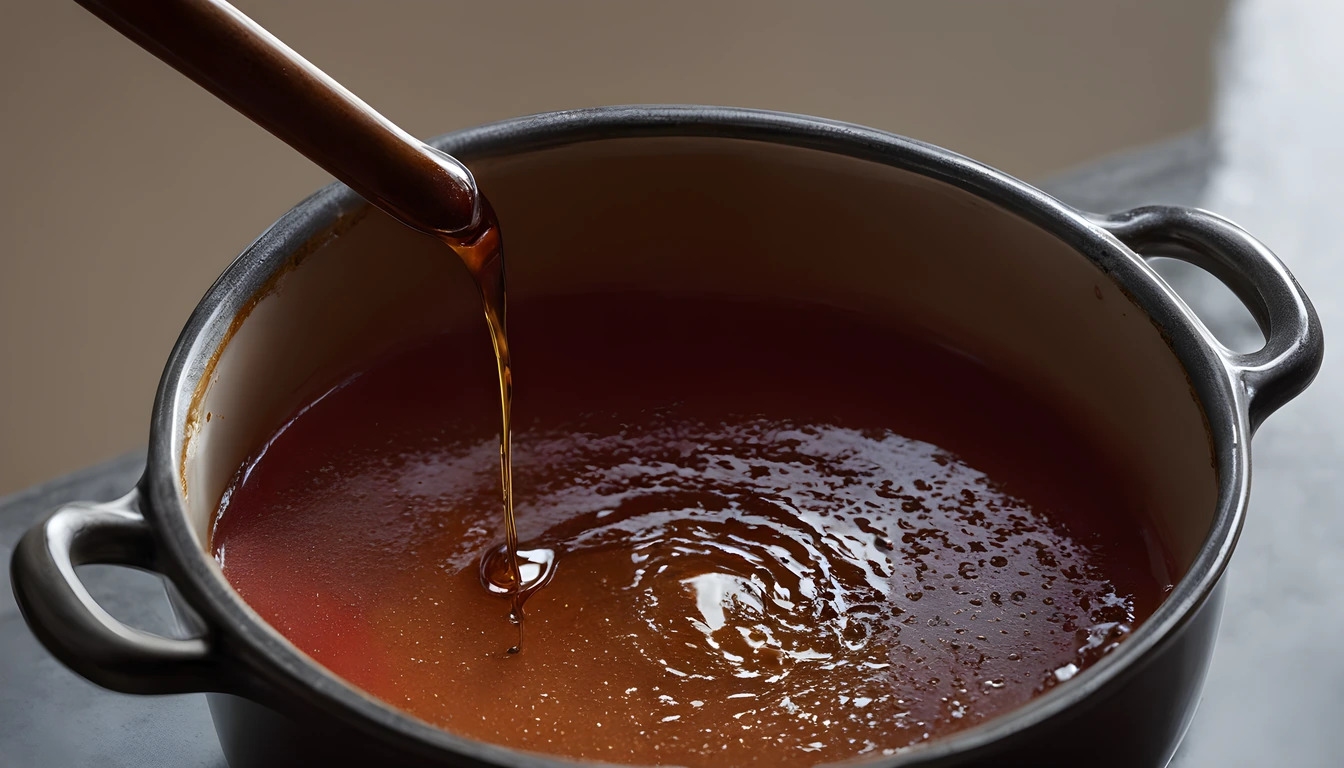
Honey Glaze for Meatballs: Tomato-Vinegar Sauce
Make a tangy honey-ketchup glaze separately, then turn cooked meatballs through it. Six portions include the entire glaze batch and exclude the meatballs.
7Ingredients
Yield: 6 servings
- 63 g honey
- 90 g ketchup
- 25 g apple cider vinegar
- 30 g water
- 1 g garlic powder
- 1 g paprika
- 0.3 g ground black pepper
Ingredient amounts scale; instructions show the original batch. Cooking times and pan sizes may need adjustment. Season to taste. Honey grams use US measures at 20°C and 17.5% moisture, a density estimate; weigh your honey for precision.
Instructions
- 1Whisk the sauceCombine honey, ketchup, cider vinegar, water, garlic powder, paprika and black pepper in a small clean saucepan. Whisk until no dry spice pockets remain.
- 2Simmer gentlyBring to a gentle simmer over medium-low heat. Cook for 5 minutes, stirring often and scraping the pan edge. Stop while the glaze is thick enough to coat a spoon but still moves readily; do not boil it down to a sticky paste.
- 3Rest and portionTake off the heat and let stand for 2 minutes, then stir. Divide the entire batch into six equal glaze portions, by finished weight if needed. The 12-minute total includes sauce preparation, simmering and the brief rest.
- 4Coat cooked meatballsCook meatballs separately by a complete recipe. Put a warm glaze portion in a clean skillet or bowl, add fully cooked meatballs and turn gently until lightly coated. Serve promptly, with any reserved clean glaze offered separately. Do not use this short glaze method to cook raw meatballs.
Estimated nutrition per serving
49.09 calories · 0.04 g fat · 13.04 g carbohydrate · 0.24 g protein · 137.1 mg sodium
Serving: 1 of 6 servings
Calculated from ingredient weights and USDA FoodData Central: 169640, 168556, 173469, 173647, 171325, 171329, 170931. Estimates use ingredient input weights; actual portions, brands and cooking losses vary. Omitted nutrient values are unavailable, not zero.
Tomato Gives This Glaze Its Body
Ketchup supplies a tomato base as well as its own sugar, salt and vinegar. The honey adds sweetness and a distinct honey flavor; cider vinegar gives the finished sauce more tang. The estimate uses the generic USDA ketchup record.
Paprika here means plain paprika, rather than an assumed smoked or hot blend. The garlic powder is measured too. Clover makes a mild sauce, while wildflower gives a stronger honey note beside tomato.
Flavor intensity uses an editorial culinary scale: 1 is mild and 5 is bold. These are tasting suggestions, not laboratory measurements.
Sources: UC Agriculture and Natural Resources: cooking with honey; USDA FoodData Central: Catsup; FoodSafety.gov: refrigerating leftovers; FoodSafety.gov: reheating leftovers.
1 = mild, 5 = bold. Editorial pairing guidance, not laboratory measurements; jars vary.
- Clover
- Tomato and cider vinegar
- Wildflower
- Paprika and tomato glaze
- Buckwheat
- A stronger savory sauce
Get the Honey Buyer's Cheat Sheet (free PDF)
16 varieties on one page — color, flavor, best use and what a fair price looks like — from the 304 honeys we track.
Turn Cooked Meatballs Gently
Make the sauce in a clean pan before it is used for coating. Put cooked meatballs in a bowl or warm skillet with a portion of glaze and turn them gently. Vigorous stirring can break tender meatballs apart.
Use honey garlic meatballs for a complete meatball method and its food-cooking instructions. The tomato-vinegar sauce here is a separate finishing option. Its short simmer does not stand in for cooking raw ground meat.
Count All Six Sauce Portions
Every measured glaze ingredient is included and divided into six servings. Meatballs, bread, rice, skewers and garnishes are outside that estimate. The batch is not assigned an invented absorption or pan-loss percentage.
Water loss can change the finished weight, so weigh the sauce and divide by six for equal portions. Using only half the batch means using half its listed ingredient nutrients. For a different flavor, see honey bourbon glaze.
Reserve Sauce before Coating
Keep a clean serving portion separate from the bowl or skillet used for the meatballs. Do not pour a used portion back into the clean sauce. Cool leftovers in a shallow container and refrigerate within 2 hours, or 1 hour above 90 F (32 C).
Reheat leftover glaze to 165 F (74 C), stirring through the center. A little plain water can loosen it if needed. Honey glaze covers other finishing styles with different ingredient balances.
Choosing the Honey
Use Clover Honey or Wildflower Honey for the flavor described in this recipe. See our honey selection guide for other culinary choices.
For a jar to give alongside a cooking gift, see the Christmas honey gift guide.