About This Recipe
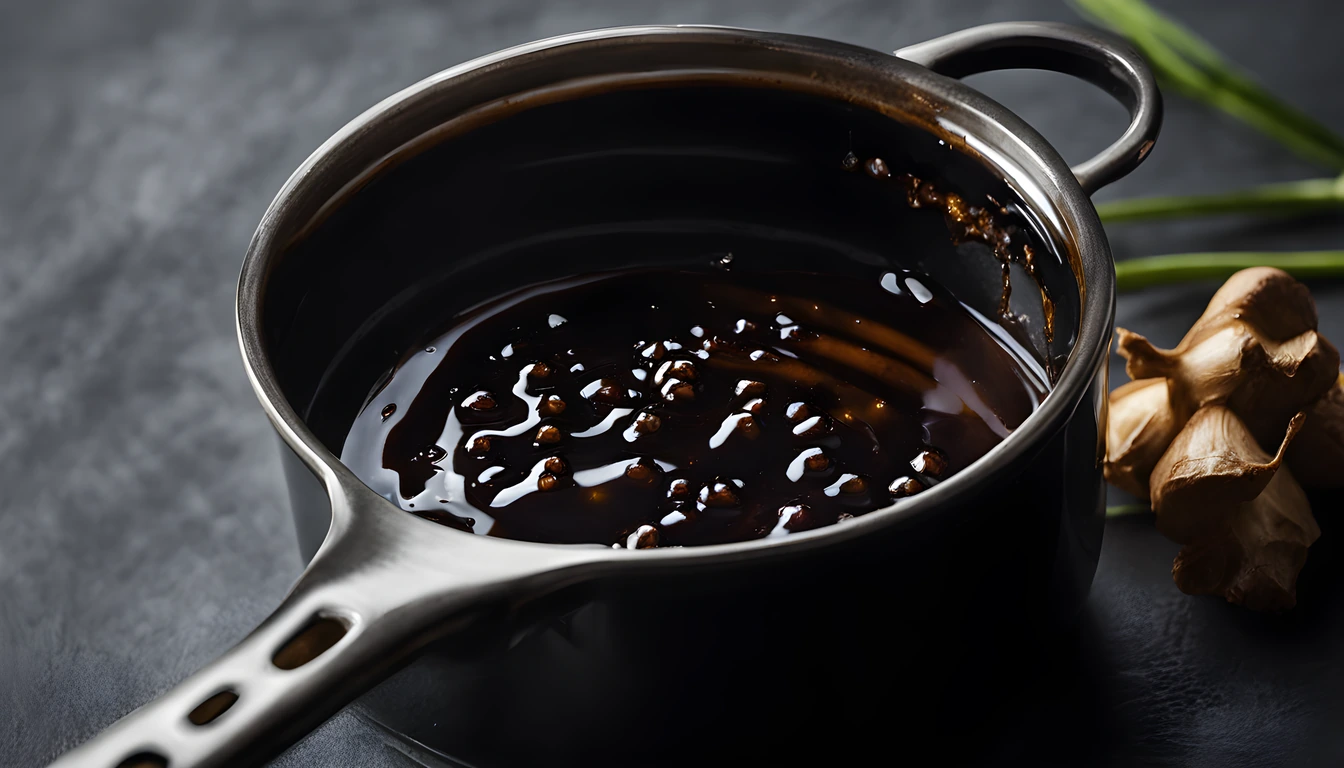
Honey balances salty soy sauce, while fresh ginger and garlic give this glaze a savory base. A short simmer softens the aromatics before a small cornstarch slurry thickens the sauce into a glossy coating.
The finished batch makes eight small glaze portions. Brush a thin layer over cooked vegetables or use it to finish a honey-soy meal, following the complete recipe for the food underneath. The nutrition estimate covers the glaze alone.
Recipe
Honey Soy Glaze Recipe: Brushable Ginger-Garlic Sauce
Honey and low-sodium soy sauce simmer with fresh ginger and garlic, then thicken into a glossy brushing glaze. Includes the measured cold-water slurry and serving guidance.
7Ingredients
Yield: 8 servings
- 84 g honey
- 56 g low-sodium soy sauce
- 15 mL Mizkan unseasoned rice vinegar
- 50 g water, divided: 30 g for simmer, 20 g cold for slurry
- 6 g fresh ginger, finely grated
- 6 g raw garlic, finely grated
- 4 g cornstarch
Ingredient amounts scale; instructions show the original batch. Cooking times and pan sizes may need adjustment. Season to taste. Honey grams use US measures at 20°C and 17.5% moisture, a density estimate; weigh your honey for precision.
Instructions
- 1Combine simmer baseIn a small saucepan, stir together 84 g honey, 56 g low-sodium soy sauce, 15 mL unseasoned rice vinegar, 30 g water, 6 g finely grated ginger, and 6 g finely grated garlic. Set the remaining 20 g water aside cold for the slurry.
- 2Simmer gentlySet the pan over medium heat and bring to a gentle simmer. Cook 5 minutes, stirring often, until the raw garlic and ginger smell has softened and the liquid is hot and fluid. Do not let it boil hard or scorch at the edges.
- 3Make the slurryWhile the base simmers, stir 4 g cornstarch into the 20 g cold water until no dry lumps remain. Stir the slurry once more before adding because cornstarch settles.
- 4Thicken and glossWhisk the slurry into the simmering sauce. Simmer 1 to 2 minutes, whisking, until the glaze turns glossy and coats the back of a spoon. It should look brushable, not like jelly. Remove from heat.
- 5Cool and portionCool 3 minutes before brushing so the glaze clings instead of running. Portion a clean 1/8-batch serving into a small dish and keep the brush bowl separate. Apply a thin coat to cooked vegetables or near-end cooked meat following that recipe; this glaze is not a marinade.
Estimated nutrition per serving
39.53 calories · 0.03 g fat · 9.88 g carbohydrate · 0.73 g protein · 252.94 mg sodium
Serving: 1 of 8 servings
Calculated from ingredient weights and USDA FoodData Central: 169640, 172473, 2083928, 173647, 169231, 169230, 169698. Estimates use ingredient input weights; actual portions, brands and cooking losses vary. Omitted nutrient values are unavailable, not zero.
A Savory Ginger-Garlic Glaze
Low-sodium soy sauce provides most of the salt and savory flavor. Honey gives the coating sweetness and body, and unseasoned rice vinegar adds a little tang. Fresh ginger and garlic remain in the sauce after simmering, so grate them finely for a more even coating.
Choose unseasoned rice vinegar for the written recipe. A seasoned product with added sugar and salt changes the balance. The measured vinegar uses its official 15 mL label serving; its nutrition reference is based on volume, while the other ingredients are weighed.
Flavor intensity uses an editorial culinary scale: 1 is mild and 5 is bold. These are tasting suggestions, not laboratory measurements.
Sources: Honey (UC Agriculture and Natural Resources); Safe Minimum Internal Temperatures (FoodSafety.gov); 4 Steps to Food Safety (FoodSafety.gov); USDA FoodData Central: Mizkan rice vinegar label reference.
Pro Tip
If you need a clean serving for a plate, spoon it out before anyone touches the brush bowl.
1 = mild, 5 = bold. Editorial pairing guidance, not laboratory measurements; jars vary.
- Clover
- Soy sauce and ginger; mild enough to stay in the background
- Wildflower
- Garlic and rice vinegar; a fuller floral note
- Buckwheat
- Strong soy and ginger; dark, malty edge
Get the Honey Buyer's Cheat Sheet (free PDF)
16 varieties on one page — color, flavor, best use and what a fair price looks like — from the 304 honeys we track.
Why the water is divided and the starch goes in cold
The 50 g water has two jobs. The first 30 g goes into the pan with the honey, soy, vinegar, ginger, and garlic so the glaze has enough liquid to simmer without reducing to a sticky film before the aromatics soften. The last 20 g stays cold and gets whisked with the cornstarch.
Cornstarch added dry will clump. Stirred into cold water first, it disperses, then thickens the simmering sauce as it heats. The 1-to-2-minute final simmer is what turns a cloudy slurry into a clear, glossy glaze.
- 30 g water in the simmer base.
- 20 g cold water for the cornstarch slurry.
- 4 g cornstarch, no more for this batch size.
Pro Tip
Whisk the slurry again right before it goes into the pan; cornstarch settles fast.
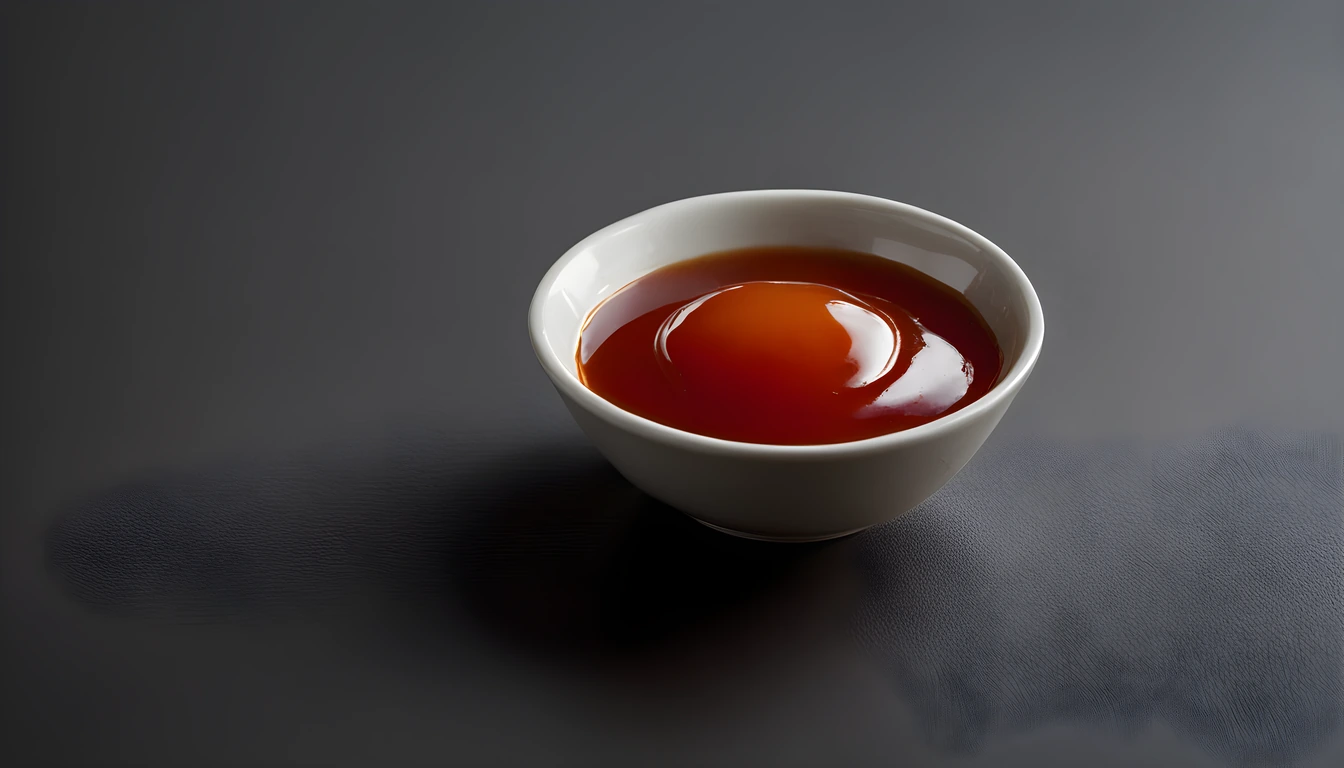
Consistency: glossy and spoon-coating, not jelly
The glaze should coat a spoon lightly and still move when the spoon is tilted. Extra starch or excessive reduction makes a heavier coating. Keep the simmer gentle and stop once the slurry has thickened the sauce rather than boiling it down into a paste.
If the glaze cools and becomes too thick to brush, loosen it with a little water rather than more honey or soy. That keeps the salty-sweet balance where the formula put it.
- Simmer the base 5 minutes before adding starch.
- After the slurry, simmer only 1 to 2 minutes.
- Cool 3 minutes before brushing.
Pro Tip
Brush a thin coat. A heavy coat of a salty-sweet glaze can overpower the food underneath.
Serving, storage, and reheating
Spoon a clean table portion into a separate dish before using a basting brush. Keep the working brush bowl separate and do not return a portion that has touched raw meat to the clean sauce. For a complete meal, follow the linked honey-soy chicken or glazed-salmon recipe for food quantities and doneness.
Refrigerate clean unused glaze promptly, within two hours or one hour when the surroundings exceed 90°F (32°C), and use within three days. Reheat leftovers to 165°F (74°C), stirring through the center; a little water will loosen sauce that has thickened in the refrigerator.
- Clean unused glaze: refrigerate within 2 hours.
- Use within 3 days.
- Reheat leftovers to 165°F after loosening with water.
Pro Tip
Divide the finished batch into eight portions by eye, or weigh it after cooking and divide that weight by eight.
Choosing the Honey
Use Clover honey or Wildflower honey or Buckwheat honey for the flavor described in this recipe. See our honey selection guide for other culinary choices.