Why Honey Makes Wings Sticky and Crispy
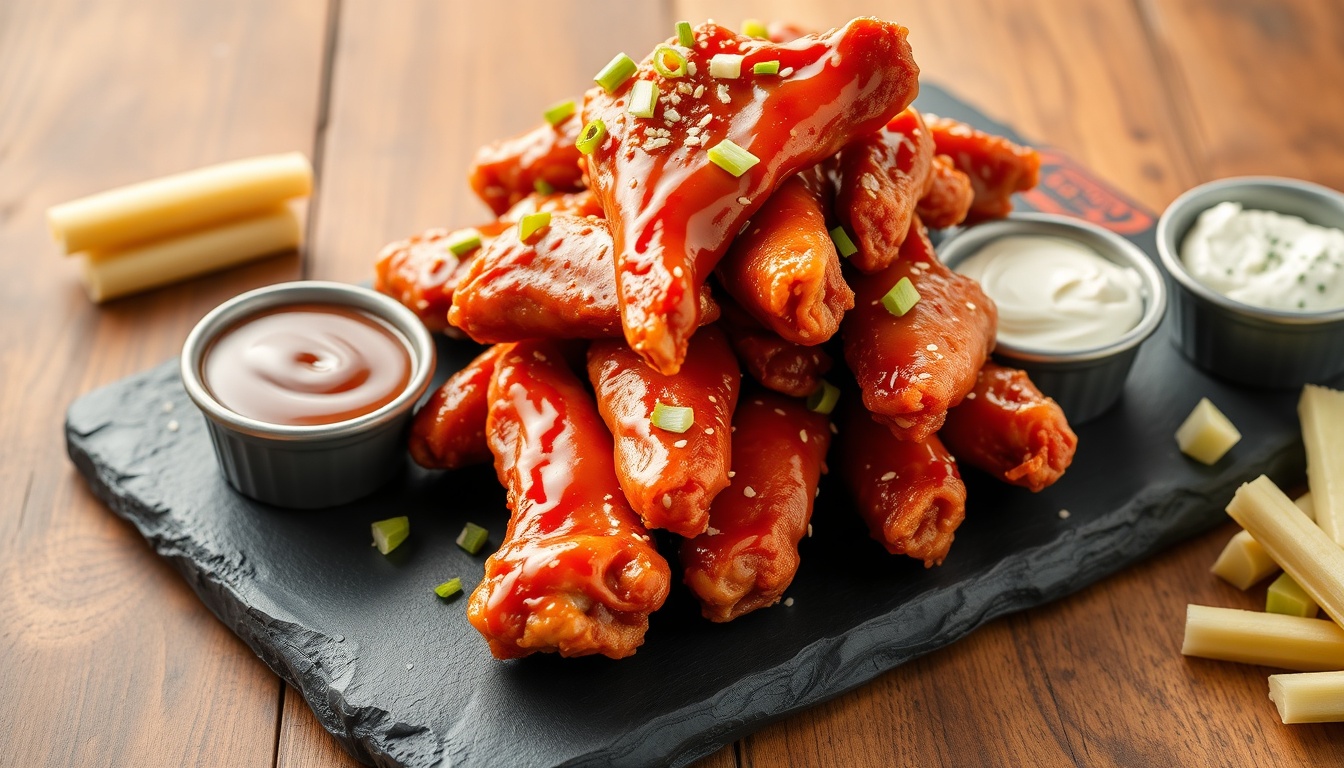
The combination of honey and hot sauce on chicken wings creates something neither ingredient achieves alone. Hot sauce on its own slides off skin — it is too thin to cling. Honey on its own would be one-dimensional sweetness. Together, the honey thickens the hot sauce into a glaze that caramelizes at oven temperatures, creating a sticky-crispy finish that is the hallmark of great wing shops.
The science is straightforward: fructose in honey caramelizes at a lower temperature than sucrose (table sugar). When honey hits a 425°F oven or a broiler, the surface sugars undergo rapid caramelization, forming a thin, crackling shell over the already-crispy baked skin. This double-crunch effect — baking powder crispiness underneath, honey caramelization on top — is what makes these wings addictive.
Honey also acts as an emulsifier between the butter and the hot sauce. Without honey, butter and vinegar-based hot sauce separate into a greasy, watery mess. The natural sugars and trace proteins in raw honey bind the fat and acid into a stable, glossy glaze that stays cohesive on the wings.
The Baking Powder Trick for Crispy Oven Wings
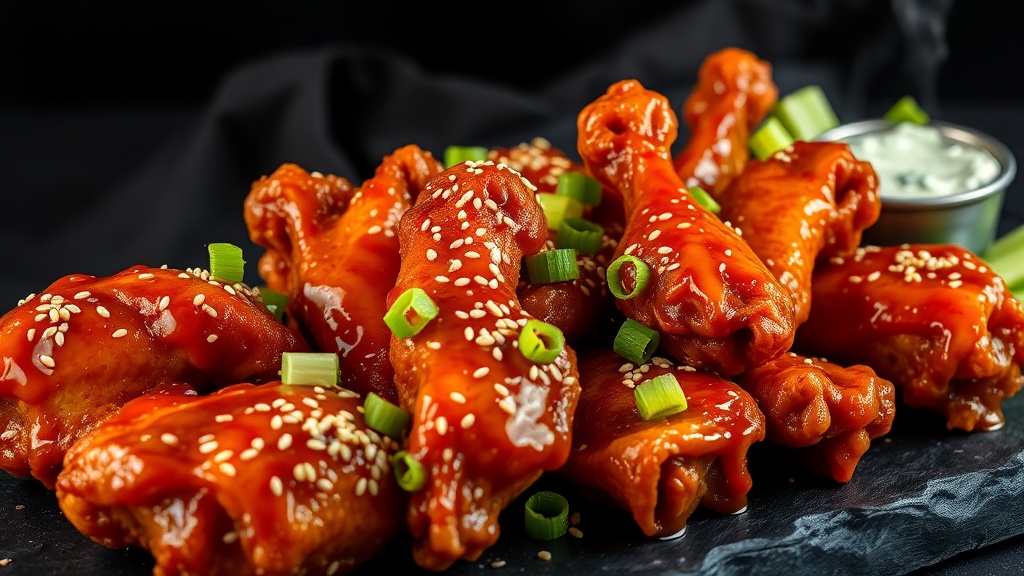
The secret to oven wings that rival deep-fried is baking powder — not baking soda. Baking powder is slightly alkaline, which raises the pH of the chicken skin. This accelerates the Maillard reaction (browning) and dehydrates the surface, producing genuinely crispy skin without a drop of frying oil.
- Use aluminum-free baking powder if possible — standard baking powder can leave a faint metallic taste when used in larger quantities. One tablespoon for 3 pounds of wings is the sweet spot
- Pat the wings bone-dry before coating. Any surface moisture steams instead of crisps, undoing the baking powder effect. Use multiple layers of paper towels and press firmly
- A wire rack is non-negotiable. Wings sitting on a flat baking sheet steam on the bottom and never crisp evenly. The rack allows hot air to circulate around every surface
- Do not use baking soda as a substitute — it is far more alkaline and will give the wings a soapy, chemical taste. Baking powder is the correct product for this technique
Pro Tip
For maximum crunch, refrigerate the coated wings uncovered on the wire rack for 1-4 hours before baking. The dry refrigerator air further dehydrates the skin surface.
Get the Honey Buyer's Cheat Sheet (free PDF)
16 varieties on one page — color, flavor, best use and what a fair price looks like — from the 304 honeys we track.
Adjusting the Heat Level
The beauty of honey hot wings is the sweet-heat balance. Adjust the ratio to match your crowd.
- Mild (family-friendly) — use 2 tablespoons hot sauce and increase honey to 1/2 cup. The honey dominates with just a warm tingle. Children over 1 year old can enjoy this version safely
- Medium (the recipe as written) — 1/4 cup hot sauce to 1/3 cup honey gives noticeable heat that the honey smooths out. Most adults find this the perfect balance
- Hot — increase hot sauce to 1/3 cup and add 1/2 teaspoon cayenne pepper to the sauce. Reduce honey to 1/4 cup. The heat is front and center with honey providing a sweet finish
- Extra hot — use 1/2 cup hot sauce, 1/4 cup honey, and add 1 teaspoon cayenne plus 1/2 teaspoon habanero powder. This is competition-level heat. The honey prevents it from being purely painful by adding a caramel sweetness between waves of fire
- For a different heat profile, substitute honey sriracha sauce or gochujang (Korean chili paste) for the hot sauce. Gochujang adds a fermented, umami depth that pairs exceptionally well with honey
Best Honey Varieties for Wing Sauce
Different honeys create noticeably different wing sauces because the honey is a primary flavor, not a background ingredient.
- **Wildflower honey ($13-24)** — The best all-around choice. Its complex, multi-floral sweetness adds depth to the hot sauce without competing. Produces a balanced wing that keeps you reaching for more at any summer cookout
- **Clover honey ($9-15)** — Mild and clean, letting the hot sauce and butter dominate the flavor. The most affordable option for large Father's Day or game day batches
- **Hot honey** — If you have made or bought hot honey (honey infused with chili peppers), use it as the full honey component for double heat layering. Reduce the separate hot sauce by half since the honey itself brings heat
- **Buckwheat honey ($9-23)** — Bold, dark, and malty with molasses-like depth. Creates a more barbecue-adjacent wing with deeper, more complex caramelization. Outstanding for smoked wings
- **Orange blossom honey ($12-24)** — Subtle citrus notes that brighten the hot sauce and add an unexpected aromatic quality. Pairs especially well with a ginger-lime dipping sauce
- Avoid delicate honeys like acacia — their subtle flavor disappears behind the hot sauce and butter. You want a honey with enough character to stand up to the other strong ingredients
Air Fryer and Grill Variations
The honey hot sauce works on wings cooked by any method.
- Air fryer — coat wings with the baking powder mixture, then air fry at 400°F for 25 minutes, shaking the basket halfway through. Toss with the honey hot sauce immediately after cooking. The air fryer produces excellent crunch in less time with no preheating
- Charcoal or gas grill — grill wings over indirect heat (one side of the grill lit, wings on the other) for 25-30 minutes, flipping every 10 minutes. Move to direct heat for the final 3-5 minutes to char the skin. Glaze with the honey hot sauce after pulling them off the grill — not during grilling, as the honey will burn over direct flame
- Deep frying — if you prefer deep frying, skip the baking powder coating. Fry at 375°F for 10-12 minutes until golden. Toss with the honey hot sauce. Deep frying produces the crispiest wings, but the baked method is 90% as good with far less mess and no oil disposal
- Smoked wings — smoke at 250°F for 1.5 hours using hickory or apple wood, then increase to 375°F for 15 minutes to crisp the skin. Toss with the glaze. Smoked honey hot wings are arguably the best version — the smoke adds another flavor layer that complements the sweet heat
Serving and Side Pairings
Honey hot wings are a complete experience with the right sides and dips.
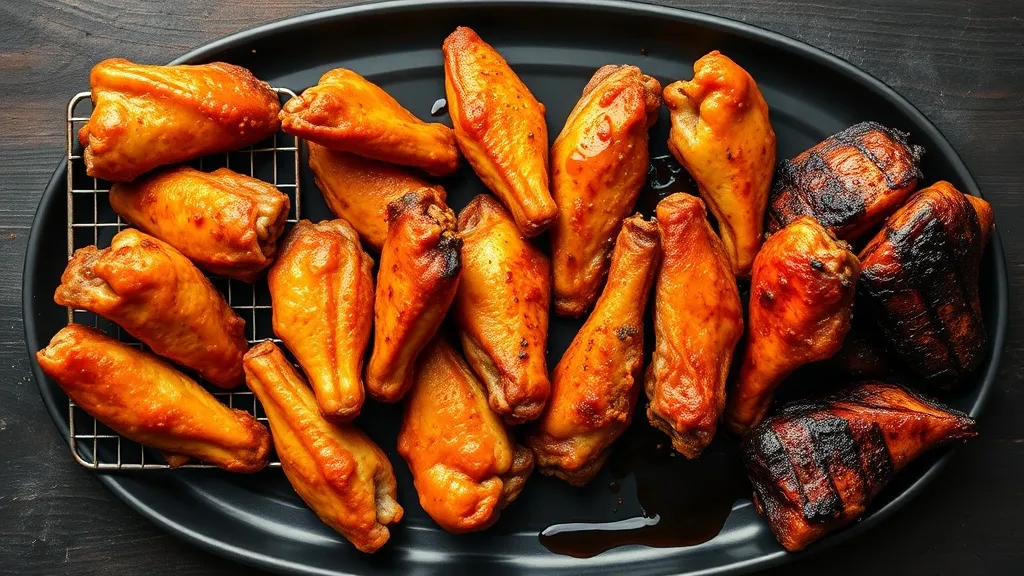
- Blue cheese dressing — the classic wing companion. The tangy, creamy cheese cuts through the sweet heat and resets your palate between bites. Crumble extra blue cheese on top of the dressing for texture
- Celery and carrot sticks — not just a garnish. The cold, crisp vegetables provide a genuine palate cleanser between wings, especially at higher heat levels
- Coleslaw — a crunchy, vinegar-based slaw balances the richness of the buttery glaze. Skip creamy coleslaw and go with a sharp vinegar slaw for the best contrast
- Honey cornbread — the natural pairing for a full wing night spread. The sweetness of the cornbread echoes the honey in the glaze while the crumb soaks up extra sauce
- Honey lemonade — a refreshing drink that cools the heat without dulling the flavor. The acid in the lemon enhances the vinegar notes in the wing sauce