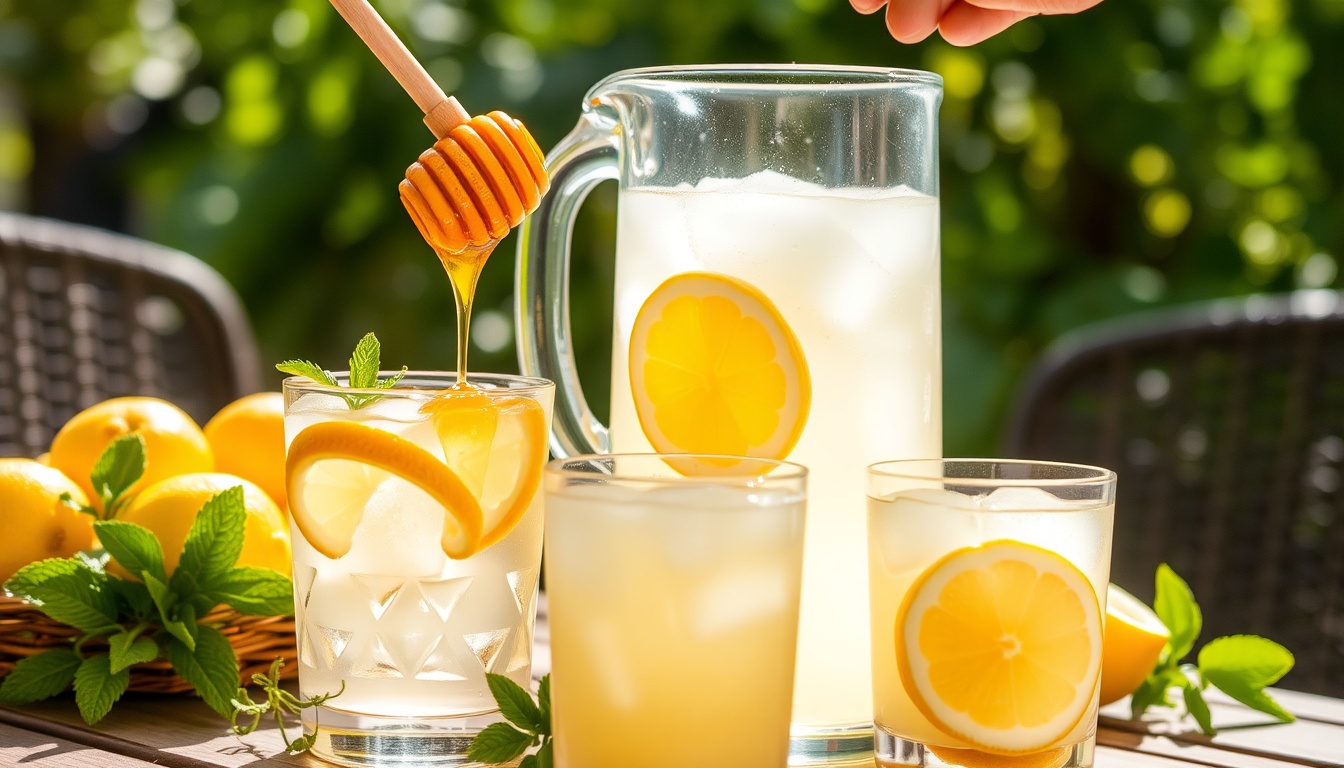
Stir Honey Into the Lemon Juice First
Honey brings a floral sweetness to lemonade. Stir it into the lemon juice before adding the cold water so it spreads through the pitcher. Measure the juice itself: lemon size and juiciness vary.
Recipe
Honey Lemonade
A honey-sweetened lemonade base with measured fresh lemon juice and water. Four servings, ready to mix in 10 minutes; optional chilling adds 30 minutes.
3Ingredients
Yield: 4 servings
- 1 cup fresh lemon juice
- 1/3 cup clover honey
- 948 g cold water
Ingredient amounts scale; instructions show the original batch. Cooking times and pan sizes may need adjustment. Season to taste. Honey grams use US measures at 20°C and 17.5% moisture, a density estimate; weigh your honey for precision.
Instructions
- 1Measure the juiceJuice enough lemons to make 1 US cup of juice, measuring after removing seeds. Lemon size and yield vary, so the cup measurement matters more than a fixed fruit count.
- 2Stir in the honeyStir 1/3 cup honey into the lemon juice until dispersed. Room-temperature juice and liquid honey are easier to mix than very cold or heavily crystallized ingredients.
- 3Add waterStir in 948 g cold water. Taste the base before changing the sweetness; extra honey or lemon changes the estimate.
- 4Portion or chillDivide into 4 equal servings and serve, or cover and chill for 30 minutes first. Ice, fruit slices and herbs are optional serving additions outside the base estimate.
Estimated nutrition per serving
99.3 calories · 0.15 g fat · 27.49 g carbohydrate · 0.3 g protein · 11.22 mg sodium
Serving: 1/4 of the measured pitcher before optional ice or garnish
Calculated from ingredient weights and USDA FoodData Central: 167747, 169640, 173647. Estimates use ingredient input weights; actual portions, brands and cooking losses vary. Omitted nutrient values are unavailable, not zero.
Measured Ingredients and Method
The recipe card lists the measured base ingredients and named steps. Follow those amounts first; the variations below change the ingredients, timing and nutrition.
- 1 cup fresh lemon juice
- 1/3 cup clover honey
- 948 g cold water
Get the Honey Buyer's Cheat Sheet (free PDF)
16 varieties on one page — color, flavor, best use and what a fair price looks like — from the 304 honeys we track.
Choosing the Best Honey for Lemonade
Use mild clover honey for the base. Wildflower honey has a more variable floral character; buckwheat honey gives a bolder, malty note. More ideas: honey for tea.
The chart is an editorial flavor-pairing guide, from 1 (mild) to 5 (bold), rather than a laboratory intensity measurement. Individual jars vary.
1 = mild, 5 = bold. Editorial pairing guidance, not laboratory measurements; jars vary.
- Clover
- A mild base
- Wildflower
- A floral note
- Buckwheat
- A bolder flavor
Matching a honey to another dish: the honey flavor map
6 Honey Lemonade Variations
Once you have the base recipe down, these variations are easy add-ons:
1. Lavender Honey Lemonade. Steep 2 tablespoons dried culinary lavender in 1 cup hot water for 10 minutes. Strain and use this lavender water as part of your 4 cups of water. The floral notes pair naturally with honey's own floral character.
2. Honey Ginger Lemonade. Peel and thinly slice a 2-inch piece of fresh ginger. Muddle gently in the pitcher before adding lemon juice and honey. The ginger adds warming spice that contrasts beautifully with the cold, tart lemonade.
3. Strawberry Honey Lemonade. Blend 1 cup fresh strawberries with 1/2 cup of the lemon juice until smooth. Strain out seeds if desired. Add to the pitcher with the remaining ingredients. Beautiful pink color and natural berry sweetness.
4. Sparkling Honey Lemonade. Replace the still water with chilled sparkling water or club soda. Mix honey into the lemon juice first, then add sparkling water gently, then gently stir in the sparkling water just before serving.
5. Frozen Honey Lemonade. Blend 2 cups of the finished honey lemonade with 3 cups of ice until slushy. Serve immediately in chilled glasses. Perfect for peak summer heat.
6. Honey Mint Lemonade. Muddle 10-12 fresh mint leaves in the pitcher before adding other ingredients. The mint oils release into the lemonade for a cooling, refreshing twist. Garnish with extra mint sprigs.
Scaling the Measured Pitcher
The base makes 4 equal servings. Select 2×for 8 servings or½×for 2, using the same ingredient proportions. Extra ice and garnishes are serving choices rather than part of the measured base.
Stir the honey into the juice before adding the bulk water, especially for a large pitcher. Taste a measured sample before deciding whether to change the recipe.
A Measured Sweetened Drink
The base uses 1/3 cup honey for the full pitcher, rather than a range that makes serving estimates uncertain. Honey contributes sugars. The card is an ingredient-based estimate for the base, not a health comparison with sugar-sweetened lemonade.
Storage and Make-Ahead Tips
Cover and refrigerate the mixed lemonade promptly. For a short preparation routine, make enough to use within 3 days and add ice and garnishes only when serving. Honey and lemon do not establish a tested preservation process.
What the Nutrition Estimate Covers
The card sums USDA FoodData Central ingredient-input values and divides by 4. 1/4 of the measured pitcher before optional ice or garnish. This is an estimate, not a laboratory analysis of the finished dish.
Different brands, extra ingredients, topping amounts and the variations change the result. The calculation does not invent a cooking-loss or discarded-food correction.