Tart Hibiscus Tea with Honey Sweetness
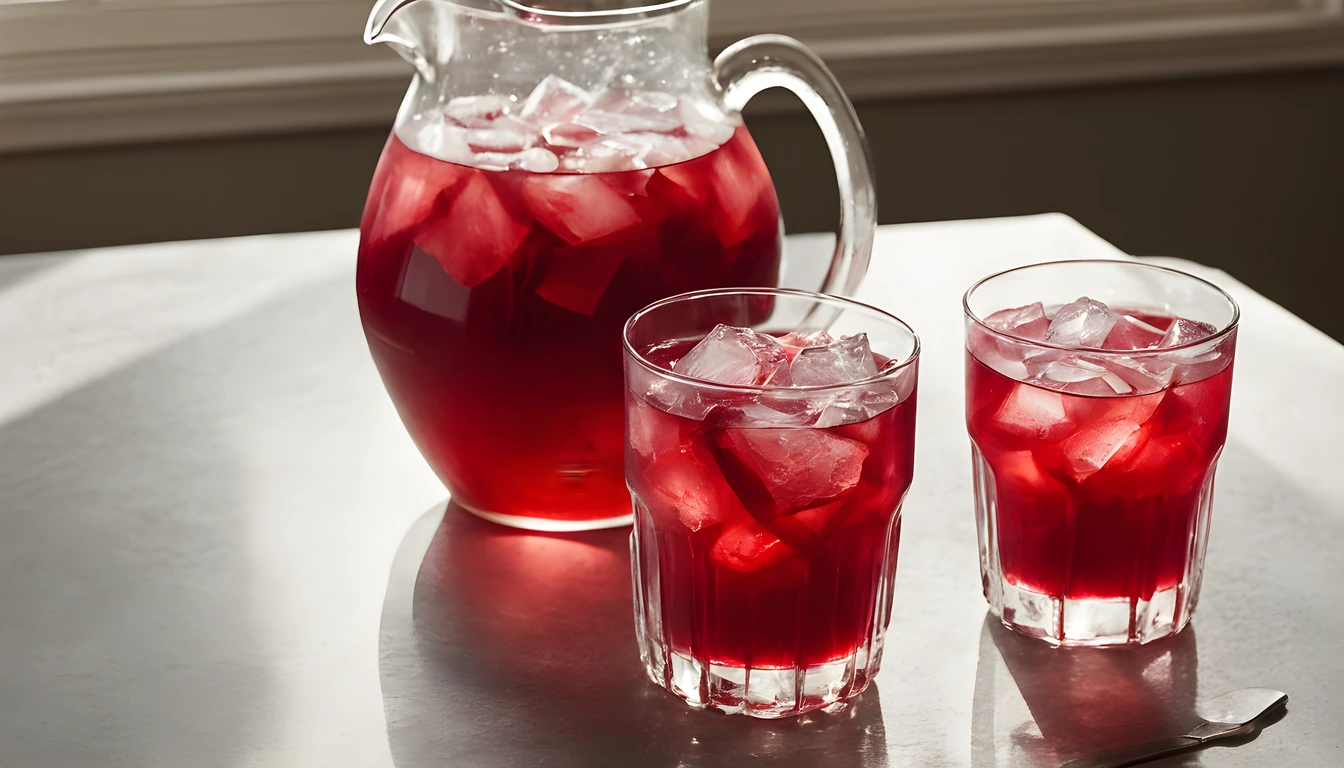
Hibiscus brews a ruby-red drink with a tart fruit-like flavor. Here it is sweetened with an equal-weight honey and water syrup, then chilled before serving. The syrup water is measured, so it is part of the recipe rather than an unnoticed extra splash.
Recipe
Honey Hibiscus Iced Tea
Brew tart ruby-red hibiscus tea, blend in a measured honey-water syrup and chill. Includes a four-serving base and dilution tips for serving over ice.
3Ingredients
Yield: 4 servings
- 948 g unsweetened brewed hibiscus tea, calyces removed
- 84 g clover honey
- 84 g water
Ingredient amounts scale; instructions show the original batch. Cooking times and pan sizes may need adjustment. Season to taste. Honey grams use US measures at 20°C and 17.5% moisture, a density estimate; weigh your honey for precision.
Instructions
- 1Brew the hibiscusFor the brewed-tea ingredient, steep 12 g food-grade dried hibiscus calyces in about 1050 g freshly boiled water for 5 to 7 minutes, covered. Alternatively, brew plain hibiscus bags according to the package for about 1 liter of tea.
- 2Strain and weigh the teaStrain out all the hibiscus calyces or remove the bags. Weigh 948 g finished tea into a heatproof pitcher, adding a little water only if needed to reach that amount.
- 3Make the honey syrupCombine 84 g honey and 84 g warm water in a small jug. Stir until no honey remains on the bottom, then stir the whole syrup into the hibiscus tea.
- 4Chill the batchCool the pitcher enough for your refrigerator, then cover and refrigerate until cold, allowing about 2 hours. The total time includes this approximate chilling period; a deep pitcher may take longer.
- 5Serve four portionsStir and divide between 4 glasses. Serve cold as made, or add a few optional ice cubes. Ice is outside the weighed base and dilutes the tea as it melts.
Estimated nutrition per serving
63.84 calories · 0 g fat · 17.3 g carbohydrate · 0.06 g protein · 11.16 mg sodium
Serving: 1/4 of the chilled tea, about 279 g before optional ice
Calculated from ingredient weights and USDA FoodData Central: 171946, 169640, 173647. Estimates use ingredient input weights; actual portions, brands and cooking losses vary. Omitted nutrient values are unavailable, not zero.
The Measured Base
Use the recipe card for the measured base. The brewing directions prepare its finished-tea ingredient; remove the leaves or flowers before weighing that liquid. Scale those brewing supplies in proportion when changing the number of servings.
- 948 g unsweetened brewed hibiscus tea, calyces removed
- 84 g clover honey
- 84 g water
Get the Honey Buyer's Cheat Sheet (free PDF)
16 varieties on one page — color, flavor, best use and what a fair price looks like — from the 304 honeys we track.
Buy Hibiscus Meant for Brewing
Look for food-grade dried hibiscus calyces, often sold as flor de jamaica or roselle. Use a plain tea rather than a sweetened instant drink or a blend with other fruit. The color and tartness depend on the material and the steep.
Rishi's hibiscus guide describes a hot steep of 3 to 5 minutes and a longer steep for iced tea. This batch starts at 5 to 7 minutes because it will be chilled and mixed with syrup water. Follow a tea bag's package if its directions differ.
Strain Before Measuring the Liquid
Dried hibiscus swells and holds water. Start with a little more brewing water than the 948 g finished ingredient, then strain and weigh the liquid that will go into the pitcher. There is no assumed percentage of water recovered from the calyces.
The card uses a completed USDA hibiscus-tea reference. It does not assign all the nutrients in 12 g dry hibiscus to the pitcher. A stronger or weaker home infusion can differ from that reference liquid.
Make an Equal-Weight Honey Syrup
Stir 84 g honey into 84 g warm water. Equal weight is different from equal volume: honey is denser than water. The scale makes this small syrup easy to repeat.
Use all the syrup for the listed base. If you prefer a tarter tea, hold some back and add it gradually after tasting, but the card will then overstate the honey you used. Keep a note of the actual honey amount for your next batch.
Chill Before Adding Ice
A cold pitcher needs only a few ice cubes in each glass. Pouring warm tea onto a glass full of ice uses the ice as cooling water and makes the finished drink noticeably weaker.
Serve the first glass without garnish to judge its balance. A lime wedge or a sprig of mint is an optional flavor addition. Neither is needed to get the red color shown in the illustration, and neither is included in the base estimate.
Scale the Pitcher, Not the Guesswork
For 8 servings, use 1896 g completed brewed hibiscus tea, 168 g honey and 168 g syrup water. Scale the dry hibiscus and brewing water too, then weigh the strained liquid. Use a larger container with space for stirring.
The stated 2-hour chilling period is approximate. Refrigeration time depends on the starting temperature, vessel and depth of liquid. Allow longer if the center of the pitcher is still warm; total time is a planning estimate, not a promise that every pitcher chills at the same rate.
Choose Honey by Flavor
Explore clover honey, acacia honey, orange blossom honey, wildflower honey and buckwheat honey. The honey for tea guide compares more choices.
The chart is an editorial flavor guide, from 1 (delicate) to 5 (bold). It is not a measured intensity scale, and individual jars vary.
- Clover softens tartness without adding a strong aroma.
- Orange blossom adds a floral citrus note.
- Wildflower gives a more variable, often fuller floral flavor.
1 = mild, 5 = bold. Editorial pairing guidance, not laboratory measurements; jars vary.
- Clover
- Clean tart-sweet pitcher
- Orange blossom
- Citrus-floral iced tea
- Wildflower
- Fuller floral accent
What the Nutrition Estimate Covers
The estimate uses 948 g of USDA FDC 171946, completed brewed hibiscus tea, plus 84 g honey and 84 g water. It is divided into 4 servings before optional ice. The reference does not measure this home steep, and no dry-calyx nutrient transfer or fixed straining yield is inferred.
USDA ingredient-reference values are estimates, not laboratory results for this finished batch. Additional honey, milk, juice or garnishes change the result. The serving description identifies the portion used in the calculation.