Why Honey and Lavender Work So Well Together
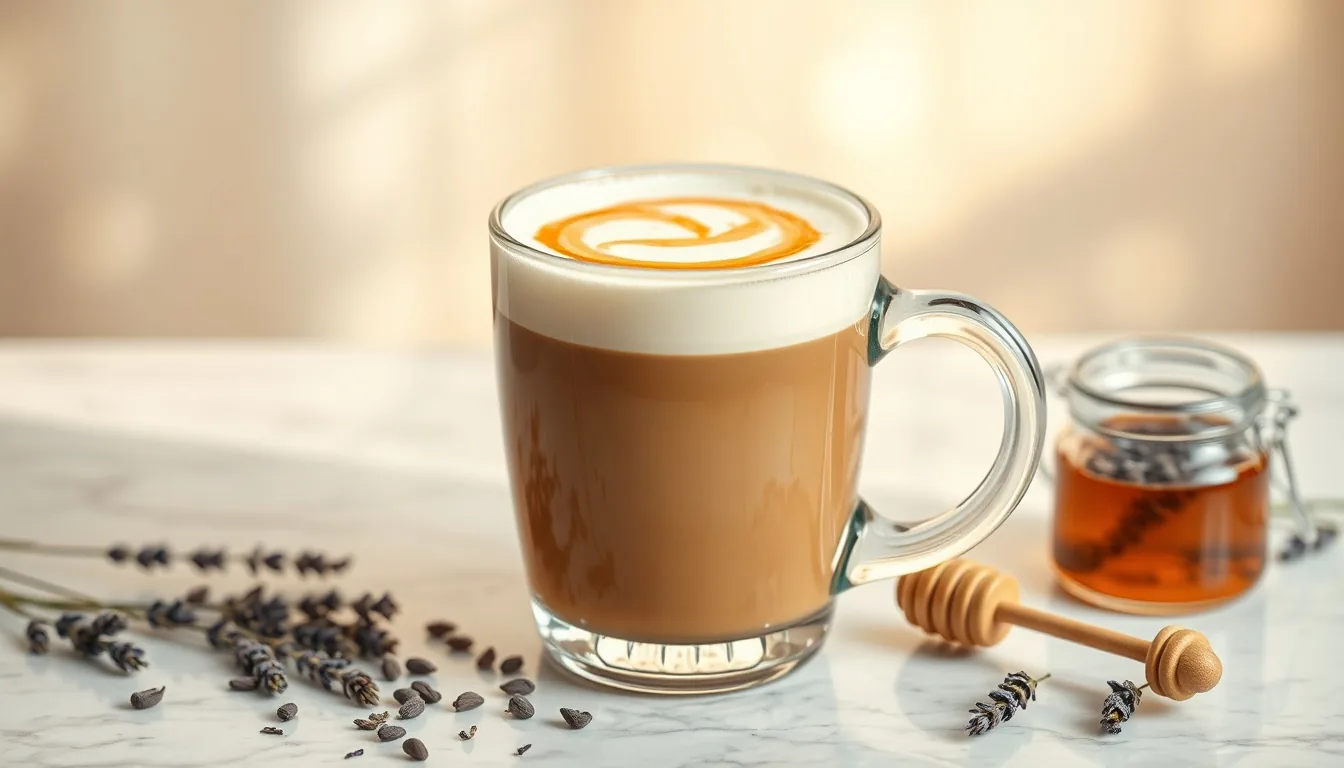
The measured card makes a latte with real lavender-blossom honey, espresso and milk. Lavender-blossom honey comes from floral nectar; it is not the same ingredient as honey infused with lavender buds and may have a gentler aroma.
For the more assertive café-style bud-infused drink, the separate syrup method below retains culinary lavender, water and honey. Its extracted composition is not invented or assigned the base card’s nutrition. For a jar to pair with a mug, see holiday honey gifts.
Recipe
Latte with Lavender-Blossom Honey
Make hot and iced honey lavender lattes with lavender-blossom honey or culinary-bud syrup, with espresso, milk and floral-flavor tips.
3Ingredients
Yield: 1 servings
- 60 g brewed espresso
- 1 cup whole milk
- 21 g lavender-blossom honey
Ingredient amounts scale; instructions show the original batch. Cooking times and pan sizes may need adjustment. Season to taste. Honey grams use US measures at 20°C and 17.5% moisture, a density estimate; weigh your honey for precision.
Instructions
- 1Brew and sweetenBrew and weigh 60 g espresso into a mug. Stir in the measured lavender-blossom honey.
- 2Heat and froth the milkHeat the milk gently until steaming, not boiling. Froth with a whisk or frother, taking care with hot liquid.
- 3CombinePour the milk and foam over the honey espresso. This base has no separate bud syrup or extra drizzle.
- 4Make the iced variationFor iced service, cool the espresso, dissolve the same honey in it, then combine with cold milk over ice. Extra syrup or different milks change the estimate.
Estimated nutrition per serving
218.08 calories · 8.04 g fat · 30.02 g carbohydrate · 7.82 g protein · 114.16 mg sodium
Serving: 1 of 1 base servings
Calculated from ingredient weights and USDA FoodData Central: 171891, 171265, 169640. Estimates use ingredient input weights; actual portions, brands and cooking losses vary. Omitted nutrient values are unavailable, not zero.
Measured Base and Preparation Notes
Use the measured card for the stated base estimate. Other methods and additions below are separate variations.
- Choose honey actually labeled as lavender-blossom honey for this base. Do not substitute a guessed quantity of an unknown syrup.
- Use the separate culinary-lavender syrup method if you want bud-infused flavor; it is outside this base estimate.
- Whole milk is the measured reference. Other milks have different composition and foaming behavior.
Get the Honey Buyer's Cheat Sheet (free PDF)
16 varieties on one page — color, flavor, best use and what a fair price looks like — from the 304 honeys we track.
Culinary Lavender Honey Syrup Option
For the distinct bud-infused café version, heat 1/2 cup water to a simmer, take off the heat and steep 2 tablespoons culinary-grade dried lavender buds, covered, for about 10 minutes. Strain out the buds, then stir 1/2 cup honey into the warm liquid.
Use lavender sold as a culinary ingredient, not decorative flowers. Steeping does not guarantee a purple syrup. Straining and extraction change the final liquid composition; no botanical nutrient proxy or measured syrup yield is invented. Keep the syrup covered and refrigerated and make only what you plan to use soon.
Hot and Iced Bud-Infused Lattes
For a hot version, stir 1–2 tablespoons of the prepared syrup into espresso and add steamed milk. Start with less syrup and adjust by taste. This is the syrup alternative, not the lavender-blossom-honey card.
For iced service, cool the coffee, dissolve syrup in it, then pour over ice and add cold milk. Milk choice and syrup amount change the composition.
Milk Choices and Other Variations
Whole milk is the measured card reference. Oat, almond and other milks change flavor, foam and composition, so use their labels rather than assigning the same numbers.
Vanilla can be added to the syrup. A matcha or tea version replaces the espresso and needs its own ingredient estimate; changing the drink does not preserve espresso nutrition.
Honey Pairing Guide
The measured base uses lavender honey; its estimate uses USDA generic honey as a food-family reference, not an assay of this floral variety.
Compare clover honey, wildflower honey and the best honey for coffee guide. The flavor-intensity scale is editorial, not a laboratory measurement.
1 = mild, 5 = bold. Editorial pairing guidance, not laboratory measurements; jars vary.
- Clover
- Mild base sweetness
- Wildflower
- Floral finish
- Orange blossom
- Citrus-floral variation
Matching a honey to another dish: the honey flavor map
Holiday Pairings
A jar of honey and a mug make a practical pairing. See holiday honey gifts for more ideas.
Nutrition Estimate
USDA input edible weights divided by yield; no cooking-loss or discarded-food adjustment assumed.
The estimate uses the recorded USDA ingredient references and divides the input into the stated servings. It is not a laboratory analysis or a measured cooking-yield result. Unknown nutrients are omitted rather than replaced with zero.