Why Timing Matters for Honey Consumption
Honey is one of the most versatile natural foods, but when you eat it can meaningfully change what it does for your body. The same tablespoon of raw honey taken first thing in the morning, 30 minutes before a workout, or right before bed activates different metabolic pathways, affects blood sugar differently, and serves distinct health purposes. Understanding these timing windows helps you get the most out of every spoonful.
The reason timing matters comes down to basic physiology. Your body's hormonal environment, glycogen status, digestive activity, and nutrient absorption capacity all shift throughout the day. Honey's unique composition — roughly 38% fructose, 31% glucose, plus enzymes, polyphenols, and prebiotic oligosaccharides — interacts with each of these states differently. Fructose preferentially restores liver glycogen, making honey ideal after an overnight fast. The mild insulin response from glucose helps shuttle tryptophan across the blood-brain barrier, which is why honey before bed supports melatonin production.
This guide breaks down every major timing window for honey consumption, reviews the clinical evidence behind each one, and provides a practical summary so you can match your honey intake to your specific health goals. Whether you are looking for better sleep, improved athletic performance, digestive support, or immune defense, there is an optimal time to take honey — and this article will help you find it.
First Thing in the Morning
Eating honey first thing in the morning on an empty stomach is one of the oldest wellness practices in the world. Ayurvedic medicine has recommended honey with warm water before breakfast for over 3,000 years, and modern research offers several explanations for why this timing works well for certain goals.
After 7-10 hours of overnight fasting, your liver glycogen stores are partially depleted — the liver typically holds 80-100 grams of glycogen, and overnight brain metabolism can consume 40-50% of that supply. Honey's balanced glucose-to-fructose ratio is well-suited for replenishment: glucose enters the bloodstream almost immediately to normalize blood sugar, while fructose is transported directly to the liver to restock glycogen reserves. A 2009 study in the Journal of the American College of Nutrition found that honey's fructose-to-glucose ratio results in more efficient liver glycogen replenishment than glucose alone.
Morning is also when honey's prebiotic compounds — fructooligosaccharides (FOS) and galactooligosaccharides (GOS) — have the clearest path to your large intestine. With no other food competing for space, these oligosaccharides reach beneficial gut bacteria faster and may provide a more targeted prebiotic effect. A 2019 review in the journal Nutrients confirmed that honey consumption consistently promoted growth of Bifidobacteria and Lactobacillus populations. For a deeper dive into this topic, see our guide on honey on an empty stomach.
The traditional format — 1 tablespoon of raw honey dissolved in a glass of warm water — adds hydration after the overnight fast and stimulates gastric motility. Keep the water temperature below 104F (40C) to preserve honey's heat-sensitive enzymes like diastase and glucose oxidase. For more on this practice, read our complete guide to honey water benefits.
Pro Tip
If you take honey in the morning on an empty stomach, follow it with a balanced breakfast containing protein and fiber within 30 minutes. This prevents the blood sugar spike that comes from honey in isolation, especially important for anyone with insulin sensitivity concerns.
Get the Honey Buyer's Cheat Sheet (free PDF)
16 varieties on one page — color, flavor, best use and what a fair price looks like — from the 268 honeys we track.
Before Meals (15-30 Minutes)
Taking honey 15-30 minutes before a meal serves two main purposes: appetite modulation and gastroprotection. This timing window allows honey's active compounds to coat the stomach lining and begin stimulating digestive processes before the main food bolus arrives.
Honey has documented gastroprotective properties. A 2006 study published in BMC Complementary and Alternative Medicine found that honey significantly protected the gastric mucosa against ethanol-induced and stress-induced lesions in animal models. The protective mechanism involves honey stimulating mucus secretion and providing a physical barrier of sugars and proteins on the stomach lining. Taking honey before a meal ensures this protective coating is in place before potentially irritating foods (spicy dishes, acidic foods, or alcohol) reach the stomach.
There is also a digestive enzyme priming effect. Raw honey contains its own enzymes — diastase (which breaks down starch), invertase (which breaks down sucrose), and glucose oxidase — that can supplement your body's digestive enzymes. When these arrive in the stomach before a meal, they are ready to assist with food breakdown as soon as eating begins. For people with sluggish digestion or mild dyspepsia, this pre-meal priming may reduce post-meal bloating and discomfort. See our full guide on honey and gut health for more on these digestive benefits.
For appetite modulation, honey's natural sugars provide a mild caloric signal that can take the edge off extreme hunger without spoiling your appetite. This may help prevent overeating at the meal itself, particularly for people who tend to eat too quickly when very hungry. The effect is modest — one tablespoon provides only about 64 calories — but the combination of sweetness and caloric signaling can help you approach a meal with less urgency.
After Meals
Eating honey after a meal still adds carbohydrate and added sugar to that meal. Meal composition and timing do not turn honey into a diabetes treatment or establish a universal best time to eat it.
If honey replaces another dessert ingredient, compare the actual serving and recipe totals rather than assuming the swap reduces calories or carbohydrate. See the honey and sugar comparison for general food-use context.
Honey is a fast-acting carbohydrate, and no honey variety or eating time is medically preferred. Use the honey carbohydrate and label guide to compare serving-size total carbohydrate and added sugars within an individualized care plan.
Pro Tip
Treat a post-meal use as part of the meal's total carbohydrate and added-sugar count; there is no required honey serving.
Before Exercise (30-60 Minutes)
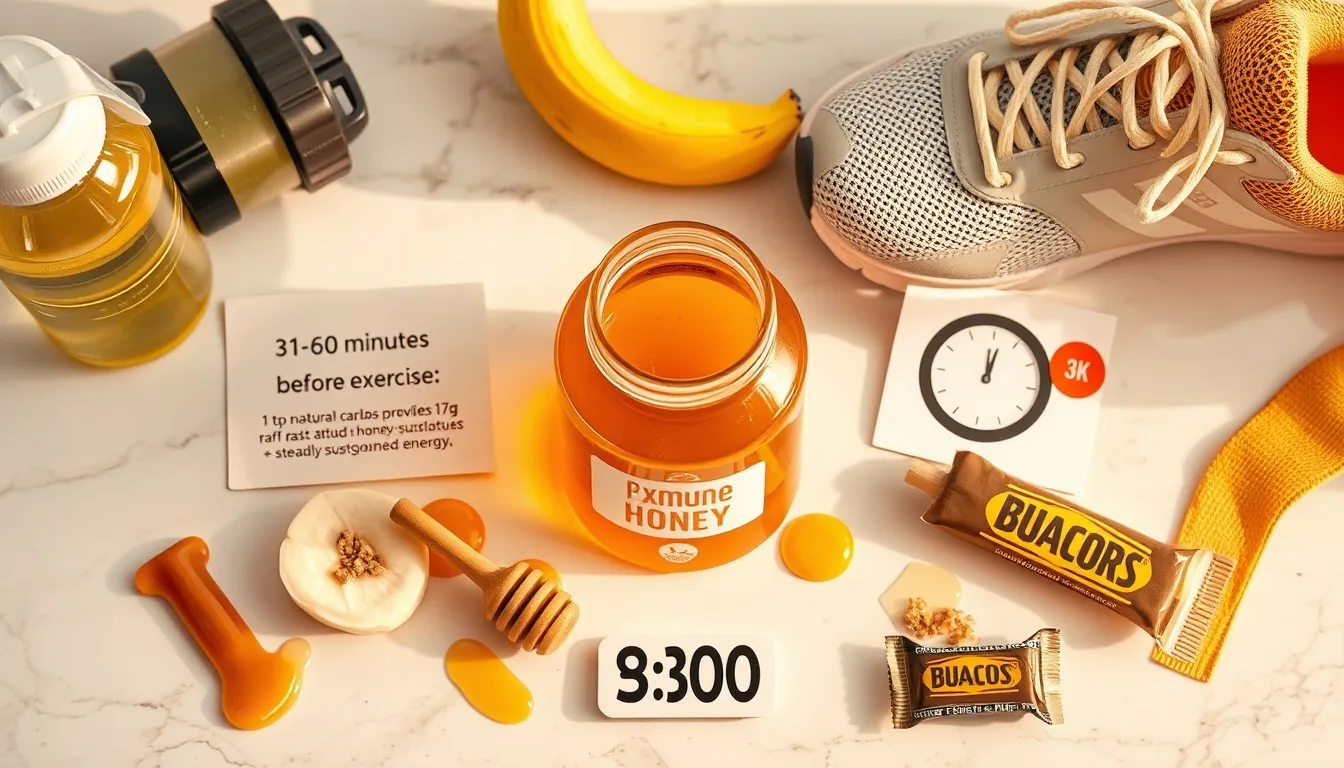
Honey is a highly effective pre-workout fuel, and the 30-60 minute window before exercise is one of the best-studied timing options for honey consumption. The key advantage is honey's dual-speed energy delivery: glucose provides immediate blood fuel within 15-20 minutes, while fructose takes a slower hepatic route, topping off liver glycogen that sustains energy over longer efforts.
A landmark 2004 study conducted at the University of Memphis and published in the Journal of Strength and Conditioning Research tested honey against dextrose (pure glucose) and a flavored placebo in trained cyclists performing a 64-kilometer time trial. The honey group maintained blood glucose levels as effectively as the dextrose group and significantly outperformed the placebo group. Importantly, the honey group showed a more stable blood sugar curve — without the sharp spike and subsequent crash that pure glucose can cause.
For most training sessions, 1-2 tablespoons of honey (17-34 grams of carbohydrate) taken 30-60 minutes before exercise provides sufficient fuel without gastrointestinal discomfort. The best honey varieties for pre-workout fuel include clover honey for mild, reliable sweetness and proven high-intensity performance, wildflower honey for complex energy from diverse floral sources providing sustained endurance support, and acacia honey for gentle digestibility when training with sensitive stomachs. This is particularly valuable for early-morning exercisers who train after an overnight fast and need quick, digestible energy without the heaviness of a full meal. Raw honey also delivers antioxidants — particularly darker varieties like buckwheat honey with 3-9× higher ORAC values than clover honey — that may help manage exercise-induced oxidative stress and support recovery throughout longer training sessions.
Honey's advantage over commercial sports gels and chews comes down to tolerability and composition. Many athletes experience GI distress from the maltodextrin, artificial sweeteners, and sugar alcohols in processed sports nutrition products. Honey is a whole food with a long track record of digestive tolerance. For a complete breakdown of honey as sports fuel, see our guide on honey for athletes and honey for energy.
During Exercise
For workouts lasting longer than 60 minutes, mid-exercise carbohydrate intake becomes important for maintaining performance. The body can oxidize approximately 60 grams of carbohydrate per hour from a single source, but honey's combination of glucose and fructose allows a higher total oxidation rate — up to 90 grams per hour — because glucose and fructose use different intestinal transporters (SGLT1 and GLUT5, respectively).
This dual-transporter advantage makes honey function like a natural energy gel. In practice, consuming 1 tablespoon of honey every 30-45 minutes during prolonged endurance exercise (cycling, running, hiking, or cross-country skiing lasting 90+ minutes) provides steady energy delivery without overwhelming a single absorption pathway. The 2004 University of Memphis study confirmed that honey maintained blood glucose and improved time-trial performance comparably to commercial sports supplements.
The practical challenge of consuming honey during exercise is portability. Honey sticks, small squeeze packets, or transferring honey to a reusable gel flask makes mid-workout consumption manageable. Some athletes mix honey into their water bottles — approximately 2 tablespoons per 500ml of water — for a simple, natural sports drink that also provides electrolyte-supporting trace minerals. For more on using honey as workout fuel, see our complete honey for athletes guide.
Pro Tip
During hot weather exercise, honey dissolved in water serves double duty as fuel and hydration. Add a pinch of sea salt for sodium and you have a basic natural sports drink.
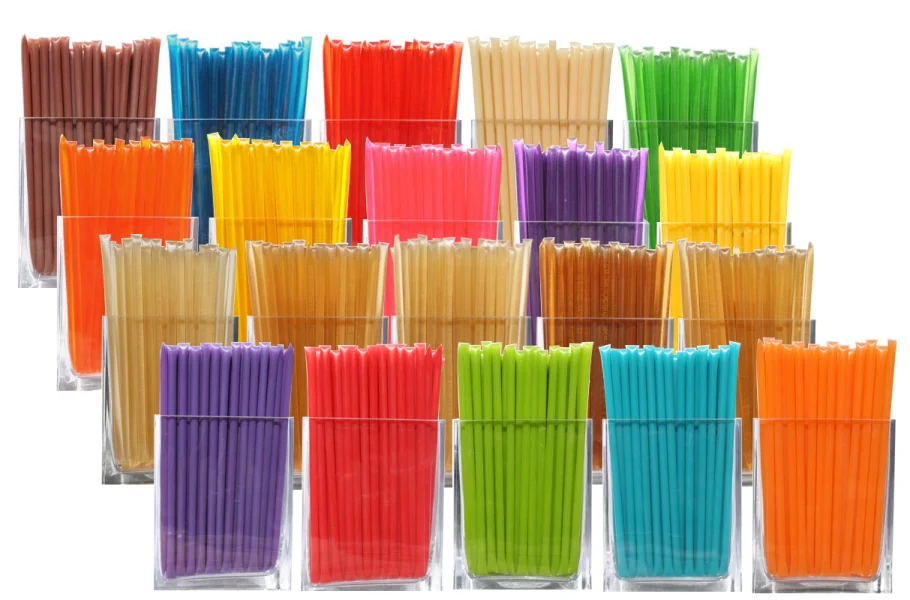
Photo: Queen Right Colonies, used with permission
Before Bed (30-60 Minutes)
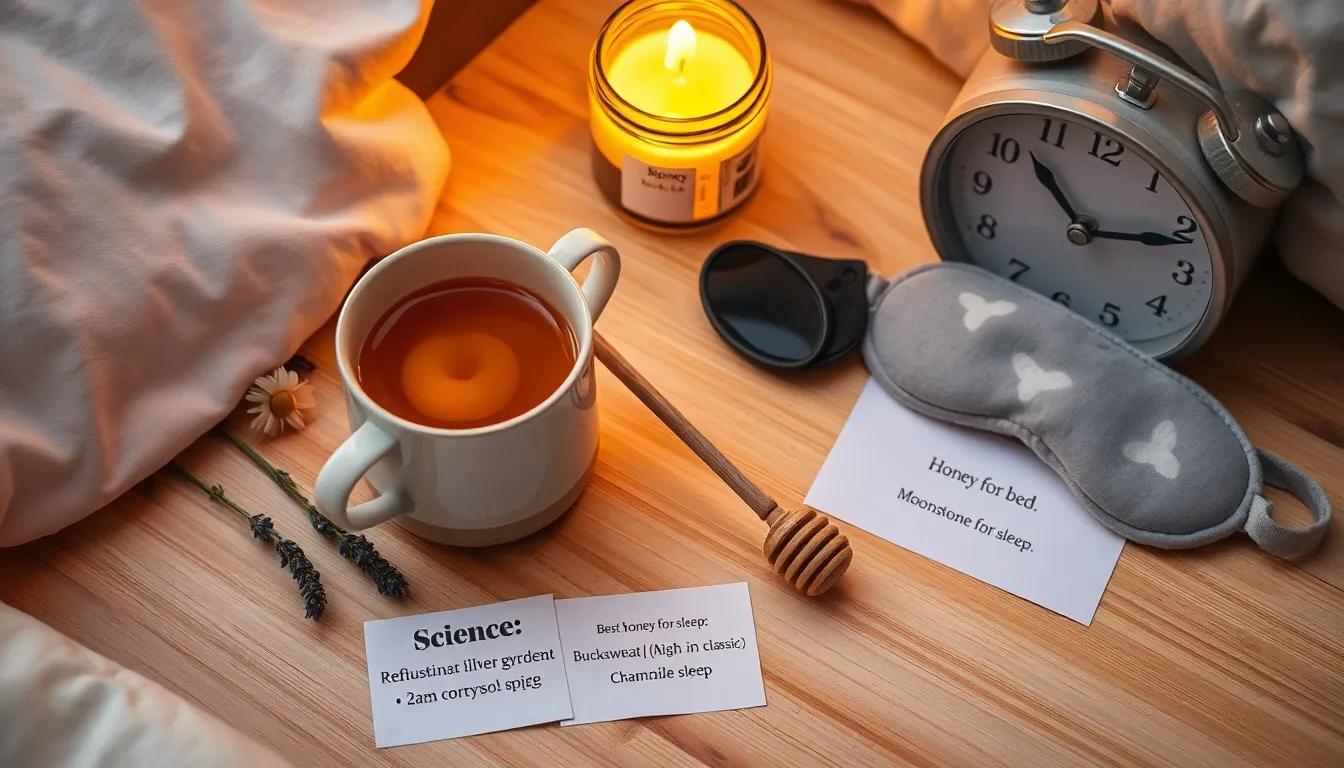
The before-bed timing window is one of the most well-studied and compelling use cases for honey. The mechanism involves two complementary pathways: liver glycogen support and tryptophan-mediated melatonin production.
Your brain consumes approximately 6-8 grams of glycogen per hour during sleep. When liver glycogen drops below a critical threshold during the night, the body releases cortisol and adrenaline to mobilize emergency energy — stress hormones that disrupt sleep and commonly cause the 2-4 AM waking pattern that many people experience. One tablespoon of honey provides about 17 grams of carbohydrate that selectively restocks liver glycogen without causing a major insulin spike, helping prevent this cortisol-driven waking.
The second pathway involves tryptophan, the amino acid precursor to serotonin and melatonin. Honey contains small amounts of tryptophan directly, but more importantly, the mild insulin release from honey's natural sugars helps tryptophan compete with other large neutral amino acids for transport across the blood-brain barrier. A 2014 study in the Iranian Journal of Basic Medical Sciences found that honey consumption increased melatonin levels in test subjects. A 2012 study in the Journal of Medicinal Food reported that honey before bed improved subjective sleep quality scores compared to placebo.
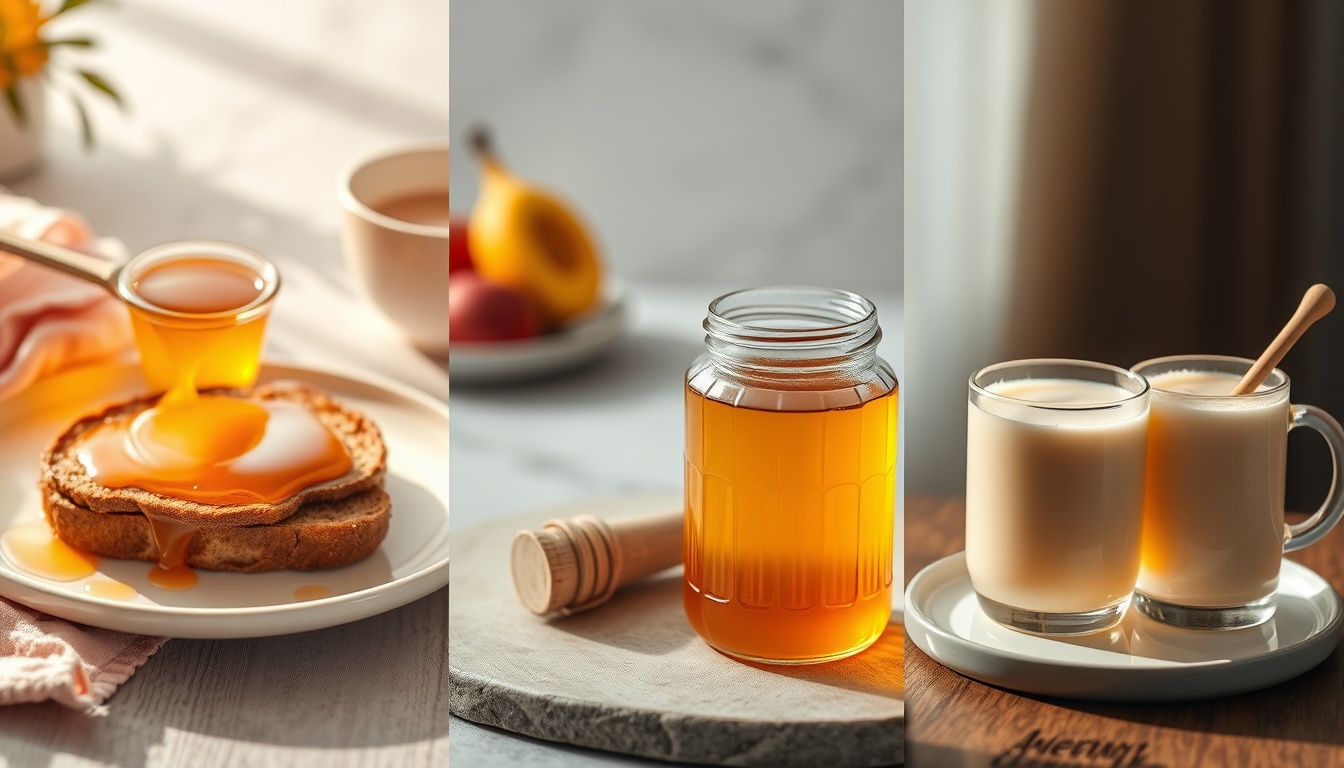
The optimal protocol is 1 tablespoon of raw honey taken 30-60 minutes before bed, with specific varieties offering distinct sleep benefits: acacia honey provides optimal liver glycogen efficiency with low GI (~32) for sustained overnight energy without blood sugar spikes, wildflower honey offers diverse nutrients and prebiotic oligosaccharides supporting gut-brain sleep connections, clover honey delivers reliable mild sweetness for nightly compliance without overpowering flavors, and buckwheat honey supplies maximum antioxidant density for anti-inflammatory sleep recovery. Take honey either straight from the spoon, dissolved in warm water, or stirred into warm milk or chamomile tea. Milk adds its own tryptophan and calcium (which helps the brain use tryptophan to produce melatonin), making the classic warm milk and honey combination genuinely complementary. For a complete deep-dive, see our dedicated guide on honey before bed for sleep.
When You Are Sick
Illness is a special-case timing scenario where honey serves as both food and medicine. The strongest evidence supports honey for upper respiratory symptoms, particularly cough and sore throat, with bedtime being the optimal timing within this category.
A 2020 systematic review published in BMJ Evidence-Based Medicine analyzed 14 studies and concluded that honey was superior to usual care (including antibiotics and over-the-counter cough medications) for reducing cough frequency, cough severity, and overall upper respiratory symptom burden. The bedtime timing was the most commonly studied in the research — honey before sleep was linked to reduced nighttime coughing and improved sleep quality in both children (over age 1) and adults in the cited studies. The mechanism involves honey's demulcent properties: its thick, viscous texture physically coats and soothes irritated throat mucosa, while its natural hydrogen peroxide activity provides mild antimicrobial action.
For sore throats specifically, some people find consuming honey throughout the day — not just at bedtime — helpful, since repeated coating and the osmotic effect of honey's high sugar concentration may help draw moisture from inflamed tissue. For a complete treatment protocol, see our guide on honey for sore throat and cough.
Honey paired with fresh ginger is a traditional remedy for nausea, with the ginger providing anti-emetic effects and the honey making the ginger palatable while adding its own soothing properties. During cold and flu episodes, honey's quick-absorbing sugars provide accessible calories when appetite is poor, and its antioxidant compounds support immune function during the recovery process.
Pro Tip
During illness, opt for therapeutic honey varieties: Manuka honey with UMF 10+ for maximum antibacterial activity, buckwheat honey for exceptional antioxidant density supporting immune recovery, eucalyptus honey for natural respiratory support, wildflower honey for diverse antimicrobial compounds, or clover honey for gentle, reliable antimicrobial activity suitable for children. Dissolve honey in warm (not hot) herbal tea for combined hydration, throat coating, and comfort.
Best Timing by Health Goal
Meal timing, sleep, exercise, cough, and diagnosed conditions involve different evidence; this section does not assign a therapeutic time to honey.
- Gut health and digestion — Honey is a sweetener, not a microbiome treatment; persistent digestive symptoms need appropriate clinical assessment.
- Weight management — Honey contributes calories and added or free sugar; changing when it is eaten does not create an energy deficit.
- Sleep claims and honey timing are not supported well enough to guide insomnia care.
- Exercise fueling should follow an individualized sports-nutrition plan, with honey counted as carbohydrate.
- Cough evidence is limited and does not establish a repeated honey schedule; seek urgent care for breathing difficulty and clinical advice for severe or persistent symptoms.
- Blood sugar management — Honey contributes carbohydrate regardless of variety; follow the meal and medication plan from the diabetes care team.
- Honey variety and timing have not been shown to provide systemic skin protection.
- Post-workout recovery depends on total carbohydrate, protein, fluid, and training demands rather than a special honey window.
Pro Tip
Amounts reported in the studies discussed here describe study protocols, not daily recommendations. Use the daily added-sugar guide to count honey with other added or free sugars.
When NOT to Eat Honey
While most of this guide focuses on optimal timing, there are specific windows when you should avoid honey entirely or exercise extra caution.
Do not give honey to infants under 12 months of age at any time. Honey can contain Clostridium botulinum spores that are harmless to older children and adults but can cause infant botulism — a rare but potentially life-threatening condition. This applies to all types of honey, including raw, pasteurized, and manuka. For more on when it becomes safe, see our guide on when babies can have honey.
Avoid eating honey immediately before brushing your teeth. Honey is acidic (pH 3.2-4.5) and its sugars feed oral bacteria that produce enamel-eroding acids. If you eat honey before bed, brush your teeth first, then wait at least 30 minutes after eating honey before brushing again — brushing while enamel is softened by acid exposure can cause more damage than the acid itself. Alternatively, rinse your mouth with plain water after eating honey. For a complete discussion of honey and oral health, see our honey and dental health guide.
Late at night after brushing your teeth is another poor timing choice for the same dental reasons. If you are using the honey-before-bed protocol for sleep, incorporate it into your evening routine before your final brushing, or rinse thoroughly with water afterward.
Immediately before dental procedures — cleanings, fillings, or other dental work — is also a time to skip honey. The residual sugars create an unfavorable environment for dental work and can interfere with bonding agents and sealants.
The Bottom Line
There is no single "best" time to eat honey — the optimal timing depends entirely on your health goals. Morning on an empty stomach is best for digestive priming and energy restoration. Before meals works for appetite modulation and gastroprotection. After meals is the safest option for blood sugar management. Before workouts provides dual-speed athletic fuel. Before bed supports sleep through liver glycogen and melatonin pathways. And during illness, honey is most effective as a nighttime cough suppressant.
The most important factors are consistency and quality. Use raw, unprocessed honey to preserve the enzymes, polyphenols, and prebiotic compounds it contains, and count it toward your daily added-sugar intake regardless of when you eat it. Natural remedies rarely produce overnight results, but the cumulative evidence for honey as a functional food — taken at the right time — is substantial and growing.