Honey and Teeth: It's Complicated
Ask a dentist if honey is bad for your teeth and you'll likely get a simple "yes — it's sugar." Ask a microbiologist and you'll hear about honey's antibacterial properties against the exact bacteria that cause cavities. Both are partially right, and the full picture is more nuanced than either answer suggests.
Honey is approximately 80% sugars — primarily fructose (38-40%) and glucose (30-32%) — which cavity-causing bacteria readily ferment into enamel-dissolving acids. That is a real risk. But honey also contains hydrogen peroxide, methylglyoxal (in manuka), flavonoids, and other compounds with demonstrated antibacterial activity against Streptococcus mutans — the primary bacterium responsible for dental caries.
This guide covers the complete dental health picture: the genuine cavity risk, the surprising antibacterial evidence, what manuka honey research shows for gum disease, and practical strategies for enjoying honey while protecting your teeth.
The Cavity Risk: What Dentists Are Right About
Dental caries (cavities) form through a well-understood process. Bacteria in dental plaque — primarily Streptococcus mutans and Lactobacillus species — ferment dietary sugars into organic acids (lactic, acetic, propionic). These acids lower the pH at the tooth surface below the critical threshold of 5.5, dissolving hydroxyapatite crystite minerals from the enamel in a process called demineralization.
Honey contains the exact sugars that oral bacteria prefer. Glucose is rapidly fermented by S. mutans, and fructose is fermented almost as quickly. A 2013 study in the Journal of Conservative Dentistry found that honey produced a pH drop in dental plaque similar to sucrose, reaching the critical demineralization threshold within 5 minutes of exposure.
Furthermore, honey's viscous, sticky texture means it clings to tooth surfaces longer than liquid sugars like juice or soda. This extended contact time gives bacteria more opportunity to produce acids. From a purely cariogenic (cavity-causing) perspective, honey's stickiness is a disadvantage compared to less viscous sweeteners.
So the basic dental warning is valid: honey is a sugar, it feeds cavity-causing bacteria, and it sticks to teeth. If you eat honey regularly without good oral hygiene, your cavity risk increases. This is the most important point to understand before exploring honey's more favorable dental properties.
Get the Honey Buyer's Cheat Sheet (free PDF)
16 varieties on one page — color, flavor, best use and what a fair price looks like — from the 268 honeys we track.
The Antibacterial Surprise: What Research Shows
Here is where the story gets interesting. Despite being a sugar, raw honey has demonstrated significant antibacterial activity against the same S. mutans bacteria that cause cavities.
A 2014 study in the International Journal of Oral Science found that manuka honey at concentrations of 1-2% inhibited S. mutans growth and reduced biofilm formation (the organized bacterial communities that form dental plaque). A 2010 study in the European Journal of General Dentistry compared honey with chlorhexidine (the clinical gold standard mouth rinse) and found that honey showed comparable antimicrobial activity against S. mutans.
The antimicrobial mechanisms are multi-layered. Honey generates hydrogen peroxide through glucose oxidase — the same enzyme that makes honey a potent wound healer. This H₂O₂ production kills bacteria through oxidative damage to cell membranes and DNA. Honey's low pH (3.2-4.5) inhibits bacterial growth. And honey's polyphenols (particularly pinocembrin and chrysin) disrupt bacterial cell membranes and inhibit biofilm formation.
Manuka honey ($35-60+ for UMF 10+) adds methylglyoxal (MGO), a potent non-peroxide antimicrobial that persists even when hydrogen peroxide is neutralized by saliva's catalase enzymes. This is why manuka shows stronger oral health effects than regular honey in most studies.
Manuka Honey and Gum Disease: Clinical Evidence
Periodontal (gum) disease is caused by different bacteria than cavities — primarily Porphyromonas gingivalis and Aggregatibacter actinomycetemcomitans in subgingival plaque. These bacteria trigger chronic inflammation that destroys gum tissue and supporting bone.
A 2004 pilot study in the Journal of the International Academy of Periodontology found that a manuka honey product significantly reduced dental plaque and gingival bleeding scores when used as an adjunct to regular oral hygiene. A 2015 study in the Journal of Oral Rehabilitation found that manuka honey (UMF 15+) reduced plaque accumulation and gingivitis scores in a 21-day clinical trial.
The mechanism goes beyond direct antibacterial activity. Honey's anti-inflammatory polyphenols reduce the NF-κB-mediated inflammatory cascade that drives gum tissue destruction. In periodontal disease, it's often the inflammatory response — not the bacteria directly — that causes the most damage to supporting structures. By modulating inflammation while also targeting pathogens, honey addresses both sides of the disease process.
Importantly, these studies used honey as a topical oral application (chewable honey products or honey-based rinses), not simply eating honey. The delivery method matters significantly for oral health effects.
Honey vs. Sugar: Dental Impact Comparison
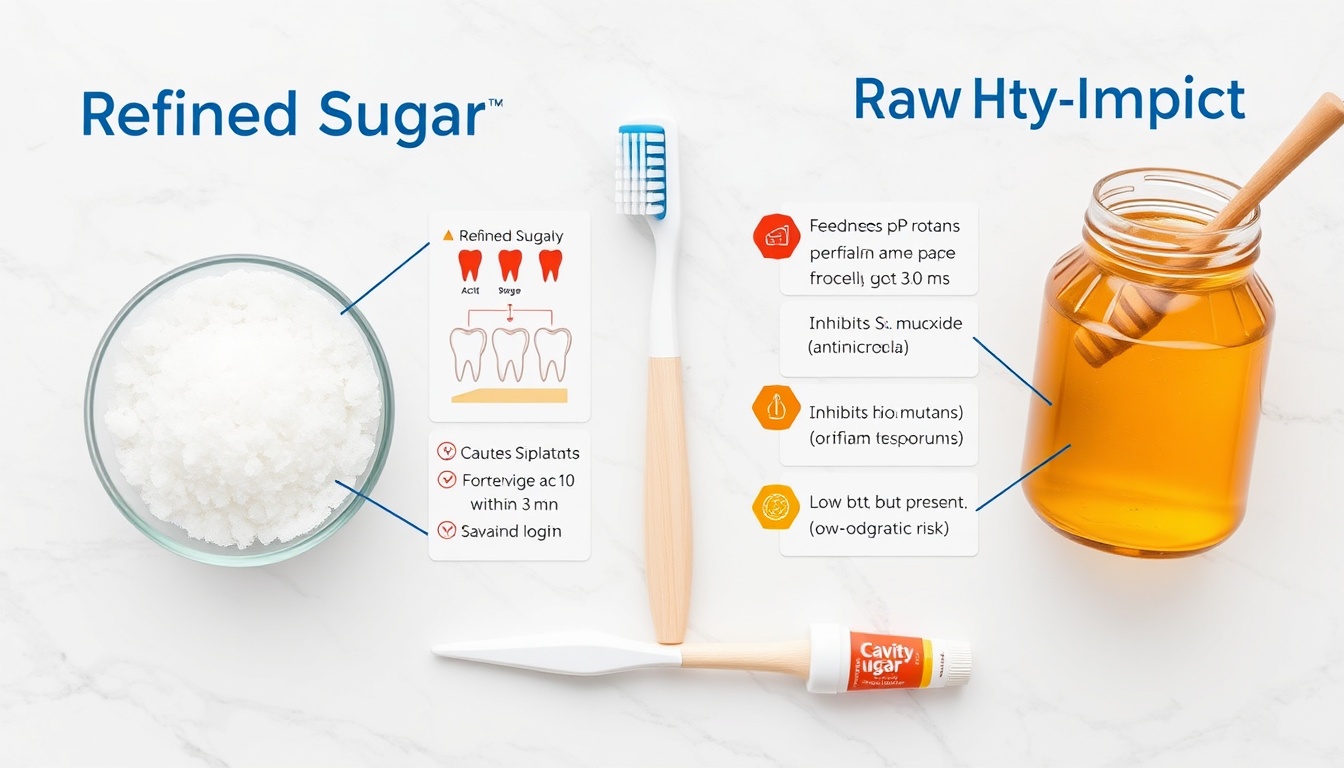
If you're choosing between honey and table sugar as a sweetener, there are relevant dental differences — though neither is "good" for teeth in the traditional sense.
- Cariogenic potential — Sucrose (table sugar) is generally considered more cariogenic than honey. A 2011 study in Caries Research found that sucrose promoted significantly more S. mutans biofilm formation than glucose-fructose mixtures at equivalent concentrations. This is because S. mutans uses sucrose to produce glucans — sticky extracellular polysaccharides that form the structural matrix of dental plaque. Honey's sugars (free glucose and fructose) are less effective substrates for glucan production.
- Antibacterial compounds — Table sugar has zero antibacterial properties. Honey contains hydrogen peroxide, polyphenols, and (in manuka) MGO that actively inhibit the bacteria responsible for cavities and gum disease. Buckwheat honey ($15-25, ORAC 16,000+ μmol TE/100g) offers the highest antioxidant content of common varieties, while even budget-friendly clover honey ($8-15) retains meaningful antibacterial activity when raw. This partially offsets honey's sugar content from a dental perspective.
- pH buffering — Some honeys contain mineral salts that provide mild pH buffering, potentially slowing the acid attack on enamel. Refined sugar has no buffering capacity.
- Quantity typically consumed — People generally use less honey than sugar because it's sweeter per volume (honey is about 1.5x sweeter than table sugar by weight due to its fructose content). Using honey as a sugar substitute at recommended 2:3 ratios means less total sugar exposure per serving.
Pro Tip
Neither honey nor sugar is "good" for teeth. The comparison is relative — honey is likely less harmful than equivalent amounts of sucrose due to lower glucan production and antibacterial properties, but it still poses cavity risk if consumed frequently without oral hygiene.
How to Enjoy Honey While Protecting Your Teeth
You don't need to give up honey for dental health. These evidence-based strategies minimize cavity risk while letting you enjoy honey's nutritional and health benefits.
- Consume honey with meals, not between them — Saliva flow is highest during meals, providing natural buffering and remineralization. Snacking on honey between meals exposes teeth to acid attacks without adequate saliva protection. The frequency of sugar exposure matters more than the total amount for cavity risk.
- Don't let honey linger on teeth — Honey's viscosity is its biggest dental disadvantage. Follow honey consumption with water to rinse sugar residue from tooth surfaces. For honey in tea or coffee, the liquid itself helps wash honey off teeth.
- Wait 30 minutes before brushing — Acid from bacterial sugar fermentation temporarily softens enamel. Brushing immediately after eating honey can abrade this softened enamel. Wait 30 minutes for saliva to remineralize the surface, then brush with fluoride toothpaste.
- Use honey in liquid form rather than sticky form — Honey water, honey in tea, or honey dissolved in warm drinks clears teeth faster than eating honey straight from a spoon, spreading it on toast, or chewing honeycomb. Less contact time means less bacterial acid production. Lighter varieties like acacia honey ($12-20, GI ~32) and wildflower honey ($10-18) dissolve faster in beverages than thicker dark honeys.
- Rinse with water after eating honeycomb — Eating honeycomb involves extended chewing that presses beeswax and honey into tooth surfaces and between teeth. Always rinse thoroughly with water afterward.
- Maintain excellent oral hygiene — Brush twice daily with fluoride toothpaste, floss daily, and see your dentist regularly. If your oral hygiene is solid, moderate honey consumption poses minimal additional cavity risk.
Honey for Oral Health: Therapeutic Uses
Beyond simply minimizing harm, certain honey preparations may actively support oral health when used correctly.
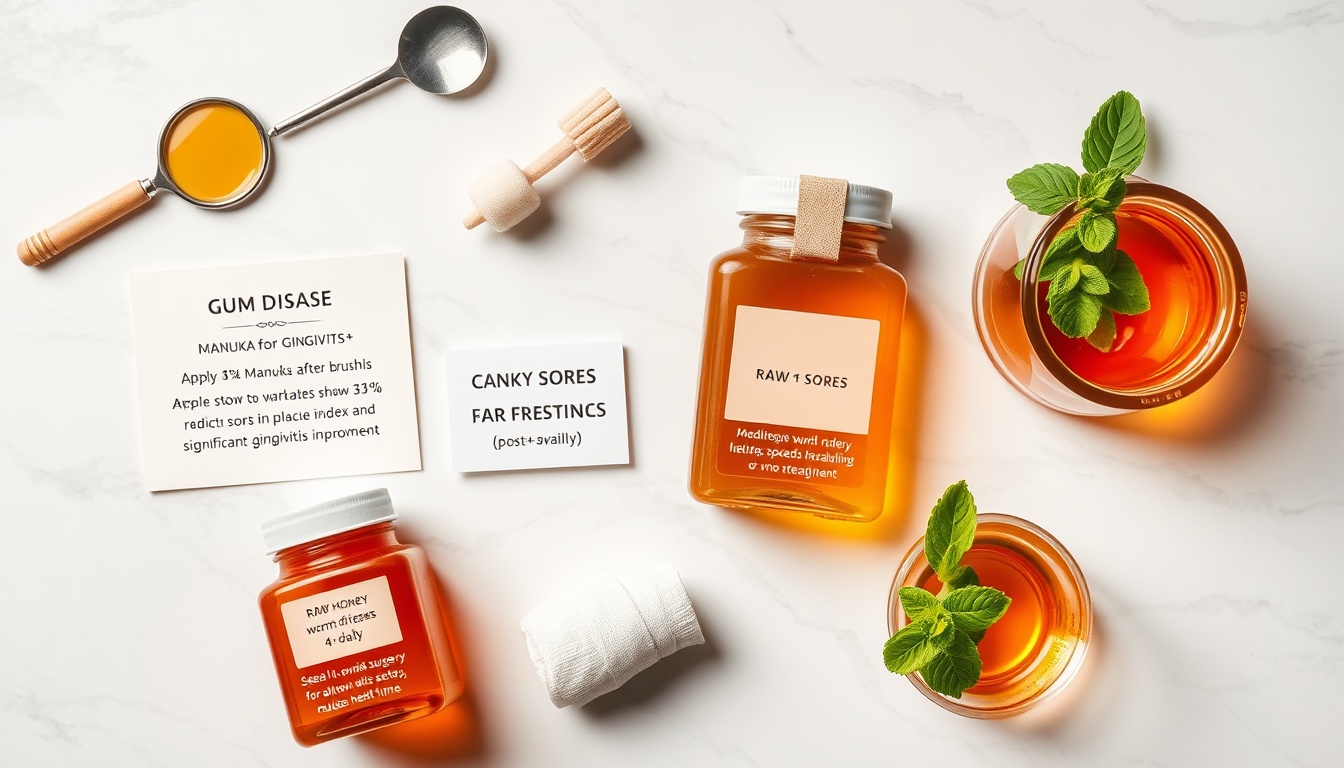
- Manuka honey for gum inflammation — Apply a small amount of UMF 15+ manuka honey ($35-60+) directly to inflamed gums after brushing. The antibacterial and anti-inflammatory properties can supplement standard periodontal care. Some studies used this as a daily adjunct for 21-28 days with positive results.
- Honey for mouth ulcers (canker sores) — A 2014 RCT in Quintessence International found that honey applied topically to aphthous ulcers reduced pain, size, and healing time compared to no treatment. Honey's wound healing properties — osmotic fluid management, antimicrobial protection, anti-inflammatory effects — apply to oral soft tissue wounds.
- Honey for post-extraction healing — Some dental studies have investigated honey-based dressings for dry socket (alveolar osteitis) prevention after tooth extraction. A 2016 study in the Nigerian Journal of Clinical Practice found honey dressings reduced dry socket incidence. However, this should only be done under dentist supervision.
- Honey as a pre-brushing rinse — Some oral health researchers have proposed dilute honey rinses (1:5 honey-to-water ratio) as a pre-brushing antibacterial treatment. The theory is that honey's antimicrobial compounds reduce bacterial load before mechanical cleaning. Evidence is preliminary, and this is not a standard recommendation.
Pro Tip
Therapeutic oral applications of honey should complement standard dental care, not replace it. Always maintain regular brushing, flossing, and dental checkups. Discuss honey-based oral care with your dentist, especially if you have active cavities or advanced gum disease.
Special Populations
Some groups need to be particularly mindful of honey's dental effects.
- Children — Children have thinner enamel and are more cavity-prone. Honey before bed for sleep is a popular remedy, but should always be followed by tooth brushing. Never send children to bed with honey residue on their teeth. Children under 12 months should never have honey due to botulism risk.
- People with dry mouth (xerostomia) — Saliva is the primary natural defense against acid attacks. People with reduced saliva flow (from medications, Sjögren's syndrome, radiation therapy, or aging) face higher cavity risk from all sugars, including honey. Extra caution with sticky honey consumption is warranted.
- People with active cavities — If you currently have untreated cavities, bacteria are already abundant in affected areas. Additional sugar exposure from honey feeds these established bacterial colonies. Get cavities treated before resuming regular honey consumption.
- People with dental appliances — Braces, retainers, partial dentures, and other appliances create additional surfaces where honey can adhere and bacteria can accumulate. Thorough cleaning after honey consumption is essential.
- Diabetes note — Honey is a fast-acting carbohydrate. The honey carbohydrate and label guide explains label-based carbohydrate counting; treatment and medication decisions belong in an individualized care plan.
The Bottom Line
Honey is a sugar that can cause cavities — that dental concern is legitimate and shouldn't be dismissed. However, raw honey also contains antibacterial compounds (hydrogen peroxide, polyphenols, and MGO in manuka) that actively inhibit the bacteria responsible for cavities and gum disease. Research shows honey is likely less cariogenic than equivalent amounts of table sugar due to lower glucan production and its antibacterial properties.
This section does not establish a universal or medical honey dose for this purpose. Use the daily added-sugar guide to count honey with other added or free sugars.