
Why Honey May Help with Nausea
Nausea — that unpleasant sensation of needing to vomit — can be triggered by pregnancy, motion sickness, food poisoning, medication side effects, surgery, migraines, and dozens of other causes. While anti-nausea medications are effective, many people seek gentler alternatives, particularly during pregnancy when medication options are limited.
Honey has been used as a stomach-soothing remedy for centuries across multiple cultural traditions. Modern research suggests several mechanisms through which it may genuinely help — though the evidence is strongest when honey is combined with other anti-nausea agents like ginger rather than used alone.
This guide examines what the science actually supports, which honey remedies are most effective for different types of nausea, and provides safe dosing guidelines for all populations including pregnant women.
How Honey Addresses Nausea: 5 Mechanisms
Honey may reduce nausea through several complementary pathways:
**1. Blood sugar stabilization:** Low blood sugar (hypoglycemia) is a common nausea trigger — particularly during early pregnancy, after prolonged fasting, or during illness when eating is difficult. Honey's dual-speed sugar delivery (fast glucose for immediate blood sugar correction plus sustained fructose for ongoing energy) quickly stabilizes blood sugar without requiring a full meal. This is especially relevant for morning sickness, where eating on an empty stomach worsens nausea but appetite is absent.
**2. Gastroprotective coating:** Honey's viscous texture physically coats the stomach lining, creating a temporary protective barrier against gastric acid. This is particularly helpful when nausea accompanies acid reflux or GERD. A 2006 study in BMC Complementary and Alternative Medicine found that honey demonstrated gastroprotective effects comparable to sucralfate in animal models, reducing gastric mucosal damage.
**3. Anti-inflammatory gut effects:** Nausea often accompanies gut inflammation — from food poisoning, gastritis, medication irritation, or inflammatory conditions. Honey's polyphenols inhibit the NF-κB inflammatory pathway in gastric tissue, and its prebiotic oligosaccharides support the gut microbiome that plays a crucial role in nausea signaling via the gut-brain axis.
**4. Antimicrobial action against gut pathogens:** When nausea is caused by bacterial gastroenteritis (food poisoning), honey's broad-spectrum antimicrobial properties — hydrogen peroxide production, low pH, high osmolarity, and polyphenol activity — help combat the pathogenic bacteria responsible. Honey has demonstrated activity against common foodborne pathogens including E. coli, Salmonella, and H. pylori.
**5. Gentle digestibility:** Unlike many foods that can worsen nausea, honey requires minimal digestive effort. Its simple sugars (glucose and fructose) are absorbed rapidly without complex enzymatic breakdown, providing calories and energy when the stomach rejects more complex foods. This makes it one of the few calorie sources tolerable during severe nausea episodes.
Get the Honey Buyer's Cheat Sheet (free PDF)
16 varieties on one page — color, flavor, best use and what a fair price looks like — from the 268 honeys we track.
Honey and Ginger: The Evidence-Based Anti-Nausea Combination
The strongest evidence for using honey to combat nausea involves combining it with ginger — and the science behind this pairing is substantial.
**Ginger's anti-nausea mechanisms:** Ginger contains gingerols and shogaols that work through multiple nausea pathways: blocking serotonin (5-HT3) receptors in the gut and brainstem — a receptor pathway also targeted by prescription anti-nausea medications — accelerating gastric emptying (prokinetic effect), and reducing gut inflammation. A 2020 meta-analysis in the Journal of the Academy of Nutrition and Dietetics analyzed 12 RCTs and confirmed that ginger significantly reduces nausea and vomiting across multiple causes. See our honey and ginger guide for the complete evidence.
**Why honey improves ginger's effectiveness:** Raw ginger is intensely spicy and difficult to consume during nausea — honey smooths the flavor, making it palatable. Honey adds blood sugar stabilization that ginger does not provide. Honey's gastroprotective coating complements ginger's prokinetic effects. And honey provides easily digestible calories that help prevent the hypoglycemia that worsens nausea.
**The classic ginger-honey remedy:** Steep fresh grated ginger in hot water for 5-10 minutes. Let cool to a comfortable drinking temperature (below 60°C to preserve honey's enzymes), then stir in raw honey. Sip slowly.
Pro Tip
Some people prepare ginger-honey tea the night before and refrigerate it, then sip it cold first thing in the morning before getting up — the idea being to ease the blood sugar drop and stomach acid surge that can trigger morning nausea. This is anecdotal; talk to your prenatal care provider about managing morning sickness.
Honey for Morning Sickness During Pregnancy
Morning sickness affects 70-80% of pregnant women, typically peaking between weeks 6-12. Many standard anti-nausea medications are restricted during pregnancy, making natural alternatives particularly valuable.
**Is honey safe during pregnancy?** Yes. Honey is safe for pregnant women — the botulism concern applies only to infants under 12 months, not to adults or developing fetuses. The adult digestive system effectively neutralizes Clostridium botulinum spores. See our honey during pregnancy guide for comprehensive safety information.
**Why honey helps morning sickness specifically:** Morning sickness is driven partly by hormonal changes (rising hCG and estrogen) and partly by blood sugar fluctuations. Overnight fasting causes blood sugar to drop, and the hormonal changes make the stomach more sensitive to acid. Honey addresses the blood sugar component directly — a small amount before or immediately upon waking provides quick glucose without requiring a full meal.
Morning sickness — Honey is not established as nausea treatment; pregnancy-related vomiting or dehydration needs prenatal clinical advice.
This section does not establish a universal or medical honey dose for this purpose. Use the daily added-sugar guide to count honey with other added or free sugars.
Honey Remedies for Different Types of Nausea
Different nausea triggers respond to different honey-based approaches:
**Motion sickness:** Prepare ginger-honey chews or bring a small jar of honey and ginger tea in a thermos for travel. Take 30 minutes before the journey begins. The ginger targets vestibular-mediated nausea via 5-HT3 receptor blockade, while honey prevents the blood sugar drop that worsens motion sensitivity.
**Food poisoning / stomach bug:** Honey's antimicrobial and gut-soothing properties are most relevant here. Diluted honey water can help with rehydration while providing gentle antimicrobial action. Avoid adding ginger if vomiting is active — ginger's prokinetic effect can initially increase vomiting before reducing it. Seek medical care for signs of dehydration or if symptoms persist.
**Medication-induced nausea:** Many medications (antibiotics, NSAIDs, chemotherapy) cause nausea by irritating the gastric mucosa or triggering central nausea pathways. Honey's gastroprotective coating can help with mucosal irritation. For chemotherapy-induced nausea, discuss honey with your oncologist — honey is generally safe but should be confirmed with your care team.
**Post-surgical nausea:** Post-operative nausea affects 30-50% of surgical patients. A 2016 pilot study in Complementary Therapies in Clinical Practice found that honey inhalation (smelling honey) reduced post-surgical nausea severity in some patients, possibly via olfactory nerve stimulation. When oral intake is permitted post-surgery, small sips of diluted honey water provide gentle nourishment.
**Hangover nausea:** Alcohol-induced nausea involves dehydration, blood sugar disruption, and gut inflammation. Honey addresses all three — glucose rapidly corrects alcohol-induced hypoglycemia, the liquid (when consumed in water) rehydrates, and polyphenols reduce inflammatory mediators. The honey-ginger combination is particularly effective here.
Honey remains a fast-acting carbohydrate; this treatment-oriented section does not establish a diabetes protocol.
5 Honey-Based Anti-Nausea Recipes
These remedies use honey as a central component, combined with other evidence-based anti-nausea ingredients:
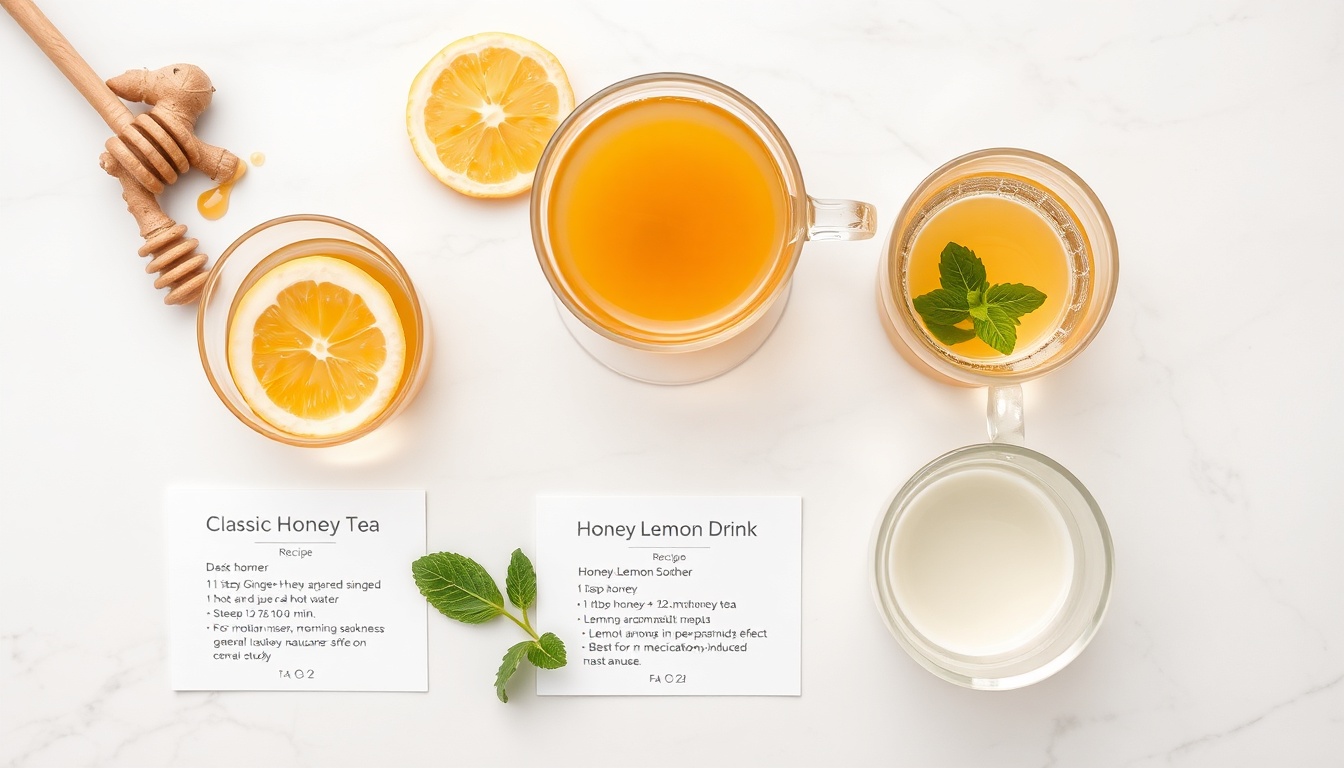
**1. Classic ginger-honey tea:** Steep grated fresh ginger in hot water for 5-10 minutes. Strain. Let cool slightly, add raw honey. Sip slowly. Used for: morning sickness, motion sickness, general nausea.
**2. Honey-lemon calm drink:** Juice half a lemon into cool water. Stir in honey. The citric acid scent can reduce nausea through olfactory pathways (a 2014 Iranian Journal of Nursing and Midwifery Research study found lemon aromatherapy reduced pregnancy nausea by 33%). See our honey and lemon guide.
**3. Honey-mint soother:** Steep fresh peppermint leaves in hot water for 5 minutes. Cool slightly, add honey. Peppermint's menthol relaxes the lower esophageal sphincter and has mild anti-spasmodic effects on the GI tract. Used for: medication-induced nausea, digestive nausea.
**4. Honey-apple cider vinegar tonic:** Mix apple cider vinegar with honey in water. The acetic acid may help normalize stomach acid production, which is sometimes low (not high) during nausea. Used for: post-meal nausea, bloating-associated nausea.
**5. Frozen honey-ginger pops:** Blend honey, grated ginger, water, and lemon juice. Pour into ice pop molds and freeze. The cold temperature provides additional nausea relief through cold-receptor stimulation, and the frozen format allows very slow consumption when sipping is difficult. Used for: morning sickness (make a batch and keep them ready); discuss with your care team before trying during chemotherapy.
Best Honey Types for Nausea
Different honeys offer different advantages for nausea relief:
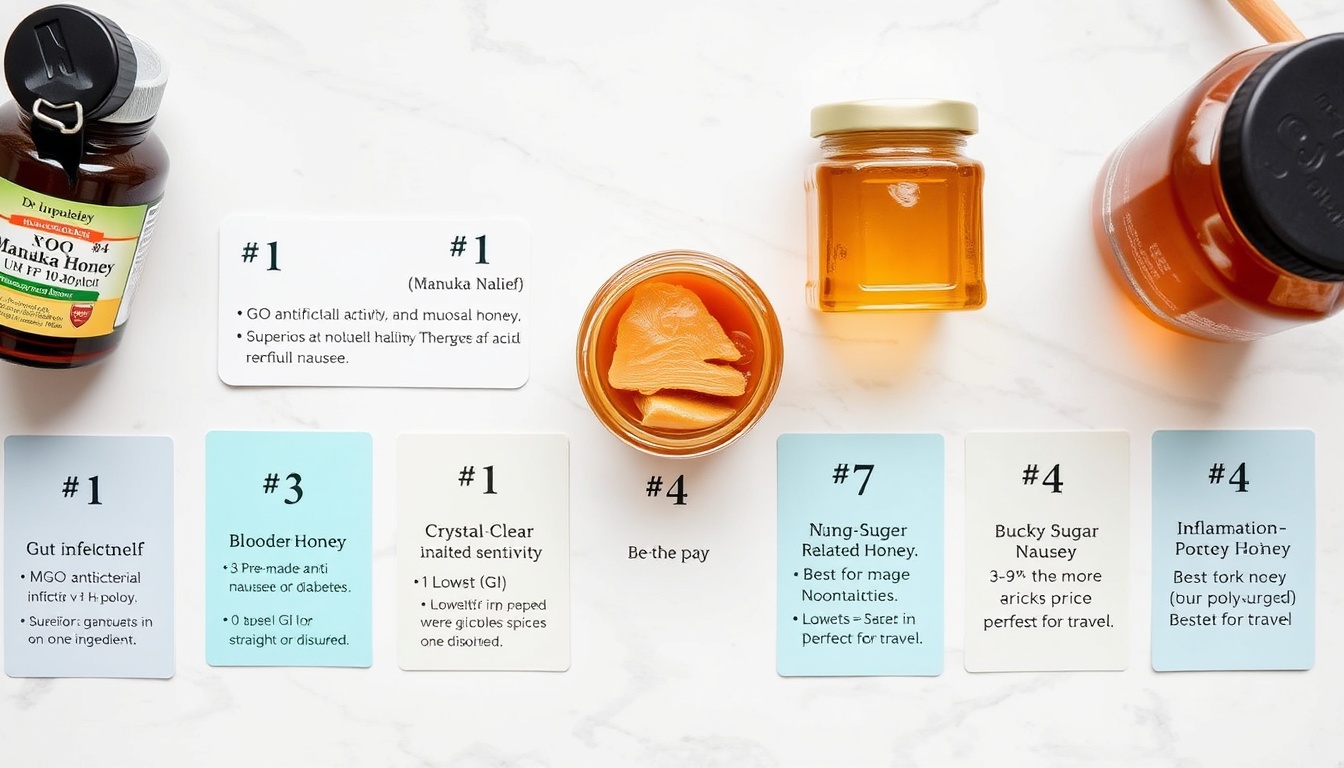
- **Manuka honey (UMF 10+, $35-60+):** Best for nausea caused by gastric infections, H. pylori, or bacterial gastroenteritis due to its superior non-peroxide antimicrobial activity (methylglyoxal). Also excellent for acid reflux-associated nausea due to strong mucosal healing properties
- **Ginger-infused honey:** Pre-made ginger honey provides anti-nausea compounds in a convenient single ingredient — straight or dissolved in water. Ideal for travel and on-the-go use
- These nausea claims do not establish that any retail honey is medically preferred for diabetes.
- **Buckwheat honey ($15-25, ORAC 16,000+):** Best for nausea accompanied by inflammation (post-surgical, chemotherapy-related) due to 3-9x higher antioxidant and anti-inflammatory polyphenol content than lighter honeys
- **Any raw, unprocessed honey:** For general nausea relief, the variety matters less than the processing. Wildflower honey ($10-18) and clover honey ($8-15) are affordable everyday options. Raw honey retains active enzymes and higher prebiotic content than pasteurized commercial honey, making it more effective for gut-related nausea
When Honey Is Not Enough: Red Flags
While honey-based remedies are helpful for mild to moderate nausea, seek medical attention if you experience:
- **Persistent vomiting lasting more than 24 hours** — Risk of dehydration and electrolyte imbalance. During pregnancy, hyperemesis gravidarum (severe pregnancy vomiting) affects 0.5-2% of pregnancies and requires medical management
- **Inability to keep any fluids down for more than 12 hours** — Dehydration risk is significant, especially in children, elderly, and pregnant women
- **Blood in vomit or severe abdominal pain** — May indicate gastric ulcer, gastritis, or other conditions requiring medical evaluation
- **Nausea after head injury** — Could indicate concussion or more serious neurological involvement
- **Nausea with high fever (>101°F / 38.3°C)** — Suggests infection that may need antibiotic treatment
- **Unexplained nausea lasting more than 2 weeks** — May indicate underlying conditions that need diagnosis
- **Signs of severe dehydration** — Dark urine, dizziness on standing, dry mouth, rapid heartbeat, confusion
Honey vs Other Natural Anti-Nausea Remedies
How does honey compare to other commonly recommended natural nausea treatments?
- **Honey vs ginger alone:** Ginger has stronger direct anti-nausea evidence (multiple RCTs, meta-analyses). Honey adds blood sugar stabilization, gastroprotective coating, and palatability. The combination is more effective than either alone
- **Honey vs peppermint:** Peppermint works primarily through menthol's smooth muscle relaxation and olfactory nerve stimulation. Honey works through blood sugar, coating, and gut microbiome effects. They address different mechanisms and combine well
- **Honey vs acupressure (P6 wristbands):** Acupressure at the P6 point has modest evidence for motion sickness and post-surgical nausea. Honey provides nutritional support that acupressure cannot. Both can be used simultaneously
- **Honey vs vitamin B6 (for morning sickness):** Vitamin B6 (10-25 mg three times daily) is the first-line recommendation from ACOG for morning sickness. Honey complements B6 by addressing blood sugar and stomach coating, but does not replace it. Ask your OB about B6 supplementation
- **Honey vs ondansetron (Zofran):** Prescription anti-nausea medication is far more potent for severe nausea (chemotherapy, post-surgical). Honey is appropriate for mild-moderate nausea or as an adjunct, not a replacement for medical anti-emetics when they are indicated