Why Honey Belongs in Ginger Tea
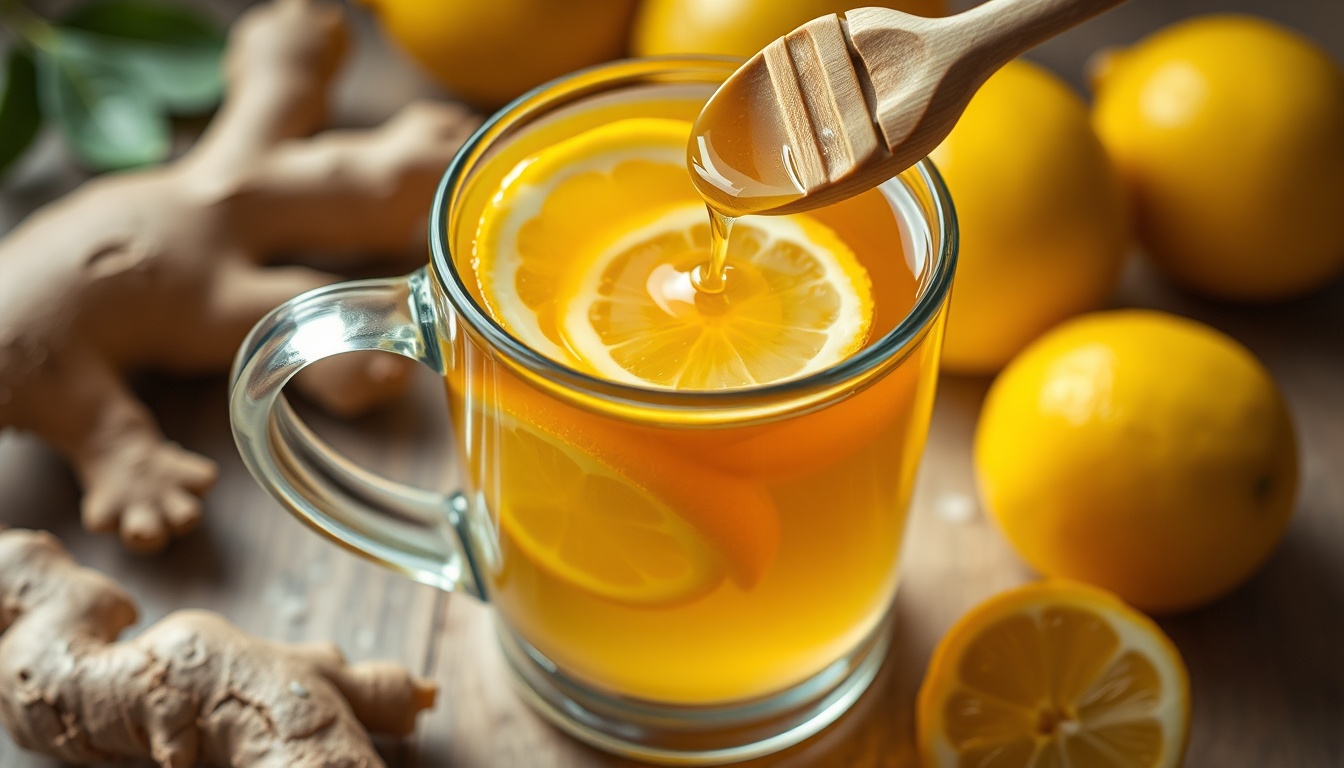
Many ginger tea recipes use sugar or agave, but honey is the best sweetener for ginger tea for three practical reasons.
First, flavor compatibility. Ginger is spicy, sharp, and warming. Honey adds sweetness with floral complexity — over 180 aromatic compounds that soften ginger's bite without masking it. Sugar just dilutes the spice. Honey transforms it.
Second, texture. Honey gives the tea a slightly fuller body compared to sugar-sweetened versions. The dissolved honey creates a smooth, almost silky mouthfeel that makes each sip feel more satisfying and coats the throat gently.
Third, temperature sensitivity. Raw honey contains enzymes, trace pollen, and volatile aromatics that break down at high temperatures. Adding honey after the tea cools slightly (below 160°F) preserves these compounds. This is not a concern with sugar, but it is a meaningful benefit when using quality raw honey.
Choosing the Right Ginger
Fresh ginger root varies more than most people realize. The right choice makes a noticeable difference in your tea.
- Fresh ginger root is essential — dried ground ginger makes a flat, dusty-tasting tea. The volatile oils in fresh ginger (gingerols and shogaols) are what create the warming, spicy sensation. These oils degrade significantly in dried and powdered forms
- Look for ginger with smooth, taut skin and a strong aroma when snapped. Wrinkled, soft ginger is old and has lost much of its potency. The skin should be thin enough to scrape off with a spoon edge
- Young ginger (sometimes called spring ginger) has thinner skin, a milder flavor, and less fiber. It makes a more delicate tea. Mature ginger has thicker skin and more heat — better for a stronger brew
- Store fresh ginger in the refrigerator wrapped in a paper towel inside a zip-lock bag for up to 3 weeks. You can also freeze whole ginger root and grate it directly from frozen — it actually grates more easily when frozen
- For this recipe, 2 inches of ginger (about 1 ounce) makes a moderately spicy tea. Use 3-4 inches for a stronger, more pungent brew. Start mild and increase to your preference
Pro Tip
The easiest way to peel ginger is with the edge of a spoon. The skin comes off cleanly without removing the flavorful flesh just beneath the surface, which a vegetable peeler shaves away.
Get the Honey Buyer's Cheat Sheet (free PDF)
16 varieties on one page — color, flavor, best use and what a fair price looks like — from the 304 honeys we track.
5 Flavor Variations
The base honey ginger tea is a blank canvas. Each variation adds a distinctive character while keeping the warming ginger-honey foundation.
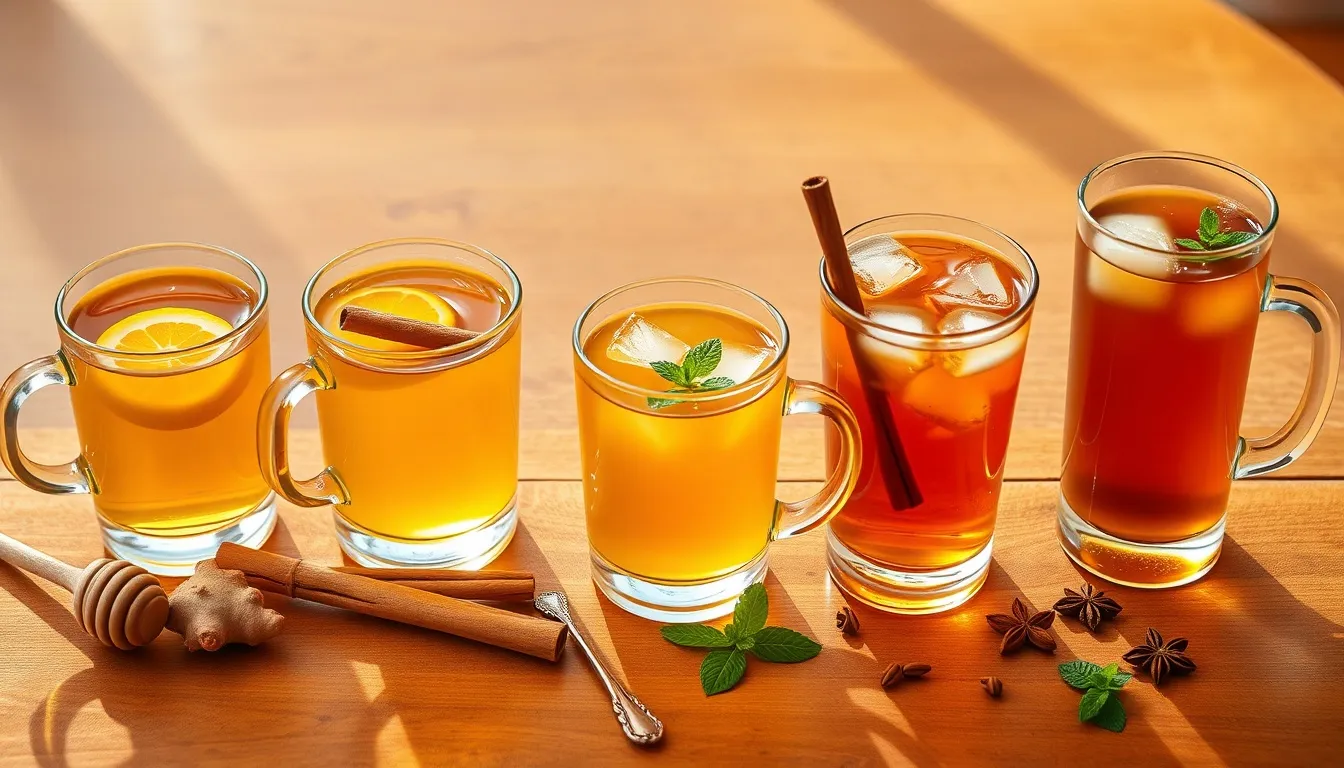
- Honey lemon ginger tea — Double the lemon juice to 2 tablespoons and add a strip of lemon zest to the simmering water. The zest releases citrus oils that complement both the ginger and honey. Use lemon honey for triple citrus layering. This is the classic cold-weather version
- Honey ginger turmeric tea — Add 1/2 teaspoon ground turmeric (or 1 inch fresh turmeric, sliced) and a crack of black pepper to the simmering water. The black pepper enhances turmeric absorption. The earthy turmeric adds warmth without heat. Use a mild clover honey to let the spices shine
- Honey ginger mint tea — After straining, add 4-5 fresh mint leaves to the hot tea and steep for 2 minutes. Remove the mint before adding honey. The cooling mint creates an interesting contrast with the warming ginger. Refreshing served hot or iced
- Honey ginger chai — Add 2 whole cloves, 3 crushed cardamom pods, 1 cinnamon stick, and 3 whole black peppercorns to the simmering water along with the ginger. Simmer for 12-15 minutes instead of 10. Strain and add honey and a splash of warm milk. A caffeine-free alternative to traditional masala chai
- Iced honey ginger tea — Make the base recipe with double the ginger (4 inches) for a concentrated brew. Stir in honey while still warm (it dissolves better). Refrigerate until cold, then pour over ice. Add sparkling water for a honey ginger spritzer. Garnish with fresh mint
Best Honey Varieties for Ginger Tea
The honey variety changes the tea's flavor profile significantly. Here are the best pairings.
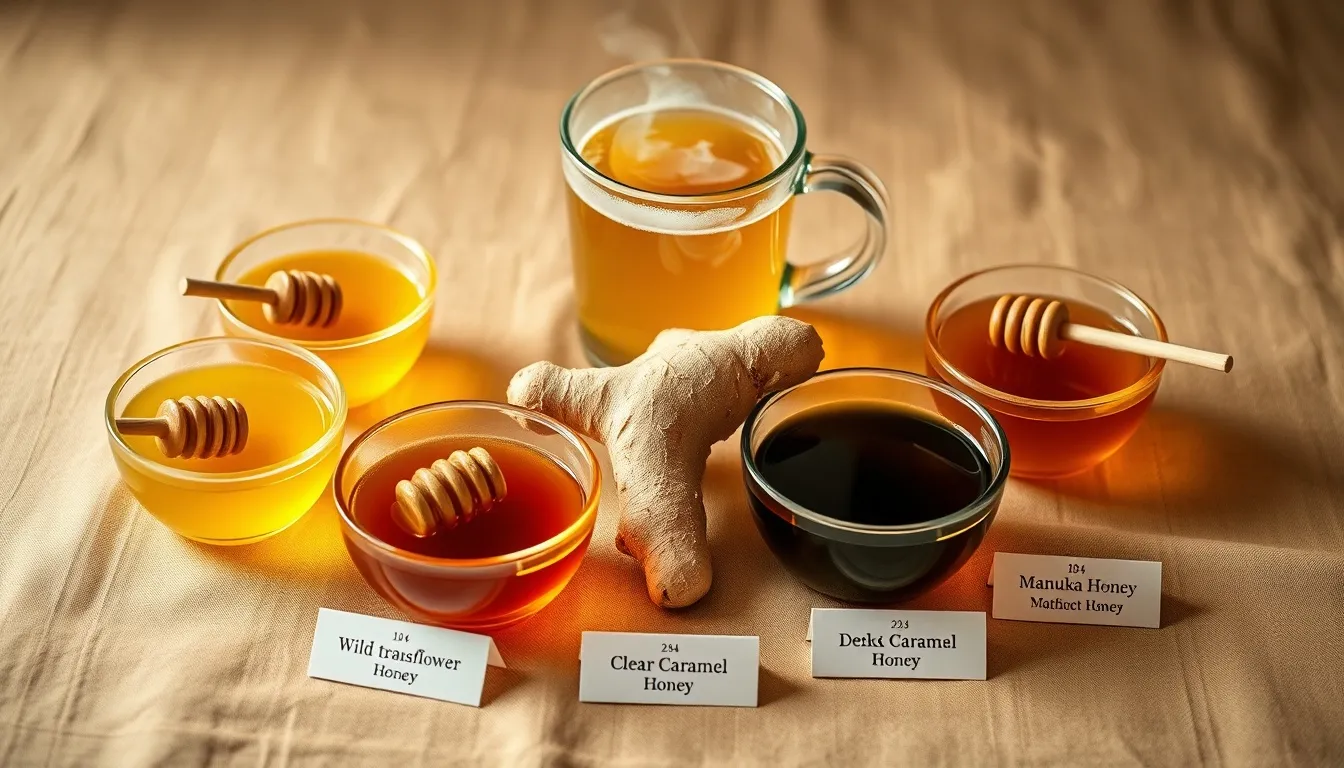
- Wildflower honey — complex floral notes that complement ginger's spiciness. The multidimensional flavor adds depth without competing. This is the best all-around choice for ginger tea
- Clover honey — clean, mild sweetness that lets the ginger dominate. Good for people who want ginger-forward tea where the honey plays a supporting role. The most widely available and affordable option
- Acacia honey — delicate, light floral sweetness that enhances ginger without masking its warmth. The subtle vanilla and almond notes complement the spice beautifully. This is an elegant choice for those who want complexity without heaviness
- Manuka honey — adds a distinctive herbal, slightly medicinal flavor that pairs naturally with the ginger. Many people choose this combination specifically during cold and flu season. Look for UMF-rated manuka for the strongest flavor
- Buckwheat honey — dark, robust, molasses-like sweetness that creates a very warming, almost spiced tea. The bold flavor stands up to extra ginger. Best for the chai variation and anyone who likes intense flavors
- Linden honey — delicate, slightly minty notes that create an unusually elegant ginger tea. The subtle herbal qualities of linden honey echo the ginger without amplifying the heat. Best for the mint variation
- Avoid orange blossom honey in ginger tea — its floral-citrus profile competes with the ginger rather than complementing it, creating a muddled flavor
Getting the Temperature Right for Honey
When you add honey to ginger tea matters more than most people think.
Boiling water (212°F) denatures the enzymes in raw honey — particularly diastase and invertase — and drives off volatile aromatic compounds. The honey still sweetens, but you lose the qualities that make raw honey different from refined sugar.
The optimal temperature window is 140-160°F. At this range, the honey dissolves easily but retains its enzymatic activity and aromatic complexity. After removing your tea from heat, waiting 1-2 minutes typically brings it into this range.
If you are using pasteurized grocery store honey, temperature matters less since the enzymes have already been denatured during processing. But if you are using raw honey — which you should be, given the modest cost difference — the 1-2 minute wait is worth it.
A kitchen thermometer removes the guesswork, but a simple test works too: if you can comfortably hold your finger in the tea for 3 seconds, it is below 160°F and ready for honey.
Making a Large Batch
Honey ginger tea scales easily for the week or for serving a group.
- Ginger concentrate: Simmer 6 inches of sliced ginger in 4 cups of water for 20 minutes (longer simmering for a concentrate). Strain and refrigerate in a sealed jar for up to 1 week. To serve, dilute with equal parts hot water and stir in honey. This saves time on busy mornings
- Honey ginger syrup: Simmer 4 inches of ginger in 1 cup of water and 1 cup of honey for 15 minutes. Strain into a jar. The syrup keeps for 3-4 weeks refrigerated. Add 1-2 tablespoons to hot water for instant honey ginger tea, or use it in cocktails, sparkling water, or drizzled over yogurt
- For a crowd: Use 1 inch of ginger and 1 tablespoon of honey per person. Simmer all the ginger together, strain into a teapot or carafe, then let guests add their own honey to taste. Set out lemon wedges, cinnamon sticks, and mint sprigs as garnishes
- Cold-brew method: Place sliced ginger in cold water in the refrigerator for 12-24 hours. The cold extraction produces a milder, less spicy tea with more subtle ginger flavor. Strain and add honey. Good for people who find hot-brewed ginger tea too intense
Common Mistakes to Avoid
Honey ginger tea is simple, but these errors reduce its quality.
- Boiling ginger too long — simmering beyond 15 minutes extracts bitter compounds from the ginger root, especially from the skin. Ten minutes is the sweet spot for flavor without bitterness. For stronger tea, use more ginger rather than simmering longer
- Adding honey to boiling water — as discussed, this denatures raw honey's enzymes and volatile aromatics. Always wait for the tea to cool to 150-160°F. A brief pause is all it takes to preserve what makes raw honey valuable
- Using ground ginger instead of fresh — dried ground ginger makes a flat, one-dimensional tea that tastes like ginger-flavored hot water. Fresh ginger contains volatile oils that create the complex, warming sensation. There is no substitute
- Slicing ginger too thick — thick coins release less flavor into the water. Slice 1/8 inch thin or grate the ginger for maximum extraction. The more surface area exposed, the more ginger flavor in your tea
- Not enough ginger — a single small slice in a large mug produces barely-ginger-flavored water. Two inches of ginger for 2 cups is the baseline. You can always dilute a strong tea but you cannot fix a weak one after the fact