Why Honey Is the Best Natural Smoothie Sweetener
Most smoothie recipes rely on refined sugar, agave, or flavored protein powders for sweetness. Honey outperforms all of them — and the reasons go beyond taste.
Raw honey dissolves instantly in cold liquids when blended, unlike granulated sugar that leaves a gritty texture. It contains over 180 flavor compounds that add floral complexity to smoothies, not just one-dimensional sweetness. And because honey is sweeter per tablespoon than sugar, you use less of it to reach the same perceived sweetness.
Honey also brings functional benefits to smoothies. Its prebiotic oligosaccharides (FOS and GOS) feed beneficial gut bacteria — turning your smoothie into a gut-health drink. The natural fructose-glucose blend provides both quick and sustained energy, making honey smoothies ideal for pre-workout fuel or morning energy without the crash.
Classic Honey Smoothie: The Base Recipe
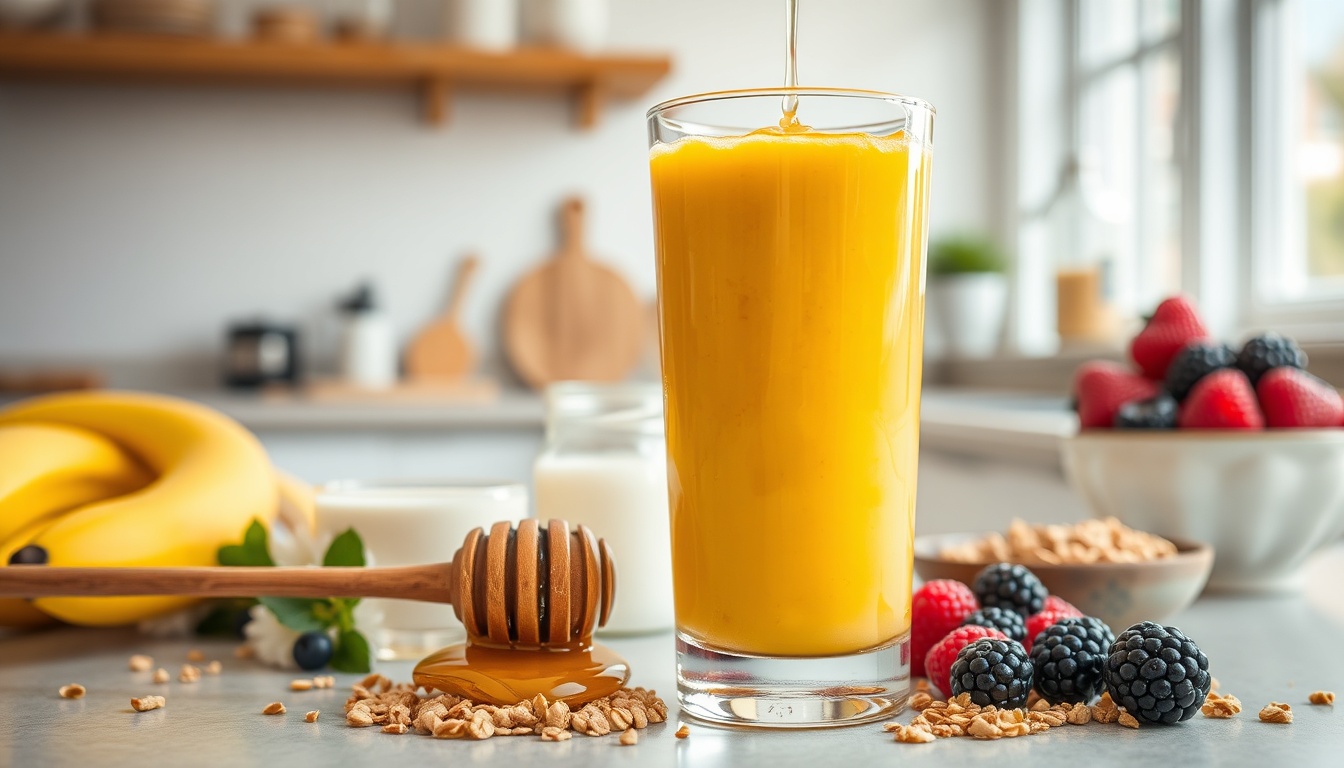
This versatile base works on its own or as the starting point for all 8 variations below. It produces a thick, creamy smoothie with balanced sweetness.
- **Ingredients (1 large smoothie):** 1 cup frozen banana slices (about 1 large banana); 1/2 cup Greek yogurt (or dairy-free alternative); 3/4 cup milk (dairy, oat, or almond); 1 tablespoon raw honey (clover or wildflower); 1/2 cup ice (optional, for extra thickness).
- **Step 1: Add liquids first** — Pour milk into the blender, then add honey. Adding liquids first prevents ingredients from sticking to the bottom and ensures the honey incorporates evenly.
- **Step 2: Add soft ingredients** — Add yogurt and any soft fruits.
- **Step 3: Add frozen ingredients on top** — Frozen banana and ice go in last. This layering creates a vortex that pulls everything down into the blades.
- **Step 4: Blend in stages** — Pulse 3-4 times to break up frozen chunks, then blend on high for 30-45 seconds until completely smooth. Scrape down the sides once if needed.
Pro Tip
Freeze ripe bananas in advance: peel, slice into 1-inch rounds, spread on a parchment-lined baking sheet, freeze for 2 hours, then transfer to a freezer bag. They keep for 3 months and make any smoothie thick and creamy without extra ice.
Get the Honey Buyer's Cheat Sheet (free PDF)
16 varieties on one page — color, flavor, best use and what a fair price looks like — from the 304 honeys we track.
Choosing the Best Honey for Smoothies
Since honey is not heated in smoothies, you taste the full flavor profile of whatever variety you choose. This makes honey selection more impactful in smoothies than in baked goods.
- **Clover honey ($9-15)** — Mild and clean with light floral notes. The most versatile choice — works in every smoothie without overpowering other flavors. Best for: kids, picky eaters, or when you want the fruit to be the star.
- **Wildflower honey ($13-24)** — Slightly more complex than clover with meadow-like floral undertones. Adds depth without dominating. Best for: berry smoothies, tropical blends.
- **Orange blossom honey ($12-24)** — Bright citrus notes that complement tropical and citrus-based smoothies beautifully. Best for: mango, pineapple, or citrus smoothies.
- **Buckwheat honey ($9-23)** — Dark, malty, and robust with. Use sparingly (2 teaspoons instead of 1 tablespoon) as it has a strong flavor. Best for: chocolate, peanut butter, or coffee smoothies.
- Carbohydrate note — Honey remains an added-sugar carbohydrate. Include the amount used in this recipe when counting total carbohydrate per serving; the honey carbohydrate and label guide explains the jar-label workflow.
- **Manuka honey ($29-71)** — Earthy, slightly medicinal. An upgrade when you want the immune-supporting MGO benefits. Best for: immune-supporting or post-illness recovery smoothies.
8 Honey Smoothie Recipes
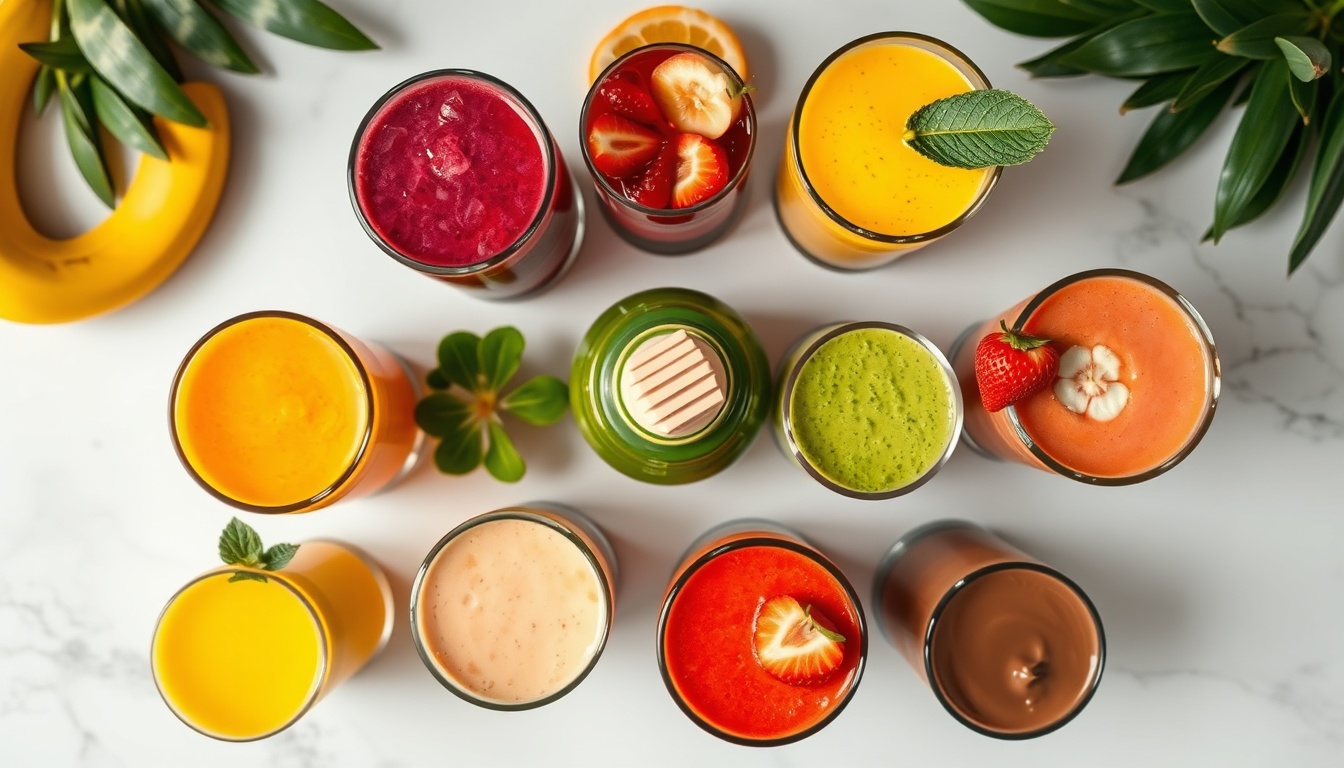
Each recipe builds on the base technique above. All produce one large (16-20 oz) smoothie.
- **1. Tropical honey mango** — 1 cup frozen mango chunks, 1/2 frozen banana, 1/2 cup coconut milk, 1/4 cup orange juice, 1 tablespoon orange blossom honey ($12-24), 1 tablespoon shredded coconut. Blend until smooth. The mango and honey create a rich tropical sweetness without any added sugar.
- **2. Berry antioxidant blast** — 1 cup frozen mixed berries (strawberry, blueberry, raspberry), 1/2 frozen banana, 1/2 cup Greek yogurt, 3/4 cup milk, 1 tablespoon wildflower honey. The deep berry color signals the high anthocyanin content — powerful antioxidants that pair with honey's polyphenols.
- **3. Green honey smoothie** — 2 cups baby spinach (packed), 1 frozen banana, 1/2 avocado, 3/4 cup almond milk, 1 tablespoon honey, juice of 1/2 lemon. The banana and honey completely mask the spinach flavor while you get a full serving of greens. The avocado adds creaminess and healthy fats.
- **4. Peanut butter honey protein** — 1 frozen banana, 2 tablespoons natural peanut butter, 1 cup milk, 1 tablespoon buckwheat honey ($9-23), 1 scoop vanilla protein powder (optional). A post-workout powerhouse with 20-30g protein. The buckwheat honey adds malty depth with that complement peanut butter perfectly.
- **5. Honey banana oat** — 1 frozen banana, 1/3 cup rolled oats (soaked in milk for 5 minutes), 1/2 cup Greek yogurt, 3/4 cup milk, 1 tablespoon honey, 1/2 teaspoon cinnamon, pinch of nutmeg. The oats add fiber and make this smoothie filling enough to replace breakfast entirely.
- **6. Honey coffee mocha** — 1 frozen banana, 1/2 cup cold brew coffee, 1/2 cup milk, 1 tablespoon cocoa powder, 1 tablespoon honey, 1/2 cup ice. A caffeinated smoothie that doubles as a healthy iced mocha. The honey rounds out the coffee bitterness better than sugar does.
- **7. Honey ginger immunity** — 1 frozen banana, 1 cup frozen pineapple, 1-inch piece fresh ginger (peeled), 1/2 cup coconut water, 1/2 cup orange juice, 1 tablespoon manuka honey ($29-71), 1/4 teaspoon turmeric. An immune-supporting smoothie with the anti-inflammatory triple combination of ginger, turmeric, and honey.
- **8. Honey yogurt vanilla** — 1 cup frozen strawberries, 3/4 cup vanilla Greek yogurt, 1/2 cup milk, 1 tablespoon honey, 1 teaspoon vanilla extract, 1 tablespoon chia seeds. The simplest recipe with the highest protein content. Chia seeds add omega-3s and thicken the smoothie as it sits.
Honey Smoothies for Specific Goals
The beauty of honey smoothies is how easily they adapt to different nutritional goals. Here are evidence-based combinations for common needs.
- **Pre-workout energy (30-60 min before)** — Use the honey banana oat or tropical mango recipe. The combination of honey's fast-absorbing fructose and banana's slower-digesting starch provides both immediate and sustained energy. Research from the University of Memphis found that honey performed comparably to commercial energy gels for athletic performance.
- **Post-workout recovery** — Use the peanut butter protein recipe. The 3:1 carb-to-protein ratio (from honey + banana + protein powder) is the research-backed window for muscle glycogen replenishment. Adding honey specifically helps because its fructose replenishes liver glycogen while glucose targets muscle glycogen.
- **Gut health** — Add 1 tablespoon of fermented honey or raw honey to any recipe. Honey's prebiotic oligosaccharides feed beneficial Bifidobacterium and Lactobacillus in the colon. Pair with yogurt (probiotics) for a synbiotic combination — prebiotics + probiotics together.
- **Sleep support** — Blend 1 cup warm milk, 1 tablespoon honey, 1/2 frozen banana, 1/4 teaspoon cinnamon, and a pinch of nutmeg. The tryptophan from milk plus honey's insulin response helps shuttle tryptophan across the blood-brain barrier for melatonin production.
- **Anti-inflammatory** — Use the berry antioxidant or ginger immunity recipe. Both combine honey's NF-κB pathway inhibiting polyphenols with additional anti-inflammatory compounds from berries (anthocyanins) or ginger (gingerols).
Smoothie Prep and Storage Tips
Honey smoothies can be part of an efficient meal prep routine if you handle them correctly.
- **Freezer smoothie packs** — Pre-portion all solid ingredients (frozen fruit, spinach, oats, etc.) into individual freezer bags or containers. In the morning, dump a pack into the blender, add liquid and honey, and blend. Total time: under 3 minutes.
- **Fresh storage (up to 24 hours)** — Store in an airtight mason jar or bottle, filled to the very top to minimize air exposure. Refrigerate immediately. Shake or re-blend before drinking. The smoothie will separate — this is normal and does not affect taste or nutrition.
- **Do not freeze blended smoothies** — Freezing a completed smoothie changes the texture dramatically. The water content expands, breaking down the emulsion. When thawed, you get a watery, grainy mess. Freeze the ingredients separately instead.
- **Honey dissolving tip** — If your honey is crystallized, it will still blend smoothly in a high-powered blender. For standard blenders, gently warm crystallized honey for 10 seconds or dissolve it in the milk before adding to the blender.
- **Thickness control** — Too thick: add milk 2 tablespoons at a time. Too thin: add more frozen banana or a handful of ice. The frozen banana is the primary thickener in all these recipes — using fresh (unfrozen) banana produces a thinner, less creamy result.
Honey vs Other Smoothie Sweeteners
How does honey compare to the other sweeteners commonly used in smoothies?
- **Honey vs sugar** — Honey is sweeter per tablespoon (64 calories vs 48, but you use less), dissolves better in cold liquids, and adds flavor complexity. Sugar adds only sweetness with zero nutritional value. Honey provides trace minerals, enzymes, and prebiotic fiber that sugar lacks.
- **Honey vs agave** — Agave has a higher fructose percentage (85% vs honey's 38-40%), which means faster liver processing and less sustained energy. Honey provides enzymes and prebiotics that agave does not. Agave is vegan-friendly; honey is debated.
- **Honey vs maple syrup** — Both are natural sweeteners with trace minerals. Maple syrup has a strong caramel-vanilla flavor that dominates smoothies. Honey is more versatile because lighter varieties blend without overpowering fruit flavors.
- **Honey vs dates** — Dates add fiber and natural sweetness but also add significant volume and can make smoothies gritty if not blended thoroughly. Honey is more efficient: 1 tablespoon sweetens as much as 2-3 Medjool dates without changing the texture.
- **Honey vs no sweetener** — Some fruits (very ripe bananas, mangos, pineapple) are sweet enough on their own. If your fruit is naturally very sweet, skip the honey or reduce to 1 teaspoon. The smoothie will still be good — honey is an enhancement, not a requirement.