About This Recipe
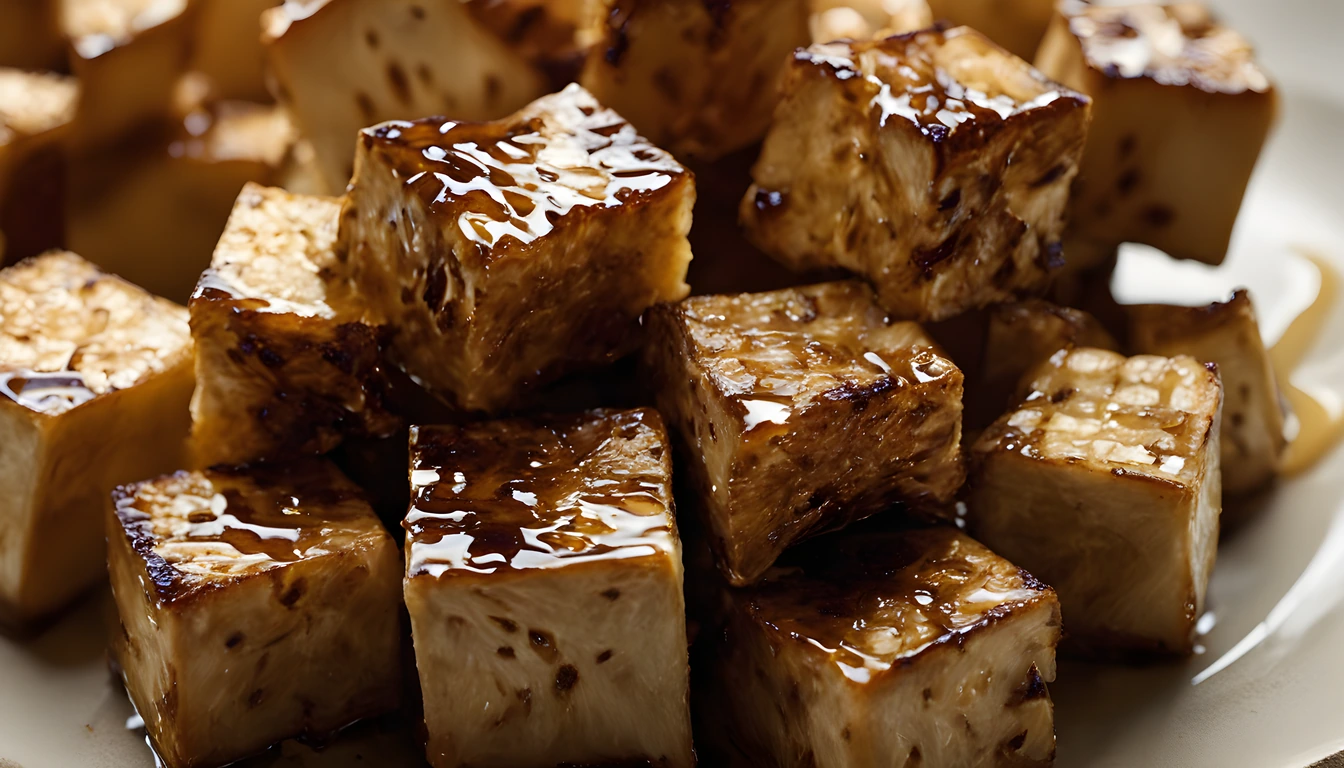
Roasting gives celeriac golden edges and a tender center. A honey-Dijon glaze added near the end brings sweetness and sharpness without spending the full cooking time on the hot pan. Serve the cubes as a warm side with a roast dinner or other winter vegetables.
The honey goes on late on purpose. A glaze applied at the start can scorch before the dense cubes are tender, so the mustard-honey-lemon mixture is tossed through only after the celeriac has had a full 30 minutes of heat.
Weigh the celeriac after peeling and trimming the rough root end. This recipe uses 600 g of edible cubes; the size and shape of a whole root cannot reliably tell you how much will remain after trimming.
Recipe
Honey Mustard Celeriac Recipe: Roasted Celery Root Cubes
Roast celeriac cubes until tender, then finish with a honey-Dijon glaze and lemon. Includes prepared root weight, pan spacing and timing for the late glaze.
7Ingredients
Yield: 4 servings
- 600 g raw peeled celeriac, cut into 2 cm cubes and weighed after trimming
- 27 g olive oil
- 42 g honey
- 30 g WinCo Foods Dijon mustard
- 15 g fresh lemon juice
- 3 g table salt
- 0.5 g ground black pepper
Ingredient amounts scale; instructions show the original batch. Cooking times and pan sizes may need adjustment. Season to taste. Honey grams use US measures at 20°C and 17.5% moisture, a density estimate; weigh your honey for precision.
Instructions
- 1Peel and weighSet the celeriac firmly on a cutting board and cut away the rough skin, root end and tough parings. Follow the crevices to remove embedded dirt and brown patches, then rinse and dry. Weigh 600 g of prepared edible root, using more than one root if necessary.
- 2Cut and seasonHeat the oven to 400°F (204°C). Cut the celeriac into 2 cm cubes, keeping them as even as you can. Toss in a bowl with the 27 g olive oil, 3 g salt and 0.5 g black pepper until every face is lightly coated.
- 3First roastSpread the cubes on a sheet pan in a single layer with clear space between them; use two pans if the cubes crowd. Roast for 30 minutes, removing the pan once at the halfway point to turn the cubes with a spatula and redistribute them.
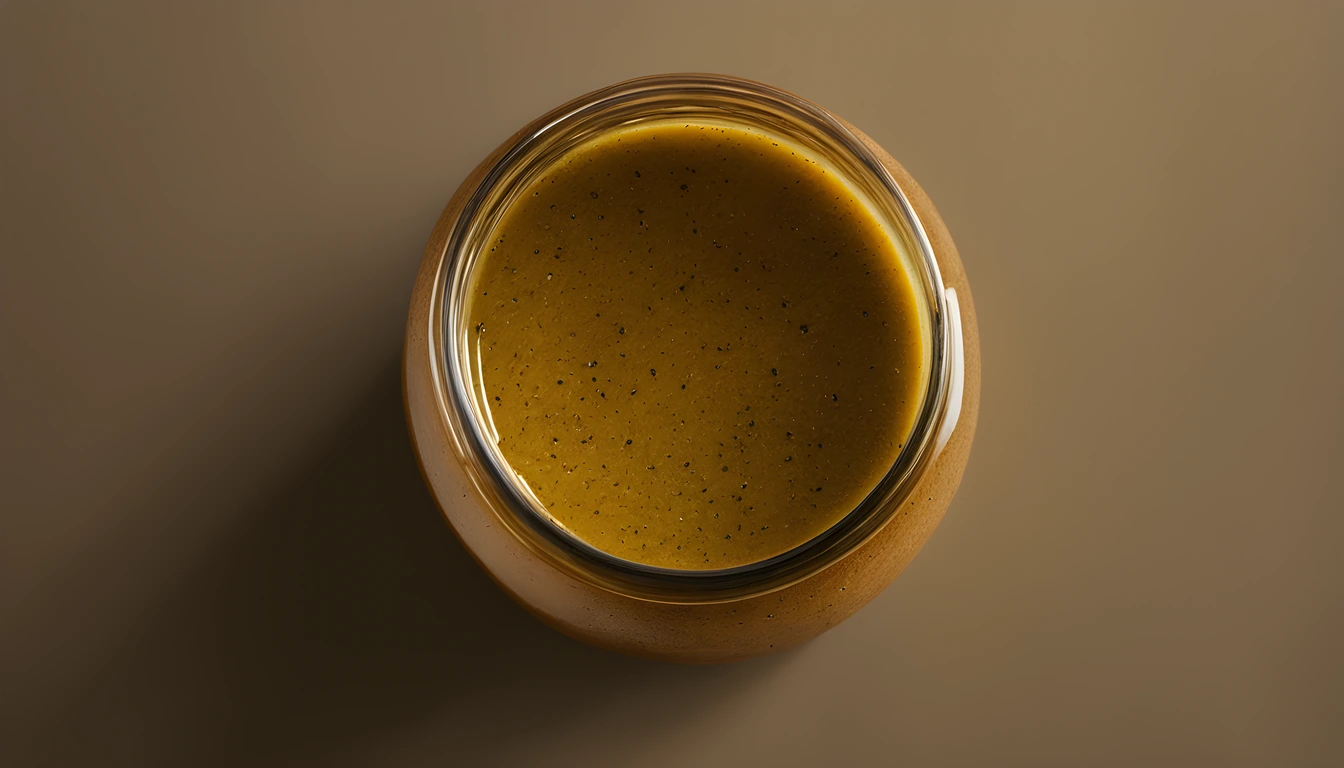
- 4Mix the glazeWhile the celeriac roasts, stir together the 42 g honey, 30 g WinCo Foods Dijon mustard and 15 g lemon juice in a small bowl until smooth. The mixture should be pourable, not stiff.
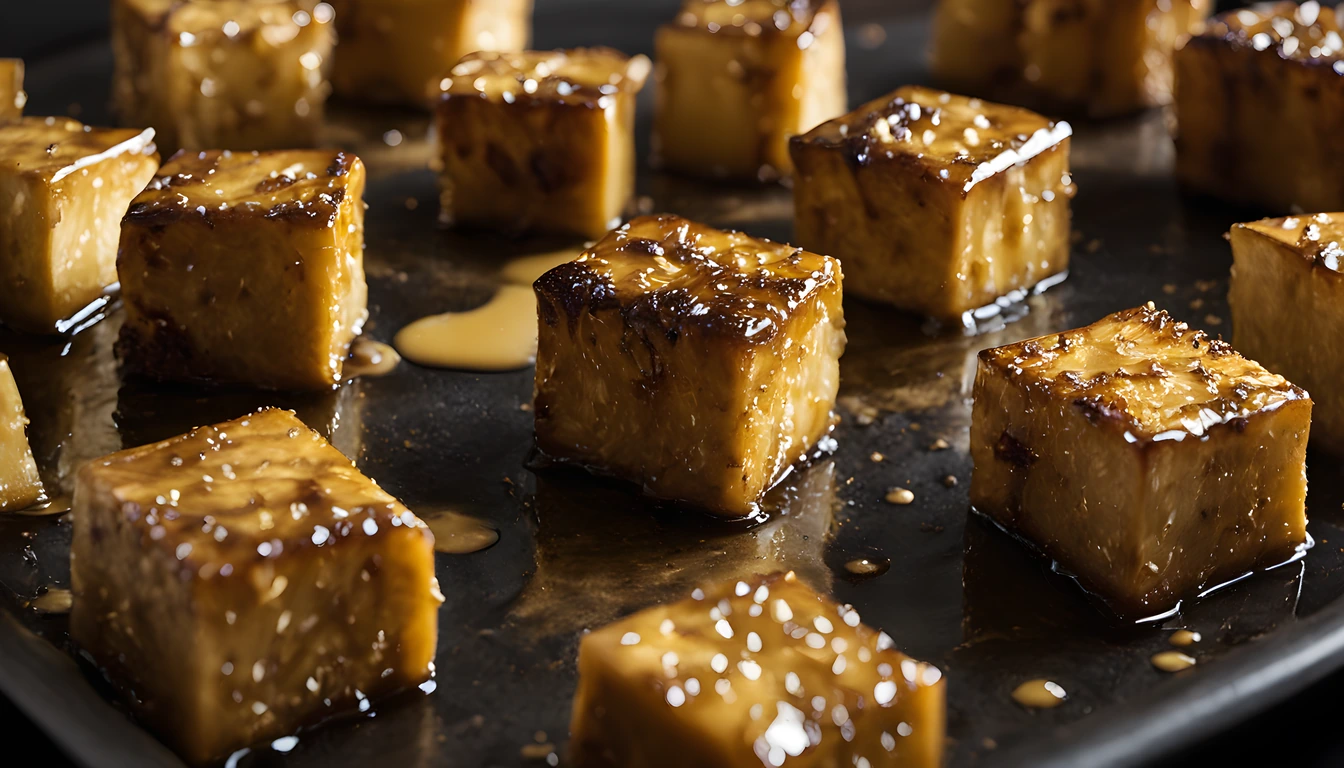
- 5Glaze and finishPull the pan from the oven and spoon the honey-mustard mixture over the hot cubes, tossing to coat. Return to the oven for 10 to 15 minutes, until the centers are tender when pierced with a knife and the edges are golden with a thin, clinging glaze. Watch the final minutes; honey darkens quickly, and timing varies with cube size and pan crowding.
- 6Cool and storeServe hot, dividing the cubes and glaze into four portions. For leftovers, transfer to shallow containers and refrigerate promptly within 2 hours, or 1 hour when the surroundings exceed 90°F (32°C). Use within 3 days and reheat to 165°F (74°C).
Estimated nutrition per serving
163.23 calories · 7.21 g fat · 22.79 g carbohydrate · 2.31 g protein · 621.62 mg sodium
Serving: 1 of 4 servings
Calculated from ingredient weights and USDA FoodData Central: 170400, 171413, 169640, 2029577, 167747, 173468, 170931. Estimates use ingredient input weights; actual portions, brands and cooking losses vary. Omitted nutrient values are unavailable, not zero.
Why celeriac needs to be weighed after peeling
Celeriac is a knobby root with a rough, ridged skin and deep pockets around the base. A vegetable peeler skips those pockets, and a paring knife has to chase them, which means a fair amount of the root lands in the trim bowl before the first cube is cut.
The seasoning is written for 600 g of prepared celeriac, not a whole-root count. The official refuse figure describes average parings, but an individual knobby root can need more or less trimming. Weigh the edible root directly so the amount on the pan matches the ingredient list.
Flavor intensity uses an editorial culinary scale: 1 is mild and 5 is bold. These are tasting suggestions, not laboratory measurements.
Sources: USDA FoodData Central: Celeriac, raw; USDA FoodData Central: WinCo Foods Dijon Mustard; UC Agriculture and Natural Resources: Honey; FoodSafety.gov: Safe Minimum Internal Temperatures; FoodSafety.gov: 4 Steps to Food Safety.
- Start with a root larger than you think you need.
- Cut off both ends flat so the root sits still on the board.
- Follow the crevices with a small knife, then square the faces before cubing.
Pro Tip
Have the oil and roasting pan ready before cubing. Toss the cut root with the measured oil promptly rather than holding it in extra lemon water.
1 = mild, 5 = bold. Editorial pairing guidance, not laboratory measurements; jars vary.
- Clover
- Dijon mustard and lemon; keeps the glaze mild and clean
- Wildflower
- Dijon mustard; adds a fuller, slightly floral note
- Buckwheat
- Strong mustard and roasted roots; bold and malty
Get the Honey Buyer's Cheat Sheet (free PDF)
16 varieties on one page — color, flavor, best use and what a fair price looks like — from the 304 honeys we track.
Pan room and the late glaze
Celeriac cubes release steam before they brown. Piled together on a sheet pan, they will soften and steam themselves pale; spread in a single layer with gaps, they caramelize on the cut faces. If your pan is small, use two.
Honey sugars darken during roasting, while mustard solids can dry and scorch on the pan. Adding the glaze after the first 30 minutes gives the root time to soften before the sweet coating arrives. Watch closely during the final minutes and turn the cubes if one area browns faster.
No specific roasting time guarantees perfect results. Cube size, how cold the root was, and how much room it got all shift the finish, so test the centers with a knife rather than trusting the clock alone.
- 2 cm cubes roast more evenly than thin slices or thick wedges.
- Turn the cubes once at 15 minutes so the bottom faces get heat.
- Toss the glaze through while the celeriac is hot so it spreads thinly.
Pro Tip
Test a cube from the center of the pan with a knife. A browned edge does not establish that the middle has softened.
The mustard and the honey
The nutrition reference for Dijon is the verified WinCo Foods label, and the written ingredient amount is 30 g. Another brand can work in the kitchen, but its salt content and flavor may differ. The estimate here is specific to that label rather than an average invented for every Dijon mustard.
Honey does the defining work in the finish. It carries sweetness into the sharp mustard and helps the glaze cling, but it goes on late so it flavors rather than burns. Any liquid honey works; a mild clover honey keeps the mustard forward, while a darker wildflower honey adds a deeper note.
- Mild clover honey leaves room for the mustard.
- A darker honey gives the glaze a stronger character.
- Measure the lemon juice so its tartness stays balanced with the honey.
Pro Tip
Whisk the glaze until the mustard and honey are evenly distributed before pouring it over the hot cubes.
Serving and Keeping Leftovers
Serve the celeriac while the edges are still freshly roasted. The honey-mustard mixture should cling in a thin coat, with tender centers rather than a crunchy raw bite. Divide all the cooked root and glaze among four portions.
The nutrition estimate includes all 27 g oil and the full glaze. Some may remain on the pan, but no assumed absorption or discarded-sauce percentage has been subtracted. Refrigerate leftovers promptly in shallow containers, use within three days and reheat to 165°F (74°C).
Pro Tip
A shallow covered pan over moderate heat works for reheating; add a spoonful of water if the glaze starts sticking.
Choosing the Honey
Use Clover honey or Wildflower honey or Buckwheat honey for the flavor described in this recipe. See our honey selection guide for other culinary choices.