Why Honey Garlic Brussels Sprouts Work So Well
Brussels sprouts have a natural bitterness from glucosinolate compounds — the same family of chemicals found in broccoli, cabbage, and kale. High-heat roasting transforms that bitterness through caramelization, browning the cut surfaces and converting sharp flavors into something nutty, sweet, and deeply savory.
Raw honey amplifies that transformation. The fructose in honey begins caramelizing at around 230°F, well below the 425°F oven temperature used for roasting. When the honey glaze hits the hot sprouts during the final minutes of cooking, it creates a glossy, amber coating that balances the vegetable's earthiness with natural sweetness. Garlic adds a savory punch that ties everything together.
The result is a side dish that converts even the most committed Brussels sprouts skeptics. The exteriors are deeply browned and crispy, the centers are tender, and every bite has a sticky-sweet, garlicky glaze that makes them almost addictive.
Choosing the Right Honey
The honey variety you choose will influence the flavor of the final glaze. Since roasting concentrates the honey's flavor, even subtle differences between varieties become noticeable.
- **Wildflower honey** — Complex, layered sweetness that complements the earthy Brussels sprouts without overwhelming them. The best all-purpose option.
- **Clover honey** — Clean, straightforward sweetness that lets the garlic and roasted vegetable flavors take center stage.
- **Buckwheat honey** — Dark, malty, and almost molasses-like. Creates a deeper, more assertive glaze that pairs well with the balsamic and bacon variations below.
- **Orange blossom honey** — Light citrus undertone that brightens the dish and works beautifully with the citrus-ginger variation.
- **Sourwood honey** — Buttery, slightly tangy character that adds sophistication. Excellent for holiday side dishes.
Pro Tip
Skip manuka honey for roasting — its beneficial compounds degrade at high temperatures, making it a waste of an expensive product. Any of the varieties above will produce excellent results.
Get the Honey Buyer's Cheat Sheet (free PDF)
16 varieties on one page — color, flavor, best use and what a fair price looks like — from the 304 honeys we track.
How to Choose and Prep Brussels Sprouts
The quality of your Brussels sprouts matters as much as the glaze. Here's what to look for and how to prep them for maximum crispiness.
- **Size matters.** Choose small to medium sprouts (about 1 to 1.5 inches in diameter). Larger sprouts tend to be more bitter and take longer to cook through, leading to burnt outsides and raw centers.
- **Look for tight, compact heads.** The outer leaves should be firmly attached and bright green, not yellowing or loosely layered. Loose leaves mean the sprout is past its prime.
- **Trim and halve.** Trim the woody stem end, peel off any yellowed or damaged outer leaves, and cut each sprout in half through the stem. The flat cut surface is where all the best browning and caramelization happens.
- **Dry thoroughly.** After washing, spin in a salad spinner or pat dry with towels. Moisture is the enemy of crispiness — wet sprouts steam instead of roast.
Pro Tip
Don't discard the loose leaves that fall off during trimming. Toss them with oil on a separate section of the baking sheet — they roast into paper-thin, chip-like crisps in about 15 minutes and make a delicious garnish.
The Complete Recipe: Honey Garlic Brussels Sprouts
This recipe serves 4 as a generous side dish and takes about 30 minutes from cutting board to table.
Ingredients
- 1.5 lbs Brussels sprouts, trimmed and halved
- 3 tablespoons olive oil
- 3 tablespoons raw honey
- 4 cloves garlic, minced
- 1 tablespoon soy sauce
- 1 tablespoon unsalted butter
- ½ teaspoon salt
- ½ teaspoon black pepper
- Pinch of red pepper flakes
Step-by-Step Instructions
**Step 1: Preheat and prep.** Preheat oven to 425°F. Line a large rimmed baking sheet with parchment paper. Trim, halve, and thoroughly dry the Brussels sprouts.
**Step 2: Toss and arrange.** In a large bowl, toss the halved sprouts with olive oil, salt, and black pepper until evenly coated. Arrange them cut-side down on the baking sheet in a single layer with space between each piece. Cut-side down contact with the hot pan is essential for browning.
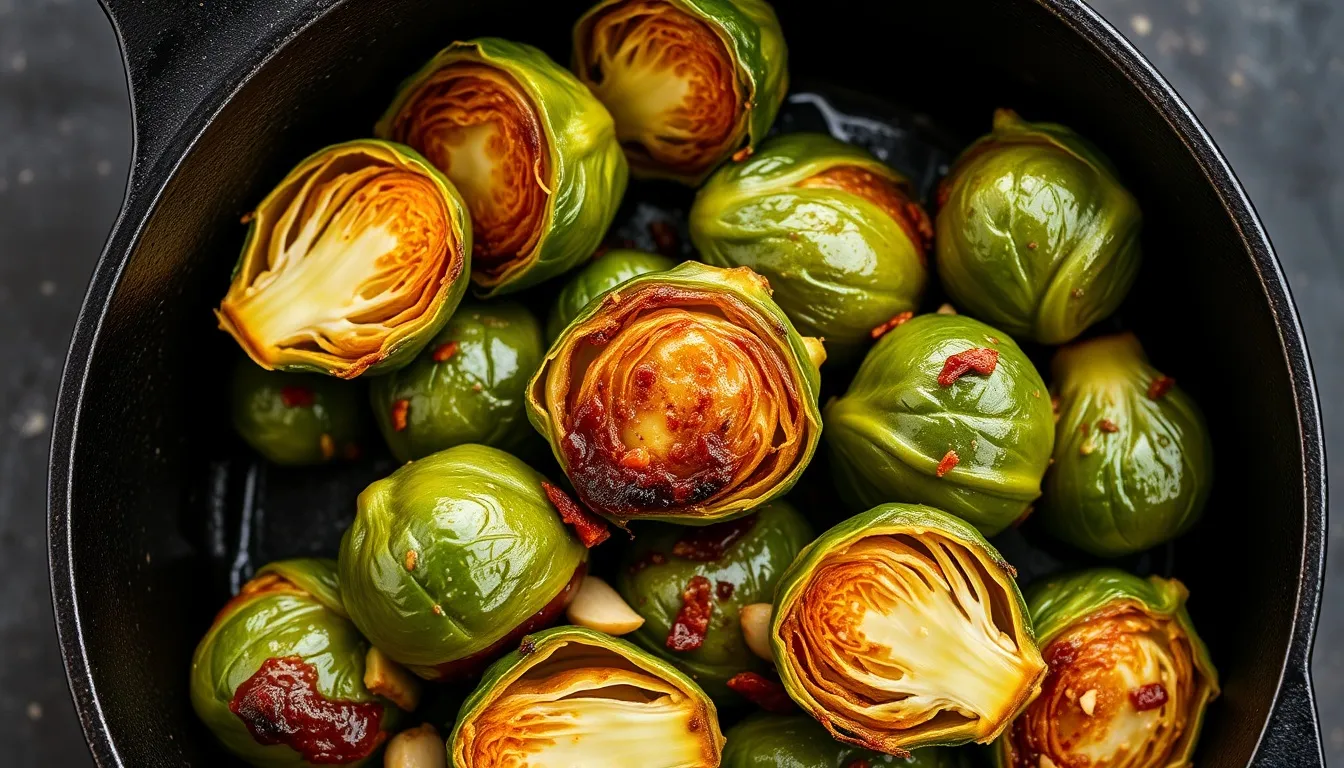
**Step 3: Roast until crispy.** Roast for 20-22 minutes without opening the oven or flipping the sprouts. You want deep, dark browning on the cut surfaces — the edges should be crispy and almost charred in spots, while the centers are tender.
**Step 4: Make the honey garlic glaze.** While the sprouts roast, melt butter in a small saucepan over medium heat. Add minced garlic and red pepper flakes, cooking for 30-45 seconds until fragrant. Stir in honey and soy sauce, let the mixture bubble for 30 seconds, then remove from heat.
**Step 5: Glaze and finish.** Remove the sprouts from the oven. Drizzle the warm honey garlic glaze over the roasted sprouts and toss gently on the baking sheet to coat. Return to the oven for 3-4 minutes until the glaze is bubbling and sticky.
**Step 6: Serve immediately.** Transfer to a serving dish. The sprouts are best eaten hot while the glaze is still tacky and the edges are at their crispiest.
Pro Tip
The single most important technique is arranging the sprouts cut-side down and not disturbing them during roasting. The flat surface needs sustained, direct contact with the hot pan to develop a dark, crispy crust. Flipping them partway through stops that crust from forming properly.
5 Flavor Variations
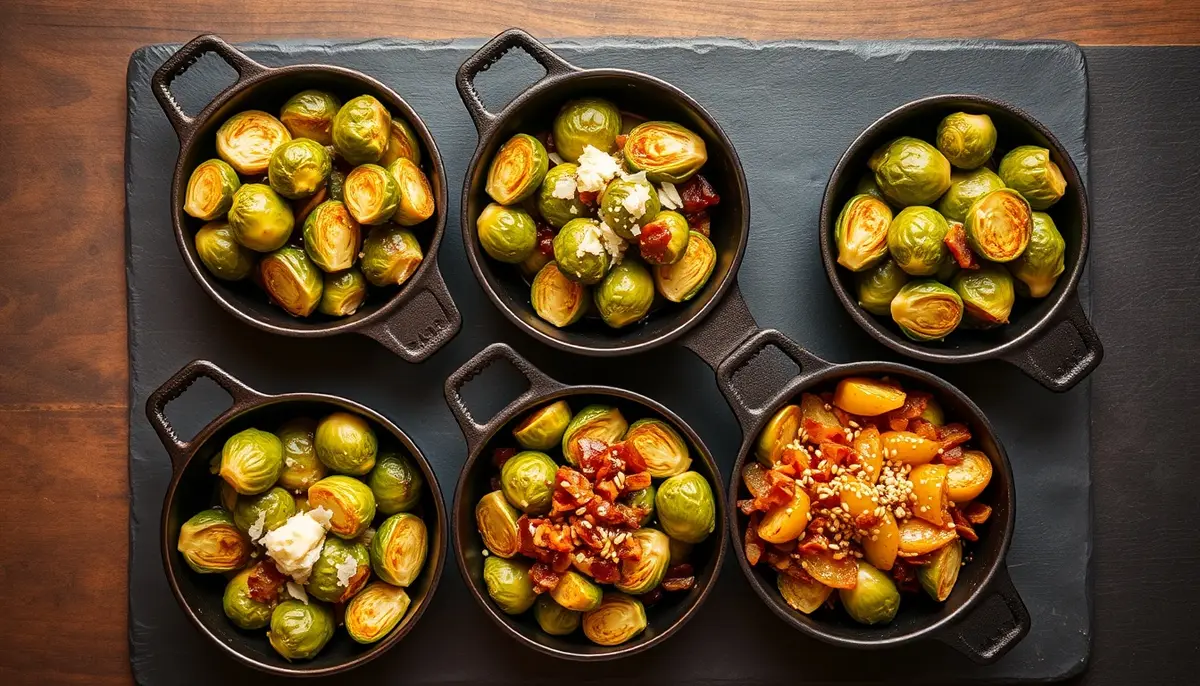
The base honey garlic recipe is a starting point. These variations use the same roasting technique with different glaze finishes.
- **Honey Balsamic Brussels Sprouts:** Add 2 tablespoons balsamic vinegar to the glaze along with the honey and soy sauce. The vinegar reduces into a tangy, syrupy coating that pairs naturally with the honey balsamic dressing flavor profile. Finish with shaved Parmesan.
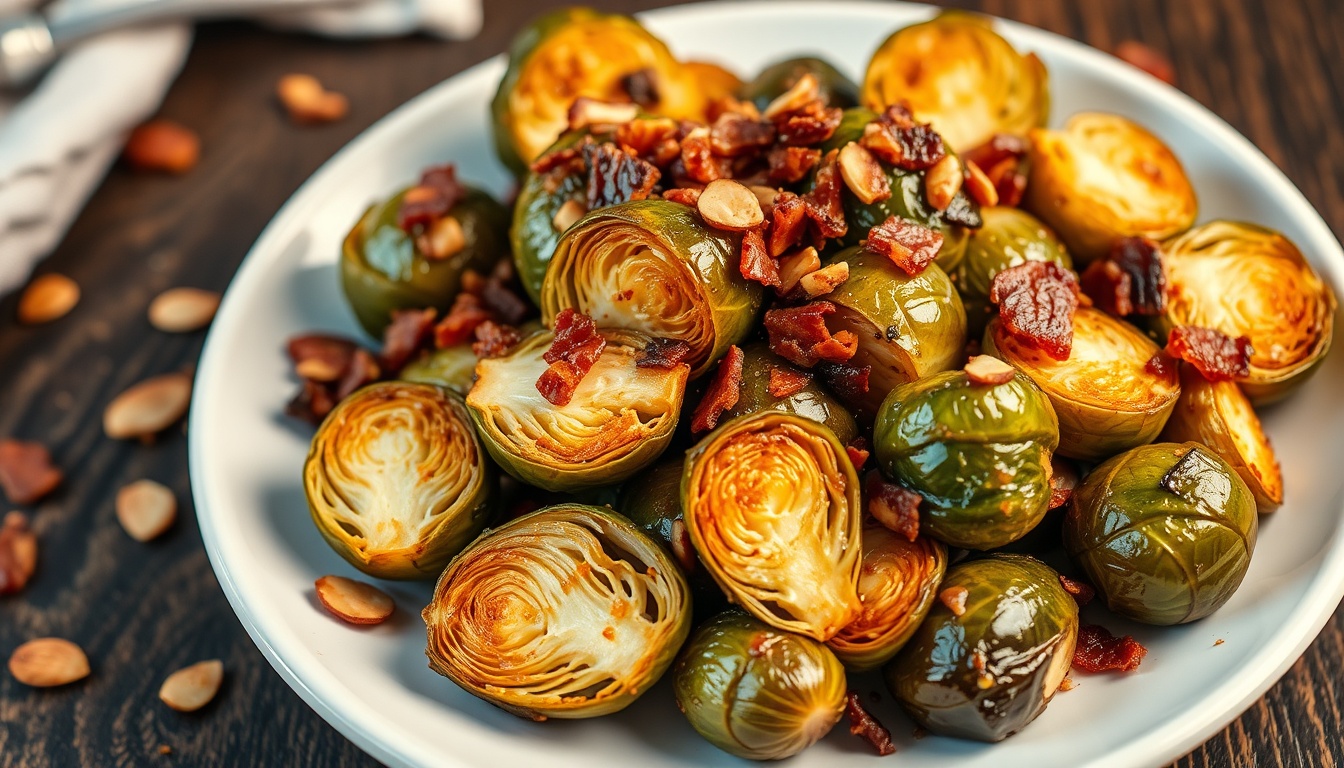
- **Honey Garlic Bacon Brussels Sprouts:** Scatter 4 slices of diced raw bacon across the baking sheet with the sprouts before roasting. The bacon fat renders and bastes the sprouts while cooking. Toss everything with the honey garlic glaze at the end.
- **Spicy Honey Garlic Brussels Sprouts:** Replace the honey in the glaze with hot honey or add 1-2 teaspoons of gochujang to the base glaze. The sweet heat transforms these into the kind of side dish that steals the spotlight from the main course.
- **Honey Garlic Parmesan Brussels Sprouts:** After tossing with the base honey garlic glaze, shower the sprouts with ½ cup freshly grated Parmesan cheese and return to the oven for 2 minutes until the cheese is melted and golden. Rich, salty, sweet, and deeply savory.
- **Citrus-Ginger Honey Brussels Sprouts:** Add 1 tablespoon freshly grated ginger and the zest of one orange to the glaze. Use orange blossom honey for a cohesive citrus profile. Finish with a squeeze of fresh orange juice and toasted sesame seeds.
Tips for the Crispiest Brussels Sprouts
Five details separate perfectly crispy, caramelized sprouts from soft, steamed ones.
- **Dry them completely.** Moisture creates steam, and steam prevents browning. After washing, use a salad spinner, then blot with paper towels. This step alone makes the biggest difference.
- **Don't overcrowd the pan.** Every sprout half needs direct contact with the pan surface. If they're piled on top of each other, they steam. Use two baking sheets if needed — it's worth it.
- **Cut-side down, no flipping.** The flat surface needs sustained contact with the hot pan to build a deep, dark crust. Resist the urge to flip or stir during roasting.
- **High heat is essential.** 425°F is the sweet spot. Lower temperatures produce soft, pale sprouts without the caramelized edges that make this dish work.
- **Add the glaze at the end.** Applying honey before roasting causes it to burn before the sprouts are tender. Roast first, glaze second — the last 3-4 minutes is enough for the honey to caramelize without scorching.
Serving Suggestions
Honey garlic Brussels sprouts pair with almost any protein or grain.
- **With honey garlic chicken** — Double down on the honey garlic flavor profile for a cohesive dinner plate.
- **Alongside honey garlic steak bites** — The crispy vegetables balance the rich, seared beef perfectly.
- **Next to honey glazed salmon** — The earthy sprouts complement the bright, sweet-savory glazed fish.
- **As a holiday side dish** — These replace traditional steamed Brussels sprouts at Thanksgiving, Christmas, or Easter with a version people actually want to eat.
- **On a grain bowl** — Spoon over brown rice or farro with a fried egg on top for a satisfying vegetarian meal.
Storage and Make-Ahead Tips
**Refrigerate:** Store leftover sprouts in an airtight container for up to 3 days. The glaze thickens as it cools but loosens again with reheating.
**Reheat in the oven or air fryer:** Spread on a baking sheet at 400°F for 5-7 minutes, or air fry at 375°F for 3-4 minutes. This re-crisps the edges better than a microwave, which makes them soft and rubbery.
**Prep ahead:** You can trim, halve, and dry the Brussels sprouts up to 24 hours ahead. Store them in an airtight container lined with paper towels in the refrigerator. Make the glaze ahead and reheat briefly before drizzling.
**Don't freeze with the glaze.** The honey garlic coating becomes watery and loses its sticky texture after freezing and thawing. If you want to freeze, store the plain roasted sprouts without glaze and make fresh glaze when reheating.
Why Honey Makes Better Vegetable Glaze Than Sugar
Many roasted vegetable recipes call for brown sugar or maple syrup, but honey has three advantages for glazing. First, honey's natural viscosity makes it inherently sticky, so it clings to the irregular surfaces of roasted vegetables without pooling on the pan. Brown sugar dissolves into a thin liquid that runs off. Second, honey's fructose caramelizes at a lower temperature than sucrose, which means the glaze develops rich amber color faster — important when you're only giving it 3-4 minutes in the oven. Third, raw honey contains over 200 aromatic compounds that contribute subtle floral and caramel notes that plain sugar simply cannot replicate.
The practical result is a glaze that looks glossier, tastes more complex, and coats more evenly. If you've ever had roasted vegetables where the sugar burned while the glaze slid off the food, switching to honey solves both problems.