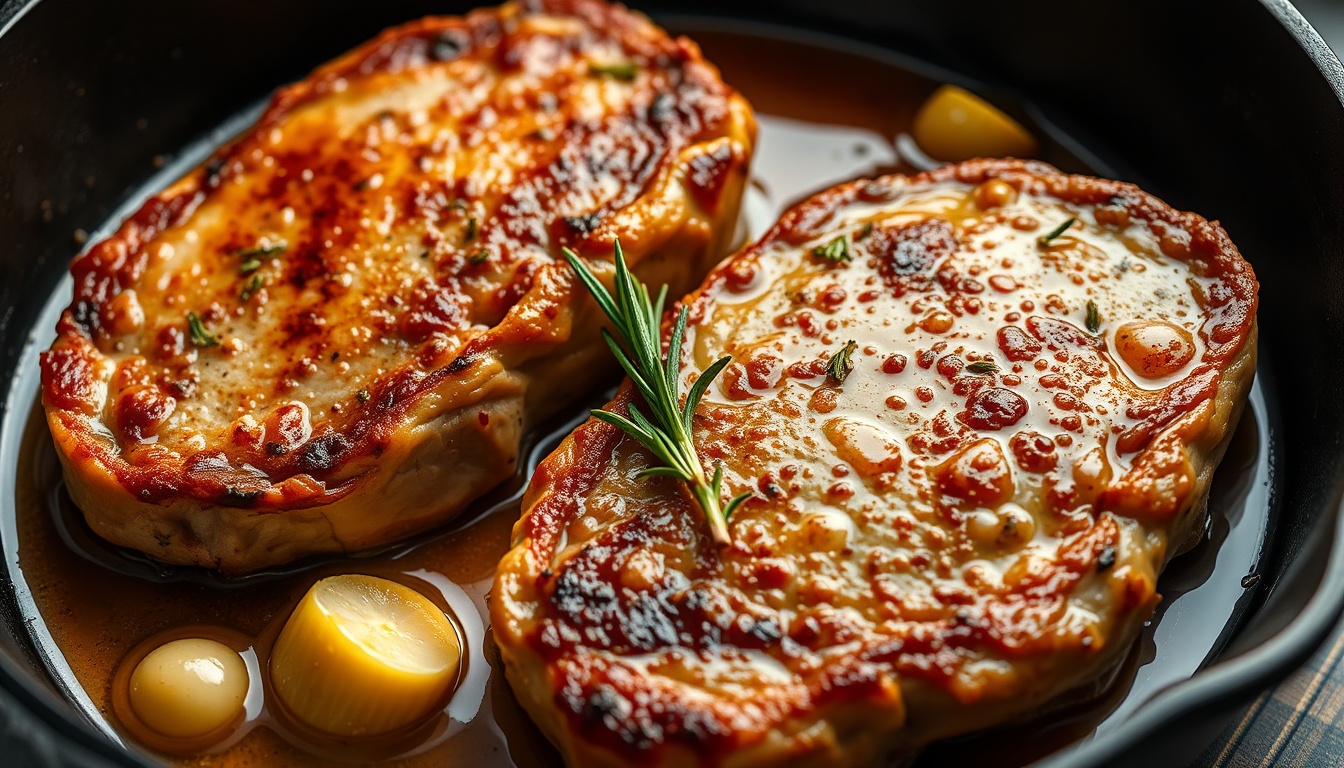
The Base Recipe
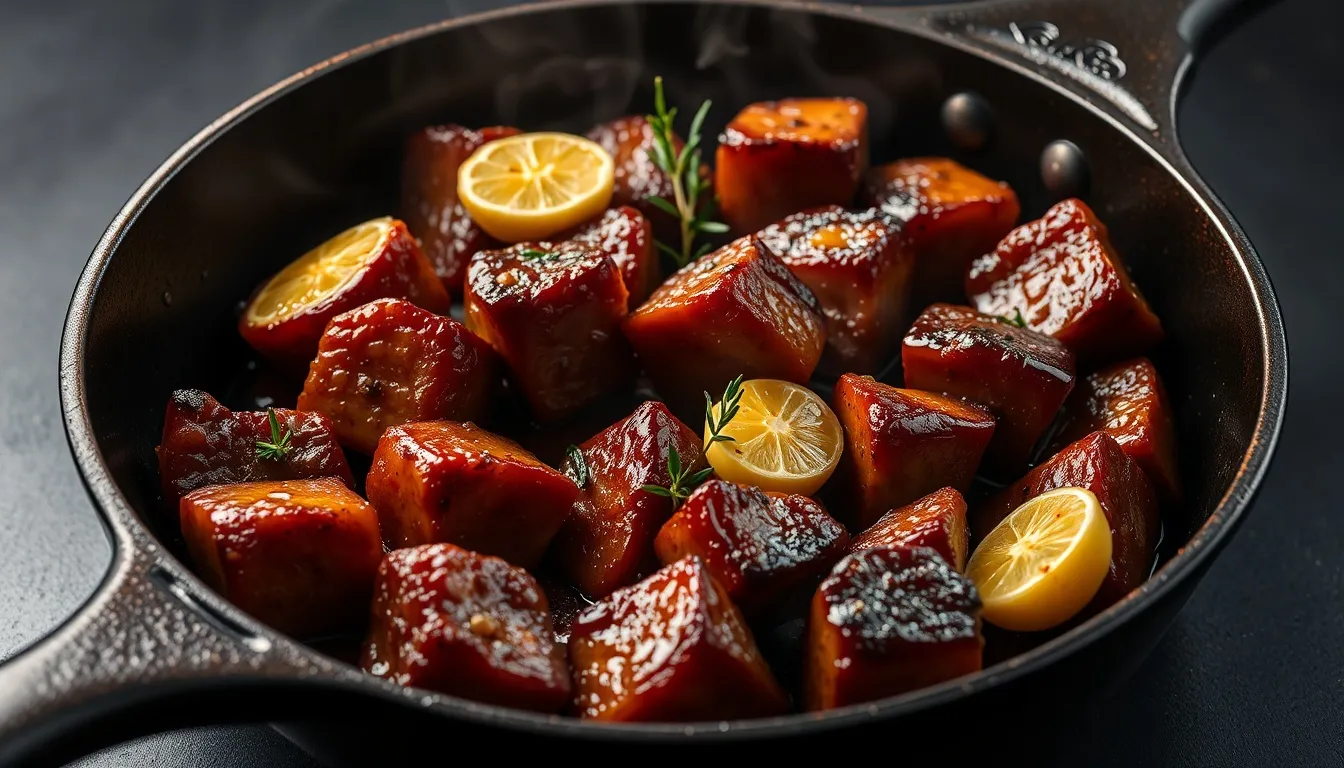
Honey garlic steak bites work best when the beef is seared before the sweet sauce enters the pan. The dry surface browns first; the honey and garlic go in over lower heat afterward.
Use 680 g of trimmed boneless top sirloin for the base recipe. The 25-minute estimate includes a three-minute rest after the beef reaches 145°F (63°C), following the federal guidance for steak.
Recipe
Honey Garlic Steak Bites
Sear boneless sirloin cubes, rest them, and coat them in honey garlic butter. Includes five flavor variations and a measured four-serving ingredient estimate.
7Ingredients
Yield: 4 servings
- 680 g raw top sirloin steak
- 3 tablespoons clover honey
- 3 tablespoons soy sauce
- 4 cloves garlic, minced
- 2 tablespoons unsalted butter
- 1 tablespoon olive oil
- 1 teaspoon black pepper, ground
Ingredient amounts scale; instructions show the original batch. Cooking times and pan sizes may need adjustment. Season to taste. Honey grams use US measures at 20°C and 17.5% moisture, a density estimate; weigh your honey for precision.
Instructions
- 1Cut and dryCut the trimmed sirloin across the grain into roughly 1-inch cubes. Pat them dry and season with the black pepper. Whisk the honey and soy sauce together.
- 2Sear the beefHeat the olive oil in a wide skillet over medium-high heat. Sear the cubes in two batches, turning to brown the sides without crowding. Check several of the largest pieces with a thermometer; steak should reach at least 145°F (63°C).
- 3Rest the steakTransfer the cooked beef to a clean plate and leave it undisturbed for at least 3 minutes. Lower the skillet heat while it rests.
- 4Build the sauceAdd the butter and garlic to the skillet over medium-low heat. Stir for 30 seconds, then add the honey-soy mixture. Let it bubble gently for about 1 minute, loosening the browned bits.
- 5Coat brieflyReturn the rested beef and its plate juices to the pan. Toss just long enough to coat the cubes. Take the pan off the heat and serve.
Estimated nutrition per serving
482.6 calories · 30.83 g fat · 14.93 g carbohydrate · 35.84 g protein · 749.3 mg sodium
Serving: 1 of 4 servings
Calculated from ingredient weights and USDA FoodData Central: 168726, 169640, 174277, 169230, 173430, 171413, 170931. Estimates use ingredient input weights; actual portions, brands and cooking losses vary. Omitted nutrient values are unavailable, not zero.
Method and Texture
A crowded pan steams the cubes and makes the sauce watery. Use two batches and give each cube contact with the pan; do not add more honey to compensate for poor browning.
Small pieces cook unevenly, so color alone is not a reliable endpoint. Cut similar-sized cubes, check more than one large piece, and allow the rest before tossing the beef back through the warm glaze.
Get the Honey Buyer's Cheat Sheet (free PDF)
16 varieties on one page — color, flavor, best use and what a fair price looks like — from the 304 honeys we track.
5 Flavor Variations
These are separate variations. Their ingredient amounts, cooking times and nutrient totals are not the base recipe calculation.
- Garlic-butter: add 1 extra tablespoon butter after taking the pan off the heat.
- Sesame-ginger: add 1 teaspoon ginger with the garlic and finish with 1 teaspoon sesame oil.
- Balsamic: stir 1 tablespoon balsamic vinegar into the glaze.
- Cajun: season the beef with 1 teaspoon Cajun seasoning before searing; choose a salt-free blend if keeping the full soy sauce amount.
- Mushroom-onion: cook 150 g sliced mushrooms and 100 g sliced onion after the steak is removed, then build the sauce. This adds cooking time.
Choosing the Honey
Clover honey gives a mild base. Wildflower honey adds a fuller floral flavor, while buckwheat honey makes a darker, more assertive glaze. Choose the flavor you want, and see our matching honey guide for other culinary uses.
The chart is an editorial pairing guide on a relative 1-5 flavor scale, not a measured composition or a record of kitchen testing.
1 = mild, 5 = bold. Editorial pairing guidance, not laboratory measurements; jars vary.
- Clover
- Mild base glaze
- Wildflower
- Fuller floral glaze
- Buckwheat
- Bold, dark glaze
Matching a honey to another dish: the honey flavor map
Serving and Leftovers
Divide the base recipe into 4 servings. Rice, noodles, vegetables, herbs, seeds and dipping sauces shown or suggested as accompaniments are optional additions and are not included in the printed ingredient estimate.
Refrigerate cooked beef promptly in a covered container. FoodSafety.gov lists 3-4 days for cooked meat leftovers at 40°F (4°C) or below. Reheat leftovers to 165°F (74°C); the steak will be more cooked than on its first serving.
Nutrition Basis
The base ingredient estimate is 482.6 calories per serving (1 of 4 servings). It counts all listed oil and glaze. Optional garnishes, sides and variations are separate. This is an ingredient calculation, not a measured plate or a kitchen-tested yield.
USDA input edible weights divided by yield; no cooking-loss or discarded-food adjustment assumed.
Sources
FoodSafety.gov cooking temperatures and cold-storage guidance; ingredient composition from USDA FoodData Central.