Why Honey Beats Sugar for Glazed Carrots
Most glazed carrot recipes use brown sugar, but honey produces a fundamentally better result for three reasons.
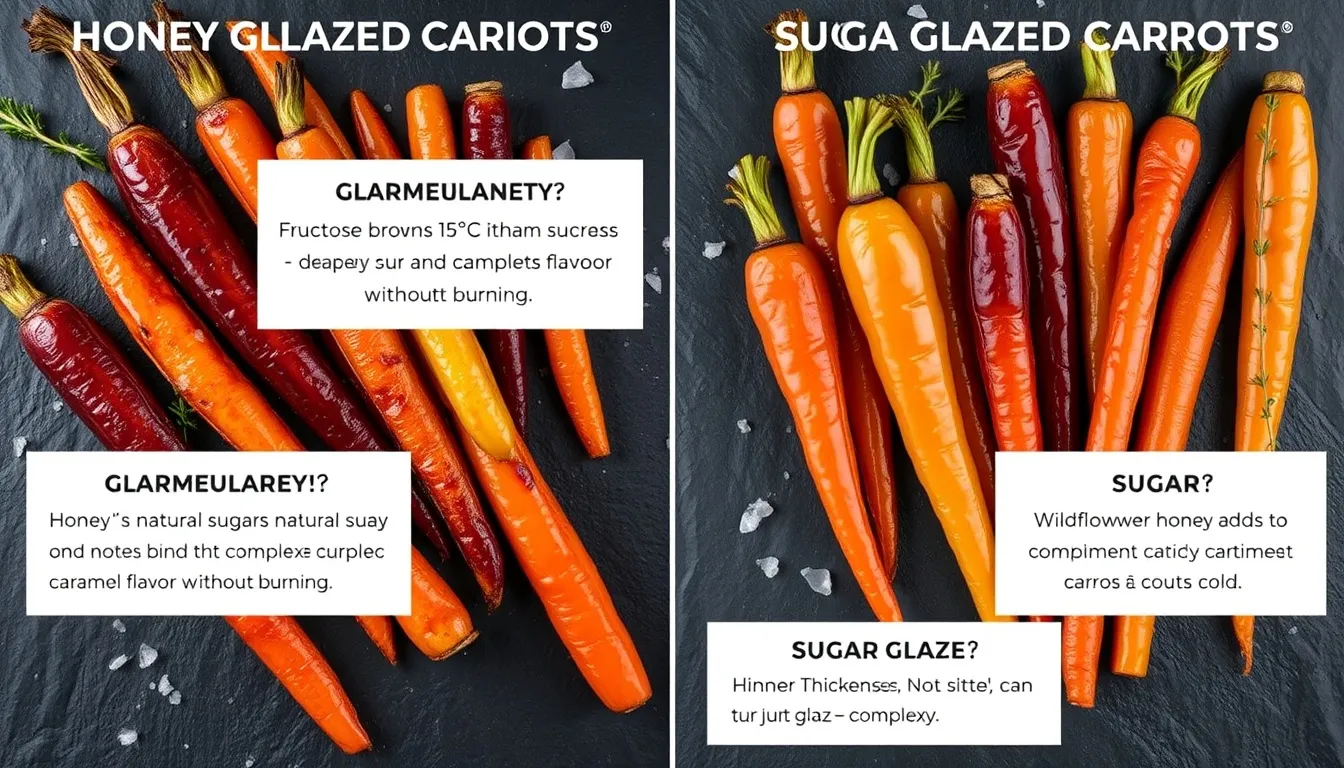
First, honey caramelizes at a lower temperature than granulated sugar. This means you get that golden, sticky coating without having to push the heat high enough to risk burning the butter. Brown sugar starts caramelizing around 320°F while the fructose in honey begins at 230°F — a much more forgiving window for a quick stovetop side dish.
Second, honey is hygroscopic — it actively pulls moisture from the air. This keeps the glaze from drying out and becoming tacky after a few minutes on the plate. Sugar-glazed carrots develop a dull, sticky film within 10 minutes of plating. Honey-glazed carrots stay glossy and appetizing through the entire meal.
Third, the 180+ aromatic compounds in raw honey add flavor complexity that plain sugar cannot match. Depending on the variety you choose, you get floral, caramel, or malty undertones that complement the natural sweetness of carrots rather than simply making them sweeter.
Choosing Carrots: Size and Shape Matter
The type of carrot you use affects both cooking time and final texture.
- Standard carrots (recommended) — cut into 1/4-inch diagonal slices. These have the best balance of sweetness and structure. The diagonal cut creates oval shapes with maximum surface area for glaze contact. Buy full-size carrots and peel them yourself — pre-peeled baby carrots have a dried-out surface that repels glaze
- Baby carrots (whole) — leave whole if small or halve lengthwise if thick. These are convenient but have less natural sugar than full-size carrots and a slippery polished surface. Expect a slightly less sticky glaze. Add 2-3 minutes to the covered cooking time
- Rainbow carrots — purple, yellow, white, and orange. These make a visually stunning dish, especially for holidays. Note that purple carrots bleed color when cooked — toss them in last during the glazing step to minimize color transfer to the lighter carrots
- Carrot sticks — cut into 3-inch batons about 1/2-inch thick. These take 2-3 minutes longer to cook through but have a satisfying snappy texture. Good for meal prep since the thicker cut holds up better when reheated
Pro Tip
Do not use pre-shredded or matchstick carrots — they cook in seconds and turn to mush in a glaze. You want pieces thick enough to retain a slight crunch in the center.
Get the Honey Buyer's Cheat Sheet (free PDF)
16 varieties on one page — color, flavor, best use and what a fair price looks like — from the 304 honeys we track.
5 Flavor Variations
The base recipe is a starting point. These variations each add one or two ingredients during the glazing step.
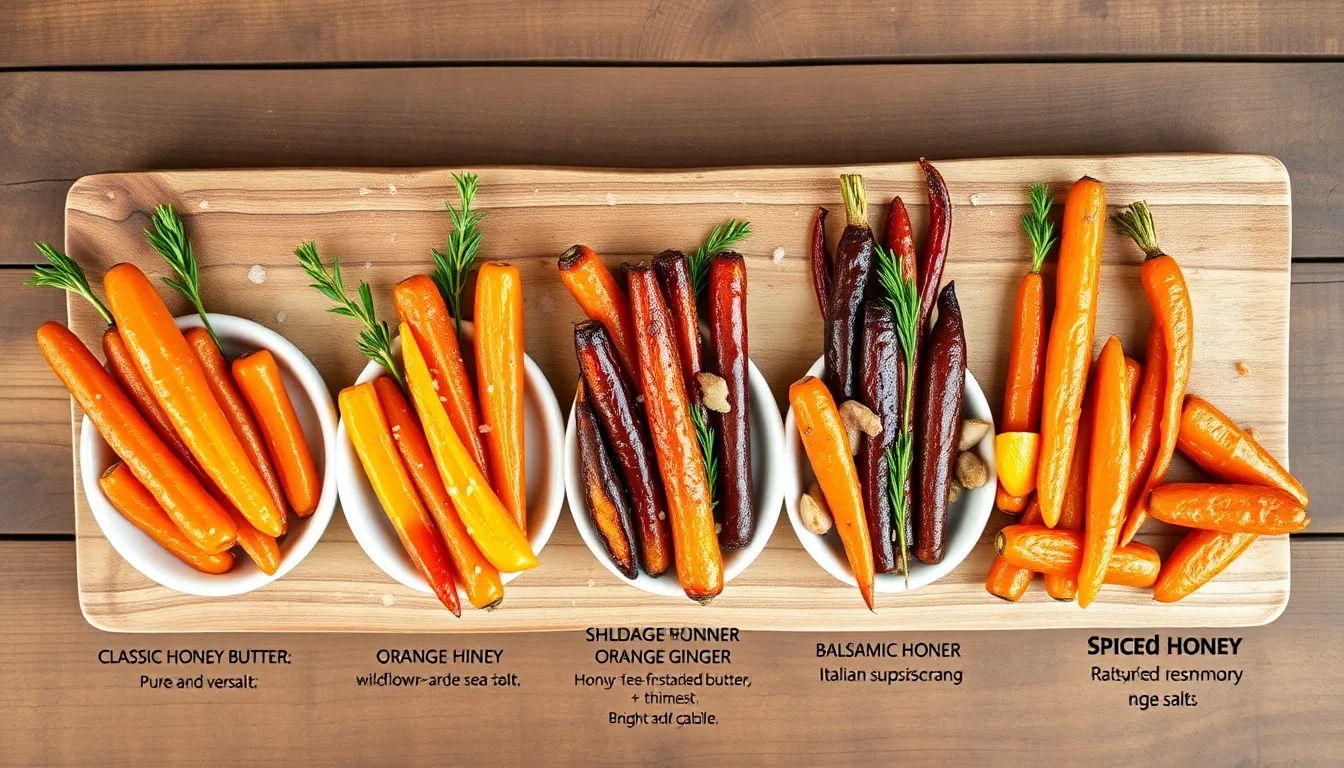
- Brown butter and sage — let the butter cook for an extra 1-2 minutes before adding carrots, until it turns amber and smells nutty. Add 8-10 fresh sage leaves during the last minute of glazing. The browned milk solids add a toasted, nutty depth that pairs with the honey sweetness. A classic fall and Thanksgiving combination
- Honey mustard — whisk 1 tablespoon Dijon mustard into the honey before adding it to the pan. The mustard adds a sharp, tangy counterpoint to the sweetness and creates a slightly creamier glaze. Finish with a pinch of mustard seeds for texture
- Maple-honey with pecans — replace half the honey with pure maple syrup and toss in 1/3 cup roughly chopped toasted pecans during the last minute. Double the tree-sweetness for an autumn flavor. Use buckwheat honey for the darkest, most molasses-like result
- Honey ginger — add 1 tablespoon freshly grated ginger when you add the water. The ginger infuses as the carrots steam, adding a warm, slightly spicy bite that cuts through the sweetness. Finish with a sprinkle of toasted sesame seeds for an Asian-inspired side dish
- Honey balsamic — add 1 tablespoon aged balsamic vinegar with the honey. The vinegar concentrates as the glaze reduces, creating a sweet-tart, syrupy coating. Use a quality balsamic — cheap imitations are mostly caramel coloring and will taste harsh. Finish with crumbled goat cheese if serving as a composed side
Best Honey Varieties for Glazed Carrots
The honey variety makes a noticeable difference since it is one of only two primary flavoring ingredients.
- Clover honey — mild, clean sweetness that lets the carrot flavor shine. The safest choice if you are serving a crowd or pairing with strongly flavored mains
- Wildflower honey — slightly more complex than clover with floral and herbal notes. The best all-purpose option for this recipe and the one used in testing
- Orange blossom honey — adds a gentle citrus-floral note that pairs beautifully with carrots. Especially good with the honey ginger variation or when served alongside roasted poultry
- Buckwheat honey — bold, dark, and molasses-like. Creates an intensely flavored glaze with deep caramel notes. Best for the brown butter and sage or maple-pecan variations where you want maximum depth
- Avoid manuka or other strongly flavored honeys — their distinctive flavor overwhelms the delicate sweetness of carrots. Save those for eating straight from the spoon (manuka guide)
Serving and Pairing Ideas
Honey glazed carrots are versatile enough for a weeknight dinner or a holiday spread.
- Thanksgiving and holiday dinners — serve alongside roasted turkey, honey glazed ham, or prime rib. The sweet side dish balances rich, savory mains
- Weeknight proteins — pairs with roasted chicken, honey garlic salmon, grilled pork chops, or pan-seared steak
- Grain bowls — spoon glazed carrots over quinoa or farro with goat cheese and arugula for a vegetarian main
- Meal prep — the glaze reheats well in a microwave for 60-90 seconds. Pack with protein for a balanced lunch. Add a splash of water before reheating to restore the glossy coating
Common Mistakes to Avoid
This is a simple recipe, but these errors will cost you the perfect glaze.
- Overcrowding the pan — if carrots overlap, they steam instead of caramelize. Use a 12-inch skillet for a full pound of carrots. If you only have a 10-inch pan, cook in two batches
- Adding honey too early — honey burns faster than sugar. Wait until the carrots are already tender before adding the honey. If you add it at the start, the fructose will scorch before the carrots cook through
- Skipping the covered step — raw carrots take 15+ minutes to soften on the stovetop uncovered. The brief covered steam cooks them quickly without browning. Skipping this step produces hard, candy-coated carrots instead of tender ones
- Using too much honey — resist doubling the honey for a sweeter result. Excess honey creates a pool of liquid that never reduces to a glaze. Stick to the 2-tablespoon ratio per pound of carrots
- Cutting carrots too thin — slices thinner than 1/4 inch overcook during the glazing step and turn floppy. You want a slight crunch in the center for textural contrast with the sticky coating