Why Honey Makes a Better Balsamic Glaze
A traditional balsamic reduction uses only vinegar — you simmer it down until the natural sugars concentrate into a thick syrup. It works, but it takes 20-30 minutes and is easy to over-reduce into a sticky mess.
Adding honey changes the equation in three important ways. First, the sugars in honey reach the desired syrupy consistency in about half the time, cutting the reduction from 25 minutes to 10. Second, honey adds body and viscosity that pure balsamic cannot achieve on its own — the fructose and glucose create a smoother, more pourable glaze rather than the slightly sticky, brittle texture of a sugar-only reduction.
Third, and most importantly, honey rounds out the sharp acidity of balsamic vinegar. Raw balsamic can be intensely tangy, especially budget-friendly bottles. The floral sweetness of honey balances that acidity without masking the complex, wine-like depth that makes balsamic vinegar special. The result tastes more like a $30 aged balsamic than a $8 grocery store bottle. Keep a jar of this on hand for Father's Day grilling — it transforms anything coming off the grill.
Choosing Your Balsamic Vinegar
The vinegar quality matters more than the honey here, since balsamic is the dominant flavor.
- Everyday balsamic (Modena IGP) — the standard grocery store bottle, typically $6-12. Works perfectly for this glaze. The reduction process concentrates its flavors and the honey smooths its rougher edges. This is what most people should use
- Aged balsamic (3-5 years) — richer, more complex, less acidic. Produces a noticeably more refined glaze with deeper fig and cherry notes. Worth it if you are drizzling on a cheese board or special dish. Usually $12-20 per bottle
- Traditional balsamic (DOP) — the real deal from Modena, aged 12-25 years. Already thick and syrupy on its own. Do not reduce this — it is meant to be used as-is. Reducing it wastes a $40-80 bottle and produces an overly sweet, one-dimensional syrup
- White balsamic — lighter in color and flavor, with more delicate acidity. Makes a beautiful pale golden glaze that works well on light-colored dishes (white fish, fruit desserts, caprese salad) where dark drizzle would look muddy
- Avoid anything labeled "balsamic glaze" or "balsamic cream" at the store — these are pre-made with added sugar, thickeners, and caramel coloring. The whole point of making your own is controlling the ingredients
Get the Honey Buyer's Cheat Sheet (free PDF)
16 varieties on one page — color, flavor, best use and what a fair price looks like — from the 304 honeys we track.
6 Ways to Use Honey Balsamic Glaze
This glaze works anywhere you want a sweet-tangy finishing drizzle. Here are the six best applications.
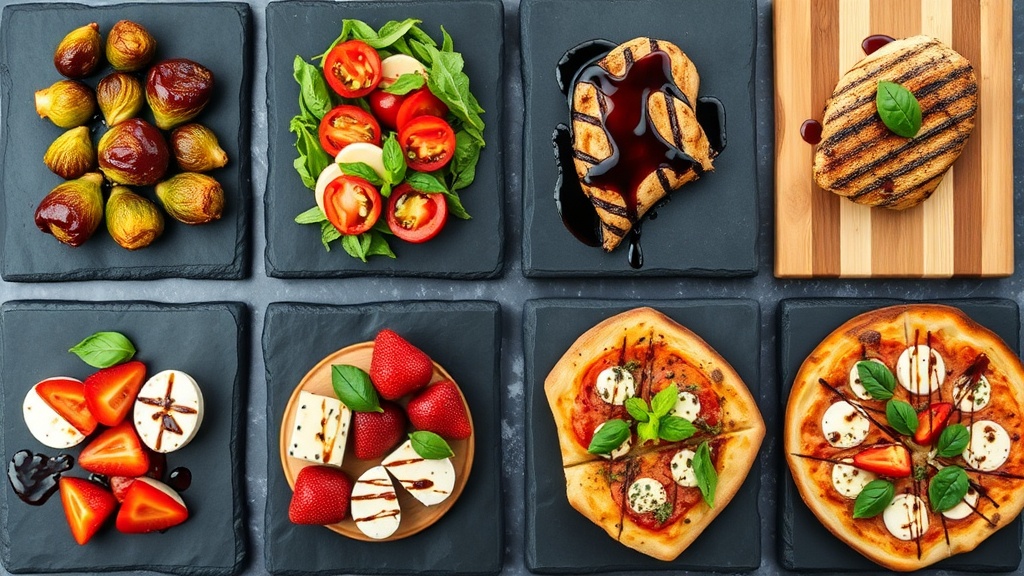
- Roasted vegetables — drizzle over honey roasted carrots, Brussels sprouts, sweet potatoes, or asparagus during the last 2 minutes of roasting. The glaze caramelizes in the oven heat, creating sticky, lacquered edges
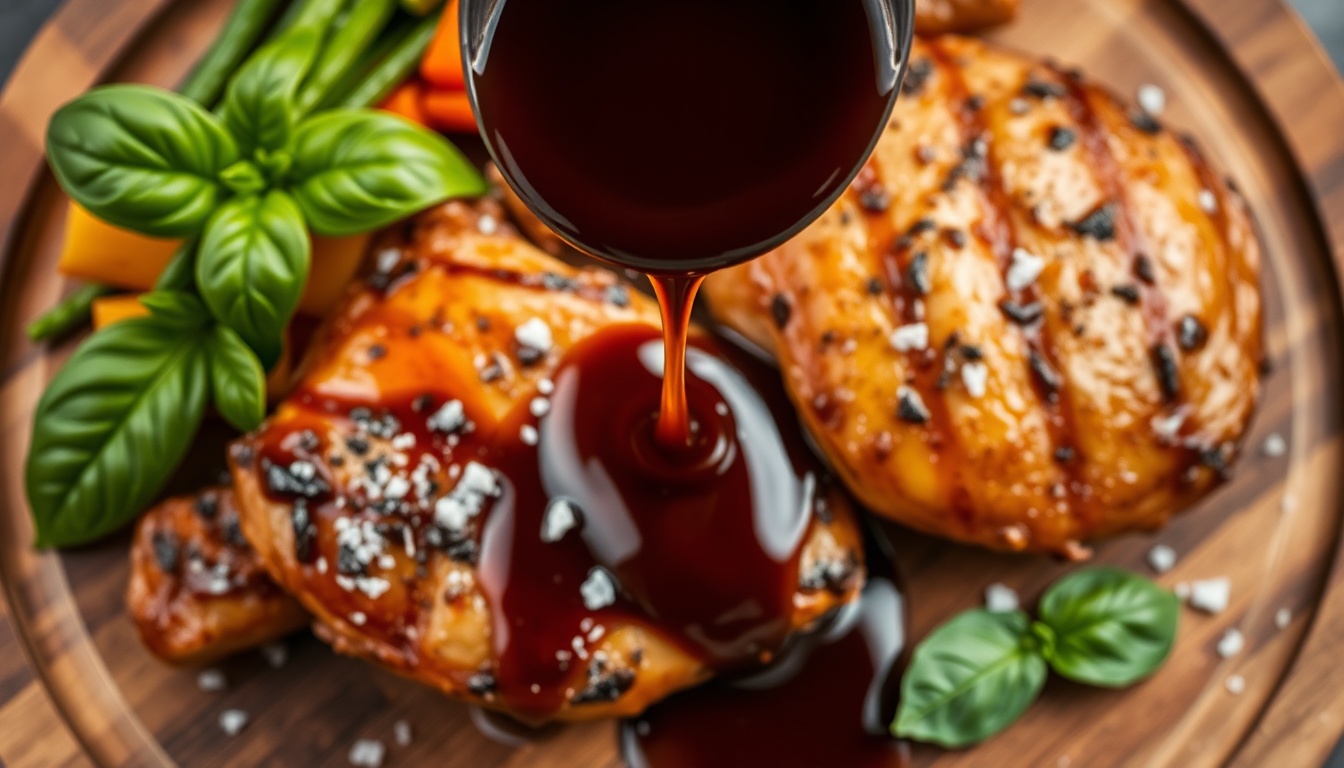
- Grilled meats — brush onto chicken, pork chops, or steak during the last minute of grilling, then drizzle extra on the resting meat. The acidity cuts through rich, fatty meats beautifully. Pairs especially well with honey glazed pork belly
- Caprese salad and fresh mozzarella — the classic Italian pairing. Arrange tomato, mozzarella, and basil, then zigzag the glaze across the plate. The honey-balsamic combination brings the sweet-acid contrast that makes plain mozzarella taste like a deliberate Italian course
- Cheese boards — drizzle into a small bowl for dipping, or directly onto aged parmesan, gouda, brie, or blue cheese. The sweet-tangy glaze bridges the gap between cheese and fruit on a board. A mandatory upgrade for entertaining
- Fresh strawberries and stone fruit — drizzle over halved strawberries, peaches, or nectarines. Add a pinch of black pepper and a sprig of mint. The balsamic draws out the natural sugars in the fruit through osmosis, creating a simple but impressive dessert
- Pizza and flatbreads — drizzle over finished pizza (especially margherita or prosciutto-arugula) after it comes out of the oven. The acidity and sweetness balance rich toppings. Use a squeeze bottle for control
Best Honey Varieties for Balsamic Glaze
The honey plays a supporting role here — it sweetens and thickens — but the variety you choose still influences the final flavor.
- Wildflower honey ($13-24) — the best all-purpose choice. Its complex, rounded sweetness complements balsamic without competing. Produces a balanced glaze where vinegar leads and honey supports
- Clover honey ($9-15) — mild and clean, virtually disappearing into the balsamic. The best choice when you want the vinegar flavor to dominate with just enough sweetness to tame the acidity
- Orange blossom honey ($12-24) — adds a subtle citrus-floral note that pairs beautifully with fruit applications (strawberries, peaches) and fresh mozzarella. A refined touch for summer dishes
- Acacia honey ($9-16) — delicate and transparent, creating a clean, elegant glaze. The best option when you want a clean, neutral glaze
- Chestnut honey ($15-24) — earthy, slightly bitter, with tannin-like complexity. Creates a more savory, less sweet glaze that works exceptionally well on grilled meats and aged cheeses. An adventurous choice
- Avoid strongly flavored honeys like buckwheat ($9-23) or eucalyptus — their bold, malty or herbal notes can overpower the balsamic rather than complement it
Flavor Variations
The basic 2-ingredient recipe is complete on its own, but these additions create purpose-built glazes for specific dishes.
- Garlic rosemary — add 2 smashed garlic cloves and 1 sprig of fresh rosemary to the pan at the start. Strain before storing. The garlic infuses savory depth and the rosemary adds piney aromatics. Perfect for roasted meats and root vegetables
- Fig and thyme — add 2 dried figs (quartered) and 2 sprigs of fresh thyme. Simmer together, then strain. Creates a rich, fruity glaze ideal for cheese boards, prosciutto, and charcuterie
- Chili heat — add 1/4 teaspoon red pepper flakes at the start of simmering. The capsaicin infuses into the liquid, creating a sweet-tangy-spicy glaze. Strain if you want smooth, or leave the flakes for texture. Great on pizza and grilled chicken
- Dijon mustard — whisk in 1 tablespoon Dijon mustard after removing from heat. Creates a creamy, emulsified glaze-dressing hybrid perfect for salads, roasted salmon, or as a sandwich spread. The mustard adds body and a gentle bite
- Citrus — add the zest of 1 lemon or orange during simmering. The citrus oils brighten the glaze and add aromatic complexity. Lemon works with fish and vegetables; orange pairs with pork and duck
Troubleshooting Common Issues
Honey balsamic glaze is simple, but timing and heat control matter.
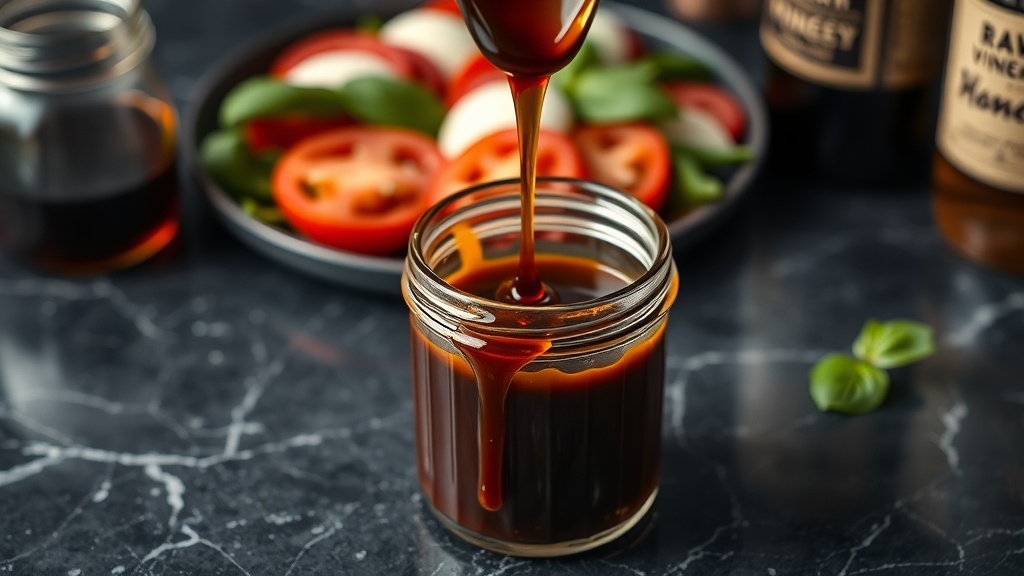
- Glaze is too thin — return to the pan over low heat and simmer for 2-3 more minutes. Remember that it thickens considerably as it cools, so pull it off heat when it is slightly thinner than your target consistency
- Glaze is too thick — stir in warm water, 1 teaspoon at a time, until you reach the desired consistency. If it has solidified into a candy-like mass, you reduced it too far — warm gently with 2-3 tablespoons of water and whisk until smooth
- Glaze tastes bitter — you overheated it. High heat scorches the natural sugars in both the vinegar and honey, producing bitter compounds. There is no fix; start over using medium-low heat. A gentle simmer with small bubbles is all you need
- Glaze tastes too acidic — either the vinegar was low quality or you did not reduce enough. Continue simmering to evaporate more acetic acid, or stir in an extra tablespoon of honey to rebalance. Switching to a better vinegar solves this permanently
- Glaze crystallized in storage — this happens rarely but can occur in cold environments. Warm the jar in hot water for 5 minutes and stir. The crystals will dissolve back into solution
Storage and Shelf Life
The high acidity of balsamic vinegar combined with the natural preservative properties of honey gives this glaze excellent shelf life.
- Room temperature — up to 2 weeks in a sealed glass jar or squeeze bottle. Keep away from direct sunlight. The acidity and low water activity prevent bacterial growth
- Refrigerated — up to 2 months. The glaze will thicken significantly when cold. Let it sit at room temperature for 10 minutes before using, or run the jar under warm water for easier pouring
- Squeeze bottle — the best storage vessel for controlled drizzling. Warm the bottle briefly under hot water if the glaze is too thick to squeeze. Restaurant kitchens keep their balsamic glazes in squeeze bottles for this reason
- Batch size — this recipe makes about 1/2 cup, which lasts most households 1-2 weeks of regular use. Double or triple the recipe for entertaining season or meal prep