Why Honey Creates the Best Pork Belly Glaze
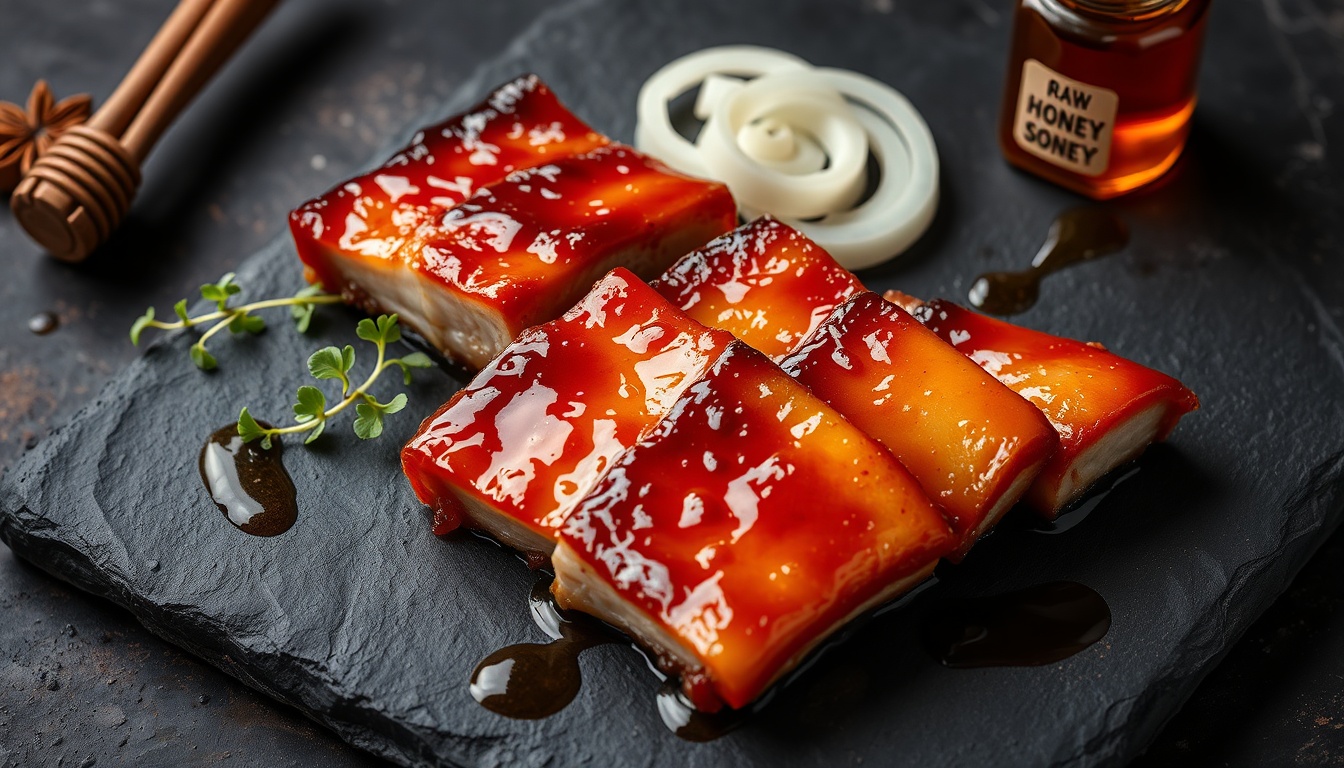
Pork belly needs a glaze that can do two things at once — caramelize into a sticky, lacquered coating and penetrate the scored fat to season the meat. Honey does both better than any other sweetener.
The fructose in honey caramelizes at 230°F, roughly 90°F lower than table sugar. During the high-heat finishing stage, the honey glaze reaches that deep amber, sticky state faster and more evenly. Brown sugar and maple syrup can burn before they fully caramelize. Honey hits the sweet spot between caramelized and charred more reliably.
Honey also has natural acidity (pH 3.5-4.5) that functions like a mild tenderizer on the pork belly surface. Combined with the rice vinegar and soy sauce, the glaze gently breaks down the outer layer of fat, helping the sweet-savory flavors absorb rather than sitting on top.
The viscosity of honey matters too. It clings to the scored surface and pools in the cuts, creating concentrated pockets of caramelized sweetness throughout the meat. Thinner glazes made with sugar water run off the pork belly during the high-heat finish.
Scoring and Drying: The Two Keys to Crackling
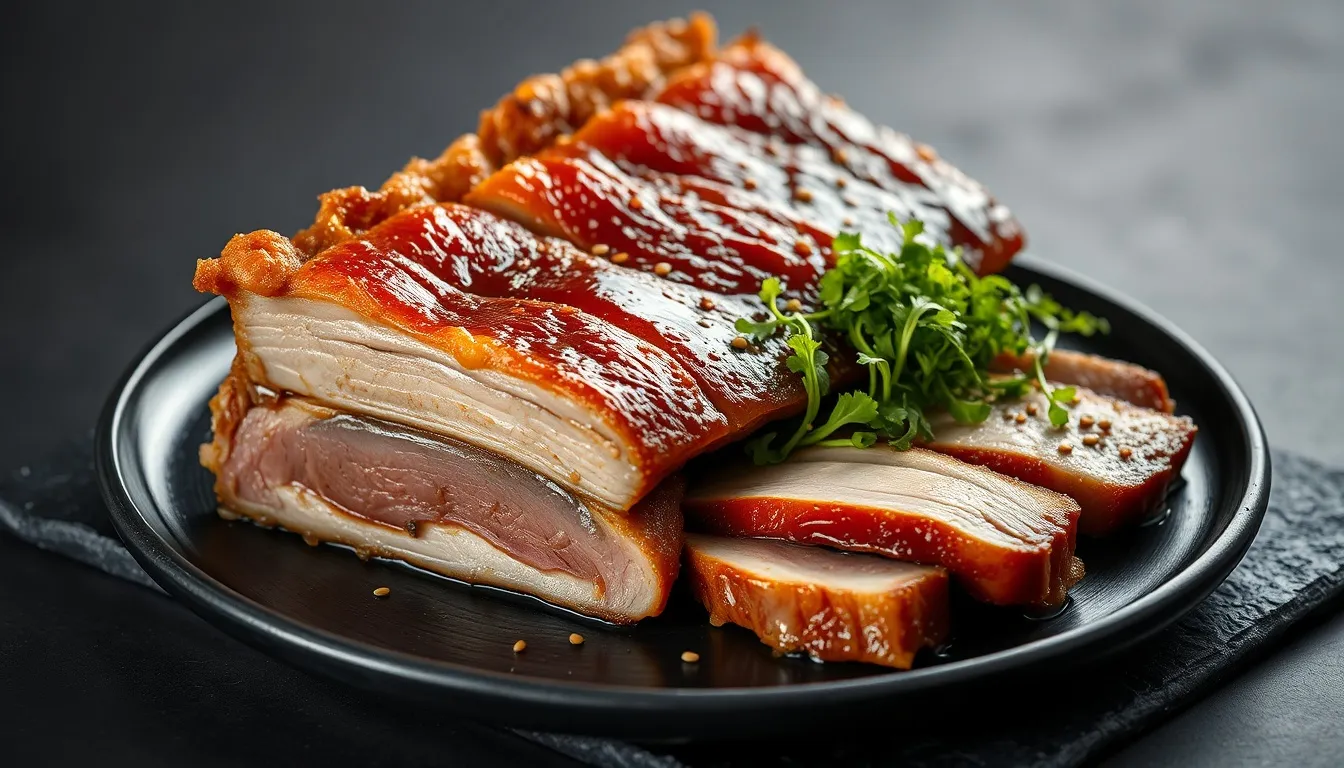
Crackling — the crispy, puffed pork skin — is the defining feature of great pork belly. Two techniques make or break it.
- Scoring technique — Cut through the skin and 1/4 inch into the fat in a 1/2-inch crosshatch pattern. A sharp chef's knife or box cutter works best. The cuts allow rendered fat to escape during roasting instead of creating a soggy barrier between the skin and the heat. Cuts that are too shallow will not render properly. Cuts that go into the meat cause the belly to curl
- Dry skin is non-negotiable — moisture on the skin creates steam during roasting, which prevents the skin from crisping. The overnight uncovered refrigeration draws moisture out of the skin. If you are short on time, pat the skin with paper towels, then use a hair dryer on cool for 5 minutes. The difference between dry and damp skin is the difference between crackling and leather
- Salt the skin after scoring — the salt draws out additional moisture through the cuts while seasoning the outer fat layer. Use coarse sea salt or kosher salt. Do not use the honey glaze on the skin — the sugar will burn at 450°F before the skin crisps, creating a bitter char instead of crackling
- Wire rack is essential — the pork belly must sit elevated above the pan so air circulates under the skin. Sitting in its own rendered fat will steam the bottom and prevent even cooking
Pro Tip
If the skin has not fully crackled after 25 minutes at 450°F, switch to broil for 2-3 minutes. Watch constantly — the skin goes from perfect to burned in under a minute under the broiler.
Get the Honey Buyer's Cheat Sheet (free PDF)
16 varieties on one page — color, flavor, best use and what a fair price looks like — from the 304 honeys we track.
4 Glaze Variations
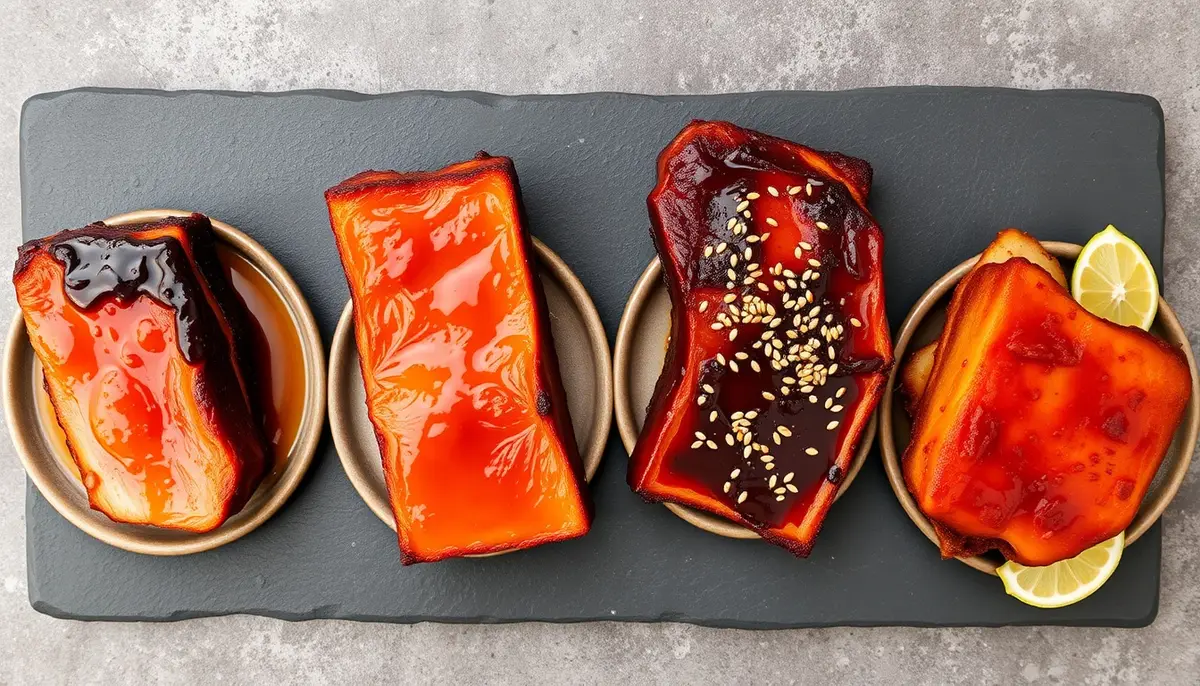
The base honey-soy glaze is a starting point. Each variation takes the pork belly in a different direction.
- Honey garlic — Double the garlic to 6 cloves and add 2 tablespoons honey garlic sauce. Skip the five-spice and add 1 tablespoon oyster sauce. A straightforward crowd-pleaser that pairs with almost any side dish
- Honey chipotle — Replace the five-spice with 2 minced chipotle peppers in adobo sauce. Add 1 tablespoon tomato paste and 1 teaspoon smoked paprika. Use a dark wildflower honey for depth. The smoky heat against the sweet pork fat is exceptional
- Honey miso — Whisk 2 tablespoons white miso paste into the glaze. Reduce soy sauce to 1 tablespoon since miso is salty. The fermented miso adds umami depth that complements the honey sweetness. A Japanese-inspired version that pairs well with short-grain rice and pickled ginger
- Honey bourbon — Add 2 tablespoons bourbon and 1 tablespoon whole grain mustard to the glaze. Skip the sesame oil and five-spice. Use buckwheat honey for its dark, molasses-like notes. An American spin that works on a bun as a sandwich or with cornbread
Best Honey Varieties for Pork Belly
The honey variety affects the glaze flavor significantly. Bold honeys work better here than delicate ones.
- Buckwheat honey — the best choice. Its dark, robust, molasses-like sweetness stands up to the rich pork fat and soy sauce without getting lost. The malty undertones echo the caramelization happening on the meat surface
- Wildflower honey — complex and well-rounded, a reliable choice for any glaze variation. The multidimensional flavor adds depth without dominating. The safest pick if you want balanced sweetness
- Chestnut honey — slightly bitter, deeply flavored, and assertive. The bitterness pairs remarkably well with fatty pork, cutting through the richness the way a good beer does. An adventurous choice that serious cooks appreciate
- Manuka honey — herbal and earthy with a distinctive tang. Works especially well in the miso variation. More expensive than necessary for a glaze where heat destroys some of the delicate compounds you are paying a premium for
- Avoid clover and acacia honey — their mild, delicate flavors disappear completely against the soy sauce, garlic, ginger, and pork fat. You would not taste any honey character in the finished dish
Serving Suggestions
Honey glazed pork belly is rich, so pair it with sides that provide contrast.
- Steamed jasmine rice — absorbs the rendered pan juices and honey glaze. The plain rice is the most important side because it balances the richness. Brown rice works too but its nuttiness competes slightly with the glaze flavors
- Quick-pickled vegetables — slice cucumbers, daikon radish, and carrots thinly, then toss with rice vinegar, a pinch of sugar, and salt. Let sit 20 minutes while the pork rests. The sharp acidity cuts through the fat in every bite
- Steamed or stir-fried greens — bok choy, broccolini, or gai lan with a drizzle of sesame oil and soy. The bitter, vegetal quality balances the sweet-savory pork perfectly
- Bao buns or steamed rolls — slice the pork belly, tuck it into a steamed bao bun with hoisin, pickled daikon, and fresh cilantro. A restaurant-quality presentation from a home kitchen
- As lettuce wraps — wrap slices of pork belly in butter lettuce leaves with sliced scallions, fresh herbs (mint, cilantro, Thai basil), and a squeeze of lime. Light and refreshing against the rich meat
Common Mistakes to Avoid
Pork belly is forgiving, but these mistakes compromise the result.
- Glazing the skin — the most common mistake. Honey on the skin burns at high heat, creating a bitter, blackened crust instead of crackling. Glaze only the sides and meat. Keep the skin dry and salted
- Skipping the overnight dry — without drying, the skin steams instead of crisps. Even a few hours uncovered in the fridge makes a significant difference. If you buy pork belly the day you cook it, at minimum pat it dry repeatedly and use a fan or hair dryer
- Roasting at one temperature — pork belly needs two stages: low heat (325°F) to render the fat and tenderize the meat, then high heat (450°F) to crisp the skin and caramelize the glaze. One temperature cannot accomplish both
- Slicing too soon — the 10-minute rest is critical. Cut immediately and the juices pour out onto the cutting board instead of staying in the meat. The crackling also firms up during resting, giving a cleaner, crunchier texture
- Cutting scores too deep — scores that penetrate into the meat (past the fat layer) cause the belly to curl and buckle during roasting. The scores should go through skin and into fat only — about 1/4 inch deep