About This Recipe
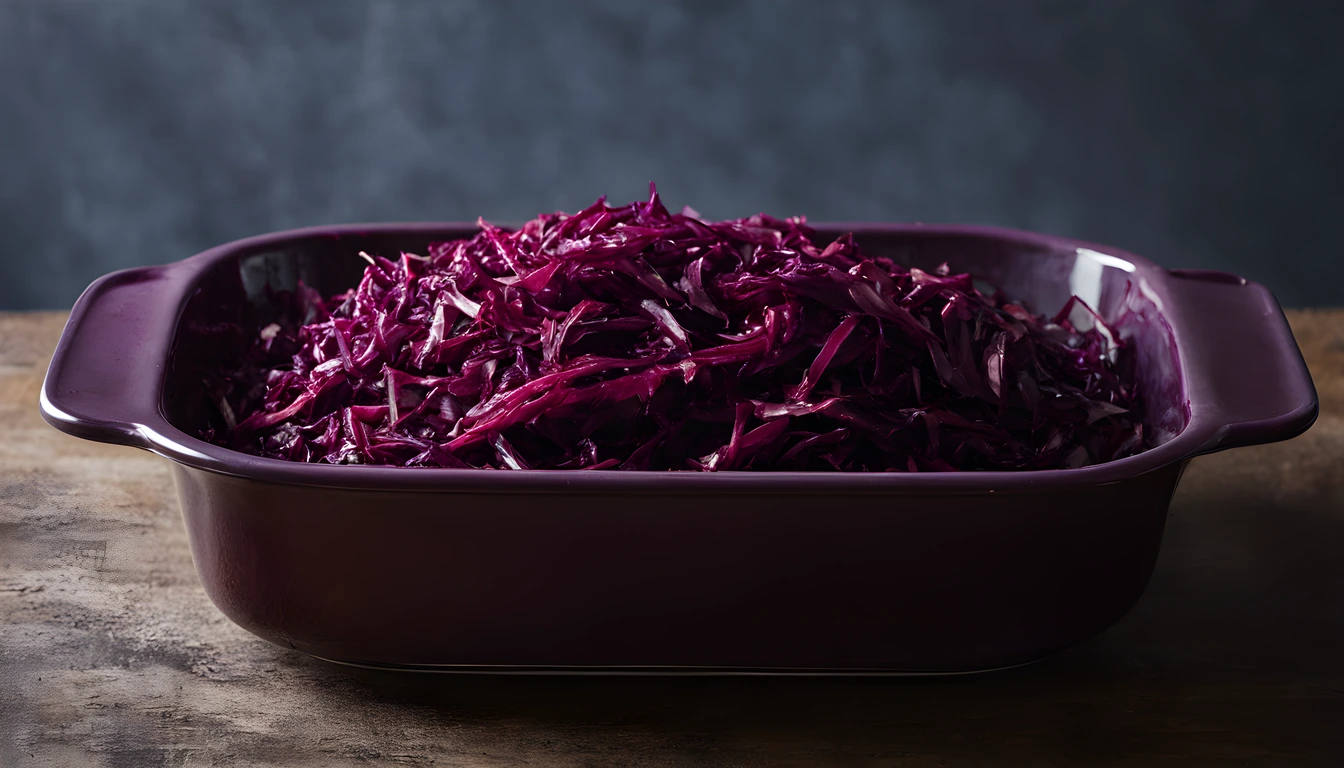
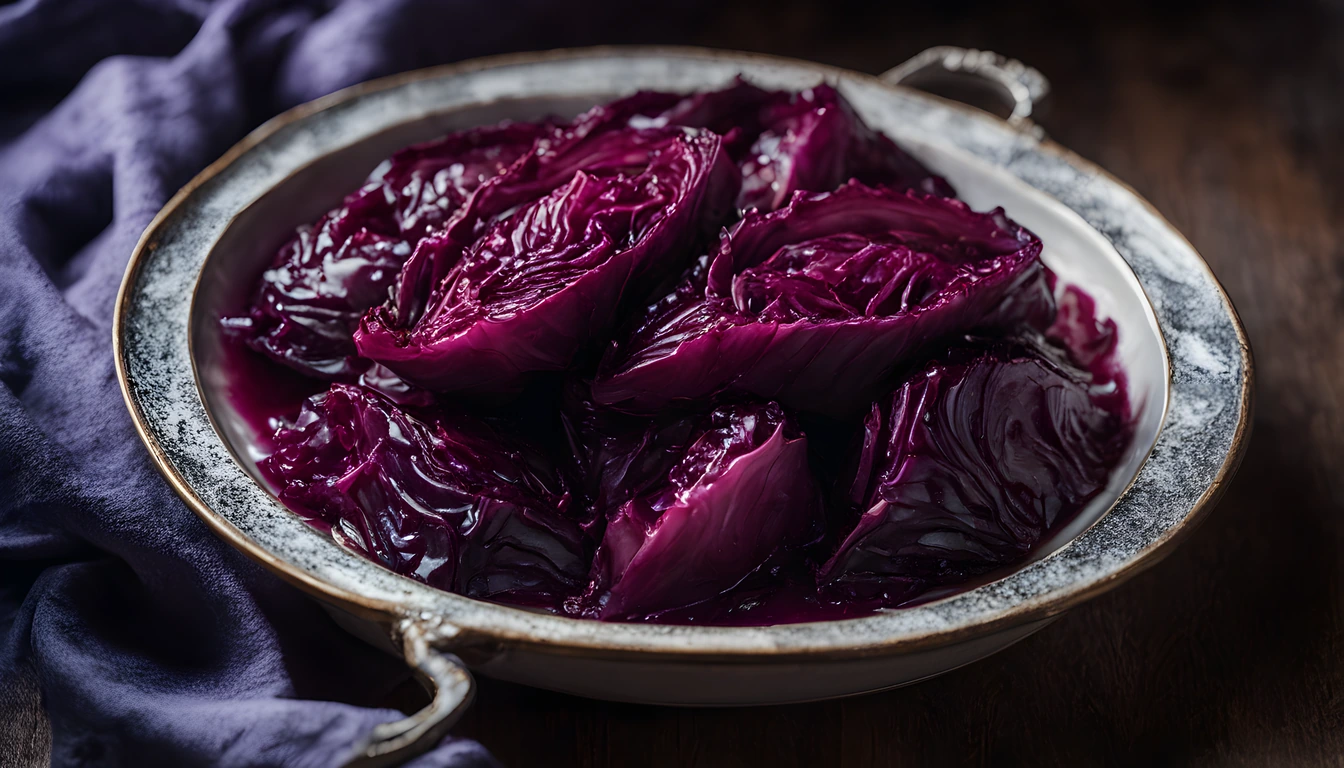
Honey and cider vinegar give this red cabbage a sweet-tart glaze, while a covered braise softens the shreds. Onion and a small amount of butter round out the flavor. Serve it hot with a roast dinner or alongside other winter vegetables.
Slice the cabbage evenly and keep the pot at a gentle simmer. The final few minutes uncovered concentrate the juices until they coat the leaves; the dish should be moist and glossy rather than swimming in liquid.
Recipe
Honey Red Cabbage Recipe
Thinly sliced red cabbage braised with honey and cider vinegar until tender, then finished with a light sweet-tart glaze. A warm side for roast dinners.
8Ingredients
Yield: 4 servings
- 600 g red cabbage, trimmed of core and damaged leaves, thinly sliced
- 100 g onion, finely chopped
- 14 g unsalted butter
- 42 g honey
- 45 g cider vinegar
- 100 g water
- 3 g table salt
- 0.5 g ground black pepper
Ingredient amounts scale; instructions show the original batch. Cooking times and pan sizes may need adjustment. Season to taste. Honey grams use US measures at 20°C and 17.5% moisture, a density estimate; weigh your honey for precision.
Instructions
- 1Sweat the onionMelt the butter in a wide pot over medium heat. Add the onion and cook for 5 minutes, stirring, until soft and translucent but not browned.
- 2Add cabbage and braising liquidAdd the shredded cabbage, salt, pepper, water, cider vinegar, and honey. Stir to combine. Bring to a gentle simmer.
- 3Braise coveredCover and simmer gently for about 40 minutes, stirring periodically, until the cabbage is tender. If the bottom begins to catch before the leaves soften, add a small splash of water and lower the heat.
- 4Uncover and finishUncover and cook for about 5 minutes more, stirring, until the remaining juices lightly coat the cabbage. Stop before the pot becomes dry. Serve hot.
Estimated nutrition per serving
116.19 calories · 3.11 g fat · 22.23 g carbohydrate · 2.49 g protein · 334.89 mg sodium
Serving: 1 of 4 servings
Calculated from ingredient weights and USDA FoodData Central: 169977, 170000, 173430, 169640, 173469, 173647, 173468, 170931. Estimates use ingredient input weights; actual portions, brands and cooking losses vary. Omitted nutrient values are unavailable, not zero.
Why Thin Slicing and Moderate Heat Matter
Cut the head into quarters, trim the core and damaged leaves, then weigh 600 g. Slice across the leaves into shreds about 3 mm thick. Even shreds soften at a similar rate; wide chunks can remain firm while the smallest pieces lose their texture.
Keep the pot at a gentle simmer so the liquid lasts through the covered braise. High heat can evaporate it before the cabbage is tender and scorch the honey at the bottom. Stir from the bottom periodically, especially if your pot heats unevenly.
Flavor intensity uses an editorial culinary scale: 1 is mild and 5 is bold. These are tasting suggestions, not laboratory measurements.
Sources: Honey (UC ANR Cottage Foods); 4 Steps to Food Safety (FoodSafety.gov); FoodSafety.gov: safe minimum internal temperatures.
- Trim the core and any damaged outer leaves before weighing.
- Slice thinly and evenly so the shreds cook at the same rate.
- Use medium heat to sweat the onion, then low heat for the covered braise.
Pro Tip
If the pan looks dry during braising, add a splash of water, not more honey or butter.
1 = mild, 5 = bold. Editorial pairing guidance, not laboratory measurements; jars vary.
- Clover
- Mild and floral; good with cabbage and cider vinegar
- Wildflower
- Variable but generally mild; suits savory braises
- Buckwheat
- Strong and malty; use where honey should lead
- Orange blossom
- Citrusy and light; complements vinegar
Get the Honey Buyer's Cheat Sheet (free PDF)
16 varieties on one page — color, flavor, best use and what a fair price looks like — from the 304 honeys we track.
Building the Sweet-Tart Glaze
Honey and cider vinegar do most of the flavor work here. The 42 g of honey is deliberately modest; it balances the vinegar without making the cabbage candy-sweet. Cider vinegar brings a sharp edge that mellows as it cooks.
All the braising liquid stays in the pot and is counted in the recipe. There is no assumed absorption or discarded liquid. The final 5 minutes uncovered reduce the liquid to a light glaze that coats the shreds.
- Add honey and vinegar with the water at the start so they season the cabbage evenly.
- Stir periodically during the covered braise to distribute the glaze.
- Uncover at the end to concentrate the liquid to a glossy coating.
Pro Tip
Reduction concentrates both sweetness and acidity. Stop with a little juice remaining at the bottom rather than cooking the pot completely dry.
Honey Choice and Flavor Balance
Honey is slightly sweeter than sugar, so a little goes a long way in a savory braise. A mild clover or wildflower honey keeps the cabbage flavor forward; a strong buckwheat honey will assert itself. The recipe uses 42 g, about 2 tablespoons.
The written batch uses 42 g honey with 45 g cider vinegar for a clear sweet-tart flavor. Choosing a different honey variety changes its aroma. Changing those amounts also changes the balance and the calculated nutrition, so start with the written batch before adapting it.
- Use a liquid honey for easy measuring and even mixing.
- Mild honey lets the cabbage and vinegar lead.
- Strong honey can work if you want a more pronounced honey note.
Pro Tip
Weigh honey directly into the pot or into the measured water; this avoids adding uncounted oil to a measuring spoon.
Storage and Reheating
Transfer leftovers to shallow containers and refrigerate promptly, within two hours or one hour if the surroundings exceed 90°F (32°C). Use within three days. Reheat leftovers to 165°F (74°C), stirring so the center heats evenly.
This cabbage is convenient to make ahead for a roast dinner. Reheat it covered over low heat, adding a spoonful of water if the glaze has become thick. This is a refrigerated cooked side, with no canning process or long pantry storage specified.
- Cool in shallow containers and refrigerate promptly.
- Use within three days.
- Reheat to 165°F (74°C).
Pro Tip
Reheat in a covered pan over low heat with a spoonful of water if the glaze is thick.
Choosing the Honey
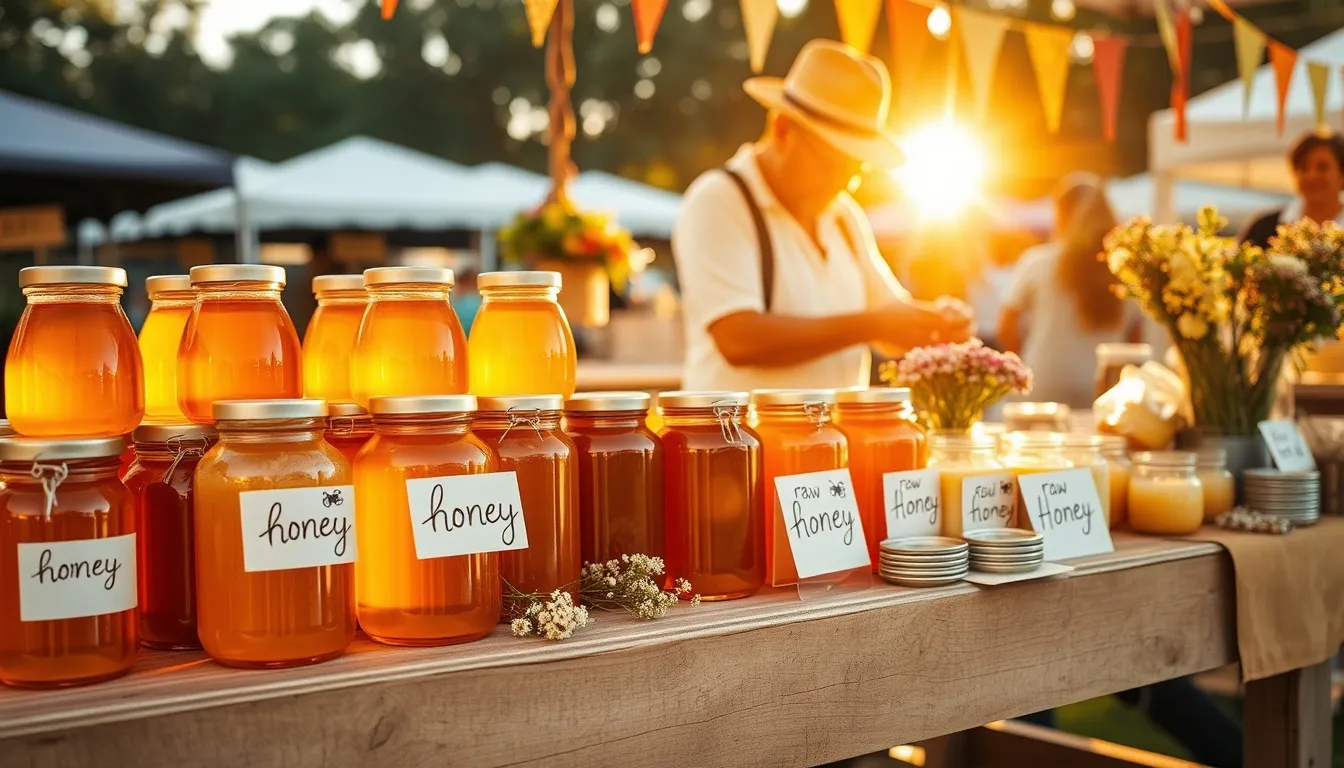
Use Clover Honey or Wildflower Honey or Buckwheat Honey for the flavor described in this recipe. See our honey selection guide for other culinary choices.