About This Recipe
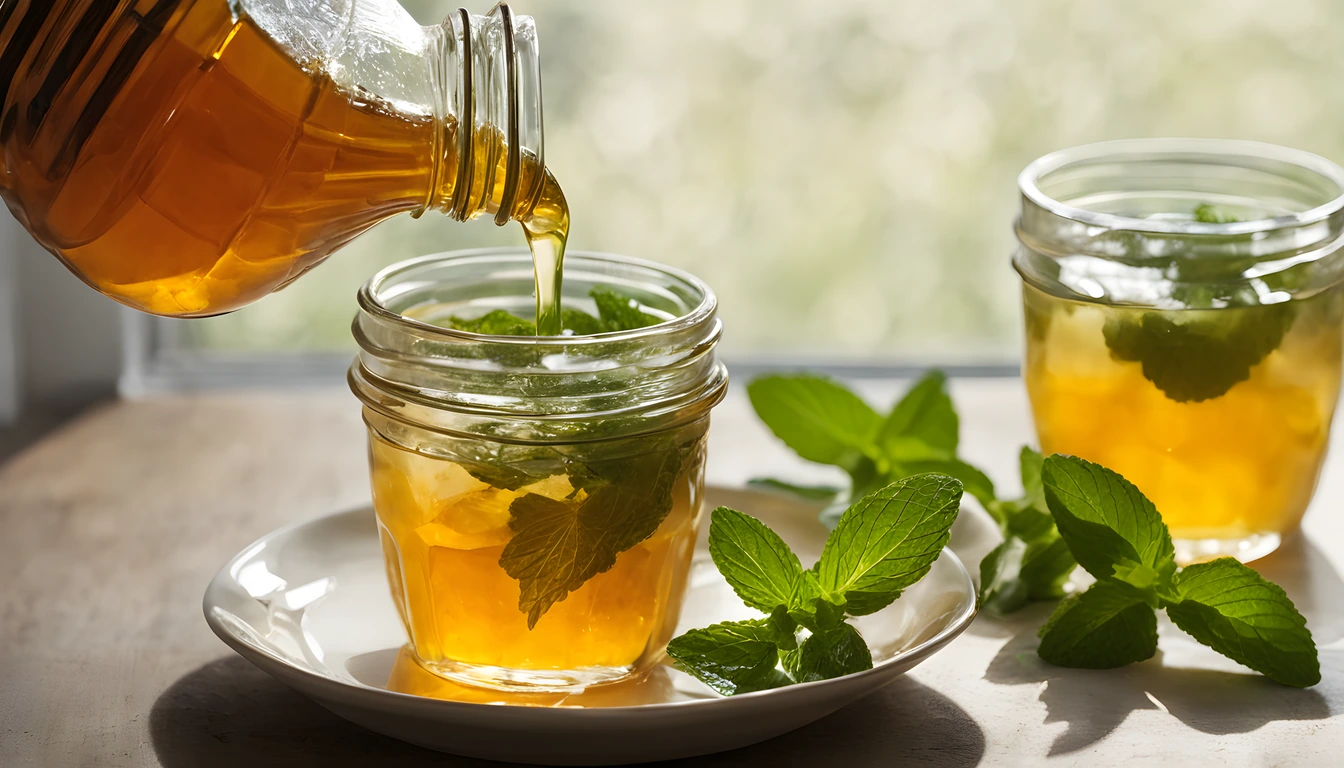
Honey rosemary syrup is a two-part idea: honey thinned with water so it pours and mixes cold, and rosemary steeped in that hot syrup just long enough to give it a resinous, piney edge without turning bitter.
The ratio here is roughly two parts honey to one part water by weight, which keeps the syrup fluid enough for cocktails but still firmly honey-sweet. Strain the rosemary out; left in, it keeps extracting and the syrup turns harsh over a few days.
Use it in a gin sour, a whiskey highball or a spritz, or brush it sparingly over roasted squash. The rosemary reads strongest in the first day or two, so make it close to when you plan to use it.
Recipe
Honey Rosemary Syrup Recipe
A rosemary-infused honey syrup for cocktails: honey dissolved in hot water, steeped with fresh rosemary, then strained. Makes about 3/4 cup plus a little more.
3Ingredients
Yield: 6 servings
- 170 g honey (about 1/2 cup)
- 85 g water (about 3 fl oz)
- 2 sprigs fresh rosemary (about 5 g)
Ingredient amounts scale; instructions show the original batch. Cooking times and pan sizes may need adjustment. Season to taste. Honey grams use US measures at 20°C and 17.5% moisture, a density estimate; weigh your honey for precision.
Instructions
- 1Warm the honey and waterCombine the honey and water in a small saucepan over medium-low heat. Stir gently until the honey has fully dissolved and the liquid is hot but not simmering, about 3 minutes. Do not let it boil hard; boiling drives off aroma and pushes the syrup toward candy.
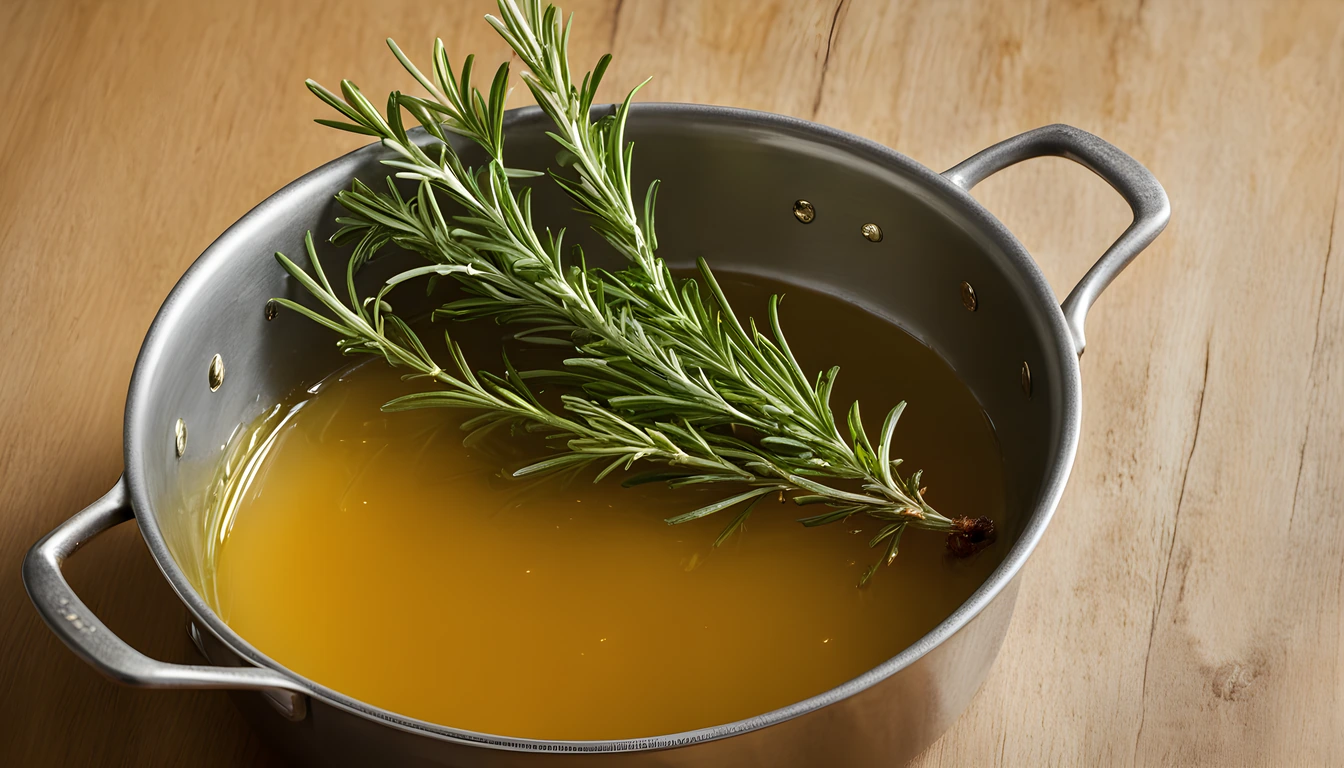
- 2Steep the rosemaryTake the pan off the heat and add the rosemary sprigs, pressing them under the surface. Cover and let stand 20 minutes. Taste at 15 minutes: you want a clear rosemary note that finishes clean, not a soapy or bitter edge.
- 3Strain and coolLift out the rosemary and strain the syrup through a fine-mesh sieve into a clean jar. Cool uncovered to room temperature, about 25 minutes, then seal. The syrup is ready to use once cool; total time includes the steep and the cooling.
- 4StoreRefrigerate and use within 2 weeks. If any cloudiness, fizzing or off smell appears, discard it. The syrup will be thicker when cold; stir or let it sit at room temperature a few minutes before measuring.
Estimated nutrition per serving
87.22 calories · 0.05 g fat · 23.52 g carbohydrate · 0.11 g protein · 1.92 mg sodium
Serving: 1 of 6 servings
Calculated from ingredient weights and USDA FoodData Central: 169640, 173647, 173473. Estimates use ingredient input weights; actual portions, brands and cooking losses vary. Omitted nutrient values are unavailable, not zero.
What the syrup should look and taste like
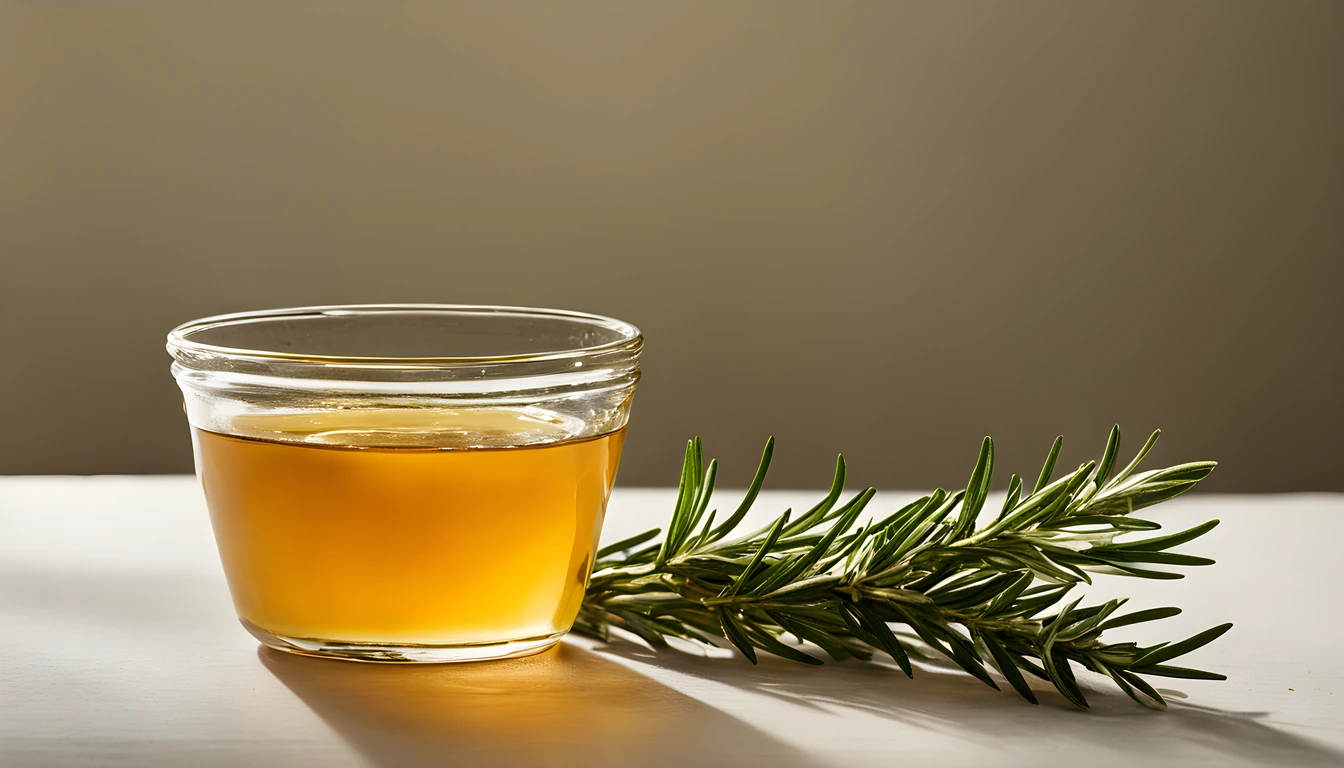
Finished syrup is clear amber, thin enough to pour from a spoon in a steady stream, and smells of honey first with rosemary just behind it. When cold it thickens noticeably; that is normal and not a sign it needs more water.
If it tastes sharp or medicinal, the rosemary steeped too long. If it is sweet with no herbal note at all, the water was not hot enough when the rosemary went in, or the sprigs were skimpy.
Flavor intensity uses an editorial culinary scale: 1 is mild and 5 is bold. These are tasting suggestions, not laboratory measurements.
Sources: Honey (UC Agriculture and Natural Resources, Cottage Foods); USDA FoodData Central: Honey; USDA FoodData Central: Beverages, water, tap, drinking; USDA FoodData Central: Rosemary, fresh.
- Clear, not cloudy: strain through a fine sieve
- Pours in a thin stream when cool
- Rosemary noticeable but not dominant
- No grit of undissolved honey at the bottom
Pro Tip
Warm the honey jar in a bowl of hot water if it is stiff or crystallized; it will measure and dissolve more evenly.
1 = mild, 5 = bold. Editorial pairing guidance, not laboratory measurements; jars vary.
- Clover honey
- Gin sours, lemon and soda
- Wildflower honey
- Bourbon and rye cocktails
- Orange blossom honey
- Gin, lemon and rosemary
- Buckwheat honey
- Rye and aged spirits, sparingly
- Sage honey
- Herbal cocktails and roasted vegetables
Matching a honey to another dish: the honey flavor map
Get the Honey Buyer's Cheat Sheet (free PDF)
16 varieties on one page — color, flavor, best use and what a fair price looks like — from the 304 honeys we track.
How to use it
Treat it as a 1:1 replacement for plain simple syrup in most cocktail recipes, keeping in mind it brings honey flavor and a little more body. It works especially well with gin, bourbon and lemon.
For a Rosemary Gin Sour, shake 2 fl oz gin, 3/4 fl oz lemon juice and 1/2 fl oz honey rosemary syrup with ice, then strain. For a longer drink, stir 1/2 fl oz into 4 fl oz soda water with a squeeze of lemon over ice.
- Gin, bourbon or rye sours and highballs
- Hot tea with lemon
- Sparingly brushed on roasted squash or carrots
- Drizzled over plain yogurt with toasted nuts
Pro Tip
Add a fresh rosemary sprig to the glass as a garnish if you want the aroma up front; the syrup alone gives a gentler herbal note.
Storage and making ahead
Because the syrup is diluted honey, it is less stable than honey itself. Keep it refrigerated in a sealed jar and use it within two weeks. Label the jar with the date you made it.
For longer keeping, freeze it in an ice cube tray and transfer the cubes to a bag; thaw what you need. Frozen syrup keeps for several months, though the rosemary aroma fades.
- Refrigerator: up to 2 weeks, sealed
- Freezer: up to 3 months in cubes
- Discard if it fizzes, clouds or smells fermented
- Make a small batch rather than a large one
Pro Tip
If you want a stronger rosemary flavor for a specific drink, muddle a fresh sprig in the shaker rather than steeping the whole batch longer.
Choosing the Honey
Use Clover Honey or Wildflower Honey or Apícola Cinco Villas Miel de Romero (Raw Rosemary Honey) for the flavor described in this recipe. See our honey selection guide for other culinary choices.