About This Recipe
Honey spelt bread is a whole-grain yeast loaf with a softly sweet crumb. A covered rest lets the flour absorb the water before gentle kneading, while a loaf pan supports the soft dough during its final rise.
Honey supplies all the added sweetness and helps the crumb retain moisture. The crust browns readily, so cover it loosely once it has enough color. Let the loaf cool completely before slicing so the middle cuts cleanly.
Recipe
Honey Spelt Bread Recipe
A whole-spelt yeast loaf with honey sweetness and a soft, close crumb. Gentle kneading and a supported rise suit the dough. Makes an estimated 840 g loaf, cut into 14 slices.
6Ingredients
Yield: 14 servings
- 500 g whole-grain spelt flour (a whole-grain wheat flour)
- 350 g water, warmed to about 105°F (41°C)
- 63 g honey (3 tablespoons)
- 27 g olive oil (2 tablespoons)
- 6 g active dry yeast (1 1/2 teaspoons)
- 9 g table salt (1 1/2 teaspoons)
Ingredient amounts scale; instructions show the original batch. Cooking times and pan sizes may need adjustment. Season to taste. Honey grams use US measures at 20°C and 17.5% moisture, a density estimate; weigh your honey for precision.
Instructions
- 1Rehydrate the yeastWeigh the ingredients. Stir the warm water and honey together in a large bowl until the honey dissolves. Sprinkle in the active dry yeast, stir and leave for 10 minutes. Small bubbles or patches of foam should appear on the surface.
- 2Mix and restAdd the whole-spelt flour, salt and olive oil. Mix firmly with a spoon or dough scraper for about 5 minutes, scraping the bowl until no dry flour remains. The dough should be soft and sticky. Cover and rest for 20 minutes.
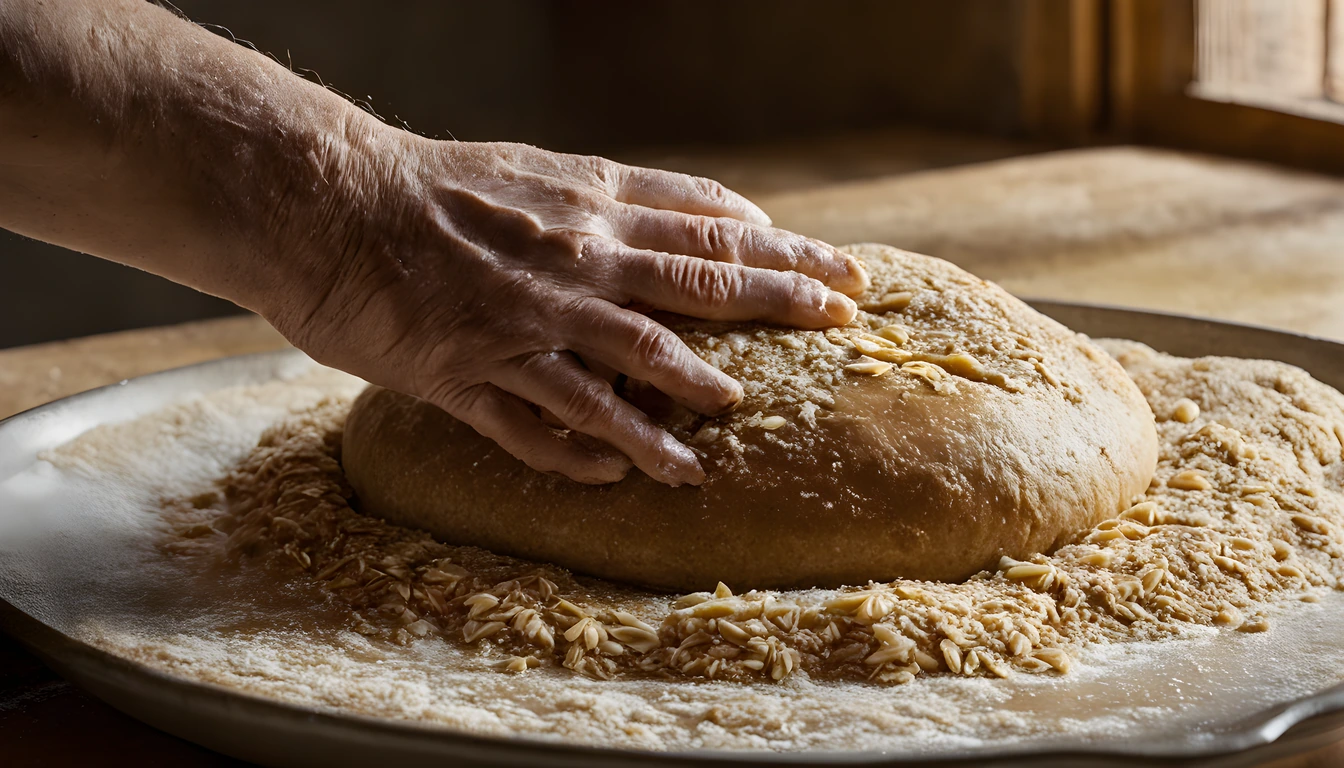
- 3Knead gently and let riseUse a dough scraper to lift an edge of the dough and fold it toward the center, turning the bowl between folds. Continue gently for about 3 minutes, until the dough holds together more evenly. Cover and leave in a moderately warm place for about 60 minutes, until roughly half again its original size and visibly aerated.
- 4Shape and proofLine a 9 by 5 inch loaf pan with parchment. Scrape the dough onto a clean work surface and use the scraper to pat it into a rectangle about as wide as the pan is long. Fold the far edge toward the center, then roll gently into a log. Set it seam-side down in the pan. Cover loosely and let rise for about 45 minutes, until puffy; a light fingertip indentation should return slowly. Begin heating the oven to 375°F (190°C) during the final 25 minutes of this rise.
- 5BakeUncover and bake on the middle rack for about 45 minutes. Check the crust after 25 minutes and loosely tent with foil if it is already deeply browned. The loaf is done when the sides feel set and the center registers 200–205°F (93–96°C). Use the center temperature to judge doneness rather than crust color alone.
- 6Cool before slicingLeave the bread in its pan for 10 minutes, then lift it out, remove the parchment and cool on a rack for about 110 minutes more, until room temperature throughout. Cut into 14 slices, including the heels. Total time includes the yeast rest, both rises and the full cooling period; allow longer if the dough rises slowly or the loaf remains warm.
Estimated nutrition per serving
153.55 calories · 2.85 g fat · 29.6 g carbohydrate · 4.9 g protein · 251.58 mg sodium
Serving: 1 slice (1/14 loaf; about 60 g), 1 of 14 servings
Calculated from ingredient weights and USDA FoodData Central: 168893, 173647, 169640, 171413, 175043, 173468. Estimates use ingredient input weights; actual portions, brands and cooking losses vary. Omitted nutrient values are unavailable, not zero.
Choosing flour and handling the dough
Use finely milled whole-spelt flour, with the bran included. White spelt flour absorbs water differently and is outside this formula. Spelt is a type of wheat; the nutrition estimate uses USDA's generic whole-grain wheat flour record rather than a spelt-specific analysis.
The rested dough should feel tacky and stretch a little before tearing. Work gently with a scraper. Adding flour until the surface feels dry can leave the baked crumb heavy.
Flavor intensity is computed from the listed flavor notes of 59 honeys in our catalog: 1 means most are described as mild or light, 5 means most are described as bold or dark. It is a tasting guide, not a laboratory measurement.
Sources: UC Agriculture and Natural Resources: Honey; USDA FoodData Central: Wheat flour, whole-grain (Includes foods for USDA's Food Distribution Program); USDA FoodData Central: Beverages, water, tap, drinking; USDA FoodData Central: Honey; USDA FoodData Central: Oil, olive, salad or cooking; USDA FoodData Central: Leavening agents, yeast, baker's, active dry; USDA FoodData Central: Salt, table.
- After mixing: soft dough with no dry pockets
- After resting: more cohesive, but still tacky
- After proofing: visibly puffy with a slowly returning indentation
Pro Tip
Mark the dough's starting height on the outside of the bowl so you can judge its rise without repeatedly uncovering it.
1 = mild, 5 = bold. Editorial pairing guidance, not laboratory measurements; jars vary.
- Clover
- Whole-spelt sandwich slices with a mild honey finish
- Wildflower
- Whole-spelt bread with a more noticeable honey character
- Buckwheat
- Whole-spelt toast with a bold honey flavor
Matching a honey to another dish: the honey flavor map
Get the Honey Buyer's Cheat Sheet (free PDF)
16 varieties on one page — color, flavor, best use and what a fair price looks like — from the 304 honeys we track.
Crust, crumb and finished yield
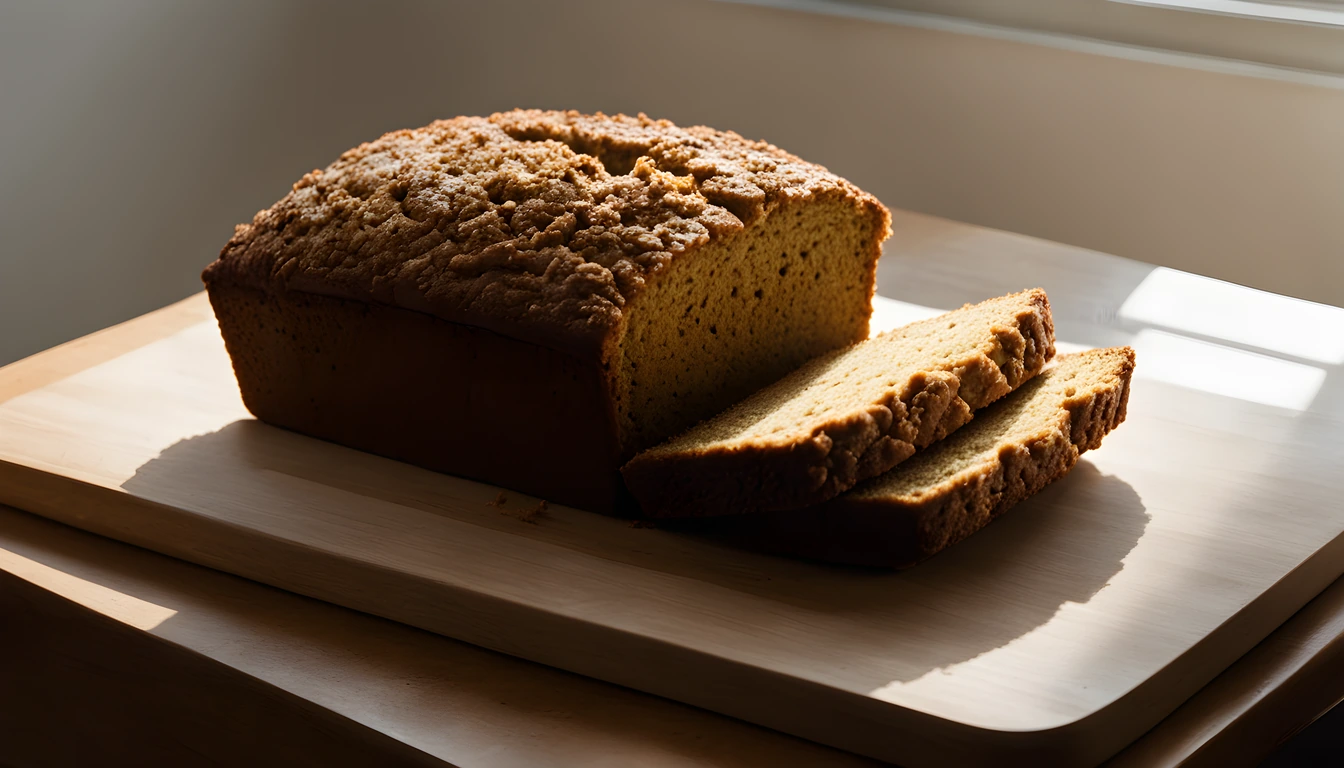
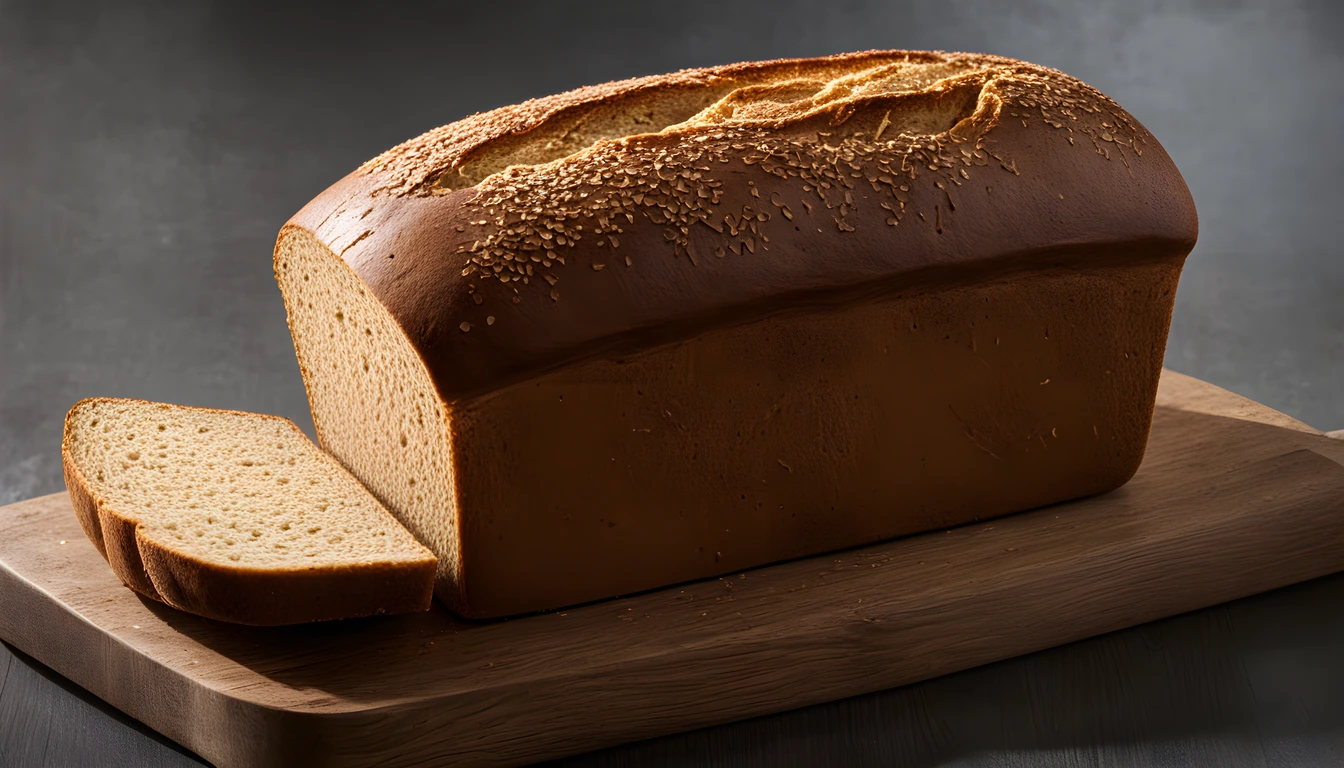
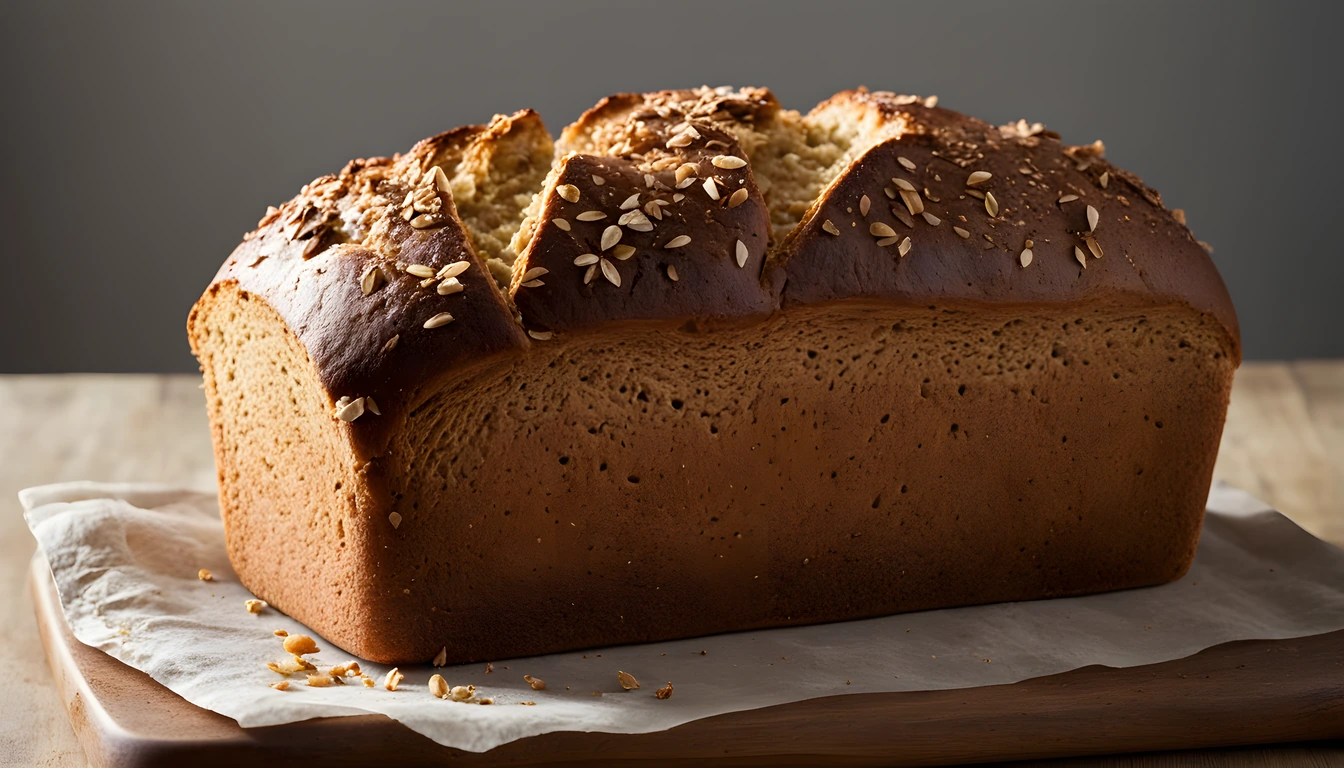
Expect a browned crust around a close, tender crumb. This dough is shaped gently and baked in a pan, so the finished bread should have small, fairly even air pockets rather than large open holes.
The ingredients total 955 g. The estimated cooled yield is 840 g, allowing about 115 g for fermentation, baking and cooling losses, with no strained or discarded ingredients. Dividing that estimated yield into 14 servings gives 60 g per slice. Actual loaf weight will vary with baking and cooling.
- Check the center temperature before removing the loaf
- Cool completely for clean slices
- Weigh the cooled loaf if you need precise serving weights
Pro Tip
Use a serrated knife with a gentle sawing motion so the crust does not compress the crumb.
Storage and serving
Once completely cool, wrap the loaf tightly and keep it at room temperature for up to 2 days. For longer storage, freeze the sliced bread in a sealed freezer bag for up to 2 months.
Thaw slices while wrapped, or toast them directly from frozen. Toasting brings out the browned edges and suits the loaf once its crumb begins to firm.
- Wrap only after the loaf has cooled throughout
- Separate slices before freezing so they are easy to remove
- Discard the loaf if mold appears
Pro Tip
Freeze the portion you will not use soon after the loaf has cooled, rather than waiting until it has become dry.
Choosing the Honey
Use Clover Honey or Wildflower Honey or Buckwheat Honey for the flavor described in this recipe. See our honey selection guide for other culinary choices.