About This Recipe
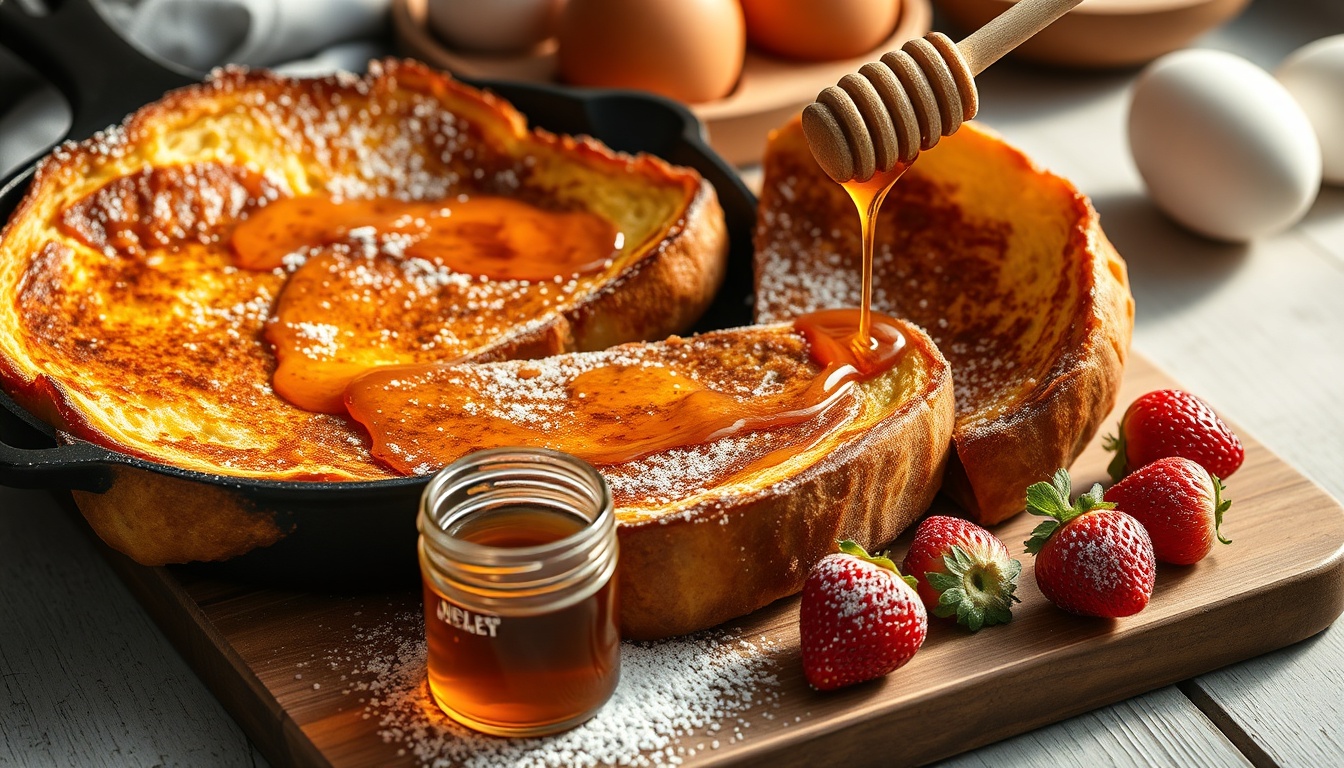
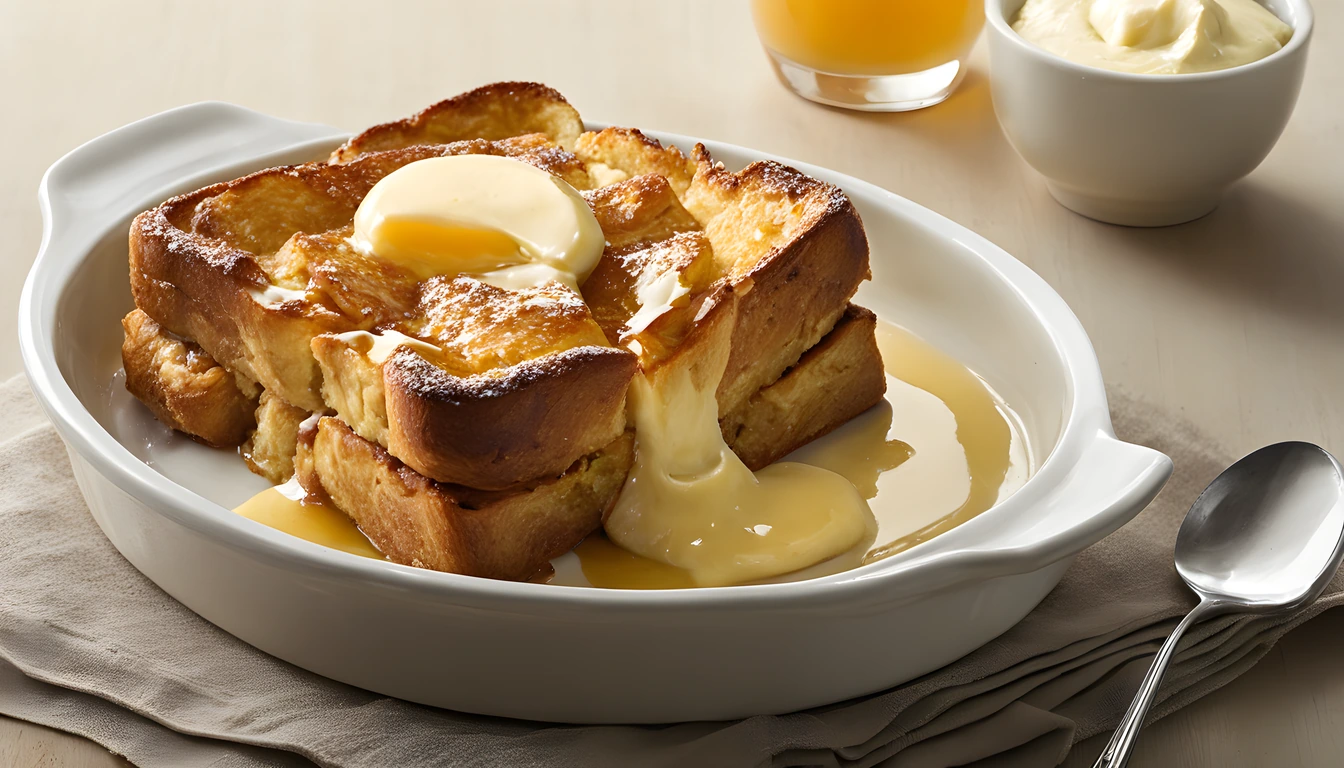
Honey French toast casserole is cubed bread soaked overnight in a honey-sweetened egg custard, then baked until the edges puff and the middle sets into something you can cut into squares with a knife.
The overnight soak does the real work. Bread left in the custard for eight hours drinks it to the center, so the baked casserole has no dry patches and no loose puddle at the bottom of the dish. Honey goes into the custard in place of sugar, and because honey browns faster than sugar, the dish stays covered for the first stretch of baking.
A plain white loaf is the safest choice. Dense sourdough stays chewy and very airy brioche slumps, though both still work if you cut the cubes larger and give them the full overnight soak.
Recipe
Honey French Toast Casserole Recipe
Honey French toast casserole: cubed bread soaked overnight in a honey custard, then baked until the top browns and the center sets. Makes 12 squares, about 98 g each.
8Ingredients
Yield: 12 servings
- 348 g white bread, cut into 1-inch cubes (about 12 slices)
- 300 g eggs (6 large)
- 488 g whole milk (2 cups)
- 113 g honey (about 1/3 cup)
- 43 g unsalted butter, melted (about 3 tbsp)
- 13 g vanilla extract (1 tbsp)
- 2.6 g ground cinnamon (1 tsp)
- 1.5 g salt (1/4 tsp)
Ingredient amounts scale; instructions show the original batch. Cooking times and pan sizes may need adjustment. Season to taste. Honey grams use US measures at 20°C and 17.5% moisture, a density estimate; weigh your honey for precision.
Instructions
- 1Butter the dish and cut the breadButter a 9-by-13-inch baking dish with a little of the melted butter, using most of it on the bottom and corners. Cut the bread into 1-inch cubes and spread them in the dish in an even layer. Slightly stale bread holds its shape better than fresh; if the loaf is very soft, leave the cubes out on a tray for an hour.
- 2Mix the honey custardWhisk the eggs, milk, honey, remaining melted butter, vanilla, cinnamon and salt in a large bowl for a full minute, until no streaks of egg white remain. If the honey is stiff, warm it with about 60 g of the milk first, stir until it dissolves, then add the rest of the milk cold.
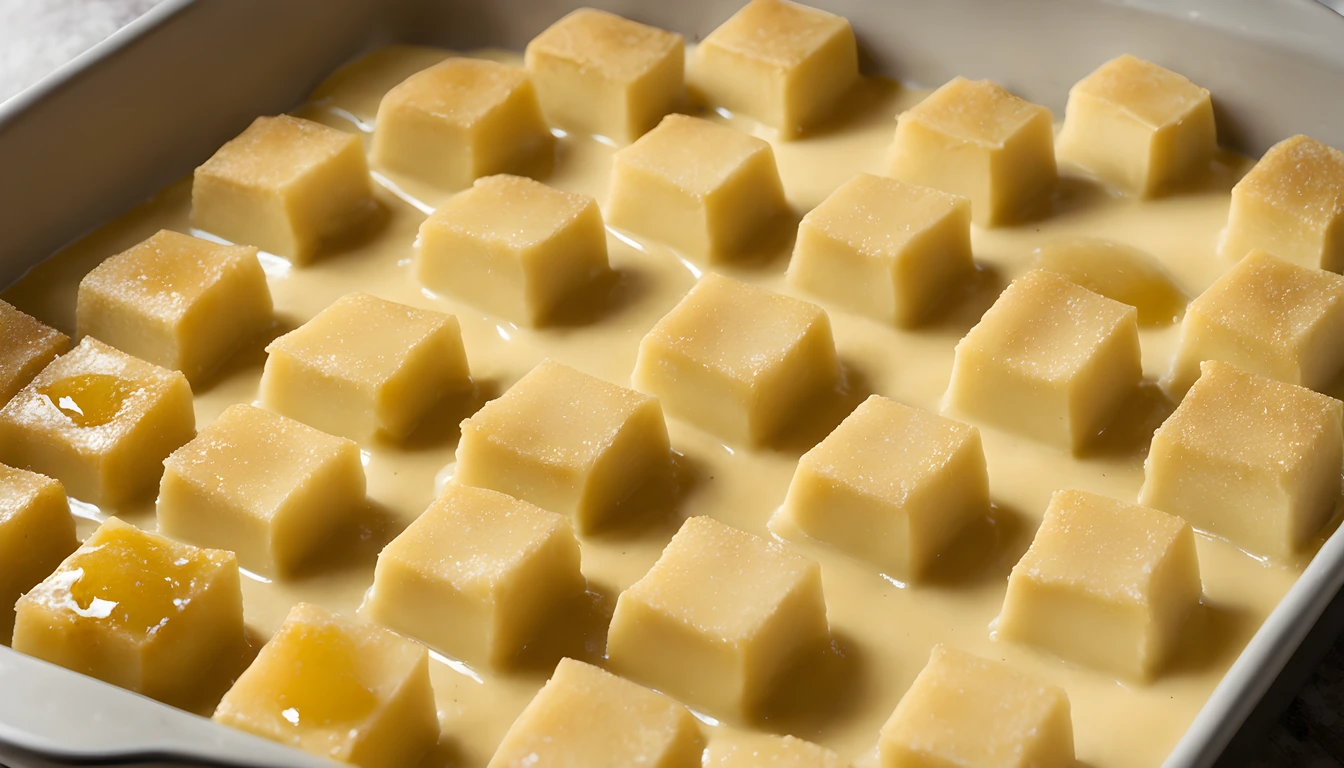
- 3Pour over and soak overnightPour the custard over the bread and press the cubes down with the back of a spoon so every piece gets wet. Cover and refrigerate at least 8 hours or overnight. The bread will absorb most of the liquid; a thin film left in the corners of the dish is normal.
- 4Bake covered, then uncoveredHeat the oven to 350°F. Bake the covered casserole 25 minutes, then uncover and bake another 20 minutes, until the top is deep golden and the center reads 175°F on an instant-read thermometer or a knife inserted in the middle comes out with only a little custard clinging to it. Honey browns quickly, so check at 15 minutes uncovered and lay foil back on if the edges darken too fast.
- 5Rest before cuttingTake the dish out of the oven and let it stand 10 minutes. The custard finishes setting as it rests, and cutting early gives ragged squares. Cut 3 across and 4 down for 12 pieces.
Estimated nutrition per serving
195.67 calories · 7.57 g fat · 24.53 g carbohydrate · 7.07 g protein · 244.48 mg sodium
Serving: 1 square (about 98 g), 1 of 12 servings
Calculated from ingredient weights and USDA FoodData Central: 174924, 171287, 171265, 169640, 173430, 173471, 171320, 173468. Estimates use ingredient input weights; actual portions, brands and cooking losses vary. Omitted nutrient values are unavailable, not zero.
What the finished casserole should look and taste like
The top should be browned and slightly crisp at the corners, with the bread tips standing proud of the custard. Underneath, the texture is soft but not wet: a knife slides through a square and leaves a clean edge rather than a run of liquid.
If the middle still wobbles after the full bake time, give it another 8 to 10 minutes covered with foil so the top does not darken further. If it looks dry at the edges while the center is loose, the oven is running hot; drop it 25°F, since honey browns faster than sugar.
Flavor intensity is computed from the listed flavor notes of 89 honeys in our catalog: 1 means most are described as mild or light, 5 means most are described as bold or dark. It is a tasting guide, not a laboratory measurement.
Sources: Honey (UC Agriculture and Natural Resources, Cottage Foods); USDA FoodData Central: Bread, white, commercially prepared (includes soft bread crumbs); USDA FoodData Central: Egg, whole, raw, fresh; USDA FoodData Central: Milk, whole, 3.25% milkfat, with added vitamin D; USDA FoodData Central: Honey; USDA FoodData Central: Butter, without salt; USDA FoodData Central: Vanilla extract; USDA FoodData Central: Spices, cinnamon, ground; USDA FoodData Central: Salt, table.
- Top deep golden, not pale and not dark brown
- Center set at 175°F and springy to a light press
- No standing liquid in the corners of the dish
- Squares cut cleanly after a 10-minute rest
Pro Tip
Taste a corner crumb before the rest is over; if the honey is barely there, drizzle a little more at the table rather than sweetening the whole batch.
1 = mild, 5 = bold. Editorial pairing guidance, not laboratory measurements; jars vary.
- Clover
- The default custard: mild sweetness, lets the cinnamon show
- Wildflower
- Everyday bake with a rounded, slightly floral finish
- Orange Blossom
- Custard with orange zest stirred in; serve with berries
- Buckwheat
- Bold molasses note; swap in half the honey and keep the rest mild
- Acacia
- Light, barely-there sweetness for a delicate batch
Matching a honey to another dish: the honey flavor map
Get the Honey Buyer's Cheat Sheet (free PDF)
16 varieties on one page — color, flavor, best use and what a fair price looks like — from the 304 honeys we track.
How to serve it
Serve the squares warm from the dish. Plain whole-milk yogurt or a spoon of whipped cream on top cuts the sweetness, and fresh berries or sliced banana work alongside the custard without competing with the honey.
A thin drizzle of extra honey at the table is optional and is not counted in the measured batch. If you want it, warm the honey briefly so it runs off the spoon instead of sitting in a blob.
- Warm squares with plain yogurt and berries
- Sliced banana and a light honey drizzle
- Cold squares straight from the fridge the next day
- A little salted butter on a reheated square
Pro Tip
Cut squares while the dish is warm, then reheat portions individually; cutting a cold casserole is easier but the first serving is best from a rested warm pan.
Storage and reheating
Cool leftovers within an hour, cover the dish or transfer the squares to a container, and refrigerate up to 4 days. The custard firms up cold, which is expected and not a sign it was underbaked.
Reheat covered at 325°F for 12 to 15 minutes, or microwave a single square for about a minute. Discard anything that smells sour or looks slick and separated, since the custard is a dairy and egg mixture.
The unbaked casserole holds in the refrigerator up to 24 hours before baking, which makes it easy to assemble a day ahead of when you need it.
- Refrigerator: baked, covered, up to 4 days
- Refrigerator: unbaked, covered, up to 24 hours
- Reheat covered at 325°F for 12 to 15 minutes
- Freeze baked squares up to 1 month, wrapped tight
Pro Tip
Freeze squares on a tray first, then bag them, so they do not fuse into one block.
Choosing the Honey
Use Clover Honey or Wildflower Honey or Orange Blossom Honey or Acacia Honey for the flavor described in this recipe. See our honey selection guide for other culinary choices.