The Immortelle Canopy: T&T's Signature Honey Landscape
Every February, the cocoa estates of Trinidad's central and southern regions undergo a brief, spectacular transformation. The immortelle trees — Erythrina poeppigiana, planted as shade canopy over cocoa plots by French Creole planters in the late eighteenth century — burst into vivid orange bloom before producing a single leaf. For three to five weeks, the estate canopy burns orange. Bees work the nectar-rich flowers intensively before cocoa flowering begins in earnest.
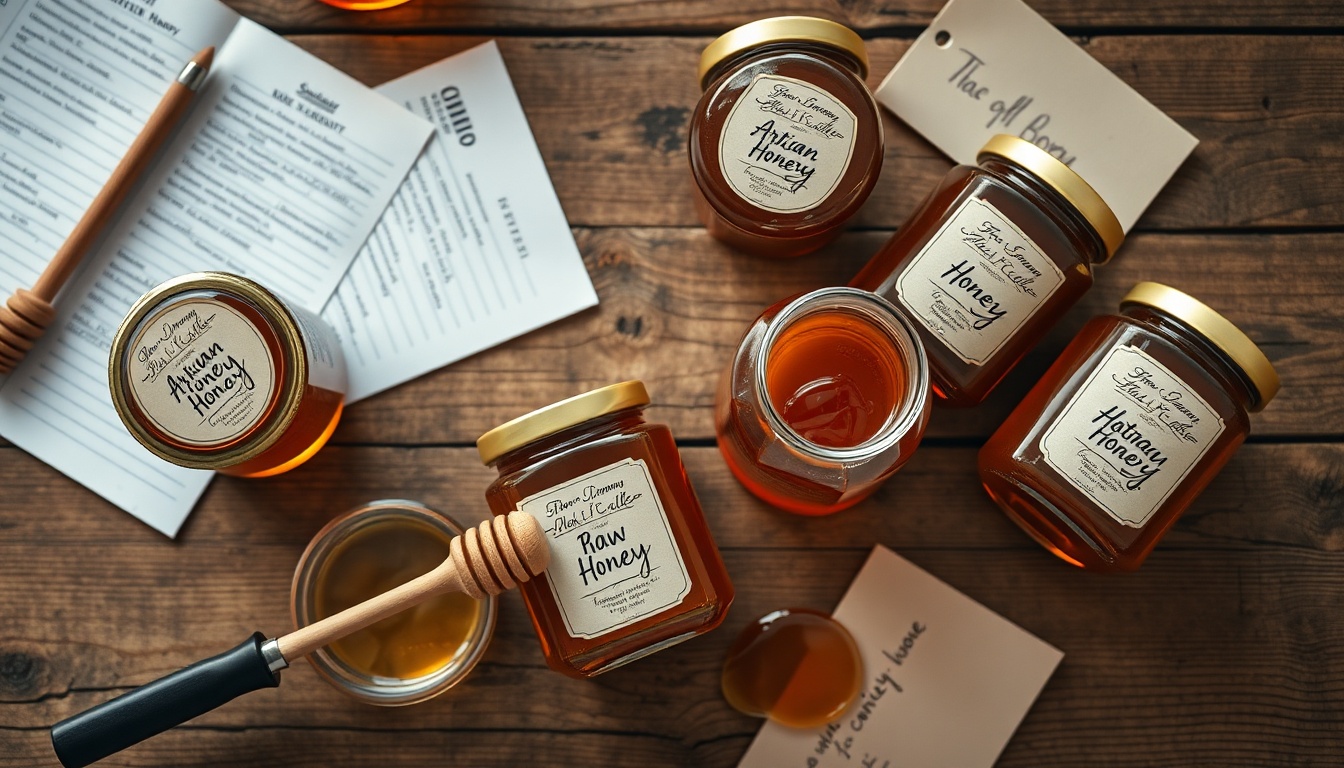
Immortelle honey is the closest thing T&T has to a signature varietal. Amber-coloured, medium-viscosity, it carries a subtle caramel undertone shaped by the micro-climate forage around it — traces of citrus, banana blossom, and heliconia pollen from intercropped estate plants. The honey bears almost no resemblance to generic wildflower honey precisely because the immortelle season is so short and concentrated: most of the nectar load in a February-March hive is immortelle, not a blend.
The shade-tree system itself is a form of living heritage. When Trinidad's cocoa industry nearly collapsed after the 1727 hurricane and disease event that destroyed original Criollo plantings, planters replanted with a natural hybrid between surviving Criollo trees and introduced Venezuelan Forastero — the variety that would become Trinitario. The immortelle shade structure they installed to protect young cocoa trees has been maintained on estates across the Central Range for nearly three hundred years.
The Trinitario Cocoa Paradox: Fine Chocolate's Homeland Has No Cocoa Honey
Trinidad is the birthplace of Trinitario cocoa. In 1727, a hurricane followed by a witches' broom disease event (Moniliophthora perniciosa) destroyed the island's Criollo cocoa. Planters repopulated with Venezuelan Forastero; natural hybridization with surviving Criollo trees produced the Trinitario variety. Today, 60–70% of the world's 'fine flavour' cocoa — the premium cacao used by artisan chocolatiers in Europe and Japan — is Trinitario-derived. Ecuador, Venezuela, Madagascar, and T&T itself all cultivate descendants of that 1727 accident.
Cocoa flowers present a curious problem for bees. The tiny, complex blooms of Theobroma cacao are primarily pollinated by Forcipomyia midges, not bees. Apis mellifera forages estate edges and cover crops but does not efficiently work cocoa flowers. The result: cocoa estate hives in Trinidad produce multifloral honey with a complex aromatic profile — immortelle, citrus, banana blossom, heliconia — but no true cocoa blossom monofloral. Elsewhere, 'cacao honey' experiments in Peru and Ecuador have yielded small batches of honey collected from hives placed among high-density cocoa plots, but these are curiosities rather than commercial products. T&T, the variety's homeland, has zero international cocoa honey brand.
This is one of the more striking artisan honey gaps in the Caribbean. The infrastructure exists: Trinitario estates across Siparia, Mayaro, and the Montserrat Hills maintain productive hive populations. What is missing is the varietal identity — a 'Trinitario estate honey' brand that connects the world's most prestigious cocoa heritage to a honey product. The estate multifloral currently produced there is sold locally without that framing.
Get the Honey Buyer's Cheat Sheet (free PDF)
16 varieties on one page — color, flavor, best use and what a fair price looks like — from the 304 honeys we track.
The South American Bee Bridge: Melipona favosa on a Caribbean Island
Trinidad sits on South America's continental shelf. During the last glacial maximum, when sea levels were 120–130 metres lower than today, Trinidad was a peninsula of Venezuela's Orinoco Delta. Post-glacial sea-level rise approximately 10,000–12,000 years ago completed the separation, stranding South American flora, fauna, and bee populations on what became an island.
The most significant consequence for beekeeping: Melipona favosa, a South American stingless bee, is present in Trinidad. It is the only Melipona species found on any Caribbean island — every other Antillean island has only Trigona and Frieseomelitta spp. Melipona favosa colonies build wax-resin pots rather than combs, producing small-batch 'pot honey': more acidic (pH 3.3–3.9), higher moisture (25–35%), and deeply aromatic. Colony yield is modest, typically 10–20 litres per year. The honey does not granulate and is traditionally used in T&T herbal medicine — locally called 'bee in the tree' honey from colonies found in hollow logs.
Conservation interest in Melipona favosa has grown. The Trinidad Natural Heritage Farmers Association and several agro-tourism operators in the Brasso Seco and Asa Wright Nature Centre corridor have begun documenting colony locations and experimenting with rational Meliponicultura hive designs. Given that the bee's Caribbean presence traces to geological accident rather than human introduction, its honey represents a genuinely irreplaceable island-specific product.
Trigona species are also widespread across both islands, producing smaller-cell nests typically in tree cavities. Like Melipona honey, Trigona pot-honey is watery, acidic, and ferments quickly without refrigeration — properties that make it more a traditional medicine and curiosity than a commercial export product.
Northern Range, Asa Wright, and the Tobago Forest Reserve
Trinidad's Northern Range runs the length of the island's northern coast, peaking at Cerro del Aripo (940 m). The range's montane forest — mahogany, immortelle, poui, and epiphyte-laden ridgelines — produces a distinct wildflower honey different from estate lowland production. Producers in the Arima and Maraval valleys collect honey with a fuller body and brighter acidity than coastal estate honey, reflecting the higher-altitude foraging mix.
The Asa Wright Nature Centre in the Arima Valley, one of the Caribbean's premier birdwatching destinations, sits at the intersection of Northern Range forest and traditional cocoa estate. Several estates near Asa Wright maintain hives; the centre's visitor shop has historically carried local honey. Access to Northern Range estate honey is easiest through ecotourism channels rather than formal retail.
Tobago is geologically distinct from Trinidad. While Trinidad rests on South America's continental shelf, Tobago sits on a separate oceanic ridge — the Tobago Ridge — and has its own geological and ecological identity. Tobago's honey foraging reflects the Atlantic coast: sea grape (Coccoloba uvifera), frangipani (Plumeria), tropical beach forest, and the endemic-rich flora of the Tobago Forest Reserve.
That reserve, designated in 1776 under British colonial governance, is widely cited as the oldest legally protected rainforest in the Western Hemisphere. The Speyside area on Tobago's northeastern Atlantic coast, adjacent to the reserve, produces honey from a foraging corridor that has been nominally protected for nearly 250 years. Tobago honey is lighter in colour and slightly more floral than Trinidad estate honey, reflecting the sea island foraging mix rather than the mainland-adjacent estate micro-climate.
Certification, Standards, and Buying Authentic T&T Honey
T&T has no internationally-recognized organic honey certification equivalent to USDA Organic or EU Organic. The T&T Bureau of Standards (TTBS) sets domestic honey quality parameters aligned broadly with Codex Alimentarius CODEX STAN 12-1981 — moisture ceiling 20%, HMF limit, free acidity threshold — but enforcement and third-party audit infrastructure for beekeepers are limited. Some estate producers in the Northern Range and Tobago Forest Reserve corridor practice de facto organic management on traditional cocoa estates that have not used synthetic inputs for generations, but these claims are not verified against a formal audit trail.
The best sources for authentic T&T honey are direct-from-producer. Queen's Park Savannah Craft Market in Port of Spain operates on weekends with several honey vendors. The Scarborough Saturday Market in Tobago carries local sea island honey. Brasso Seco, a community ecotourism village in the Northern Range, has marketed estate honey through agro-tourism channels. The Asa Wright Nature Centre visitor shop is a reliable stop for Northern Range estate honey when available.
Price ranges widely: TT$80–200 per jar (approximately US$12–30) for authentic estate or stingless bee honey. Mass-market supermarket honey in T&T is often imported blend; Carib brand and similar supermarket products are not estate-origin. For Melipona pot-honey specifically, expect to pay premium prices and to source it through community agro-tourism or direct beekeeper contact rather than retail. Shelf-stable refrigeration is required given the higher moisture content.
T&T's honey sector receives institutional support from the Caribbean Agricultural Research and Development Institute (CARDI), which has published technical guidance on hive management and quality standards for Caribbean stingless bee honey. CARDI's multi-country research on Meliponini honey quality is one of the few systematic efforts to characterize the chemical properties of Caribbean pot-honey varieties.