The Beekeepers' Republic: Ukraine's Extraordinary Apiary Density
Ukraine holds an unusual distinction in global honey production: it is almost certainly the world's most beekeeping-dense nation measured by apiaries per unit of arable land. With an estimated 2.2–2.5 million registered bee colonies spread across some 400,000–500,000 registered beekeepers in a country of roughly 603,000 km² of total territory — of which approximately 42 million hectares is agricultural land — Ukraine's beekeeping density has no parallel in any major honey-producing nation. For comparison, Germany has roughly 900,000 colonies; France has approximately 1.4 million. Ukraine, at roughly 2.3 million colonies, managed more than either EU giant from a smaller landmass.
This density is not accidental. The Ukrainian steppe and forest-steppe belts — the chornozem (black earth) zone stretching from Kharkiv south through Poltava to Kherson and west through Kirovohrad to Vinnytsia — are among the most ecologically productive agricultural landscapes in the world. The same soil fertility that drives Ukraine's global dominance in sunflower, wheat, corn, and rapeseed production also generates extraordinary nectar flows. Sunflower nectar flows in July–August across southern Ukraine create surges that rival the great acacia flows of Hungary — millions of hectares of continuous yellow, billions of individual flowers per square kilometre, accessible to any colony within a 3–5 km foraging radius.
Historically, Ukrainian beekeeping predates the Kievan Rus era. Medieval chronicles document honey and wax trade as primary exports of the Kyiv Principality from at least the 9th century. The Zaporozhian Cossacks maintained apiaries as part of their self-sustaining steppe economy. The Hutsul people of the Carpathian highlands developed a distinct beekeeping tradition documented in writing from the 16th century, using horizontal log hives (дуплянки, duplyanka) carved from tree trunks — precursors of modern log-hive traditions across Central and Eastern Europe. By the 19th century, Ukrainian honey production was well-established as a commercial enterprise, feeding markets in the Russian Empire and Central Europe. The Soviet collectivisation of beekeeping (1930s–1950s) reorganized production into large collective apiaries, creating the scale and geographic distribution that persists today.
The practical consequence of this density is that Ukraine — despite being unknown to most Western specialty honey buyers — was producing roughly 60,000–80,000 metric tonnes of honey annually in the years immediately before 2022, making it consistently one of the world's five largest producers alongside China, Turkey, India, and Argentina. Most of this output entered the EU as bulk commodity honey, labeled on supermarket shelves as 'blend of EU and non-EU honeys' — invisible to the consumer buying an ordinary supermarket jar. The 2022 invasion changed that anonymity, suddenly and dramatically.
Pro Tip
Ukraine's acacia honey rivals Hungarian and Romanian acacia chemically but reaches Western shelves at a significant price discount when labeled correctly. Look for jars that explicitly state 'Ukraine origin' rather than vague 'EU blend' labels — the 2022 trade changes have increased Ukrainian origin disclosure requirements for some importers.
Acacia (Robinia) Honey — Ukraine's Premium Export Variety
Ukrainian acacia honey (акацієвий мед, akatsiyevyi med) comes from Robinia pseudoacacia — black locust / false acacia — the same North American immigrant species that drives Hungarian akácméz, Romanian salcâm, and Italian acacia production. Robinia arrived in Ukraine during the 18th–19th centuries, planted initially for soil stabilisation in the sandy steppes along the lower Dnipro River (Kherson Oblast) and to stabilise railway embankments across southern Ukraine. As in Hungary and Romania, nobody planned a honey industry — but the tree's extraordinary nectar productivity and Ukraine's beekeeping density converted an environmental intervention into one of Europe's major honey flows.
The main acacia-production zone runs along the lower Dnipro corridor in Kherson Oblast and extends into Mykolayiv, Kirovohrad, and Dnipro oblasts. Kherson's sandy alluvial soils support large Robinia plantations — trees grow faster in dry, well-drained soils than in heavier clay, and the Kherson Robinia stands have historically produced some of Ukraine's largest, most consistent acacia nectar flows. Bloom timing is typically early-to-mid May in southern Kherson (later than Hungarian Alföld, which blooms late April), with the bloom cascade extending north and east through June following Ukraine's latitudinal gradient.
Ukrainian acacia honey shares the universal Robinia profile: water-white to very pale gold, very high fructose content (38–44%), minimal crystallization tendency (acacia typically remains liquid for one to three years at room temperature), and a clean, mild, lightly floral character with a neutral finish that pairs with anything. Subtle regional variation exists — Kherson acacia, from warm, dry stands at 20–50m ASL, tends to the palest color and most neutral profile; more northerly Robinia stands in Kirovohrad or Cherkasy oblasts, influenced by slightly cooler temperatures and more diverse surrounding flora, may show marginally more floral complexity.
Since the full-scale Russian invasion in February 2022, Kherson Oblast's role in Ukrainian honey has been severely disrupted. Russian forces occupied the entire oblast south of the Dnipro by late March 2022. Ukrainian forces liberated Kherson city and the right (west) bank in November 2022, but the Dnipro's left (east) bank remained under Russian control through 2023–2024. The acacia plantations and apiaries of the Kherson lowlands — Ukraine's premier acacia zone — sit in active conflict or mined territory. The practical effect: Ukrainian acacia production has been significantly disrupted from the country's most productive zone, with surviving output shifting to more northerly and westerly Robinia stands that are outside the conflict area.
Get the Honey Buyer's Cheat Sheet (free PDF)
16 varieties on one page — color, flavor, best use and what a fair price looks like — from the 304 honeys we track.
Sunflower Honey — The Volume Crop That Defines Ukraine's Bulk Market
Ukraine's relationship with sunflower (соняшник, sonyashnyk, Helianthus annuus) is difficult to overstate. Ukraine is consistently the world's largest or second-largest producer of sunflower oil, with 7–10 million hectares of sunflower planted annually across southern and central oblasts. This agricultural dominance translates directly into honey production: when 7–10 million hectares of sunflower bloom simultaneously in July–August, the nectar flows across southern Ukraine dwarf almost any other single honey flow in Europe.
Ukrainian sunflower honey is bright yellow to amber in colour, with a moderate sweetness, a mild sunflower-seed aroma, and a slightly waxy, creamy finish. It crystallises rapidly — within two to four weeks of extraction, sunflower honey sets to a firm, grainy bright-yellow solid driven by its high glucose content (approximately 35–38% glucose, giving a glucose/water ratio that crosses the crystallisation threshold quickly at room temperature). Crystallised Ukrainian sunflower honey is often sold as a spreadable cream honey product, with the rapid crystallisation being a feature rather than a flaw in domestic markets.
Most Ukrainian sunflower honey enters the export market as bulk commodity. It is the variety most likely to appear in 'blend of EU and non-EU honeys' supermarket jars — low-cost, high-volume, consistent quality suitable for industrial food processing, commercial baking, and mass-market retail. Genuine single-origin Ukrainian sunflower honey from a named Oblast and harvest year is rarely visible on Western specialty shelves. For buyers seeking it explicitly: look for Ukrainian brands marketed directly to diaspora communities in Poland, Germany, and the UK, or for specialty importers who have worked directly with Ukrainian beekeeping cooperatives since 2022.
The war's impact on sunflower honey production is significant but geographically mixed. Southern oblasts (Kherson, Mykolayiv, Zaporizhzhia, Kharkiv) — Ukraine's sunflower heartland — have seen heavy conflict. Many sunflower fields have been abandoned, mined, or used as military positions. Northern and western oblasts (Sumy, Poltava, Vinnytsia, Kirovohrad) continue production outside active conflict zones. The net effect is a significant reduction in total sunflower honey output from 2022 onwards, with production concentrated in regions further from the southern front.
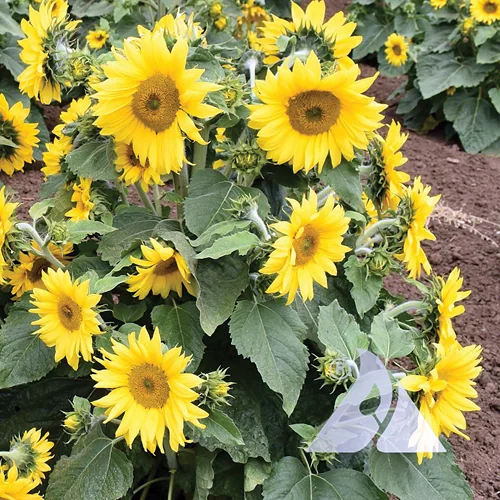
Photo: Queen Right Colonies, used with permission
Buckwheat Honey — Ukraine's Signature Dark Specialty
If Ukrainian honey has a single signature variety that stands apart from its neighbours, it is buckwheat (гречаний мед, hrechanyi med, from Fagopyrum esculentum). Ukraine's Poltava and Chernihiv oblasts, along with parts of Khmelnytskyi and Zhytomyr, have historically been among Europe's most important buckwheat-growing regions. The plant — a pseudocereal, not a true cereal, native to Central Asia — produces exceptionally nectar-rich flowers in July–August, and the resulting honey is among the darkest and most distinctively flavoured in the European honey spectrum.
Ukrainian buckwheat honey is dark amber to near-black, with a robust, malty-earthy aroma reminiscent of molasses or dark caramel, and a strong, lingering finish that tasters describe as 'warming'. The flavour divides opinion sharply — buckwheat honey's assertiveness makes it unsuitable for applications where honey should be neutral (sweetening delicate tea, dressing mild cheeses), but ideal where boldness is welcome: rye bread spreads, hearty winter teas, dark-chocolate pairings, marinades, and traditional Ukrainian recipes that call for a honey with presence.
Ukrainian buckwheat is closely related to — and in blind tastings often indistinguishable from — Canadian or US buckwheat honey, which comes from the same Fagopyrum esculentum species and produces honey with near-identical chemical signatures. What differentiates Ukrainian buckwheat from commodity bulk is the tradition of small-apiary production and named-origin labelling from specific Poltava or Chernihiv village cooperatives. Ukrainian diaspora communities in Germany, Poland, the Czech Republic, and Canada are the primary Western buyers who specifically seek Ukrainian buckwheat by name.
Pro Tip
Buckwheat honey is a folk remedy for tiredness in parts of Eastern Europe, but no study shows it treats anaemia or fatigue; a spoonful carries only trace iron. Buy it for flavour: if you're looking for the boldest honey to spread on dark bread, Ukrainian buckwheat is the archetype.
Linden Honey and Carpathian Wildflower — Ukraine's Aromatic Specialties
Ukrainian linden honey (липовий мед, lypovyi med) comes primarily from Tilia cordata — small-leaved linden — which grows as a characteristic feature of Ukrainian forest-steppe zones, along riverbanks, in urban parks, and as a traditional village tree across Kyiv, Chernihiv, Poltava, and Podolia (Khmelnytskyi, Vinnytsia) oblasts. The linden honey season is narrow — approximately 10–14 days per stand in late June to mid-July — and beekeepers often follow the bloom northward, from warmer southern Kyiv Oblast in late June to cooler Chernihiv Oblast stands in mid-July.
Ukrainian linden honey shares the defining character of all Central-Eastern European Tilia honeys: pale golden colour, an intensely aromatic linalool-driven profile (faintly mentholated, herbal, cooling), and a light sweetness without the assertiveness of darker varieties. It is Ukraine's most domestically prized specialty honey, commanding the highest retail prices in Ukrainian specialty shops and farmers' markets. Authentic Ukrainian linden honey from named Kyiv or Chernihiv Oblast apiaries represents genuinely excellent value on the international market for buyers who can source it directly — equivalent in quality to Bulgarian or Romanian linden but less known in Western European specialty channels.
Carpathian mountain wildflower honey (карпатський мед, karpatskyi med) is Ukraine's most complex and geographically distinctive variety. The Carpathian range in western Ukraine — covering Zakarpattia, Lviv, Ivano-Frankivsk, and Chernivtsi oblasts — creates a vertical botanical transect from valley-floor meadows (300–500m ASL) through sub-alpine herb meadows (1,000–1,500m ASL) to the treeline. At these altitudes, summer meadows contain an exceptional diversity of nectar plants: mountain clover, phacelia, borage, sainfoin, raspberry, meadowsweet, St. John's wort, fireweed, and endemic Carpathian herbs found nowhere else in Europe. The Hutsul beekeeping tradition — the Hutsul people being the ethnic Ukrainian Carpathian highlanders who maintained highland apiaries and traditional duplyanka log hives long after lowland beekeeping modernised — is documented as a distinct cultural heritage and has seen a revival since Ukrainian independence in 1991.
Carpathian wildflower honey ranges from pale amber to medium amber depending on harvest timing and altitude. Spring Carpathian harvest (May–June) is lighter, with fruit blossom and early herb dominance. Summer harvest (July–August) is darker, richer, with mountain herb complexity and resinous overtones from forest-edge proximity. Carpathian honey is the variety most likely to carry genuine provenance labelling from Ukrainian specialty producers — Zakarpattia Oblast apiaries near Uzhhorod or the Synevyr National Park area have developed dedicated specialty export operations. It is the category where Ukrainian honey most directly competes on quality with Austrian or Swiss alpine wildflower rather than on price with bulk commodity.
The Polesian Gray Bee — Ukraine's Cultural Heritage Subspecies
The most distinctive biological dimension of Ukrainian beekeeping is the existence of a native bee subspecies rarely discussed outside specialist literature: the Polesian gray bee (бджола сіра, bdzhola sira), also referred to as Apis mellifera sossimai or the Polessian bee. This subspecies — or closely related ecotype — evolved in the Polesia region of northern Ukraine, Belarus, and adjacent Russia: a vast lowland of mixed forest, peat bogs, lakes, and river systems (the Pripyat basin) stretching across what is now northern Zhytomyr, Kyiv, Chernihiv, and Rivne oblasts in Ukraine.
The Polesian gray bee shares morphological characteristics with the broader Apis mellifera carnica / carpathica group — grey body, relatively long winter clustering behaviour, good temperament — but exhibits specific adaptations to the Polesia environment: tolerance for high humidity, ability to utilise forest honeydew sources under marginal conditions, and foraging activity in cooler temperatures than most Central European A. mellifera subspecies. For centuries, before modern apiculture standardised on Carniolan and Italian strains, this native bee was the basis of Ukrainian forest-steppe beekeeping.
The 20th century dealt two catastrophic blows to the Polesian gray bee. First, Soviet collectivisation and apicultural modernisation in the 1950s–1970s introduced Carniolan queens on a massive scale, crossbreeding with the native population. Second, the 1986 Chornobyl Nuclear Power Plant disaster (in Kyiv Oblast, adjacent to the heart of Polesia) contaminated vast areas of the bee's natural habitat. The Exclusion Zone created around Chornobyl has inadvertently become a wildlife sanctuary — including for bees — but managed breeding populations of the native Polesian bee are now the subject of conservation programs at the Ukrainian Institute of Apiculture and through private breeding operations in Zhytomyr and Rivne oblasts. The bee was officially recognised as a Ukrainian agricultural heritage breed in 2006.
Honey from certified Polesian gray bee colonies is not commercially exported — the breeding populations are too small and the emphasis is genetic conservation rather than production. But the existence of this subspecies matters for the wider story of Ukrainian honey: it represents a pre-modern beekeeping tradition rooted in the Polesia wetland forest, producing forest-floor honey with a botanical composition entirely different from the steppe sunflower and Robinia of southern Ukraine. It is the biological evidence that Ukrainian beekeeping is not just an agricultural industry but a cultural heritage with indigenous biological foundations.
- Apis mellifera sossimai / Polesian gray bee: native to Polesia (northern Ukraine, Belarus, Russia)
- Adaptations: high-humidity tolerance, cool-temperature foraging, gentle temperament
- Conservation status: officially listed as Ukrainian agricultural heritage breed (2006); genetic reserve maintained in Zhytomyr and Rivne oblasts
- Chornobyl Exclusion Zone: inadvertent wildlife sanctuary that includes managed feral bee populations with reduced human crossbreeding pressure
- Dominant commercial subspecies: Apis mellifera carpatica (Carpathian bee) in western Ukraine; A. mellifera carnica crosses across central Ukraine
The EU Tariff Controversy: How War Reshaped European Honey Markets
Before February 2022, Ukrainian honey entered the EU under the Deep and Comprehensive Free Trade Area (DCFTA) agreement, provisionally applied from 1 January 2016, which gave Ukraine a duty-free honey tariff-rate quota that reached 6,000 tonnes a year. Above that quota, the standard EU duty on natural honey of 17.3% applied. This arrangement had been in place since 2016, placing Ukrainian honey in competition with EU domestic production but limiting the volume of duty-free imports. Ukrainian beekeepers and exporters operated within those quota limits; EU producers coexisted with manageable Ukrainian import volumes.
The full-scale invasion of February 24, 2022 triggered a rapid EU trade-policy response. From 4 June 2022, the EU's Autonomous Trade Measures (Regulation (EU) 2022/870) suspended all duties and quotas on Ukrainian goods, honey included, as emergency economic support. The rationale was straightforward: Ukraine's export economy was facing catastrophic disruption, and removing trade barriers was one of the fastest economic levers the EU could pull in solidarity. For Ukrainian honey exporters, this created an immediate and massive new opportunity: unlimited duty-free access to a market of 450 million consumers.
The consequences rippled quickly through Central European honey production. Polish, Hungarian, Romanian, and Czech beekeepers found themselves suddenly competing against Ukrainian bulk acacia and sunflower honey entering EU markets at prices reflecting Ukraine's lower production costs and the scale of its large commercial apiaries. Demonstrations by EU beekeepers in Warsaw, Budapest, Bucharest, and Brussels through 2022–2023 highlighted a genuine market disruption: cheaper Ukrainian acacia honey entering Poland was undercutting Hungarian and Romanian acacia (salcâm).
The measures were extended in June 2023 and renewed in June 2024. The 2024 renewal (Regulation (EU) 2024/1392) added honey to an 'emergency brake': once imports reached the average of the second half of 2021, 2022 and 2023, the honey quota came back automatically. Honey hit that level in August 2024, and the tariff-rate quota returned for the rest of the measures' term. The measures expired on 5 June 2025 and the DCFTA quotas applied again. In October 2025 the EU and Ukraine adopted a revised DCFTA that raised the honey quota; Ukrainian sources put it at 35,000 tonnes a year.
For consumers, the controversy created an authenticity layer that still persists. During 2022–2024, significant volumes of Ukrainian honey entered Poland and other Central European countries, were repackaged, and entered retail as 'Product of Poland' or 'EU blend' — legally in many cases, but obscuring Ukrainian origin from consumers who believed they were buying domestic product at domestic prices. Origin labelling reform — requiring explicit declaration of each country of origin when multiple countries contribute to a blend — remains an ongoing EU policy discussion partly driven by this episode.
Pro Tip
If you're buying honey labeled 'blend of EU honeys' or 'Product of Poland/Germany' at unusually low prices, there is a reasonable probability of Ukrainian acacia or sunflower content in the blend. This is not a quality problem — Ukrainian honey quality is generally high — but it is a transparency problem for consumers who are paying for domestic production and getting a cheaper import without disclosure.
DSTU Standards, Authentication, and Buying Ukrainian Honey
Ukraine's honey standard — ДСТУ 4497:2005 (Ukrainian Honey Standard, DSTU 4497:2005) — sets quality parameters for domestic and export honey. The standard is broadly aligned with the Codex Alimentarius 2001 standard and the EU 2001/110/EC honey directive, with some differences in specific parameters. Ukrainian export honey typically meets EU quality thresholds (moisture ≤20%, HMF ≤40 mg/kg for regular honey, diastase ≥8 DN), though historically Ukrainian bulk honey destined for non-EU markets may carry higher HMF levels reflecting less-rigorous cold-chain management in storage and transport.
Authentication of Ukrainian honey presents specific challenges in the current conflict period. The disruption to producing regions, the movement of beekeepers from conflict zones, and the complexity of tracking product through multi-country supply chains creates a provenance opacity problem. For buyers who want verified-origin Ukrainian honey: (1) seek producers or cooperatives with direct-to-consumer or direct-to-importer channels in western Ukraine (Zakarpattia, Lviv, Ivano-Frankivsk — regions outside active conflict); (2) look for Ukrainian diaspora-oriented brands, several of which have established direct partnerships with Ukrainian beekeepers as a form of wartime economic support; (3) for Carpathian wildflower specifically, some Zakarpattia cooperative brands have maintained supply chain integrity and labelling throughout the conflict period.
The 'real Carpathian honey' authenticity signal most worth knowing: authentic Ukrainian Carpathian wildflower honey from a genuine mountain apiary will show high pollen diversity under microscopy (many plant species in a summer sample) and will crystallise to a medium-granular texture within 2–4 months at room temperature. Very slow crystallisation in a labeled 'Carpathian wildflower' honey suggests high Robinia content from valley-floor apiaries, which is not fraudulent but is a different product from genuine altitude-collected mountain honey. Very fast full crystallisation within 2 weeks suggests high sunflower or rapeseed content.
- Acacia / akatsiyevyi med: pale gold, mild, slow-crystallising — Southern/central Ukraine; Kherson (disrupted), Kirovohrad, Cherkasy
- Sunflower / sonyashnykovy med: bright amber, fast-crystallising, volume commodity — southern steppe, July–Aug bloom
- Buckwheat / hrechanyi med: near-black, malty-earthy, assertive — Poltava, Chernihiv, Khmelnytskyi
- Linden / lypovyi med: pale golden, aromatic, mentholated — Kyiv, Chernihiv, Poltava river valleys, Jun–Jul
- Carpathian wildflower / karpatskyi med: amber-complex, high pollen diversity, Jun–Aug altitude harvests — Zakarpattia, Lviv, Ivano-Frankivsk
- Coriander / koriandrovy med: warm-spicy, distinctive — Kherson, Zaporizhzhia (production disrupted since 2022)