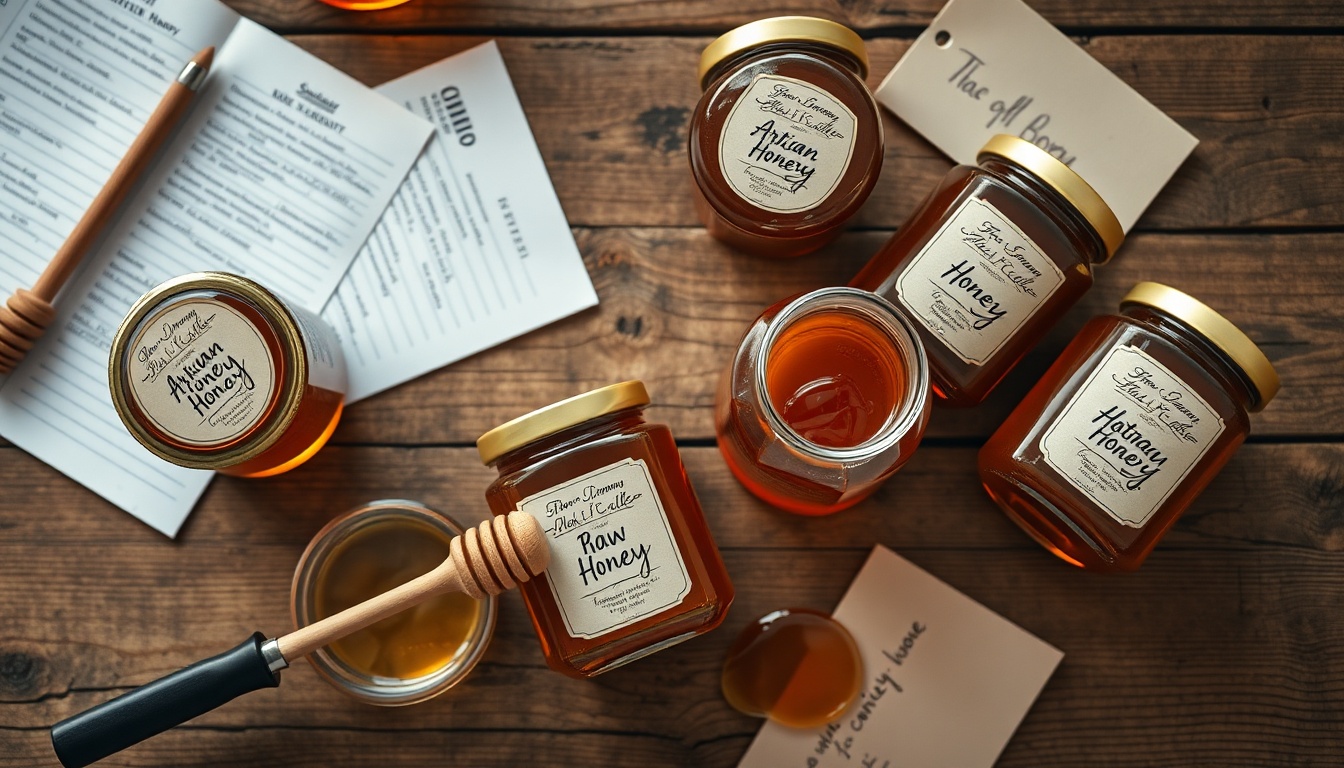
Lipiec: The Month Poland Named for Honey
In English, July is named for Julius Caesar. In German it is Juli — a Latin borrowing. In Polish, July is called lipiec. Not after a general, an emperor, or a calendar reformer — after the linden tree (lipa, Tilia cordata), because July is when Polish linden forests bloom and the most important honey harvest of the Polish year begins. No other European language ties a month of the calendar so directly to a honey plant. The naming is a cultural timestamp: it records that medieval Polish agriculture was organized around the linden bloom the way wine-growing regions are organized around the grape harvest.
This linguistic accident has a practical consequence for honey buyers: Poland's single most important and culturally prestigious honey variety — lipiec (linden honey) — is the only European honey whose harvest month is literally built into the national language. When a Polish beekeeper says the lipiec harvest was good this year, they are saying something that has no direct equivalent in French, German, or Italian beekeeping vocabulary. The word collapses the botanical, the seasonal, and the cultural into a single syllable.
Poland's relationship with honey runs deeper than language. Historical records document Polish honey and mead as significant trade commodities from at least the 10th century. Medieval apiary systems (barć beekeeping — tree-hollow hives carved into forest oaks and pines) were legally protected under Piast dynasty statutes, with penalties for destroying a barć hive equal to those for destroying a horse. Mead (miód pitny) remained the drink of the Polish nobility through the 17th century. The beekeeping heritage is not a modern marketing story — it is a documented thousand-year industry that predates Poland's current borders by centuries.
Pro Tip
The Polish word lipiec (July) and lipa (linden tree) share the same root. If you see a Polish honey label reading 'miód lipowy' or simply 'lipiec', you are looking at linden honey — the variety whose harvest defines the Polish apicultural calendar.
Miód Lipowy — Poland's Linden Honey and the Small-Leaved Difference
Polish linden honey (miód lipowy) is produced primarily from Tilia cordata — the small-leaved linden — rather than Tilia tomentosa (silver linden), which dominates Romanian and Hungarian linden honey production. This botanical difference is real and produces a detectable difference in aromatic chemistry. Tilia cordata nectar is particularly rich in trans-anethole (an anise-adjacent compound) alongside linalool, giving Polish lipiec honey a characteristic herbal-minty top note that can read as faintly anise or fennel-adjacent. Romanian tei and Hungarian hárs honey — both primarily from Tilia tomentosa — have a more purely floral-citrusy linalool character with less of the herbal-anise edge.
This is a falsifiable authentication signal: if you hold a jar labeled 'Polish linden honey' and the aroma is purely floral-citrusy without any herbal or slightly anise-adjacent note, it may not be genuine T. cordata-dominant Polish lipiec, or it may have been blended. The herbal note is subtle — more like a faint dried herb than a food-flavoring anise hit — but it is reliably present in properly produced monofloral Polish linden honey.
Tilia cordata grows across Poland's broadleaf forest belt from the Western Carpathian foothills northward through Małopolska, Mazovia, the Kujawy plain, and eastward into Podlaskie and Lublin provinces. The bloom window is narrow: approximately 10–14 days per stand, typically late June to mid-July in lowland forest stands, a week to ten days later in foothill and submontane zones. Migratory Polish beekeepers time hive placement to intercept successive bloom windows across the latitudinal gradient, extending a single linden season by 20–30 days across multiple apiaries.
Flavor profile: intensely aromatic, floral-herbal, with the characteristic linalool warmth plus the T. cordata herbal-minty edge, mild sweetness, faint cooling sensation on the palate. Color ranges from water-white to pale gold at extraction, deepening to light amber as it crystallizes. Crystallization occurs in 2–6 months, producing a smooth, medium-grained cream. Price at specialty retail: approximately for monofloral lipiec from a named apiary; quality plateau at €12–18.

Get the Honey Buyer's Cheat Sheet (free PDF)
16 varieties on one page — color, flavor, best use and what a fair price looks like — from the 304 honeys we track.
Rzepakowy — The White Cream That Funds Polish Beekeeping
Poland is one of the EU's largest rapeseed (Brassica napus) producers — a member of the same Northern European grain-and-oilseed belt that runs through Germany, Denmark, Sweden, and the Baltic states. Rapeseed honey (miód rzepakowy) is Poland's highest-volume crop and the economic foundation of professional Polish beekeeping. Without the spring rapeseed flow (late April to late May), most large Polish apiaries would be financially unviable; lipiec is culturally supreme, but rzepakowy pays the annual operating costs.
Miód rzepakowy is distinctive and divisive. It crystallizes to a firm, snow-white or cream-colored solid within 2–4 weeks of extraction — among the fastest-crystallizing honeys in Europe, driven by its high glucose content (~38–42% glucose) and near-zero crystallization nucleation threshold. The flavor is mild: faintly waxy, slightly cabbage-adjacent at room temperature (Brassica volatiles), clean and neutral when the crystallized solid melts on the tongue. It is considered a commodity honey in Poland — functional, widely consumed, not prestigious. Polish consumers use crystallized rzepakowy on bread much as northern Germans or Danes use their own rapeseed honey.
For buyers unfamiliar with Polish honey, rzepakowy is a confusing entry point: it looks like cheap supermarket honey (white, solid, inexpensive) but is technically a pure monofloral product with reliable origin. This contrasts sharply with American honey market structures where pure clover honey USA commands premium retail pricing despite comparable flavor profiles to Polish rzepakowy, demonstrating how regional market positioning and consumer expectations dramatically affect honey pricing independent of botanical quality. The better quality signal for Polish rzepakowy is whether it has been naturally crystallized at ambient temperature after extraction versus force-crystallized industrially. Naturally crystallized Polish rzepakowy has a finer, smoother grain and a cleaner flavor. The lower end of the market is often processed into a stabilized white paste used in industrial baking and food service — a different product category despite sharing the same name.
Pro Tip
Polish rzepakowy that smells faintly of cooked cabbage at room temperature is behaving normally — Brassica glucosinolate volatiles degrade slowly in stored honey. The flavor is neutral when the crystallized solid warms and melts. If you find the Brassica aroma off-putting, try storing it in a cool place and consuming it spread on bread rather than tasted neat.
Gryczany, Wrzosowy, and Akacjowy — Poland's Specialty Triad
Polish buckwheat honey (miód gryczany) is produced from Fagopyrum esculentum (common buckwheat), a crop grown in Poland's eastern regions — Podlaskie, Lublin, and Mazovia provinces — where sandy, slightly acidic soils suit buckwheat better than wheat or barley. Miód gryczany is Poland's most intensely flavored honey: very dark amber to near-brown, with a pungent, earthy, slightly fermented aroma and a strong malty-bitter flavor that polarizes tasters as strongly as Marmite. The high phenolic content — among the highest of any European honey — gives gryczany its distinctive antioxidant profile. It crystallizes to a brown-gray granular solid. Polish gryczany is among Europe's finest buckwheat honeys, comparable to Ukrainian and Belarusian gryczany from the same Eastern European buckwheat belt.
Polish heather honey (miód wrzosowy) comes from Calluna vulgaris (common heather) moorlands in northeast Poland — particularly the Mazurian Lakes district (Warmia-Mazury province), the Kurpie forest (northeastern Mazovia), and the pine heath stretches of Podlaskie. Like Scottish heather honey, Polish wrzosowy exhibits thixotropy: the honey is a gel at rest but liquefies under mechanical stirring, returning to gel when undisturbed. This unusual non-Newtonian behavior is caused by high protein (primarily Api m 10 bee enzyme) that creates a colloidal gel matrix around water and sugar molecules. Color is dark amber to amber-red, flavor is intensely floral-bitter with a dry, slightly astringent finish characteristic of Calluna. Genuine monofloral Polish heather honey commands a price premium and is rarer than either lipiec or rzepakowy.
Polish acacia honey (miód akacjowy) is produced in southeast Poland — the Podkarpackie, Lubelskie, and Świętokrzyskie provinces — where Robinia pseudoacacia forests are found on the same sandy, eroded soils that drew the tree to Hungary and Romania in the 18th century. The acacia forest in Poland is smaller in extent than Romania's or Hungary's (~50,000–80,000 hectares versus Romania's 250,000+ hectares), so miód akacjowy is a smaller commercial category in Poland. The profile matches European acacia quality standards established by Italian acacia honey: water-white to pale gold, high fructose, 1–3 year crystallization resistance, mild floral sweetness. Polish akacjowy demonstrates the same exceptional clarity and delicate vanilla undertones characteristic of premium Alpine foothills terroir, though with slightly more mineral complexity from Carpathian soils compared to Italian lowland varieties. Southeast Polish akacjowy is the southernmost node of the same Robinia cascade that runs from Hungary through Romania — bloom typically arrives 2–4 weeks after equivalent Romanian lowland stands, making it the last link in the cross-border seasonal circuit.
- Gryczany (buckwheat): dark amber-brown, pungent earthy aroma, malty-bitter flavor, highest phenolic content of any Polish honey
- Wrzosowy (heather): thixotropic gel, dark amber, intensely floral-bitter, dry finish — from Mazurian moorlands
- Akacjowy (acacia): water-white, mild, crystallization-resistant — southeast Podkarpackie/Lublin region
- Wielokwiatowy (multifloral): Poland's most widely consumed category; highly variable by region and season
Spadziowy — Tatra and Carpathian Honeydew from Poland's Mountain Edge
Poland's southern border runs along the Tatra Mountains and the Western Carpathian arc — the same mountain range that produces Romania's miere de brad and Germany's Schwarzwälder Tannenhonig. The Polish Tatras (Tatry) and the Beskidy mountain ranges (Małopolska and Silesian Beskids) produce Poland's rarest and most expensive honey: miód spadziowy (honeydew honey), specifically the subtype miód spadziowy z drzew iglastych (conifer honeydew honey) from silver fir (jodła pospolita, Abies alba) and Norway spruce (świerk pospolity, Picea abies).
Polish conifer honeydew honey is one of only a few EU foods protected by a PDO (Protected Designation of Origin) registration: 'Miód drahimski' and 'Miód z Sejneńszczyzny/Łoździejszczyzny' are registered Polish honey PDOs, though the most prized conifer honeydew comes from the Tatra/Beskidy zone without a formal PDO. The chemical profile of Polish spadziowy is essentially identical to Romanian miere de brad and German forest honey Schwarzwälder Tannenhonig: dark amber to near-black, conductivity ≥0.8 mS/cm, high mineral content, resinous-malty-balsamic flavor, minimal floral sweetness, 12+ month crystallization resistance due to high mineral salt content suppressing glucose nucleation. However, Polish Tatra honeydew often exhibits slightly more pronounced mineral complexity from the Carpathian crystalline basement geology compared to the Central European volcanic terroir of Black Forest varieties.
The finest Polish conifer spadziowy is produced in years when aphid (Cinara abietis and related species) infestations on fir and spruce are heavy enough to produce abundant honeydew but not so severe as to stress the trees into needle drop. These are irregular harvests — a peak honeydew year may yield exceptional quality, while a dry year with low aphid density produces almost no harvestable honeydew. This irregularity is what makes spadziowy a premium product; unlike rapeseed or linden, the harvest cannot be reliably planned.
Pro Tip
Polish miód spadziowy from Tatra-region conifer forests is among Europe's finest honeydew honeys and usually costs less than equivalent German Tannenhonig or Swiss fir honey with stronger brand recognition. Look for 'spadziowy z drzew iglastych' (conifer honeydew) on the label rather than 'spadziowy z drzew liściastych' (deciduous tree honeydew) if you want the dark, resinous Tannenhonig-equivalent profile.
Poland's Honey Landscape: From Baltic Coast to Tatra Summit
Poland's topography creates several distinct honey zones. The Northern Lowlands (Baltic coast, Pomerania, Warmia-Mazury) are dominated by heather moorland, mixed pine-deciduous forest, and rapeseed agriculture — producing wrzosowy heather honey, buckwheat in east-Pomeranian zones, and the majority of commodity rzepakowy. The Mazurian Lakes district is Poland's premier heather honey region, where Calluna vulgaris thrives on the post-glacial sandy moraines between lake basins.
The Central Lowlands (Mazovia, Kujawy, Łódź province) form Poland's agricultural heartland — rapeseed, sunflower, and buckwheat flow country. The Kujawy region (between Bydgoszcz and Włocławek) has some of Poland's most productive rapeseed apiaries. Mazovia and Lublin provinces produce the finest miód gryczany buckwheat honey from the Eastern European buckwheat belt.
The Southern Uplands and Małopolska Plateau (Małopolska, Świętokrzyskie, Lublin Upland) form a transition zone with a more varied agricultural mosaic — small fields, orchards, meadows, and remnant broadleaf forest. This landscape produces Poland's most complex wildflower (wielokwiatowy) honeys and supports both linden and acacia flows in the same geographic region. The Świętokrzyskie Mountains (Holy Cross Mountains) have a significant linden component alongside diverse meadow flora.
The Carpathian Foothills (Małopolska Carpathians, Podkarpacie) and the Tatry/Beskidy mountain ranges are spadziowy and specialized linden territory. The Bieszczady range (far southeast) has some of Poland's least-disturbed meadow and forest landscape, producing multi-botanical polyflora honey of exceptional pollen diversity comparable to Transylvanian polyflora in Romania. These Carpathian mountain wildflower varieties offer more concentrated botanical complexity than broad-plain regions like Texas wildflower honey, where elevation gradients compress diverse nectar sources into compressed alpine growing seasons, creating honey with more intense, layered floral character impossible to replicate at consistent sea-level terroir.
Polish Quality Standards, PDOs, and the Invisible Giant Paradox
Polish honey quality is overseen by the Główny Inspektorat Jakości Handlowej Artykułów Rolno-Spożywczych (IJHARS — the Chief Inspectorate of Commercial Quality of Agri-Food Products) and the veterinary inspection system (Główny Inspektorat Weterynarii), implementing the EU Honey Directive (2001/110/EC) alongside Polish national honey regulations. Standards cover moisture limits (≤20% for standard honey, ≤18.5% for linden, rapeseed, and heather categories), HMF limits, diastase activity, residue testing, and labeling compliance.
Poland has three geographically registered honey products under EU quality schemes: 'Miód drahimski' (PDO, from the Drawsko Pomeranian lake district), 'Miód z Sejneńszczyzny/Łoździejszczyzny' (PDO, from the Suwałki/Sejny region bordering Lithuania), and 'Podkarpacki miód spadziowy' (PGI, Subcarpathian conifer honeydew honey from the Bieszczady and Carpathian ranges). These are the only formally protected Polish honey designations — most regional honey has no formal geographical protection despite genuine place-specific character.
The invisible giant paradox: Poland produces approximately 20,000–24,000 tonnes of honey annually — consistently among the EU's top five producers, competing with Spain, Romania, Hungary, and Germany for rankings that vary year to year with weather and disease. Yet Polish honey is almost entirely absent from Western European specialty retail. The export channel runs almost exclusively through industrial blenders: Polish bulk honey (primarily rzepakowy and wielokwiatowy) is purchased by German, Dutch, and British packers, blended into EU or mixed-origin products, and sold without Polish attribution. A jar of 'EU blend' in a UK or German supermarket is statistically likely to contain Polish honey — but the consumer has no way to know it.
The specialty segment is growing slowly. Polish producers including Apiland, Pasieka Jaros, and a number of Małopolska and Podkarpacie artisan beekeepers are reaching German and UK specialty retailers with named-origin lipiec, wrzosowy, and gryczany. But brand recognition for Polish honey remains almost nil in Western markets — an asymmetry that represents both the paradox of Polish production and the opportunity for buyers willing to look past the origin.
Buying Polish Honey — Authentication and What to Look For
Lipiec authentication: the primary physical test is crystallization timeline. Genuine monofloral miód lipowy crystallizes to a smooth, medium-grained cream within 2–6 months of extraction. It should not stay liquid for 12+ months (that would indicate acacia contamination or blending), nor should it crystallize to a coarse, gritty white solid within days (that indicates rapeseed contamination). The correct texture is a smooth pale-gold cream with a slightly grainy but not gritty texture, not as fine as rapeseed and not as stiff. Scent check: the herbal-minty note that distinguishes T. cordata lipiec from Romanian or Hungarian tei/hárs should be detectable — lean over the open jar and look for that herbal-anise edge.
Gryczany authentication: color is your first signal. Genuine Polish buckwheat honey should be very dark amber to brown — if it is pale or medium amber, it has been heavily blended with lighter honeys. The aroma should be immediately distinctive: earthy, slightly fermented, malty, unmistakable. Any buckwheat honey that smells mild and neutral is not monofloral gryczany. No other common European honey smells like buckwheat; there is no useful substitution in that flavor space.
Spadziowy authentication: dark color (amber to near-black) plus high conductivity (≥0.8 mS/cm — sometimes stated on specialist labels) plus slow or absent crystallization. If a honey labeled spadziowy is pale or medium amber and crystallizes quickly, it is not conifer honeydew. The resinous-balsamic aroma of genuine conifer honeydew is distinctive: it smells of forest, not flowers.
Polish product vocabulary: miód lipowy / miód z lipy = linden honey; miód rzepakowy = rapeseed honey; miód gryczany = buckwheat honey; miód wrzosowy = heather honey; miód akacjowy = acacia/Robinia honey; miód wielokwiatowy = multifloral/wildflower honey; miód spadziowy = honeydew honey; miód spadziowy z drzew iglastych = conifer honeydew; pasieka = apiary; bartnik = tree beekeeper (historical tradition); pszczelarstwo = beekeeping; skład: miód pszczeli = ingredients: bee honey; kraj pochodzenia: Polska = country of origin: Poland. The four-signal label: named variety + named pasieka/pszczelarza + named region + harvest year (rok zbioru) is the gold standard.
Pro Tip
For gryczany (buckwheat) authenticity, apply the paper-towel test: place a small drop of honey on white paper. Dark amber honey leaves a faint dark halo as water migrates into the paper. If the halo is pale despite the honey appearing dark, it may have been artificially colored. The halo of genuine gryczany is distinctly amber-tan, not colorless.