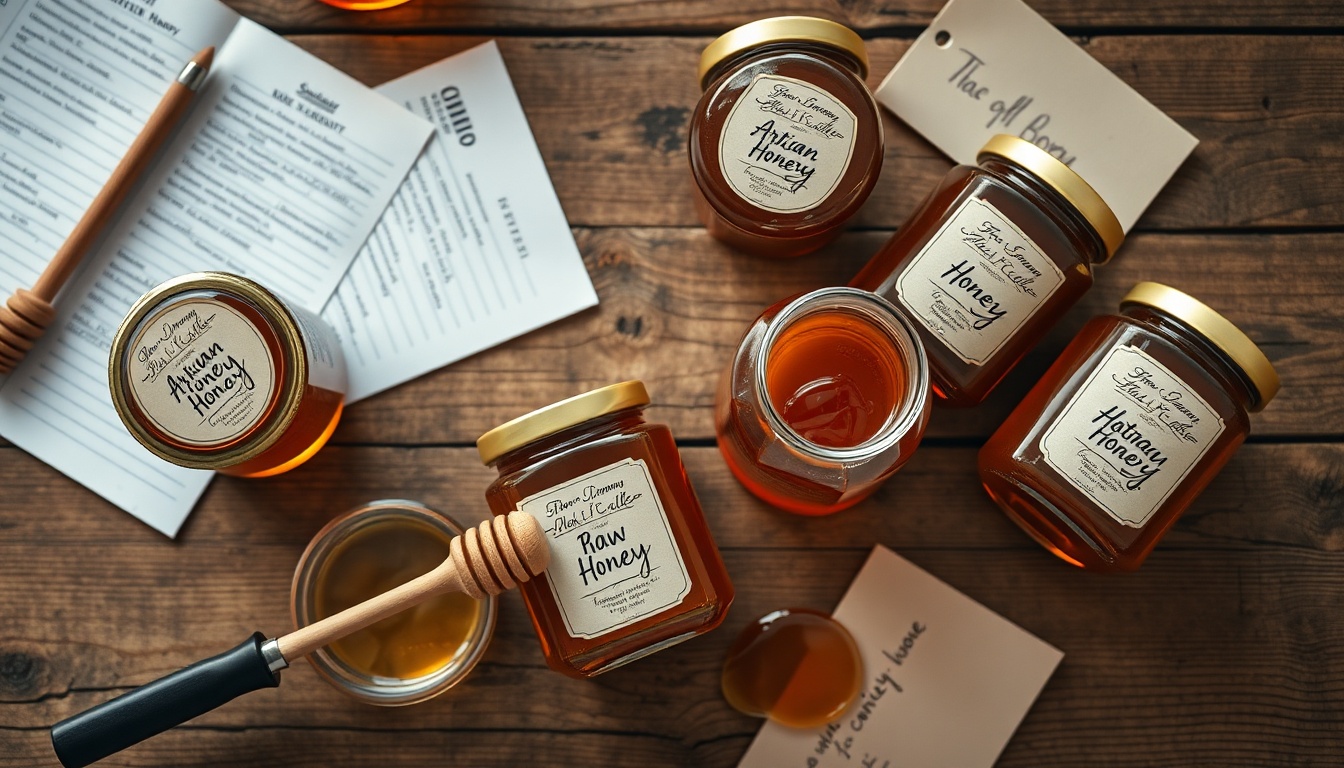
The 91% Paradox: The World's Most Distinctive Heather Honey and a Market That Ignores It
The United Kingdom consumes approximately 35,000–40,000 metric tonnes of honey per year while producing only 3,500–5,000 metric tonnes domestically — covering roughly 9–13% of national demand. The remaining 87–91% is imported, primarily from Argentina, New Zealand, Mexico, and a range of EU and Eastern European sources, blended under commodity labels that reveal little about origin or quality. This structural import dependency makes the UK one of the most import-reliant honey markets in the developed world, on a par with Germany and France in the same paradox: countries with native honey traditions of genuine world standing that are largely invisible in their own supermarkets.
The Scottish and northern English heather moorland produces Calluna vulgaris honey that is — by any rational botanical comparison — as texturally and biochemically distinctive as any honey in the European premium catalog. Authentic Scottish heather honey exhibits thixotropy: a gel state at rest that liquefies under mechanical shear (stirring, spreading) and reforms over hours. This same gel behavior — arising from the same protein-polysaccharide network formed by Calluna vulgaris nectar compounds — is the authentication signature of German Heideblüte from the Lüneburg Heath, the only property proven to uniquely distinguish Calluna honey from all other European flower honeys. It is, in other words, a built-in adulteration test. Yet Scottish heather honey represents fewer than 1% of UK retail honey sales by volume, while New Zealand manuka honey — prized specifically for its bioactive profile — commands a rapidly expanding premium UK market share despite requiring a 12,000-mile supply chain.
Two additional British varieties complete the picture of genuine domestic distinctiveness: borage honey (from oilseed borage, Borago officinalis, grown as an industrial seed crop across tens of thousands of hectares in East Yorkshire and Lincolnshire) is one of the mildest and palest honeys produced anywhere in Europe — water-white to barely gold, with a neutral, clean sweetness that makes it the most versatile British culinary honey; and oilseed rape honey (OSR, from Brassica napus) crystallises to a smooth cream within weeks of extraction, forming the palest and finest-grained crystallised honey from any UK crop. Understanding these three varieties — heather, borage, and OSR — in the context of UK honey regulations and the BBKA quality framework gives the serious buyer both the analytical tools to find authentic domestic honey and the vocabulary to make sense of it.
Scottish Heather Honey — The Gel Honey of the Highlands and Moors
Scottish heather honey is produced from Calluna vulgaris (ling heather, common heather) blooming across the Highland grouse moors, Cairngorms plateau, and upland moorland from Sutherland in the far north to the Southern Uplands. The bloom runs from late July to mid-September, earlier at lower elevations (mid-July in Yorkshire and Dartmoor, August through early September on the Cairngorms). This is a brief, weather-dependent window: a warm dry August and early September is a good heather year; a wet, cold summer can suppress the nectar flow almost entirely. The practical result is that genuine Scottish heather honey is inherently limited in volume and strongly seasonal — characteristics that, combined with its botanical distinctiveness, define it as the most legitimately scarce premium British honey.
The defining property of Calluna vulgaris honey is thixotropy: at room temperature, undisturbed authentic heather honey is a semi-solid gel — not crystallised (the crystal structure is different from set honey), but a protein gel that holds its shape against gravity, rather like a soft jam or thick yogurt. When the gel is agitated by a spoon, spreader, or finger, it immediately liquefies and flows freely, then reforms over several hours once the shear is removed. This behavior arises from a three-dimensional network formed by protein compounds specific to Calluna vulgaris nectar — suspected to involve arabinoxylans and related structural polysaccharides — and is unique among European flower honeys. (Manuka honey from New Zealand exhibits a different thixotropy arising from protein fibrils, not the Calluna polysaccharide network; the mechanisms are analogous but not identical.) The practical authentication implication is direct: if a honey labelled "heather honey" is fully liquid at room temperature without having been heat-treated, it is not pure Calluna vulgaris honey. Mixing even 30–40% of standard liquid honey into authentic heather honey breaks the gel structure permanently. This makes the thixotropic gel state one of the most reliable authenticity markers in the European honey market — a property that any buyer can verify with a finger and a jar.
Because the gel structure makes Calluna honey impossible to extract by standard centrifugal methods, traditional heather honey production in Scotland has relied on pressing — the oldest honey extraction technique, producing what Scottish beekeepers call "press honey" that includes some wax particles and pollen, giving a cloudier appearance and intensifying the flavor. Modern approaches use a loosener (a heated spiked plate pressed into the comb to break the gel before centrifugation), which extracts a clearer honey while preserving the thixotropic structure of the original gel. The flavor profile of authentic Scottish heather honey is warm, bittersweet, and herbal-complex: a caramel-sweet backbone with a pronounced bitter edge (from the same phenolic compounds that give heather its characteristic moorland aroma), a warm dried-fruit mid-note, and a pleasantly astringent tannin finish. Color ranges from deep amber-red to amber-brown. Price for named-moor authenticated Scottish heather honey: (8oz) jar — approximately — from specialist Scottish producers. Mass-market "blended heather honey" in UK supermarkets is almost certainly not pure Calluna vulgaris and will not exhibit the gel.
Get the Honey Buyer's Cheat Sheet (free PDF)
16 varieties on one page — color, flavor, best use and what a fair price looks like — from the 304 honeys we track.
Yorkshire, Dartmoor and Welsh Heather — Regional Variation in Britain's Calluna Honeys
Heather honey production in England and Wales is geographically concentrated on the upland moors and heathlands of the Yorkshire Dales and North York Moors, the Exmoor and Dartmoor plateaus in the southwest, and scattered Welsh upland zones in Snowdonia and the Brecon Beacons. These English and Welsh Calluna vulgaris sources produce honey with the same thixotropic gel property as Scottish heather — the underlying botany is identical — but with measurable differences in flavor profile attributable to differences in associated flora, soil chemistry, and local climate. Yorkshire Moors heather honey, from the largest area of managed heather moorland in England (approximately 40% of the UK's total heather moorland by area), is typically the most intensely flavored of the English varieties: warm, bittersweet, with pronounced moorland-herbal complexity. Dartmoor heather honey, from the high granite plateau in Devon, tends toward a slightly more mineral quality alongside the characteristic Calluna bitterness, reflecting the granitic acid soils.
Bell heather (Erica cinerea) is distinct from common heather (Calluna vulgaris) and blooms approximately two weeks earlier on British moorland, from late June to August. Erica cinerea honey is not thixotropic — it lacks the gel-forming protein network of Calluna — and is typically liquid and lighter in colour, with a cleaner sweetness and less of the characteristic Calluna bitterness. In the wild, both species bloom simultaneously on British moorland, and most "heather honey" from UK producers reflects a mixture of Calluna and Erica nectar sources. Pure Calluna honeys, gel-confirmed and produced by beekeepers who move hives to the moors after Erica bloom peaks, command higher prices. The distinction matters for the serious buyer: a partially-Calluna heather honey will have only partial thixotropy (reduced gel strength, faster breakdown) rather than the full solid-gel-at-rest behavior of high-Calluna product.
In Wales, heather honey production overlaps with a distinctly Welsh culinary tradition that is underappreciated internationally: mead production. Wales has one of the densest concentrations of artisan mead producers in the UK relative to population, and several Welsh meaderies source native Welsh heather honey as a botanical distinctive in premium meads. The Welsh honey tradition is also linked to the oldest surviving bees legislation in any European language: the Laws of Hywel Dda (Cyfraith Hywel), codified around 940 AD, contained detailed provisions governing bee-ownership, honey tithes, and the valuation of beeswax — evidence of a mature honey economy in medieval Wales that long predates any surviving German or French beekeeping documentation. Contemporary Welsh honey producers increasingly use this heritage provenance as a marketing differentiator.
Oilseed Rape (OSR) Honey — The Commercial Backbone That Crystallises in Weeks
Oilseed rape honey — from Brassica napus, grown across approximately 550,000–650,000 hectares of UK agricultural land primarily in eastern England, East Anglia, Lincolnshire, and the Yorkshire Wolds — is the dominant honey type by volume in UK commercial beekeeping and the variety most UK beekeepers harvest in the greatest quantity each year. The spring OSR bloom, running from late April to mid-May, provides an intense but brief nectar flow that is the single most productive honey crop for UK apiaries in most years. A strong OSR flow can yield 20–40 kg per colony in a few weeks; it is the economic foundation of the UK beekeeping industry in a way that no other UK crop approaches.
OSR honey has an exceptionally high glucose-to-fructose ratio — approximately 35–40% glucose — that causes it to crystallise with extraordinary speed: typically within 2–4 weeks of extraction at room temperature, forming an almost white, opaque, dense crystal mass. Left unmanaged, this rapid granulation produces a very hard, coarse-grained set that is difficult to use as a spread. UK beekeepers manage this by one of two traditional techniques: extracting the honey immediately after it begins to granulate and "stirring it off" regularly while it sets to produce soft-set honey; or allowing full crystallisation and selling it as "chunk honey" or "cut comb" alongside liquid sections. The resulting "soft-set" or "creamed" honey — smooth, pale, spreadable at room temperature — became the defining format of British mass-market honey through the 20th century and remains the most common honey texture in UK supermarkets.
The flavour of OSR honey is among the mildest of any European variety: very pale gold when liquid, near-white when set, with a clean, slightly fatty-sweet neutrality that carries no floral character. It is the functional honey of the British pantry — ideal for toast, sandwiches, and tea — rather than a connoisseur variety. Blended UK supermarket honey is often OSR-dominant, sometimes up to 90% OSR with a fraction of darker imported honey added for colour and flavour complexity. Pure OSR honey from identified UK producers, while modest in flavour profile, commands a modest quality premium over blended imports and provides guaranteed single-origin British provenance. Retail price: (1 lb) from UK farm-direct producers.
Borage (Starflower) Honey — Britain's Underrated Water-White Specialty
Borage honey — from Borago officinalis (borage, starflower, star flower), a brilliant blue-flowered annual herb grown as an industrial oilseed crop across East Yorkshire, Lincolnshire, and Nottinghamshire — is one of the most distinctive and least-known British honeys in the international market. The UK is one of the largest commercial borage producers in the world for the seed oil industry (borage seed oil is a rich source of gamma-linolenic acid, used in nutritional supplements and cosmetics), with approximately 30,000–50,000 hectares under cultivation in peak years. This industrial borage acreage creates an enormous, concentrated late-summer nectar source — borage blooms from June through August, overlapping with and extending the summer honey season well beyond the OSR spring flow.
Borage honey is exceptionally mild and pale: water-white to barely gold when liquid, with a neutral, clean sweetness that carries only the faintest floral top note and essentially no bitterness or minerality. This neutrality is not a deficiency but a deliberate character — borage honey's exceptional mildness and light colour make it one of the most versatile culinary honeys produced anywhere in Europe. It dissolves readily in warm liquids without asserting a dominant flavour, making it the preferred honey for flavour-delicate applications: perfumed teas, light salad dressings, mead fermentation bases, and baking contexts where the recipe's other flavours should dominate. Crystallised borage honey sets to a fine-grained, smooth, pale cream comparable to high-quality rape honey but with slightly better texture — some UK producers sell lightly creamed borage honey as a premium spread.
Despite the UK's large borage production, the honey is largely unknown internationally and even within the UK specialty food market — most borage honey is blended into generic "English Wildflower" or "Summer Honey" blends, or used as a sweetness extender in flavoured honey products. Independent beekeepers with apiaries adjacent to commercial borage fields are the most reliable sources of single-varietal borage honey. Price from specialist UK producers. The nearest flavor comparable in the international market is Argentine sunflower honey — also pale, mild, and fast-crystallising — though borage has a notably finer crystallised texture and marginally cleaner flavour profile.
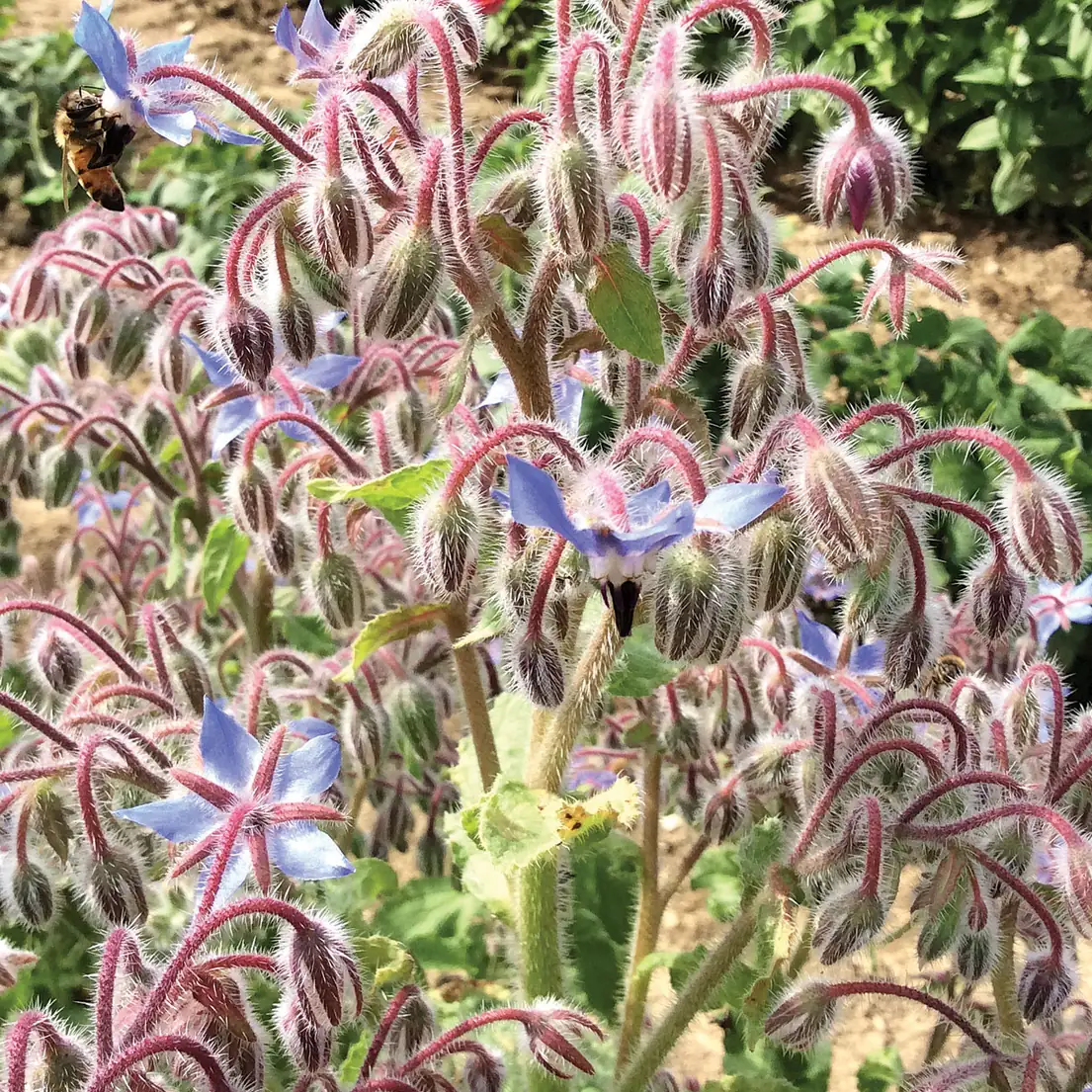
Photo: Queen Right Colonies, used with permission
English Wildflower, Lime Blossom and Urban Honey
English wildflower honey covers a diverse range of summer-forage sources including red and white clover (Trifolium repens, T. pratense), phacelia (Phacelia tanacetifolia, increasingly planted as a conservation and bee-forage crop), bramble (Rubus fruticosus — blackberry blossom honey, producing a mild, fruity honey with a slightly tannic quality), field bean (Vicia faba — a significant arable crop in Scotland and northern England whose bloom contributes a distinctive slightly-herbal note), and an increasingly varied garden-forage mix from wildflower field margins and conservation headlands. The character of English wildflower honey varies dramatically by region and season but typically shows medium amber colour, balanced sweetness, moderate crystallisation rate, and a mild-to-moderately-complex flavour depending on the dominant flora of the harvest location. Named-location wildflower honeys (e.g., "Yorkshire Dales wildflower," "Cotswold wildflower," "Kent wildflower") carry more reliable flavour character than generic "English wildflower" labels.
Lime blossom honey — from the common lime (Tilia × europaea, a hybrid of T. platyphyllos and T. cordata widely planted across UK streets and parks since the 17th century) and from T. cordata (small-leaved lime, native to limestone woodland in northern England and Wales) — carries the same signature cooling-fresh menthol-like top note as German Lindenblüte and French tilleul honey. The botanical source is the same genus (Tilia) and the nectar chemistry is essentially identical. UK lime trees flower briefly in late June to mid-July; in a warm, settled summer the nectar flow can be intense, particularly in urban parks and tree-lined avenues (lime was the favoured street tree of Regency-era British town planning, leaving extensive mature lime avenues across London, Bath, Edinburgh, and every English market town). Urban honey from London, Edinburgh, and other UK cities is frequently lime-dominant in July and carries the characteristic cooling aromatic note at its most pronounced within the first few months of extraction.
Urban beekeeping has experienced a significant revival in the UK since 2008, with registered hives in London alone increasing from approximately 1,600 to over 5,000 by 2020. The British Beekeepers Association (BBKA) tracks urban apiaries separately; London's density of urban hives has raised ecologists' concerns about competition with wild pollinator populations in recent years, prompting discussion of urban apiary density guidelines. Despite this, London honey — typically lime-dominant in July, shifting to ivy (Hedera helix, which flowers September-October providing a late autumn nectar flow) through September and October — has acquired a genuine specialist market following. Fortnum & Mason, Fortnum's own rooftop hives, and a range of London-produced single-postcode honeys have created a premium urban provenance segment that parallels the Parisian urban honey tradition.
Post-Brexit Honey Regulations & BBKA Standards — What Changed and What to Look For
UK honey regulation was derived from EU Council Directive 2001/110/EC (the EU Honey Directive) and implemented domestically as The Honey (England) Regulations 2003, with parallel regulations for Scotland, Wales, and Northern Ireland. Following Brexit, the UK retained the substantive requirements of the 2001/110/EC framework — minimum sugar content by type, maximum moisture 20%, maximum HMF 40 mg/kg for general honey and 80 for baker's honey, diastase requirements, and banned heating or treatment practices — but diverged on country-of-origin labeling. Under EU rules, honey blended from multiple origins must state "blend of EU honeys," "blend of non-EU honeys," or "blend of EU and non-EU honeys." UK regulations post-Brexit removed the EU/non-EU distinction from the required declaration: UK-sold blended honey from multiple origins must state "a blend of honeys from more than one country" but is no longer required to specify whether those origins are EU or non-UK. This is a consumer transparency step backwards relative to the EU framework — it makes it harder for UK buyers to distinguish EU-standard honey from other origins in blended products.
The British Beekeepers Association (BBKA), founded in 1874, is the largest beekeeping organisation in the UK with approximately 33,000–35,000 members managing around 280,000–300,000 bee colonies. The BBKA operates a voluntary honey quality assurance framework — the BBKA Honey Seal — for UK-produced honey. Requirements include: 100% UK origin, moisture below 20% (the EU/UK legal maximum), no artificial heating, and the honey must be produced by BBKA-member beekeepers. The seal is less prescriptive than the German DIB Gütesiegel (which requires independent laboratory testing, sub-18% moisture, and regional provenance specificity), but it provides a reliable indicator of UK domestic origin and basic quality compliance. For specialty heather honey, the Scottish Beekeepers' Association (SBA) maintains its own provenance and quality guidelines for members selling named-moor heather honey.
The National Honey Show — held annually in October in London (Weybridge, Surrey venue in recent years) — is the world's longest-running honey show, with continuous records from 1923 and roots in exhibiting traditions of the late Victorian era. The show is both a competitive exhibition (with classes for every major UK honey type, comb honey, mead, beeswax, and confectionery) and the UK's most important annual gathering point for serious honey producers and buyers. Winners of key show classes — particularly the Heather class and the Supreme Championship — are regarded in the UK specialty food trade as provenance validation. National Honey Show class winners from Scottish and northern English heather producers represent the peak of British honey production in the judgment of the most experienced honey tasters in the country.
Buying UK Honey — What to Look For
For authentic Scottish heather honey, the most reliable purchase channels are: direct from named-moor Scottish producers (many operating farm-shop or online sales, with increasing social-media presence documenting moor locations and harvest dates); specialty food retailers including Harvey Nichols, Fortnum & Mason, and independent Scottish delicatessens; and SBA-member producer lists. Confirming authenticity: the honey must exhibit thixotropic gel at rest — a jar that sits on a shop shelf and pours freely like liquid honey is not pure Calluna vulgaris heather, regardless of label. Tilt the jar gently and observe: pure heather honey moves slowly and reluctantly, not like a liquid. Once stirred or shaken, it will flow, then reform. A label with a named moor (Cairngorms, Flow Country, North York Moors, Dartmoor), a beekeeper name, and a harvest year is the highest-confidence purchase signal. Price below (8oz) jar for "pure Scottish heather honey" from a named moor is a flag requiring explanation.
For borage honey and OSR soft-set honey, the most reliable sources are farm-direct UK beekeepers selling at farmer's markets, agricultural shows, and through local-food platforms (Farmdrop, Abel & Cole local producers, direct beekeeper websites). Both types are underrepresented in mainstream specialty retail — this is a gap that makes the farmer's market and beekeeping event route significantly more productive than high-street shopping for authentic single-varietal British honey. Agricultural shows including the Great Yorkshire Show, the Royal Welsh Show, the Royal Highland Show (Edinburgh), and county-level agricultural shows typically include honey classes with named-producer exhibitors who also sell direct; these venues combine authentication (show-class winners are verified) with direct purchase.
Outside the UK — in the US, Australia, and EU specialty markets — authentic Scottish heather honey is among the most scarcely available of any European premium honey. The combined effect of limited production volume, short season, difficult extraction (pressing or loosener-plus-centrifuge required), and low international marketing investment has kept Scottish heather honey far below its deserved profile in global specialty food markets. US buyers seeking it should look to Scottish immigrant community food retailers, UK specialty importers (such as those serving the US fine food trade), and a small number of Edinburgh and Scottish Highlands producers who ship internationally. The thixotropic gel test remains the universal authentication: refrigerate the jar overnight, then observe behavior at rest at room temperature before opening. Authentic heather honey will hold a dome shape when tilted; blended or non-Calluna heather honey will slide. Compare with German Heideblüte (same Calluna source, same thixotropic property, similar flavor register) and the global origin atlas for context on the UK's role in the international honey supply picture.