Correction, October 2026: we removed or corrected claims and figures on this page that our sources did not support. How we handle corrections
Avocado Honey vs Buckwheat Honey
A detailed comparison to help you choose the right honey for your needs.
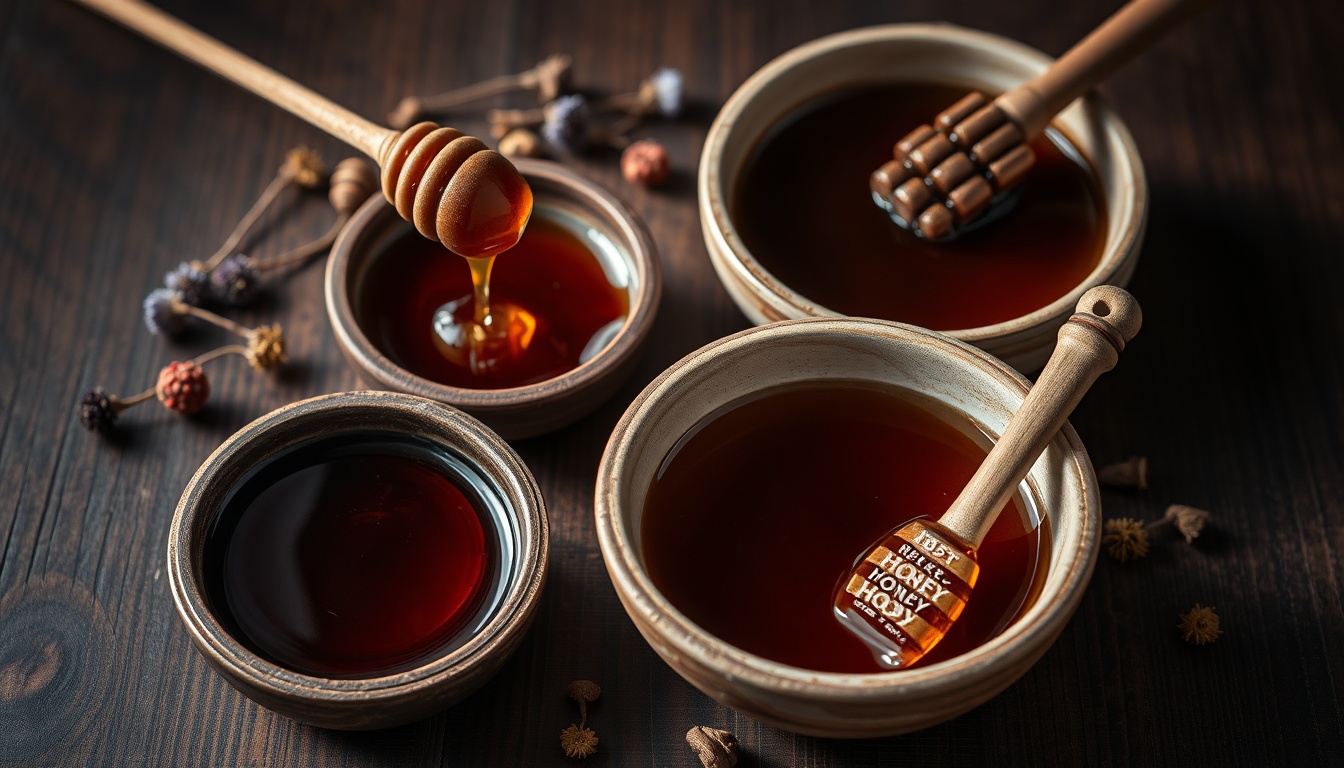
Quick Answer
Avocado honey delivers smoky, caramel richness from California orchards; buckwheat brings malty, earthy power and is the honey used in a 2007 children's cough trial, where it beat no treatment and was not significantly different from dextromethorphan. Both are bold, dark honeys for people who appreciate strong flavors. Choose avocado for smoky depth, buckwheat for maximum intensity.
At a Glance
Avocado Honey
Rich, molasses-like, smoky with caramel notes
Marinades, BBQ sauces, dark bread, bold recipes
$12-$25 per jar
California, Mexico, Australia
Buckwheat Honey
Strong, malty, molasses-like with earthy depth
BBQ sauce, dark baking, strong cheeses, robust cooking
$10-$22 per jar
Northeast US, Canada, Europe
Head-to-Head
Flavor Comparison
Avocado honey surprises people who expect something light and fruity based on the name.
It is one of the darkest honeys available, with a robust flavor that leans into molasses, butterscotch, and subtle smokiness. Despite its intensity, avocado honey maintains a smoothness that buckwheat often lacks—a rounded richness rather than a rough edge. The finish is long and caramel-sweet. Buckwheat honey is the heavy metal of the honey world—unapologetically bold and intense. The flavor hits with malty, earthy force, reminiscent of dark molasses and stout beer. There are undertones of dried fruit and a persistent aftertaste that either captivates or overwhelms. It is not a honey for the timid, but those who love it tend to be fiercely loyal.
Nutrition Comparison
Both dark honeys measure higher in phenolic compounds and lab antioxidant capacity than light honeys, and dark honeys tend to carry more minerals.
Buckwheat has the better-known data: a 2002 University of Illinois lab study of honeys from seven floral sources measured 3.1 to 16.3 µmol Trolox equivalents per gram, with buckwheat highest. Avocado honey has less published data. These lab values have not been shown to matter for health at the amounts people eat, and honey is not a meaningful iron source. Buckwheat honey was tested for children's nighttime cough (Paul et al. 2007): parents rated it better than no treatment, with no significant difference from dextromethorphan.
Best Use Cases
Avocado honey thrives in savory applications.
Use it in BBQ sauces, meat marinades and dark bread recipes. Its smooth smokiness pairs well with grilled foods, aged cheeses and dark chocolate. It is also excellent drizzled over roasted vegetables. Buckwheat honey is the one tested for children's nighttime cough (the Paul 2007 trial) — talk to your doctor before using it that way. In the kitchen, use it for gingerbread, dark cookies and hearty baking. Its bold flavor stands up to strong ingredients in marinades and glazes.
Price Comparison
Avocado honey runs $12 to $25 per jar, with California-produced varieties at the premium end.
Buckwheat honey is slightly more accessible at $10 to $22. Both are affordable for specialty honeys, reflecting their relative availability compared to rarities like sourwood or tupelo.
Our Verdict
For dark honey enthusiasts, both avocado and buckwheat deliver impressive depth. Avocado honey offers a smoother, more caramel-forward experience that works beautifully in savory cooking. Buckwheat honey brings raw intensity and is the variety studied for children's cough. If you love bold flavors, both deserve shelf space: start with avocado if you are new to dark honey, buckwheat if you want maximum intensity.
Frequently Asked Questions
Does avocado honey come from avocado trees or fruit?
Which honey is better for coughs, avocado or buckwheat?
Which has higher antioxidants, avocado or buckwheat?
How does avocado honey taste compared to buckwheat?
Can I substitute avocado honey for buckwheat in recipes?
Which dark honey is better for BBQ and savory cooking?
Best Honey For...
More Honey Comparisons
View allRelated Guides
Seasonal Honey Guide
How seasons affect honey production.
Read GuideBuckwheat Honey Guide
Lab antioxidant data, the 2007 cough trial, flavor, and buying tips.
Read GuideHow Bees Make Honey
The journey from flower to jar.
Read GuideRelated Articles
Types of Honey: A Complete Guide to 20+ Varieties
Explore every major type of honey — from clover and wildflower to manuka and buckwheat. Learn how floral source, color, and processing affect flavor,...
Read ArticleThyme Honey: Taste, Colour, Origins and Price
Thyme honey is medium amber and herbal. Five catalog jars from Greece, Spain, Cyprus and New Zealand, jar prices, Pfund colour class, and how to spot a blend.
Read ArticleSidr Honey Benefits: Why This Ancient Honey Commands Premium Prices
Sidr (jujube) honey: where it comes from, why Yemeni sidr is so expensive, its caramel flavor, what human studies show, and how to spot fakes.
Read Article