Best Honey for Roasted Vegetables
Match honey to your favorite roasted vegetables — from root vegetables to Brussels sprouts and squash. Learn which varietals caramelize best without burning.
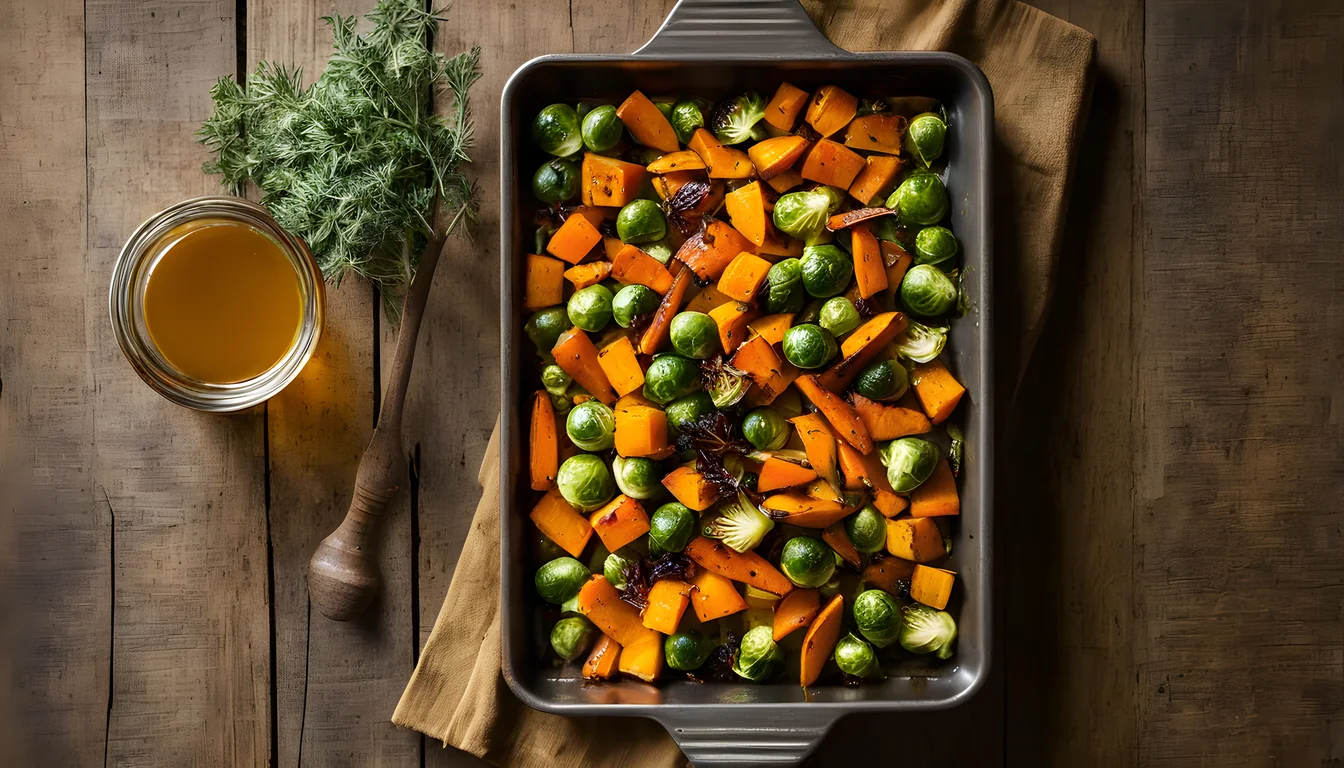
Quick Answer
Buckwheat honey is the top choice for roasting bold root vegetables (carrots, parsnips, beets) — its dark, malty flavor caramelizes into rich, molasses-like depth. Wildflower honey is the all-purpose workhorse for any roasted vegetable medley. Orange blossom honey complements winter squash (butternut, acorn, kabocha) with bright citrus-floral counterpoint. Acacia honey is the best choice for delicate vegetables (asparagus, green beans, snap peas) where subtle sweetness is desired. Clover honey is the reliable weeknight option when cooking a quick sheet-pan dinner.
What to Look For
Match honey intensity to vegetable heartiness. Bold, earthy vegetables (beets, carrots, Brussels sprouts, sweet potatoes) can carry buckwheat or chestnut honey. Mid-range vegetables (broccoli, cauliflower, peppers, squash) work best with wildflower, orange blossom, or clover. Delicate vegetables (asparagus, peas, green beans, tomatoes) need mild honey like acacia or orange blossom. Always toss vegetables in oil first, then add honey in the last 10-15 minutes of roasting — adding honey at the start will burn it. Honey with higher fructose content (acacia) browns faster than glucose-heavy varieties.
Relevant Honey Varieties
Its dark, malty intensity caramelizes into rich depth that matches root vegetables and Brussels sprouts. Stands up to high-heat roasting (400°F+) without disappearing. Creates the lacquered, slightly bitter-sweet finish that defines great roasted root vegetable dishes.
View honey varietyThe versatile all-purpose roasting honey. Its multi-floral complexity works across vegetable types and adds interest to honey-roasted medleys without competing with other flavors. Reliable browning at standard roasting temperatures.
View honey varietyIts citrus-floral notes complement winter squash (butternut, acorn, kabocha), sweet potatoes, and carrots with bright counterpoint to the natural sweetness of caramelizing vegetables. Pairs especially well with rosemary and sage.
View honey varietyIts mild, clean sweetness does not overpower delicate vegetables (asparagus, snap peas, green beans, cherry tomatoes). High fructose content means it browns quickly, making it ideal for fast-roasted vegetable dishes.
View honey varietyThe reliable weeknight roasting honey. Mild and affordable, it adds gentle sweetness to sheet-pan dinners without competing with the vegetables. Easy to find and consistent in flavor.
View honey varietyGet the Honey Buyer's Cheat Sheet (free PDF)
16 varieties on one page — color, flavor, best use and what a fair price looks like — from the 304 honeys we track.
How to Use
Toss vegetables in olive oil, salt, and pepper first, then roast for most of the cooking time without honey. Add 1-2 tablespoons of honey per pound of vegetables during the last 10-15 minutes of roasting, tossing to coat evenly. For bold root vegetables (carrots, beets, parsnips), use buckwheat or wildflower; for squash, use orange blossom or wildflower; for delicate vegetables, use acacia or orange blossom. Finish with a fresh drizzle of honey after roasting to preserve aromatics. Combine honey with acid (balsamic, sherry vinegar) and fat (olive oil, butter) for the best balance. Roasted vegetable salads benefit from an extra honey drizzle in the dressing.
What to Avoid
Do not add honey at the start of roasting — it will burn before the vegetables caramelize. Honey burns above 350°F (177°C), so add it in the last 10-15 minutes when oven temperature may be lower or vegetables are nearly done. Avoid strongly flavored honeys (buckwheat, chestnut) with delicate vegetables — they will overpower the vegetable flavor. Skip honey if the vegetables already have a sweet glaze (maple, brown sugar) — adding more sweetener makes the dish cloying. Do not crowd the pan — vegetables need space to caramelize, and honey-glazed vegetables in a crowded pan will steam rather than roast.
Frequently Asked Questions
What is the best honey for honey-roasted carrots?
How do you keep honey from burning when roasting vegetables?
Can you use honey on Brussels sprouts?
Does honey go with sweet potatoes?
Is honey better than maple syrup for roasting vegetables?
Related Honey Comparisons
Edited by Sam French · Raw Honey Guide Editorial Team
Sam French is the founding editor of Raw Honey Guide. This is an editorial guide, not a medical review.
Last updated: