What Goldenrod Honey Is
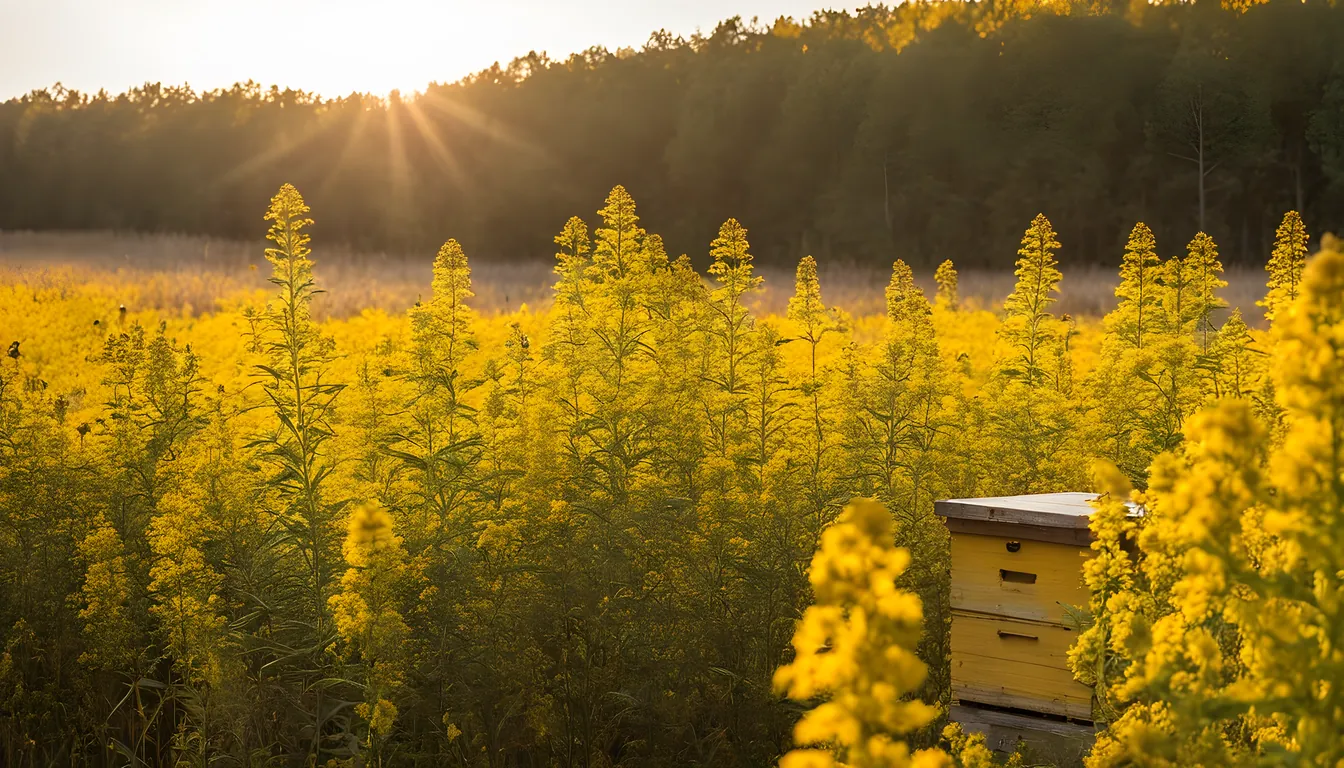
Goldenrod honey comes from bees working goldenrod (*Solidago*) in late summer and fall. John Semple, who wrote the *Flora of North America* account of the genus, counts about 120 *Solidago* species native to the US and Canada, so most of the country has some goldenrod in bloom from late August into September.
It is one of the last big nectar flows of the year. In the Northeast and the upper Midwest it often decides whether a colony goes into winter with enough food.
Our catalogue carries one single-source jar, Gil's Honey Bees Goldenrod Honey from New York's Finger Lakes. The seller describes it as gold-amber with a distinct, sharp flavor that crystallizes quickly into a creamy set, and notes that the 2025 crop was lighter and turns almost white once fully set.
- **Color:** gold to amber; lighter in a strong flow, darker when other fall nectar is mixed in
- **Flavor:** sharp and bold rather than delicate
- **Texture:** sets fast into a fine, creamy crystal
- **Season:** bloom late August to September, harvest September to October
Why the Hive Smells Like Wet Socks in September
New beekeepers often panic the first time they smell a yard during the goldenrod flow. Beekeepers describe it as sweaty or dirty socks. The smell comes from nectar being ripened in the hive and fades once the honey is finished and capped.
American foulbrood smells different: beekeepers compare it to something dead and rotting, and it comes with sunken, perforated cappings on brood. If the smell comes with spotty or discolored brood, inspect the brood frames rather than assuming it is goldenrod.
Pro Tip
Note the date the smell starts each year. It is a free marker for when your goldenrod flow begins.
Get the Honey Buyer's Cheat Sheet (free PDF)
16 varieties on one page — color, flavor, best use and what a fair price looks like — from the 304 honeys we track.
When to Harvest Goldenrod Honey
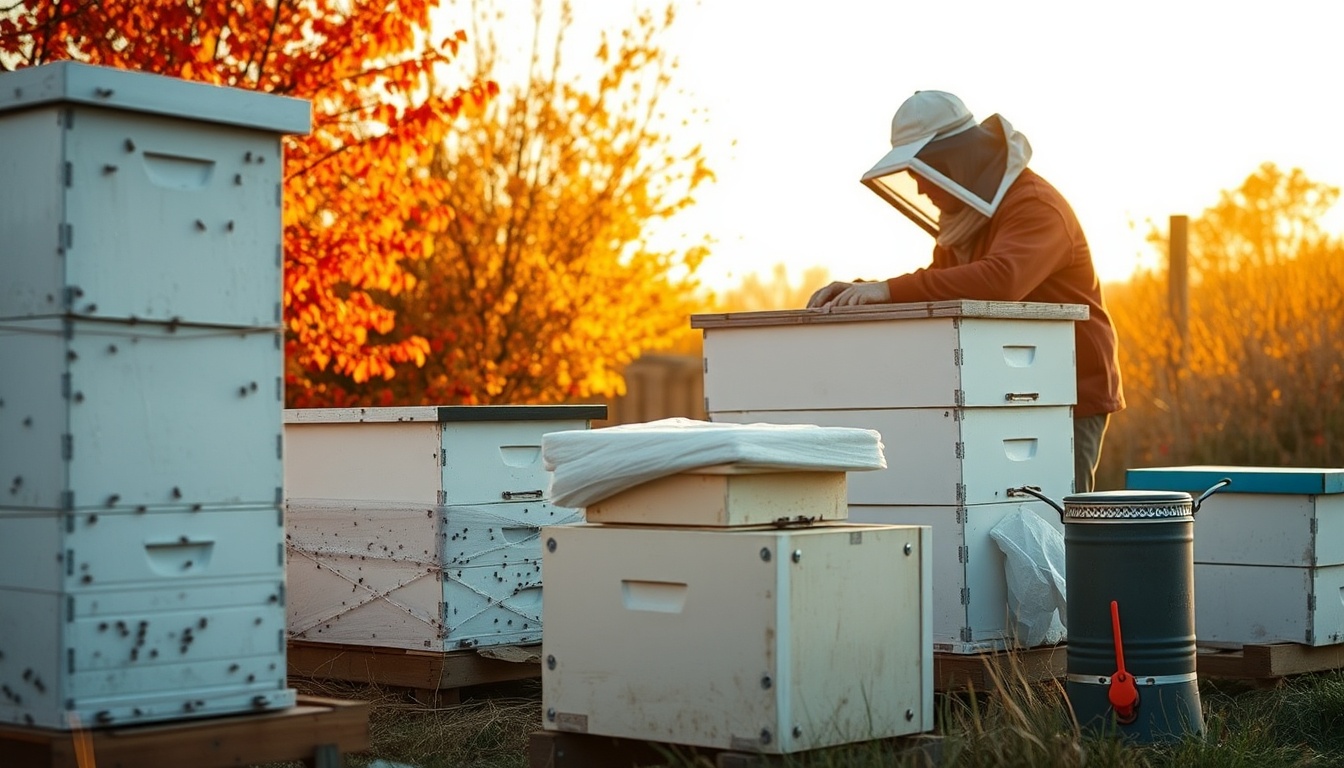
Harvest only honey the colony does not need for winter. Many Northeast beekeepers leave the goldenrod crop on the hive as winter stores, and our harvest season guide covers how that changes by region.
If you do take it, the timing rules are the same as any harvest:
- **Mostly capped frames.** Many beekeepers use 80 to 90 percent capped as the rule.
- **Shake test.** Hold an uncapped frame flat over the hive and give it a sharp shake. If nectar rains out, it is not ripe.
- **Moisture.** If you own a refractometer, aim for 18.6 percent moisture or less, the ceiling in the USDA grade standards for extracted honey. Wetter honey can ferment.
- **Extract quickly.** Goldenrod honey can start to set in the comb and in the bucket. Extract and bottle soon after pulling frames.
Pro Tip
Pull frames on a warm afternoon when most foragers are out. Warm honey also extracts faster.
Crystallization: Fast, Fine and Useful
Goldenrod honey sets much faster than slow-crystallizing honeys like acacia or tupelo. That is a feature if you like spreadable honey and a nuisance if you sell liquid jars.
For a fine, smooth texture on purpose, use it as the base for creamed honey. Our crystallization timeline shows where it sits against other varietals.
- **To keep it liquid longer:** store jars at warm room temperature, away from a cold pantry wall.
- **To re-liquefy:** set the jar in a pan of warm, not boiling, water and stir as it softens. Our decrystallizing guide has the full method.
- **To use it set:** spread it straight from the jar on toast or biscuits. It does not drip.
Goldenrod or Fall Wildflower?
Goldenrod and aster bloom in the same weeks, and bees work both. Much of what is sold as "fall wildflower" honey is a mix of the two plus whatever else is flowering, which is why fall wildflower is usually darker than spring wildflower.
A jar labeled goldenrod honey means the beekeeper believes goldenrod dominated that harvest. Ask how they know: location, bloom timing and taste are the usual answers. A laboratory pollen analysis is the only firm proof, and few small producers pay for one.
How to Use Goldenrod Honey
Its sharp flavor needs food with weight behind it. The Finger Lakes seller suggests apple and pear desserts, sharp cheeses and autumn baking, and those are good starting points.
- **Cheese:** aged cheddar, aged gouda or a blue. See our honey and cheese pairing guide.
- **Fruit desserts:** apple crisp, baked pears, pear tart. More in our fall honey recipes.
- **Baking:** gingerbread, spice cake and rye bread, where a mild honey would disappear.
- **Savory:** a glaze for roast pork or ham, brushed on in the last minutes so it does not scorch.
- **Set honey on toast:** the crystallized texture spreads like soft butter.
Buying Goldenrod Honey
Look for it from beekeepers in the Northeast, the Midwest and Appalachia in October and November, right after the fall harvest. Farmers markets and state beekeeping associations are the easiest way to find small fall crops. Because many beekeepers leave the goldenrod crop for their bees, supply is small and sells out.
- **Label:** "goldenrod honey" or "Solidago honey", with a region
- **Harvest year:** this year's crop is what you want
- **Texture:** a set or partly set jar is normal, not a defect