About this recipe
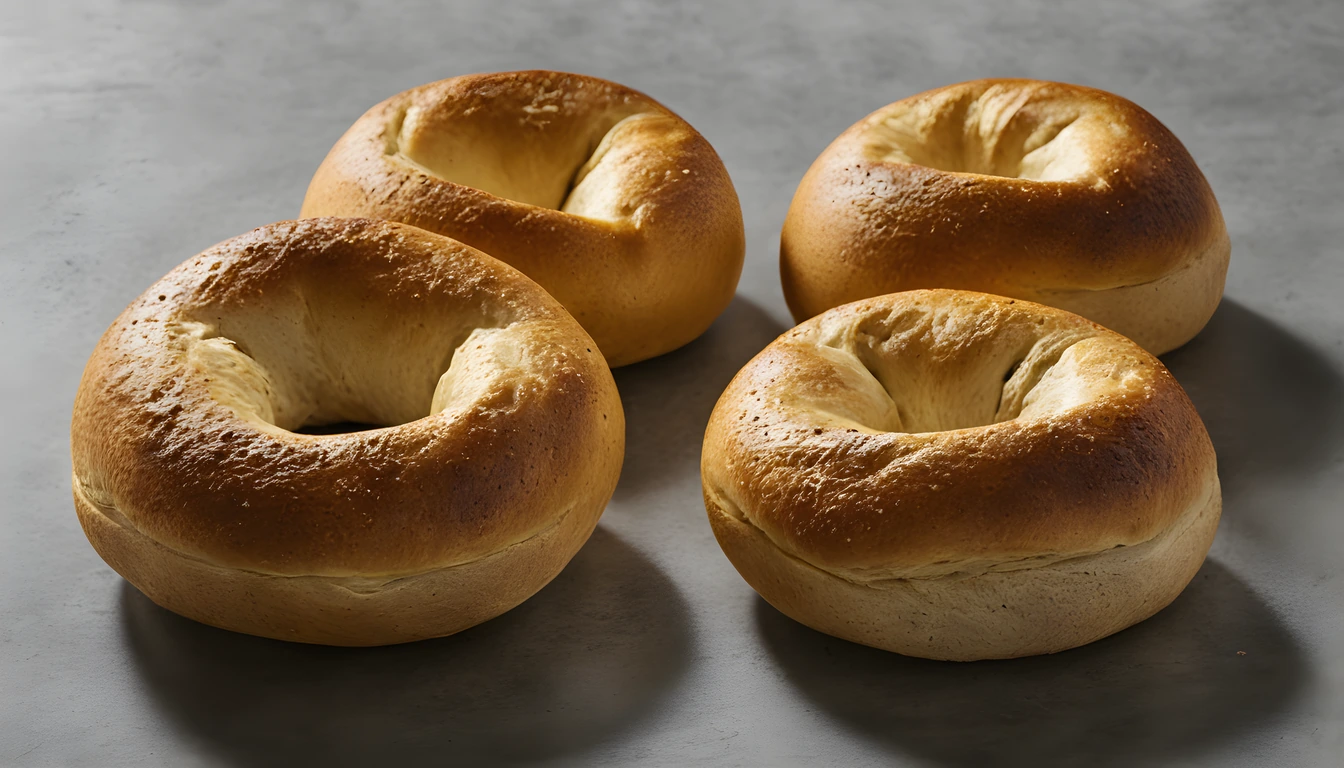
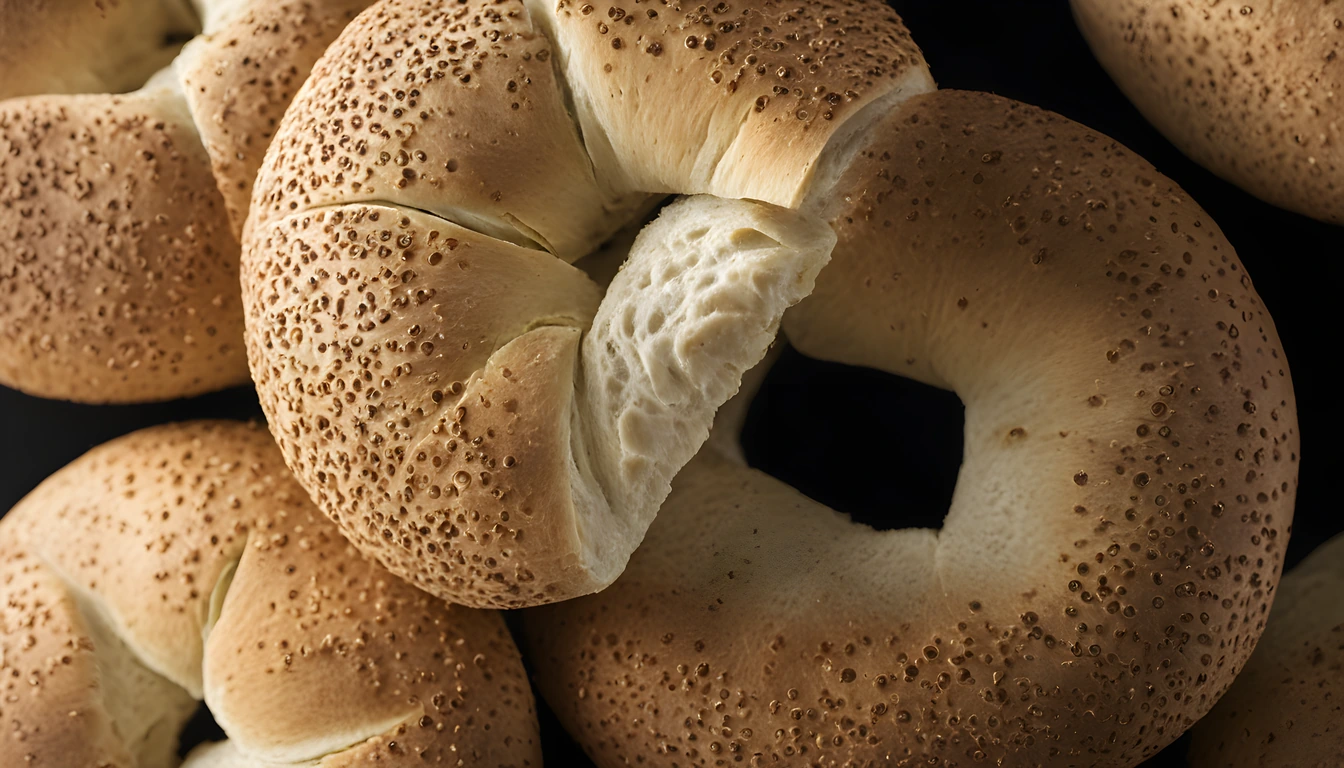
Honey goes directly into this firm bagel dough, so the bread itself carries the sweetness. A brief boil sets the surface before the rings go into the oven.
The base makes eight plain bagels. Keep the holes generous during shaping and use bread flour for a dough strong enough to lift into the pot. Seeds, egg wash, cream cheese and other toppings are separate additions.
Recipe
Honey Bagels Recipe with a Plain-Water Boil
Make eight honey-sweetened bagels with firm bread-flour dough, a brief plain-water boil and a golden baked crust. Includes shaping, rising and cooling time.
5Ingredients
Yield: 8 servings
- 480 g bread flour
- 270 g water
- 42 g clover honey
- 9 g salt
- 7 g active dry yeast
Ingredient amounts scale; instructions show the original batch. Cooking times and pan sizes may need adjustment. Season to taste. Honey grams use US measures at 20°C and 17.5% moisture, a density estimate; weigh your honey for precision.
Instructions
- 1Start the doughStir honey and yeast into the 270 g water at about 100°F (38°C); leave 10 minutes. Add bread flour and salt, then knead vigorously for about 10 minutes in a mixer or 12–15 minutes by hand, until firm and elastic.
- 2Let it riseCover and let rise 60–90 minutes, until noticeably expanded. The planned schedule allows 90 minutes. The dough should retain its shape rather than flow across the bowl.
- 3Divide and restDivide into 8 equal pieces and round each into a ball. Cover the rounds with an inverted tray or a lightly damp cloth and rest about 30 minutes; keep the surface from drying without adding oil.
- 4Shape the ringsHeat the oven to 425°F (220°C). Poke a hole through each ball and widen it to about 2 inches across. Bring about 2 litres of plain water to a gentle boil in a wide pot; this is cooking water, separate from the weighed dough water.
- 5Boil and bakeBoil 2–3 rings at a time for 30 seconds per side. Lift with a slotted spoon, drain briefly and set on a tray lined with a reusable silicone baking mat rated for 425°F (220°C). Allow about 10 minutes for batches and handling. Bake 20–25 minutes, until well browned; tent if the honey dough darkens early.
- 6Cool before slicingCool on a rack for at least 30 minutes before cutting. The 3-hour-35-minute plan includes the upper rise and bake times and this cooling period.
Estimated nutrition per serving
235.4 calories · 1.06 g fat · 48.19 g carbohydrate · 7.57 g protein · 439.71 mg sodium
Serving: 1 of 8 portions
Calculated from ingredient weights and USDA FoodData Central: 168896, 173647, 169640, 173468, 175043. Estimates use ingredient input weights; actual portions, brands and cooking losses vary. Omitted nutrient values are unavailable, not zero.
The honey is in the bread
The 42 g honey belongs to the dough, along with the weighed 270 g water. The boiling pot contains plain water only. Keep those two quantities separate when following the recipe.
A honey-water boil is another bagel method. This plain-water version has a lighter crust than an alkaline or malted boil; give the rings enough oven time to brown.
Get the Honey Buyer's Cheat Sheet (free PDF)
16 varieties on one page — color, flavor, best use and what a fair price looks like — from the 304 honeys we track.
Firm dough and visible holes
Kneading gives this relatively firm dough enough strength for shaping and boiling. Use similar-sized pieces so the rings can cook together without one becoming much larger than another.
Widen the holes before boiling. They narrow as the dough expands. A crowded, violently boiling pot can knock the rings against each other; a wide pot and small batches make handling easier.
A repeatable serving size
Divide the dough into eight equal pieces before shaping. Keep each ring about the same thickness so it boils and bakes evenly.
Cool the bagels fully before wrapping. Use within 2 days at room temperature, or slice and freeze. Toast from frozen as needed; spreads and fillings change the serving estimate.
Choosing the honey
Clover honey makes a mild base. Wildflower is a fuller-flavored alternative; buckwheat is more assertive, especially on toasted bread. Keep the measured amount the same when changing variety.
The chart is an editorial flavor guide on a 1-to-5 scale, not a measurement or a record of kitchen testing.
1 = mild, 5 = bold. Editorial pairing guidance, not laboratory measurements; jars vary.
- Clover
- A mild honey base
- Wildflower
- A fuller floral bread flavor
- Buckwheat
- A darker toasted-bread pairing
Nutrition basis
The card divides the measured ingredient inputs into 8 portions. 8 bagels; the estimate is for one bagel without toppings.
The calculation uses raw USDA ingredient inputs. Fermentation, baking loss and finished weight have not been measured. Toppings and substitutions change the estimate.
Method sources
The firm dough and shaping sequence follow the general approach in King Arthur Baking’s bagels. FoodCrumbles’ own bagel experiments and Basic Bagels recipe specify plain boiling water with baking soda optional; this version omits that addition and keeps its honey in the dough.
Use the cited methods for context, and keep this page's ingredient weights and yield together.