Why Honey Makes Better Cinnamon Rolls
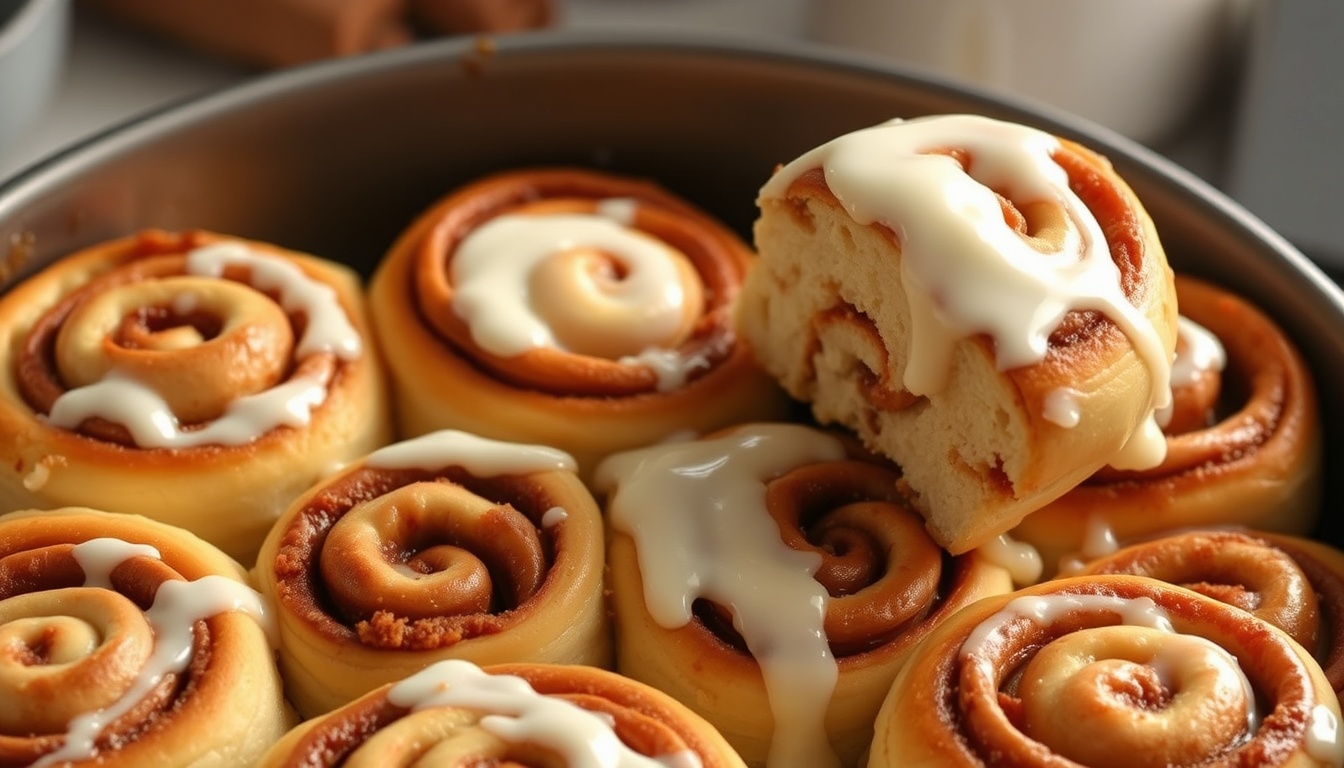
Swap refined sugar for raw honey in your cinnamon rolls and the difference is immediate. Honey is hygroscopic — it actively attracts and holds moisture from the air — which means your rolls stay pillowy-soft for days while sugar-based versions go stale within hours. That weekend batch still tastes freshly baked on Tuesday morning.
Honey also caramelizes at a lower temperature than granulated sugar, producing a gorgeous golden crust without the risk of burning. Its natural acidity (pH around 3.5-4.5) strengthens gluten development during kneading, giving you a chewier, more satisfying crumb structure that holds up to generous swirls of filling.
Then there is flavor. Honey contains over 200 aromatic compounds that vary by floral source, adding layers of complexity that plain sugar simply cannot deliver. These compounds complement cinnamon beautifully — the warm spice and floral sweetness create a more nuanced, less one-dimensional roll.
Choosing the Right Honey
The honey you select shapes the character of your finished rolls. Here are five varieties worth trying.
- **Wildflower honey** ($13–24) — The best all-around choice. Multi-floral complexity adds depth without overpowering the cinnamon. Works beautifully in dough, filling, and glaze.
- **Clover honey** ($9–15) — Clean, straightforward sweetness that lets the cinnamon and butter flavors lead. The most widely available option and a reliable pick.
- **Orange blossom honey** ($12–24) — A subtle citrus undertone that brightens every bite. Especially lovely in the cream cheese glaze.
- **Buckwheat honey** ($9–23) — Bold, molasses-like flavor that creates a darker, more intense filling. Best blended with a milder honey rather than used exclusively.
- **Lavender honey** ($11–17) — Floral elegance that pairs beautifully with cinnamon for a sophisticated twist. Ideal for special-occasion batches.
Pro Tip
Use a mild honey (clover or wildflower) for the glaze. Strongly flavored varieties like buckwheat can taste overpowering in an uncooked glaze where the honey flavor is front and center.
Get the Honey Buyer's Cheat Sheet (free PDF)
16 varieties on one page — color, flavor, best use and what a fair price looks like — from the 304 honeys we track.
The Complete Recipe: Honey Cinnamon Rolls
This recipe yields 12 generous cinnamon rolls. Total active time is about 30 minutes, with roughly 1.5 hours of rising and 25 minutes of baking. Plan for about 2.5 hours from start to warm rolls on your plate.
Ingredients
**For the dough:**
- 1 cup warm milk (110°F)
- 2¼ teaspoons active dry yeast (1 standard packet)
- ⅓ cup honey
- ⅓ cup melted butter
- 1 large egg, room temperature
- 3½ to 4 cups all-purpose flour
- 1 teaspoon salt
**For the honey-cinnamon filling:**
- ⅓ cup softened butter
- ½ cup honey
- 2 tablespoons ground cinnamon
- Pinch of salt
**For the honey cream cheese glaze:**
- 4 oz cream cheese, softened
- 3 tablespoons honey
- 2 tablespoons milk
- 1 teaspoon vanilla extract
Step-by-Step Instructions
**Step 1: Bloom the yeast.** Combine warm milk (110°F) and honey in a large mixing bowl. Sprinkle the yeast over the surface and let it sit for 5 minutes until foamy and bubbly. If the yeast doesn't foam, your liquid was too hot or the yeast is expired — start over with fresh yeast.
**Step 2: Mix the dough.** Add the melted butter and egg to the yeast mixture and stir to combine. Add 3½ cups flour and salt, mixing until a soft, shaggy dough forms. Add more flour a tablespoon at a time only if the dough is too wet to handle — it should be slightly tacky, not dry.
**Step 3: Knead.** Turn the dough onto a lightly floured surface and knead for 8 minutes until smooth, elastic, and springs back when poked. Resist the urge to add too much flour during kneading. A slightly sticky dough produces softer rolls.
**Step 4: First rise.** Place the dough in a lightly oiled bowl, cover with a damp towel or plastic wrap, and let rise in a warm spot for 1 hour or until doubled in size.
**Step 5: Roll and fill.** Punch down the dough and roll it out on a lightly floured surface into a 16x12 inch rectangle. Spread the softened butter evenly over the surface, leaving a ½-inch border along one long edge. Drizzle the honey over the butter and spread it gently, then sprinkle the cinnamon and salt evenly across the surface.
**Step 6: Roll and cut.** Starting from the long edge opposite the bare border, roll the dough tightly into a log. Pinch the seam to seal. Use unflavored dental floss or a sharp knife to cut the log into 12 equal pieces — slide the floss under the log, cross the ends over the top, and pull to slice cleanly without crushing the layers.
**Step 7: Second rise.** Place the rolls cut-side up in a buttered 9x13 inch baking pan, leaving a little space between each. Cover and let rise for 30 minutes until puffy and the rolls are just touching.
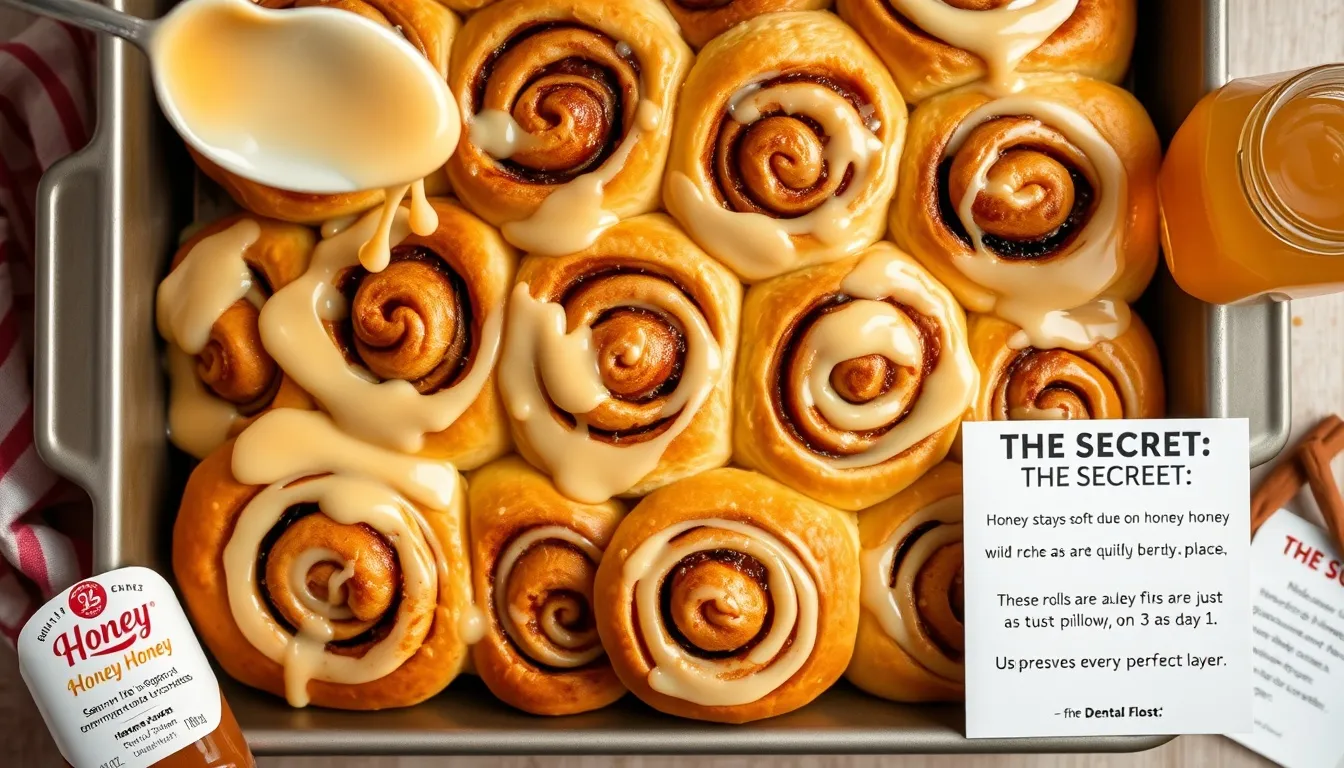
**Step 8: Bake and glaze.** Preheat the oven to 375°F. Bake for 22-25 minutes until the tops are golden brown and the center roll is cooked through. While the rolls bake, beat together the cream cheese, honey, milk, and vanilla until smooth. Spread the glaze over the rolls immediately out of the oven — the heat melts it into a glossy, dripping layer that seeps into every crevice.
Pro Tip
The dental floss cutting trick makes a real difference here. A knife compresses the delicate layers, but floss slices cleanly through without squishing. Use unflavored floss — mint-flavored will transfer taste to your dough.
Overnight Honey Cinnamon Rolls
For fresh rolls with zero morning effort, use the refrigerator rise method. After cutting the rolls and placing them in the buttered pan (end of Step 6), cover the pan tightly with plastic wrap and refrigerate for 8 to 18 hours.
In the morning, remove the pan from the fridge and let it sit at room temperature for 45 minutes. The rolls will puff up as they warm and finish their final rise. Then bake at 375°F as directed.
The overnight method actually produces superior rolls. The slow, cold fermentation allows the yeast to develop more complex flavors — subtle tangy, almost sourdough-like notes that pair beautifully with the honey and cinnamon. Professional bakeries use cold retarding for exactly this reason. If you have the patience, overnight is the way to go.
5 Creative Variations
Once you've mastered the base recipe, try these twists that build on the same dough and technique. Each one pairs naturally with honey and cinnamon.
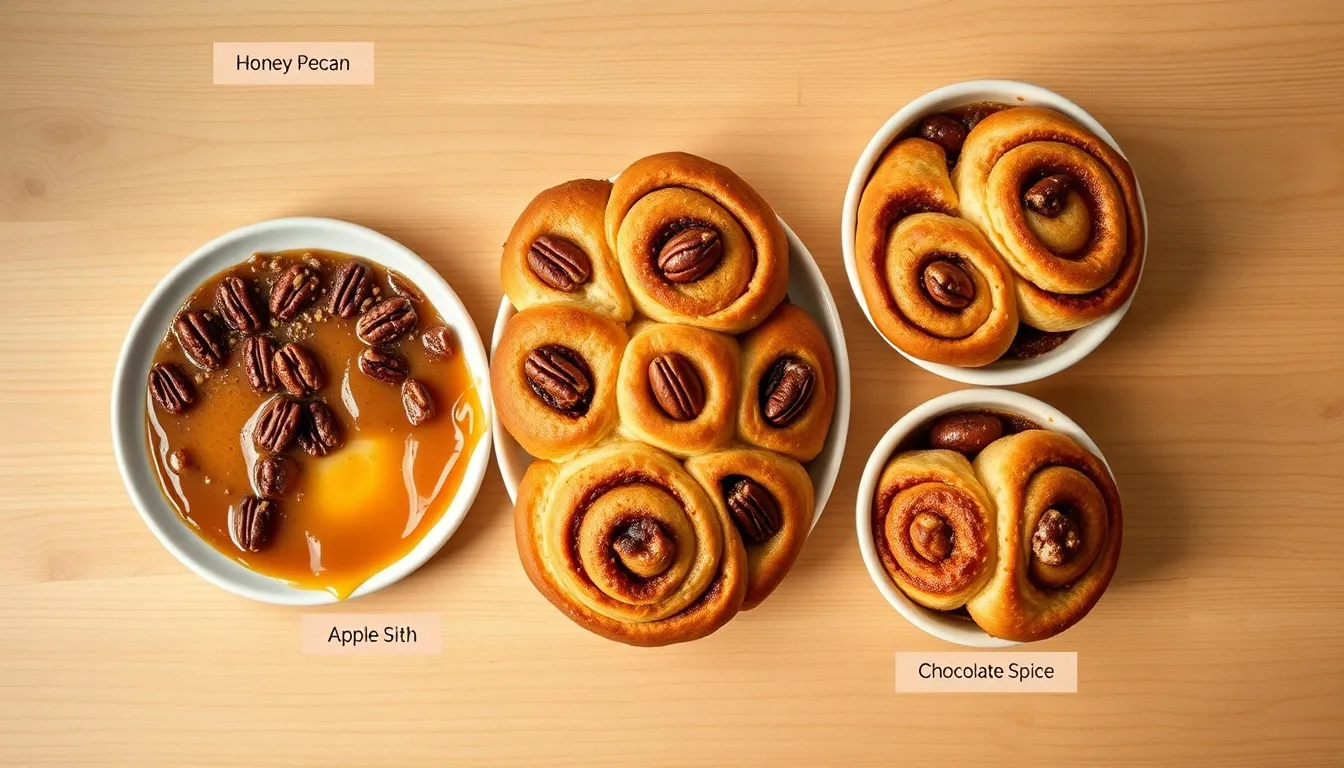
- **Honey Pecan Sticky Buns:** Before placing rolls in the pan, spread a mixture of ⅓ cup honey, ¼ cup butter, and ¾ cup chopped pecans across the bottom. Place rolls on top and bake as directed. Invert the pan onto a platter immediately after baking for a caramel-pecan crown.
- **Apple Cinnamon Honey Rolls:** Add 1½ cups finely diced apple (peeled) tossed with 1 tablespoon honey and ½ teaspoon cinnamon to the filling before rolling. The apple softens during baking into jammy pockets.
- **Pumpkin Spice Honey Rolls:** Add ½ cup pumpkin puree to the dough in Step 2 (reduce milk to ¾ cup). Replace the cinnamon filling with 2 teaspoons pumpkin pie spice. Perfect for autumn mornings.
- **Chocolate Honey Rolls:** Add 3 tablespoons cocoa powder to the filling along with ½ cup chocolate chips scattered over the honey-butter layer. The chocolate melts into gooey pockets throughout the swirl.
- **Lemon Honey Rolls:** Add 2 tablespoons lemon zest to the dough. Replace the cream cheese glaze with a lemon-honey glaze: 3 tablespoons honey, 2 tablespoons lemon juice, and 1 cup powdered sugar whisked together. Bright, citrusy, and perfect for spring.
Tips for Perfect Honey Cinnamon Rolls
Five details separate great rolls from mediocre ones.
- **Check your water temperature.** Yeast activates between 105-115°F. Too cool and it won't bloom; too hot and you'll kill it. Use an instant-read thermometer — guessing leads to flat, dense rolls.
- **Don't over-flour the dough.** The number one mistake home bakers make. A slightly tacky dough produces soft, pillowy rolls. A dry, easy-to-handle dough produces tough, bread-like rolls. Trust the stickiness.
- **Roll tightly.** A loose roll creates gaps where the filling pools and leaks out during baking. Roll the dough firmly (but don't stretch it) starting from the far edge, keeping consistent tension the entire length.
- **Cut cleanly.** Whether using dental floss or a very sharp knife, make decisive cuts. Sawing back and forth compresses the layers and squeezes out filling. One smooth motion or a clean floss pull.
- **Glaze while hot.** The residual heat from the rolls partially melts the cream cheese glaze, creating that signature gooey, dripping look. Glazing cooled rolls just sits on top without melting in.
Storage and Make-Ahead Tips
**Room temperature:** Store glazed rolls covered with plastic wrap or in an airtight container for up to 2 days. Honey's hygroscopic nature keeps them softer longer than sugar-based rolls.
**Refrigerate:** Glazed rolls keep in the fridge for up to 5 days. The cream cheese glaze firms up but softens again when warmed.
**Freeze:** Freeze unglazed rolls in a single layer on a baking sheet, then transfer to a freezer bag for up to 3 months. Thaw overnight in the fridge and glaze after reheating.
**Reheat:** Microwave individual rolls for 20 seconds with a damp paper towel draped over the top to restore moisture. For a full pan, cover with foil and warm at 350°F for 5-8 minutes.
The Science of Honey in Baking
Honey's baking benefits go beyond flavor. Its primary sugar is fructose, which is more hygroscopic than the sucrose in table sugar. This means honey-based baked goods actively pull moisture from the air, staying softer longer. Acacia honey ($9–16, GI ~32) is especially notable for its high fructose-to-glucose ratio, which translates to superior moisture retention in baked goods.
Honey's lower pH (more acidic than sugar) also strengthens gluten networks during mixing and kneading. Stronger gluten means a chewier, more structured crumb that holds its shape while still being tender. And honey contains natural enzymes like amylase that break down starches during baking, contributing to a softer, more delicate crumb texture.
When substituting honey for sugar in any baking recipe, remember two rules: reduce other liquids slightly (honey is about 20% water) and lower your oven temperature by 25°F to prevent over-browning from honey's lower caramelization point.