Why Honey Is the Heart of Great Baklava
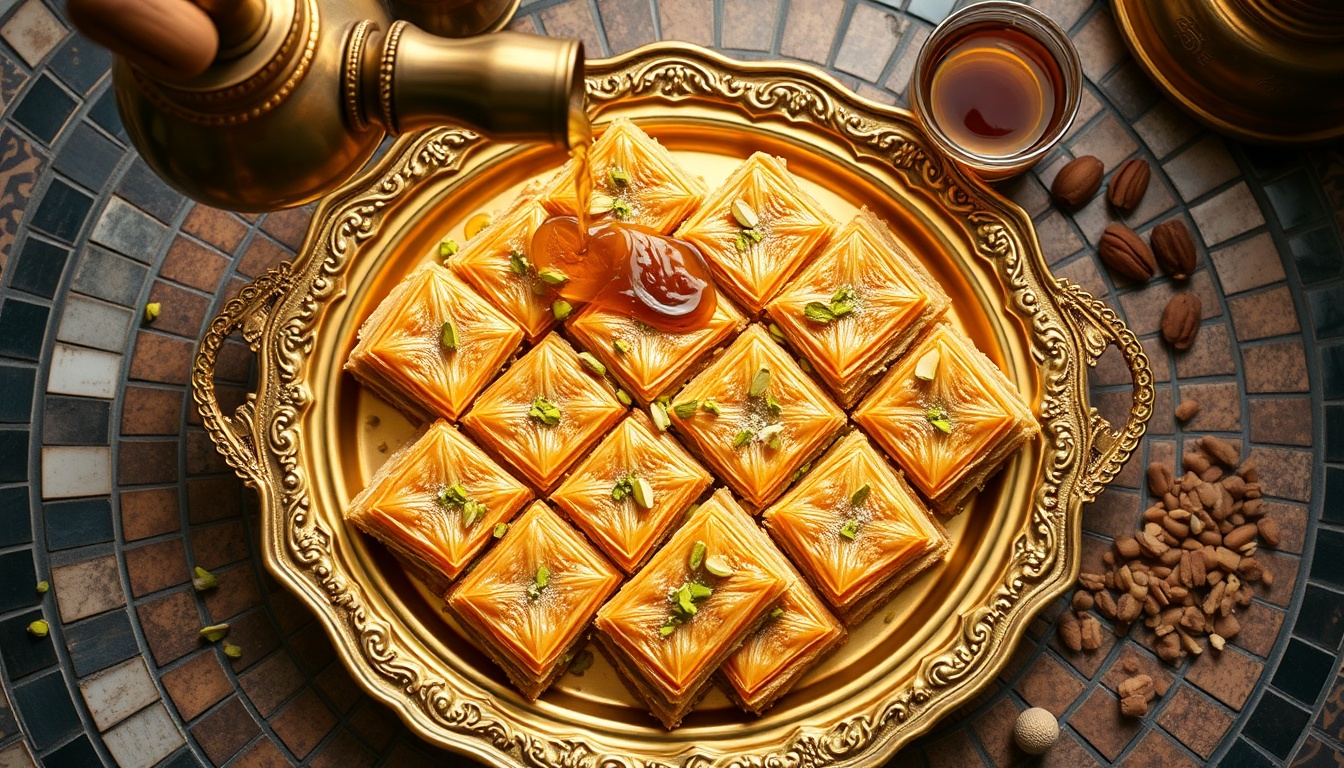
Baklava is one of the oldest pastries in the world — and one of the few where honey is not just a sweetener but the defining structural element. The honey syrup does three jobs simultaneously: it sweetens every layer, it binds the flaky phyllo together, and its hygroscopic properties keep the pastry moist for weeks.
The key to exceptional baklava is getting the syrup temperature right. When cool syrup meets hot pastry (or vice versa), the temperature differential creates rapid absorption — the syrup wicks into every phyllo layer by capillary action without making the pastry soggy. This one principle is the entire difference between professional baklava and a disappointing attempt.
This recipe produces about 24 pieces and takes roughly 90 minutes total (30 minutes assembly, 45 minutes baking, plus cooling and soaking time). It's more straightforward than its reputation suggests — if you can brush butter and stack sheets of dough, you can make baklava.
Choosing the Best Honey for Baklava
Baklava uses a significant amount of honey — 3/4 cup in the syrup — so the variety genuinely impacts the flavor of every bite.
- **Wildflower honey** ($10–18) — Our top choice. Multi-floral complexity that adds depth without competing with the nuts and spices. The most versatile option for any regional variation.
- **Orange blossom honey** ($12–20) — The traditional Mediterranean choice. Delicate citrus notes that feel authentic and pair beautifully with the lemon in the syrup. Outstanding for Greek-style baklava.
- **Clover honey** ($8–15) — Clean, neutral sweetness that lets the nuts and butter be the stars. The safest and most budget-friendly choice if you're making baklava for the first time.
- **Lavender honey** ($15–25) — Floral notes that produce an elegant, refined baklava. Pairs exceptionally with pistachios in the Lebanese variation.
- **Thyme honey** ($15–25) — The classic Greek choice. Herbal, slightly savory undertones that create the most authentic Mediterranean flavor profile. If you can find Greek thyme honey, use it.
Pro Tip
Never use crystallized honey for the syrup — it won't dissolve evenly. If your honey has crystallized, gently warm the jar in warm water first.
Get the Honey Buyer's Cheat Sheet (free PDF)
16 varieties on one page — color, flavor, best use and what a fair price looks like — from the 304 honeys we track.
The Complete Recipe: Classic Honey-Walnut Baklava
This recipe makes a 9×13-inch pan (about 24 pieces). The technique works with any nut filling and any regional variation below.
Ingredients
**For the pastry:**
- 1 lb (16 oz / 454g) phyllo dough, thawed overnight in the refrigerator
- 1 cup (2 sticks / 227g) unsalted butter, melted and slightly cooled
- 2 cups (240g) walnuts, finely chopped (not ground to powder)
- 1 teaspoon ground cinnamon
- 1/4 teaspoon ground cloves
- 1/4 teaspoon salt
Syrup Ingredients
- 3/4 cup (255g) raw honey
- 3/4 cup (150g) granulated sugar
- 3/4 cup (180ml) water
- 2 tablespoons fresh lemon juice
- 1 strip lemon zest (2-3 inches)
- 1 cinnamon stick
- Optional: 1 teaspoon rose water or orange blossom water
Step-by-Step Instructions
**Step 1: Prepare the syrup first.** Combine sugar, water, and the cinnamon stick in a saucepan over medium heat. Stir until sugar dissolves, then bring to a gentle boil. Reduce heat and simmer for 10 minutes without stirring — this creates a light syrup. Remove from heat, add honey, lemon juice, lemon zest, and rose water if using. Stir until honey is fully incorporated. Cool completely. The syrup must be cool when the baklava is hot, or the pastry will become soggy instead of crispy.
**Step 2: Prepare the nut filling.** Pulse walnuts in a food processor in short bursts until finely chopped — not powdered. You want pieces roughly the size of coarse sand, with some slightly larger bits for texture. Mix with cinnamon, cloves, and salt.
**Step 3: Layer the base.** Preheat oven to 350°F (175°C). Brush a 9×13-inch baking pan with melted butter. Lay one sheet of phyllo in the pan, trimming to fit if needed, and brush generously with melted butter. Repeat for 8-10 sheets total. Keep unused phyllo covered with a damp (not wet) towel — it dries out within minutes.
**Step 4: Add the nut layer.** Spread half the nut mixture evenly over the phyllo base. Layer 4-6 more sheets of buttered phyllo on top. Spread the remaining nut mixture. You now have three distinct layers: phyllo base, nuts, phyllo middle, nuts, and the top.
**Step 5: Layer the top.** Add 8-10 more sheets of buttered phyllo on top, brushing every single sheet generously with butter. The top should be golden and well-buttered — this is what creates the flaky, shattering crust.
**Step 6: Cut before baking.** Using a very sharp knife, cut the baklava into diamond or square shapes all the way through to the bottom of the pan. This is essential — you cannot cut baklava cleanly after baking without shattering the top layers. Cut into roughly 24 pieces.
**Step 7: Bake.** Bake for 40-50 minutes until the top is deep golden brown and the edges are pulling away from the pan slightly. Rotate the pan halfway through for even browning.
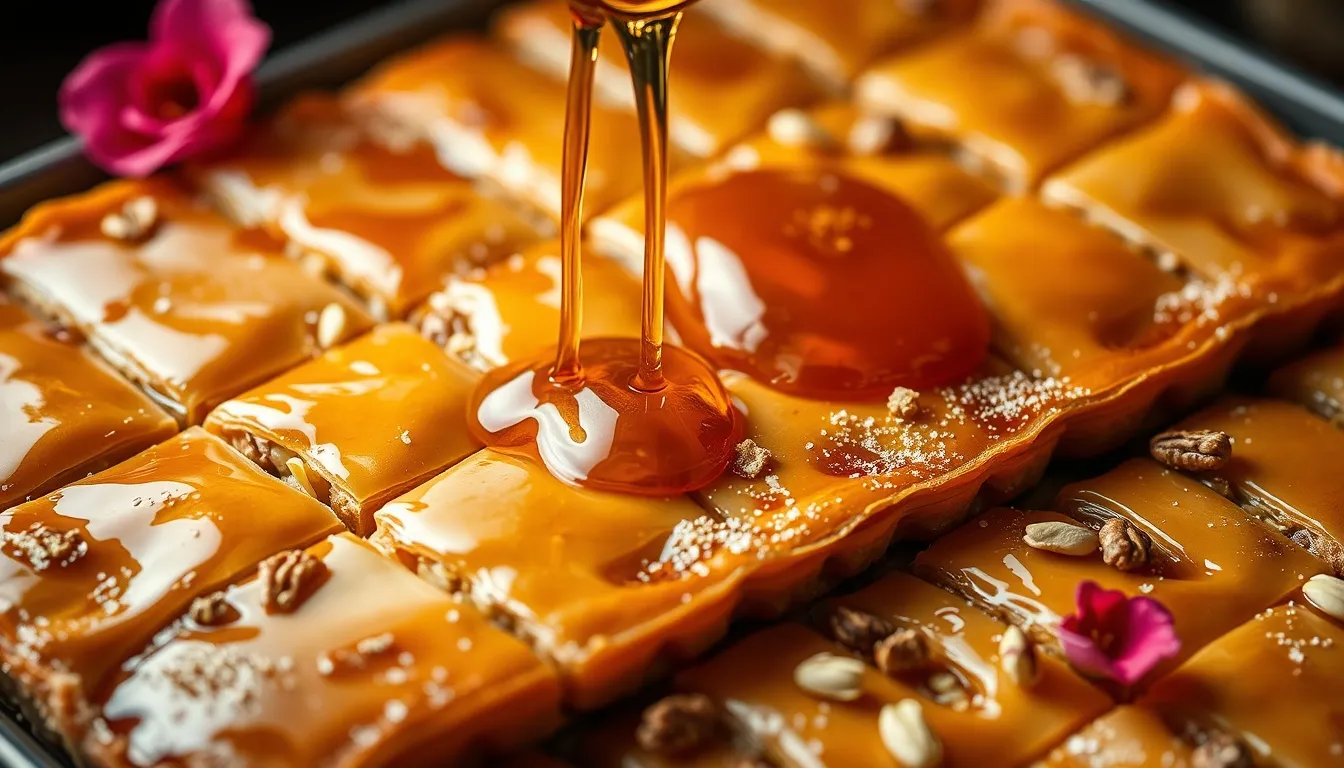
**Step 8: Soak with syrup.** Remove from oven and immediately pour the cooled syrup slowly over the hot baklava, concentrating on the cut lines and edges. You will hear a satisfying sizzle — that's the temperature differential creating rapid absorption. Let the baklava sit uncovered at room temperature for at least 4-6 hours (overnight is better) to allow the syrup to fully absorb and the layers to set.
Pro Tip
The single most important rule: cool syrup on hot baklava, or hot syrup on cool baklava. The temperature contrast is what drives absorption. If both are the same temperature, the syrup pools on top and makes the pastry soggy.
4 Regional Variations
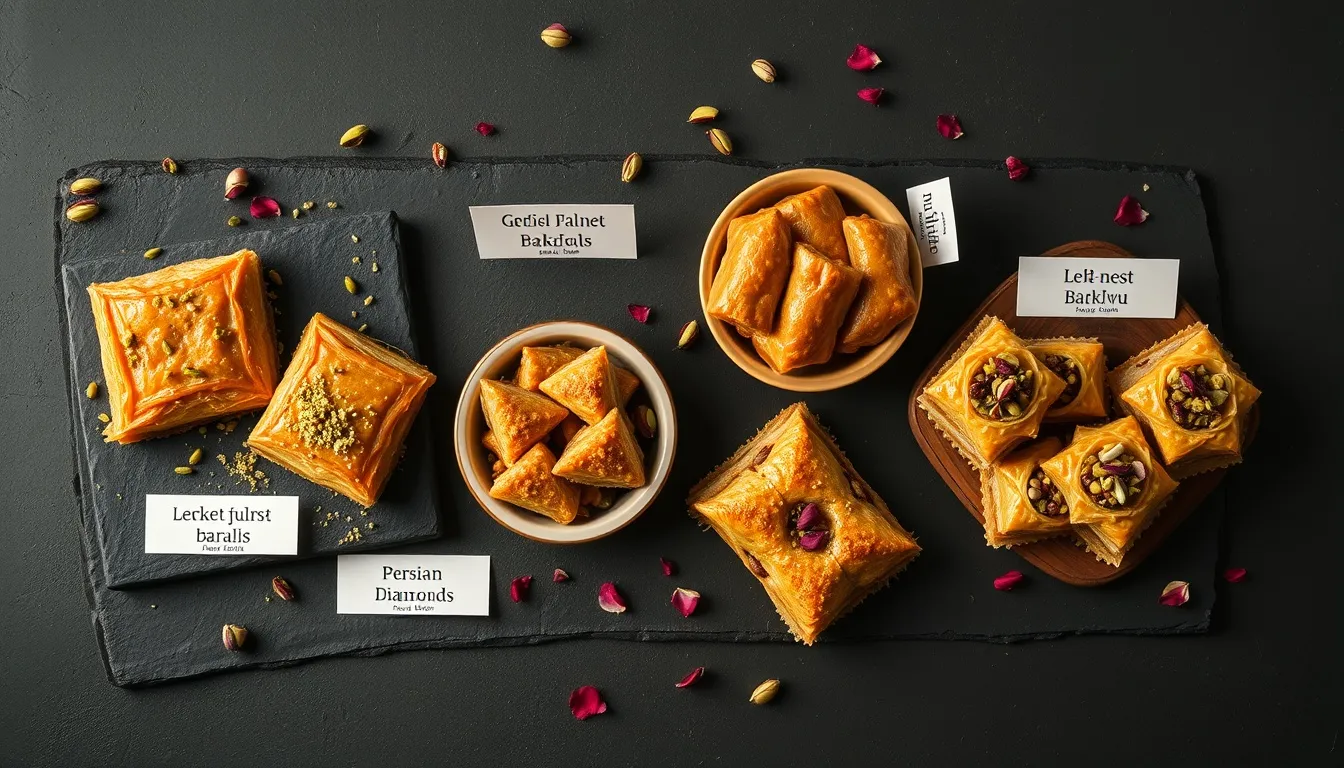
Baklava exists across the Eastern Mediterranean, Middle East, and Central Asia, with each region claiming its own version. All variations use the same assembly technique — only the filling, syrup, and proportions change.
- **Greek Baklava:** Use thyme honey or wildflower honey in the syrup. Replace half the walnuts with almonds. Add 1/2 teaspoon extra cinnamon and a pinch of nutmeg. Use more lemon juice (3 tablespoons) for a tangier syrup. Greek baklava tends to be the sweetest and most heavily spiced version.
- **Turkish Baklava:** Replace all walnuts with pistachios. Use less sugar in the syrup (1/2 cup instead of 3/4) and more honey (1 cup). Skip the cinnamon in the filling — Turkish baklava lets the pure pistachio and butter flavors shine. Use thinner phyllo layers (12-15 sheets per layer) for an ultra-flaky result. The Gaziantep region produces what many consider the world's finest baklava.
- **Lebanese Baklava:** Use a mixture of pistachios, walnuts, and cashews. Add 1-2 teaspoons rose water to the syrup for the signature floral note. Replace lemon juice with orange blossom water. Use orange blossom honey for a double layer of citrus florals. Lebanese baklava is typically less sweet than Greek, emphasizing the nuts and aromatics.
- **Pistachio Rolls (Burma/Borma):** Instead of flat layers, roll each buttered phyllo sheet around a dowel, scrunch it accordion-style, remove the dowel, fill the center with chopped pistachios, and arrange in a spiral in a round pan. Bake and syrup as usual. Same flavors, dramatically different presentation.
The Science Behind Perfect Baklava
Understanding why each step matters helps you troubleshoot and adapt the recipe.
**Butter and phyllo interaction.** Brushing each sheet with butter serves two purposes: it waterproofs the layer (preventing syrup from turning it gummy) and it creates tiny steam pockets during baking that separate the layers into distinct, flaky sheets. Skimping on butter produces dense, flat baklava.
**Honey in the syrup.** Honey's fructose and glucose create a syrup that stays liquid at room temperature (pure sugar syrup would crystallize). Honey is also hygroscopic — it actively draws moisture from the air, which is why properly made baklava stays moist for weeks without refrigeration, just as honey itself doesn't expire.
**The temperature principle.** When cool syrup hits hot pastry, the pastry's heat creates a brief vacuum in the air pockets between layers as steam condenses. This vacuum draws the syrup inward by capillary action. Same-temperature combinations lack this driving force, leaving syrup pooled on the surface.
**Pre-cutting.** Phyllo becomes extremely brittle after baking. Pre-cutting while soft ensures clean edges. The cuts also create channels for syrup to reach the interior layers rather than just coating the top.
Storage and Shelf Life
**Room temperature (best for 1-2 weeks):** Store loosely covered (not sealed) at room temperature. Baklava needs some air circulation — an airtight container traps moisture and softens the top layers. A loosely draped piece of foil or a vented container works perfectly. Thanks to honey's natural antimicrobial properties, properly syruped baklava resists spoilage for weeks.
**Refrigerator (2-4 weeks):** If your kitchen is warm or humid, refrigerate in an airtight container. Bring to room temperature before serving — cold baklava tastes less sweet and the butter is firmer.
**Freezer (3-6 months):** Freeze baked, syruped, and cooled baklava in a single layer, then stack with parchment between layers. Thaw at room temperature for 2-3 hours. Alternatively, freeze unbaked assembled baklava (without syrup) and bake from frozen, adding 10 minutes to the baking time. Make syrup fresh.
**Gifting tip:** Baklava is one of the best homemade gifts precisely because it improves with time and stays fresh without refrigeration. Package in a box with parchment between layers — never plastic wrap, which traps moisture.
Common Mistakes and How to Avoid Them
- **Soggy baklava:** Either the syrup was warm when poured over hot pastry, or the baklava was sealed airtight before the syrup fully absorbed. Always use cool syrup on hot pastry and let it sit uncovered for at least 4 hours.
- **Dry baklava:** Not enough syrup. Pour slowly and make sure syrup reaches every cut line and edge. Some bakers make extra syrup and add more the next day if the baklava seems dry.
- **Phyllo dries out during assembly:** Keep unused sheets under a damp (not wet) kitchen towel. Work quickly — have everything prepped before you start layering.
- **Nuts are powdery:** Over-processing in the food processor. Pulse in short bursts, not continuous blending. Some coarser pieces are better than a uniform powder — they provide texture contrast.
- **Bottom is soggy, top is crispy:** The pan wasn't buttered enough, or the bottom phyllo layers weren't buttered individually. Each sheet needs its own brush of butter for proper waterproofing.
- **Can't cut clean pieces:** Always cut before baking when the phyllo is still soft. Use a very sharp chef's knife and decisive downward pressure rather than a sawing motion.