Why Honey Makes Better Donuts
Most commercial glazed donuts use refined sugar in both the dough and the glaze, producing a one-dimensional sweetness that disappears the moment you stop chewing. Replacing sugar with raw honey changes the game in three ways: honey's hygroscopic nature pulls moisture from the air, keeping the dough softer for longer. Its fructose caramelizes at a lower temperature, creating a deeper golden color. And the 200+ aromatic compounds in real honey add subtle floral and caramel notes that refined sugar simply cannot match.
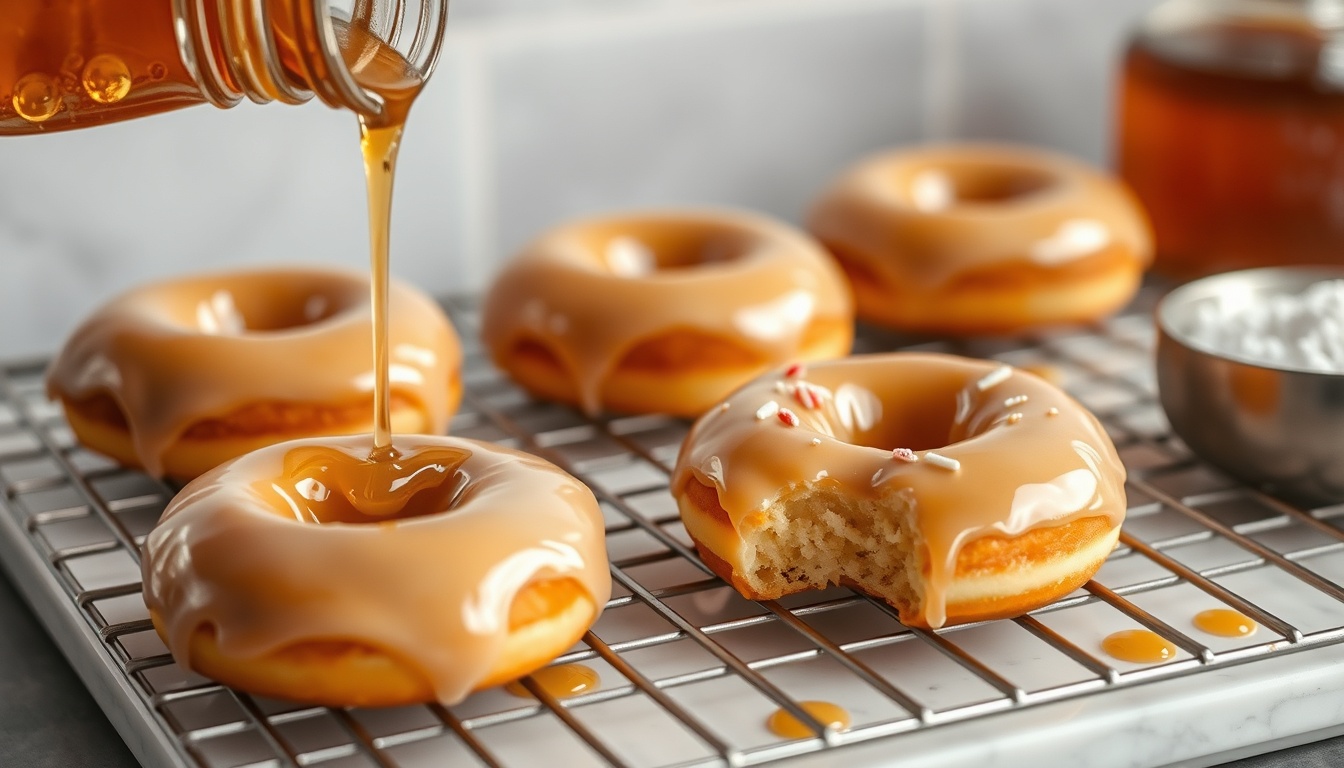
The glaze is where honey really shines. A traditional donut glaze is just powdered sugar and milk — sweet but flat. A honey glaze has body, complexity, and a gorgeous amber sheen. It stays slightly tacky rather than cracking off in shards, which means the flavor actually stays on the donut.
This recipe gives you both a baked and a fried option, plus 5 glaze variations to keep things interesting. Whether you're making donuts for a weekend breakfast, a bake sale, or just because you want your kitchen to smell incredible, honey is the upgrade that makes homemade donuts worth the effort.
Choosing the Right Honey
Since honey is the star ingredient in both the dough and the glaze, the variety you choose has a noticeable impact on flavor.
- **Clover honey** — Clean, classic sweetness that lets the dough flavor shine through. The most versatile choice and closest to a traditional glazed donut taste.
- **Wildflower honey** — Adds multi-floral complexity and a slightly deeper flavor. Excellent for a more sophisticated donut.
- **Orange blossom honey** — Delicate citrus and floral notes that make the glaze taste almost perfumed in the best way. Beautiful for spring and summer.
- **Lavender honey** — Subtle herbal-floral character. Pairs beautifully with the lavender-honey glaze variation below.
- **Buckwheat honey** — Bold, molasses-like flavor for a darker, more rustic donut. Not for everyone, but buckwheat honey donuts with cinnamon are outstanding.
Pro Tip
Use the same honey variety in both the dough and the glaze for a unified flavor, or mix it up — a mild clover in the dough with a bold buckwheat glaze creates an interesting contrast.
Get the Honey Buyer's Cheat Sheet (free PDF)
16 varieties on one page — color, flavor, best use and what a fair price looks like — from the 304 honeys we track.
The Complete Recipe: Honey Glazed Donuts (Baked Method)
This recipe makes 12 donuts. Total time: about 2 hours (including 1 hour rise time). The baked method is simpler and uses a donut pan.
Ingredients
**For the honey donut dough:**
- 2¼ teaspoons active dry yeast (1 packet)
- ¾ cup whole milk, warmed to 110°F
- ¼ cup raw honey (plus 1 teaspoon for activating yeast)
- 3 cups all-purpose flour
- ¼ teaspoon freshly grated nutmeg
- ¾ teaspoon salt
- 2 large eggs, room temperature
- 4 tablespoons unsalted butter, softened
- 1 teaspoon vanilla extract
**For the honey glaze:**
- 2 cups powdered sugar, sifted
- 3 tablespoons raw honey
- 3-4 tablespoons whole milk or cream
- 1 teaspoon vanilla extract
- Pinch of salt
Step-by-Step Instructions
**Step 1: Activate the yeast.** In a small bowl, combine warm milk (110°F — warm to the touch but not hot) with 1 teaspoon honey. Sprinkle yeast over top and let sit for 5-7 minutes until foamy. If it doesn't foam, your yeast is dead — start over with fresh yeast.
**Step 2: Make the dough.** In a large bowl (or stand mixer with dough hook), whisk together flour, nutmeg, and salt. Add the yeast mixture, ¼ cup honey, eggs, softened butter, and vanilla. Mix until a soft, slightly sticky dough forms, about 5-7 minutes by hand or 4 minutes with a stand mixer on medium-low. The dough should pull away from the sides of the bowl but still feel tacky.
**Step 3: First rise.** Place dough in a greased bowl, cover with a damp towel or plastic wrap, and let rise in a warm spot for 1 hour or until doubled in size. Honey dough rises slightly slower than sugar dough because honey is hygroscopic — this is normal.
**Step 4: Shape the donuts.** Turn dough onto a lightly floured surface and roll to ½-inch thickness. Cut with a 3-inch donut cutter (or use a large and small round cutter). Place donuts on a parchment-lined baking sheet, cover loosely, and let rise 20 minutes.
**Step 5: Bake.** Preheat oven to 375°F. If using a donut pan, pipe or spoon dough into greased cavities, filling each about ⅔ full. Bake for 10-12 minutes until the tops spring back when lightly touched and the edges are just barely golden. Don't overbake — the residual heat continues cooking them.
**Step 6: Make the honey glaze.** While donuts cool slightly, whisk together powdered sugar, honey, milk, vanilla, and salt until smooth and pourable. The consistency should be like thick cream — add milk by the teaspoon if too thick.
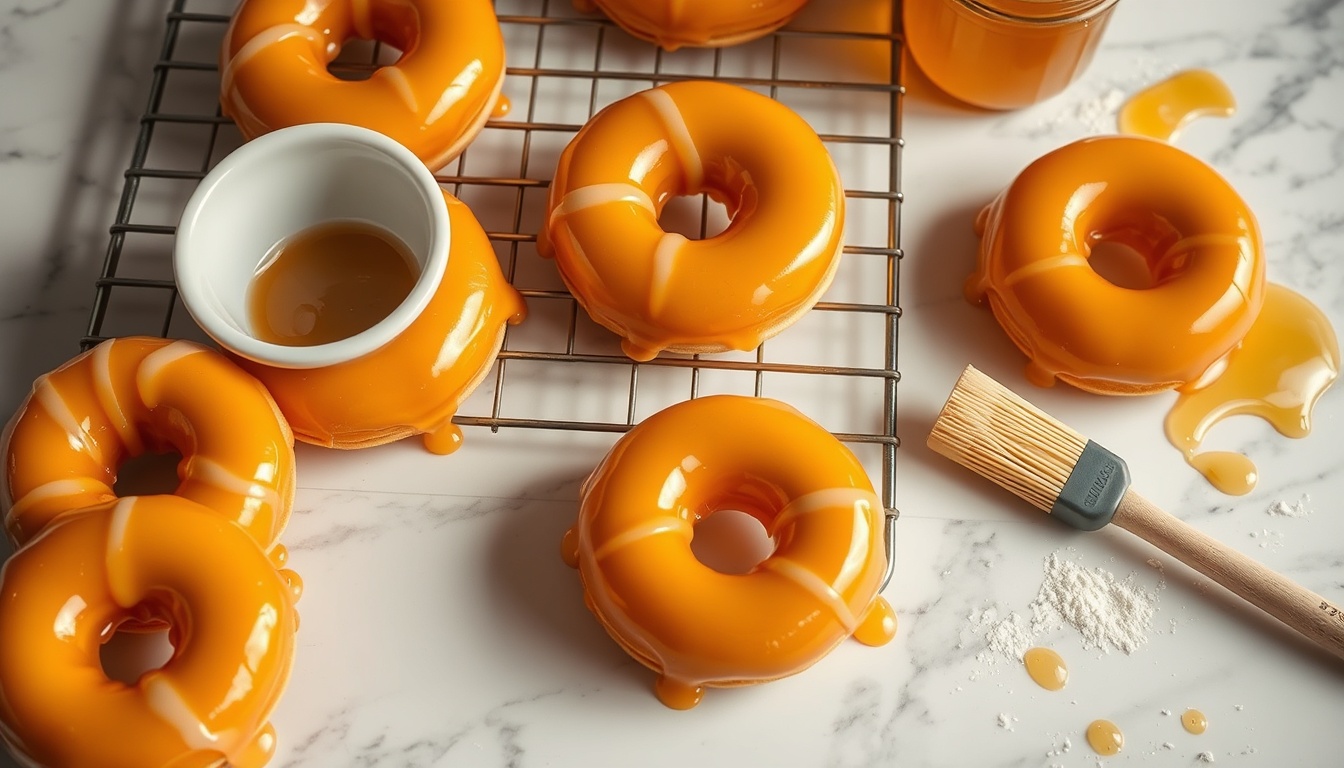
**Step 7: Glaze.** Dip the top of each warm donut into the glaze, let excess drip off for 5 seconds, then place glazed-side-up on a wire rack. Let the glaze set for 10 minutes. For a thicker coating, dip a second time after the first layer sets.
Pro Tip
The donuts must be warm but not hot when glazing. Too hot and the glaze melts off. Too cool and it won't stick. The sweet spot is about 5 minutes after coming out of the oven — warm to the touch but holdable.
Fried Method (Classic Style)
For a traditional fried donut texture with a crispy exterior, follow the same dough recipe through Step 4, then fry instead of bake.
- Heat 2-3 inches of vegetable or canola oil to 350°F in a heavy-bottomed pot or Dutch oven. Use a thermometer — temperature control is everything.
- Gently lower 2-3 donuts into the oil (don't crowd). Fry for 1-1.5 minutes per side until deep golden brown.
- Remove with a slotted spoon or spider strainer to a wire rack over a sheet pan. Let cool 3-5 minutes before glazing.
- Maintain oil at 350°F between batches. Too low and the donuts absorb oil and get greasy. Too high and the outside burns before the inside cooks.
Pro Tip
Don't discard the donut holes — fry them for 30-45 seconds per side for bite-sized honey-glazed donut holes. Kids (and adults) love them.
5 Honey Glaze Variations
The base honey glaze is excellent, but these variations take your donuts in different directions.
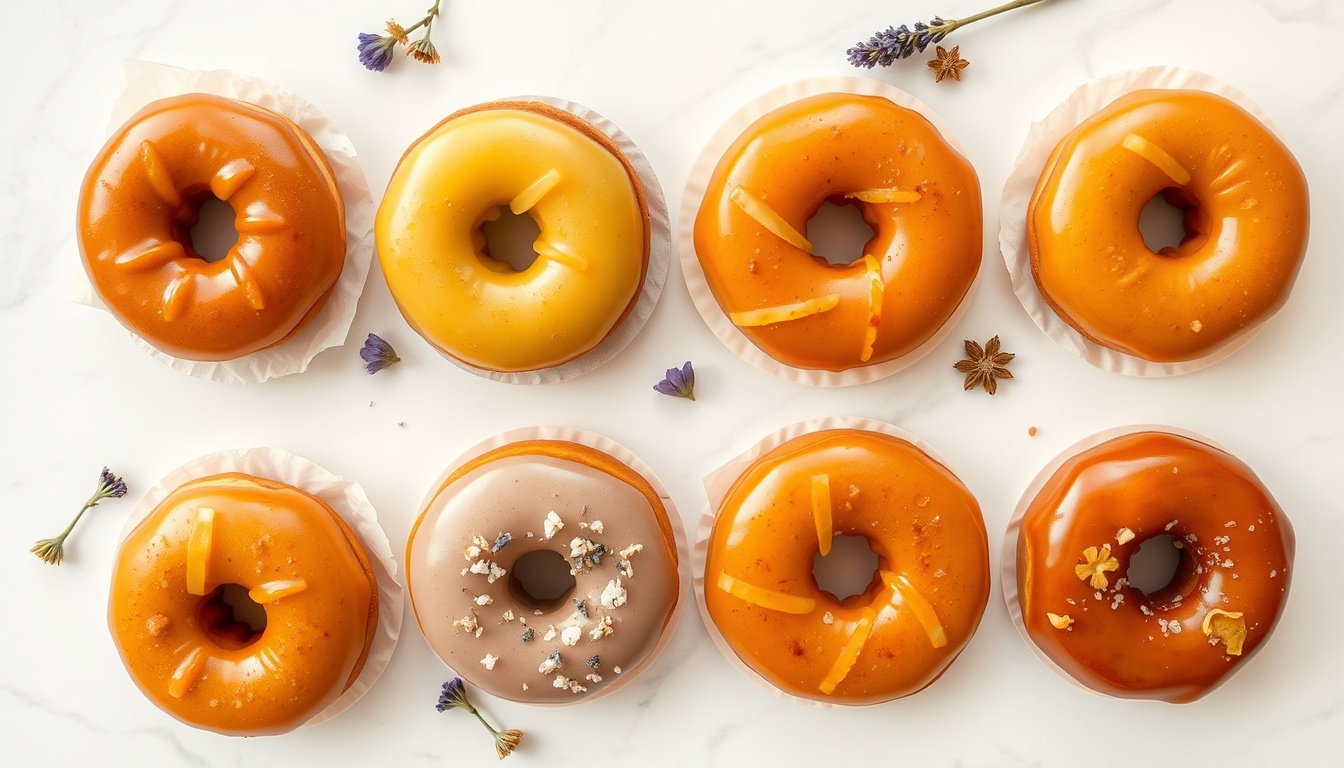
- **Honey Cinnamon Glaze:** Add 1 teaspoon ground cinnamon and a pinch of cardamom to the base glaze. The warm spices complement honey's natural warmth beautifully. Finish with a light dusting of cinnamon sugar.
- **Honey Lemon Glaze:** Replace milk with 3 tablespoons fresh lemon juice and add 1 teaspoon lemon zest. The acidity cuts through the sweetness for a bright, bakery-style donut. Pairs perfectly with orange blossom honey.
- **Honey Maple Glaze:** Replace 1 tablespoon of the honey with pure maple syrup and add ½ teaspoon maple extract. A double-natural-sweetener glaze that tastes like fall breakfast.
- **Honey Lavender Glaze:** Steep 1 tablespoon dried culinary lavender in the warm milk for 10 minutes, strain, then use the lavender-infused milk in the base glaze recipe. Use lavender honey to double the floral notes.
- **Hot Honey Glaze:** Add 1 tablespoon hot honey (or ½ teaspoon cayenne) to the base glaze. The sweet-spicy combination is addictive. Finish with flaky sea salt.
Common Mistakes and How to Avoid Them
Homemade donuts have a learning curve. Here are the most frequent pitfalls.
- **Killing the yeast.** Milk above 115°F kills yeast instantly. Use a thermometer or test on your wrist — it should feel like a warm bath, not hot.
- **Dense, heavy donuts.** Usually caused by too much flour. Measure by spooning flour into the measuring cup and leveling with a knife, rather than scooping (which packs the flour). The dough should be soft and slightly sticky.
- **Donuts that don't rise.** Honey is hygroscopic and slightly acidic, which can slow yeast activity. Give the dough a full hour to rise in a warm spot (80-85°F). If your kitchen is cool, place the bowl in an oven that's been turned on to 200°F for 2 minutes then turned off.
- **Glaze that slides off.** The donuts were either too hot (glaze melts) or too cold (glaze doesn't adhere). Glaze when donuts are warm but holdable — about 5 minutes out of the oven.
- **Greasy fried donuts.** Oil temperature dropped below 340°F. Maintain 350°F and only fry 2-3 at a time. Cold dough absorbs more oil, so don't refrigerate the dough right before frying.
- **Burnt outside, raw inside (fried).** Oil was too hot. If your oil exceeds 365°F, the crust sets before the interior cooks through. Lower heat and use a thermometer.
Storage and Make-Ahead Tips
**Day of:** Honey glazed donuts are best within 4-6 hours of glazing. The honey in the dough keeps them moist longer than sugar donuts, but the glaze gradually absorbs into the surface.
**Overnight storage:** Store unglazed donuts in an airtight container at room temperature. Glaze fresh the next morning — takes just 2 minutes to whisk together.
**Make-ahead dough:** After the first rise, punch down the dough, wrap tightly in plastic wrap, and refrigerate for up to 24 hours. The cold fermentation actually develops more flavor. Bring to room temperature for 30 minutes before shaping.
**Freezing:** Freeze unglazed baked donuts in a zip-top bag for up to 2 months. Thaw at room temperature for 1 hour, warm in a 300°F oven for 3-5 minutes, then glaze fresh.
The Science of Honey in Baking
Understanding why honey behaves differently than sugar helps you troubleshoot and adapt recipes. Honey contains about 17% water, which means you're adding liquid when you substitute it for dry sugar — this is why the dough may feel stickier than you expect. That extra moisture is actually beneficial: it produces a softer, more tender crumb.
Honey is also slightly acidic (pH 3.4-6.1), which strengthens gluten structure slightly and can interact with baking soda if present. In yeast doughs like this one, the acidity is mild enough that it doesn't cause problems, but it does contribute to a subtle tang that balances the sweetness.
For more on substituting honey in baking, including the standard conversion formula and temperature adjustments for cakes and cookies, check the complete guide.