About This Recipe
Honey sweetens this small batch of cooked eggnog, with vanilla and nutmeg alongside its floral aroma. Whole eggs give it a light custard texture without a separate layer of whipped egg-white foam. Divide the chilled batch into four small servings.
Use a thermometer for the cooking endpoint, then allow time for cooling. The stirred mixture must reach 160°F (71°C) before it leaves the stove. A brief ice bath and at least four hours in the refrigerator follow, so start well before you plan to serve it.
Recipe
Cooked Honey Eggnog Recipe
Cook a small batch of honey eggnog to 160°F, cool it in an ice bath, then chill for four hours. Whole eggs, milk and cream give a smooth custard texture.
7Ingredients
Yield: 4 servings
- 150 g whole egg, weighed without shells (about 3 large eggs at 50 g each)
- 480 g whole milk
- 120 g heavy whipping cream
- 84 g honey
- 5 g vanilla extract
- 0.5 g ground nutmeg
- 0.5 g table salt
Ingredient amounts scale; instructions show the original batch. Cooking times and pan sizes may need adjustment. Season to taste. Honey grams use US measures at 20°C and 17.5% moisture, a density estimate; weigh your honey for precision.
Instructions
- 1Whisk the baseIn a heatproof bowl, whisk the 150 g whole egg with the honey and salt until smooth and no honey streaks remain. Keep the bowl near the stove.
- 2Warm the dairyCombine the milk and cream in a heavy saucepan over medium heat. Warm, stirring often, until steaming and small bubbles form at the edge — do not let it boil.
- 3Temper the eggsOff the heat, ladle a spoonful of the hot dairy into the egg mixture while whisking. Add a second and third spoonful the same way. This gradually raises the egg temperature before it meets the rest of the hot liquid.
- 4Cook to temperatureWhisk the tempered egg mixture back into the saucepan. Set over low heat and stir constantly with a spatula, scraping the bottom and corners, until a thermometer probe in the stirred mixture reads 160°F (71°C). Color and thickness are guides, not the endpoint; do not let it boil.
- 5Finish and strainRemove the pan from the heat immediately. Strain through a fine-mesh sieve into a clean heatproof bowl, then stir in the measured vanilla and nutmeg.
- 6Cool and chillSet the bowl in an ice-water bath without letting any bath water enter the eggnog. Stir occasionally for about 20 minutes, then cover and promptly refrigerate at 40°F (4°C) or below. Refrigerate within 2 hours of cooking, or within 1 hour when the surrounding temperature is above 90°F (32°C). Chill at least 4 hours and until cold throughout before serving.
Estimated nutrition per serving
296.92 calories · 18.34 g fat · 24.41 g carbohydrate · 9.43 g protein · 162.42 mg sodium
Serving: 1 of 4 servings
Calculated from ingredient weights and USDA FoodData Central: 171287, 171265, 170859, 169640, 173471, 171326, 173468. Estimates use ingredient input weights; actual portions, brands and cooking losses vary. Omitted nutrient values are unavailable, not zero.
What Makes This Eggnog Different
Eggnog methods vary. Some separate the eggs and fold in whipped whites; this version uses weighed whole eggs and cooks them with milk and cream. The result is a smooth, pourable custard rather than a foamy drink. Honey is the sole added sweetener.
Tempering means whisking a little hot dairy into the eggs before returning them to the pan. This reduces the sudden temperature change that can produce lumps. Keep stirring over low heat as the full mixture warms, moving the spatula across the bottom and into the corners.
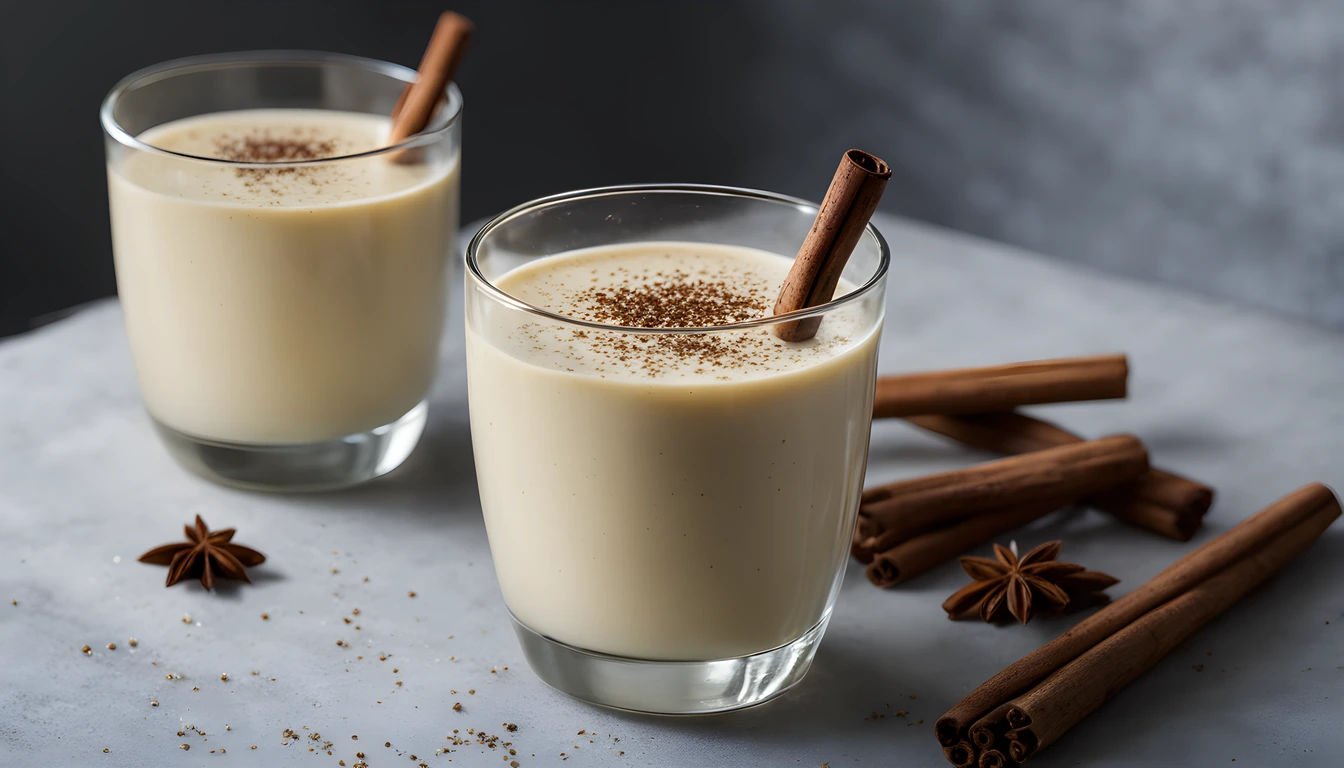
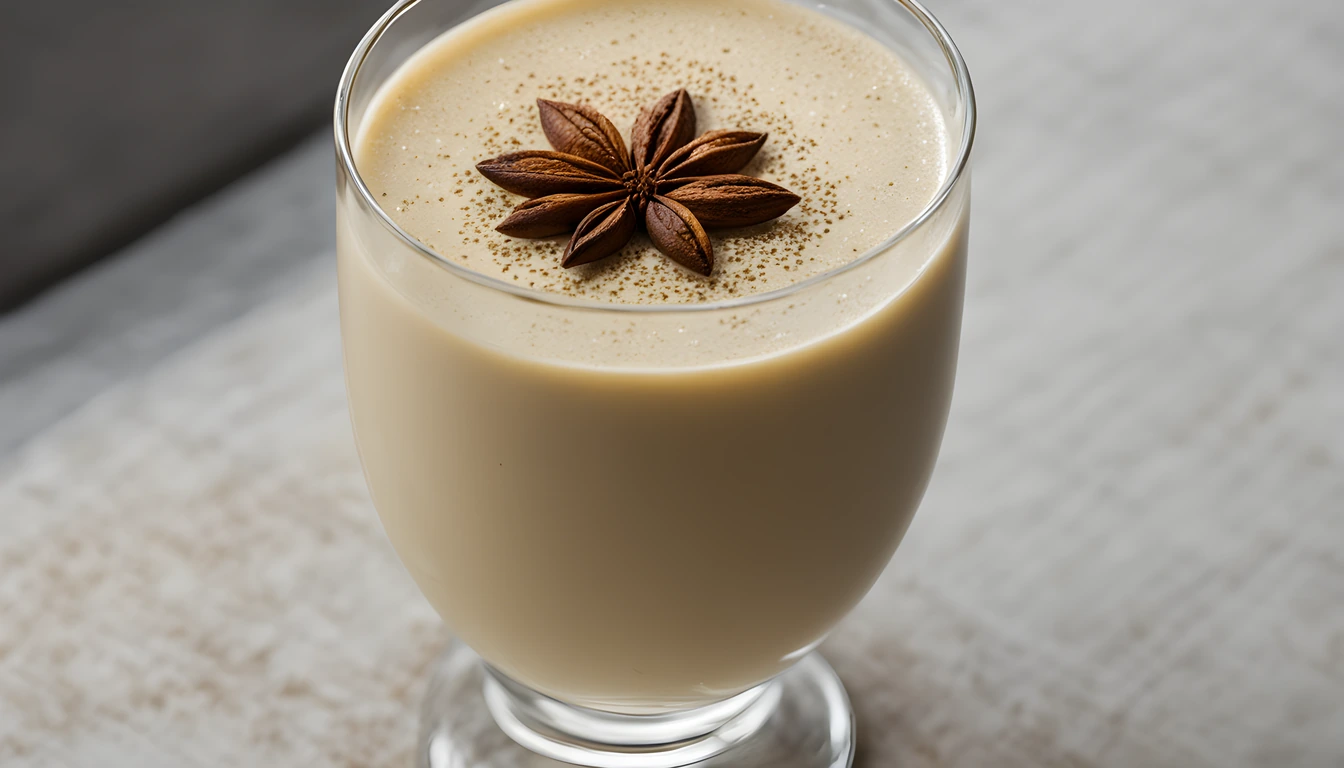
The illustrations show optional whole-spice serving garnishes: cinnamon sticks or star anise. The cooked base uses only the measured ground nutmeg. These extras are not needed for the recipe and are outside the ingredient and nutrition totals.
Flavor intensity uses an editorial culinary scale: 1 is mild and 5 is bold. These are tasting suggestions, not laboratory measurements.
Sources: FoodSafety.gov — Safe Minimum Internal Temperatures; FoodSafety.gov — 4 Steps to Food Safety; UC Cooperative Extension — Honey (cottage foods guide).
- 150 g whole egg, weighed without shells
- Milk and cream for a pourable custard texture
- Four equal servings from the finished chilled batch
Pro Tip
The mixture will look thin when it hits 160°F; it thickens a little as it cools and chills.
1 = mild, 5 = bold. Editorial pairing guidance, not laboratory measurements; jars vary.
- Clover
- Mild, neutral sweetness; lets nutmeg and vanilla lead
- Orange blossom
- Citrus-floral note that lifts a creamy custard
- Wildflower
- Mixed floral character; variable batch to batch
- Buckwheat
- Dark, malty and assertive; dominates a small batch
- Sage
- Herbal, rounded sweetness; a quieter match
Get the Honey Buyer's Cheat Sheet (free PDF)
16 varieties on one page — color, flavor, best use and what a fair price looks like — from the 304 honeys we track.
Cook and Cool by the Thermometer
FoodSafety.gov lists egg dishes at 160°F (71°C) as the safe minimum internal temperature, so that is the number this recipe uses. A pale color or a coating on the spatula means nothing on its own — the probe reading in the stirred pot does.
Cooling belongs in the recipe schedule. The retained FoodSafety.gov guidance calls for prompt refrigeration within two hours, or one hour when the surrounding temperature is above 90°F (32°C). An ice-water bath helps release heat before the bowl goes into the refrigerator; it is a short cooling step, not a reason to leave the eggnog on the counter.
- Measure the temperature in the stirred liquid
- Use a clean bowl and sieve after cooking
- Keep refrigerated at 40°F (4°C) or below
Pro Tip
Use within 2 days as a conservative limit, and never leave a jug of eggnog out on a buffet.
Timing and Yield
Prep is 15 minutes and cooking is 15 minutes. The 290-minute total includes the 20-minute ice bath and 240 minutes (4 hours) of refrigeration — it is not 290 minutes of hands-on work. If your eggnog needs longer to chill, the total grows; trust the thermometer and the clock over the listed number.
The ingredient weights give four servings, but they do not establish an exact volume after cooking. Divide the finished chilled batch equally. A wider pan or a longer heating period can evaporate more water, which changes the volume and thickness.
Pro Tip
Chill the serving glasses in the fridge so the drink stays cold once poured.
How Honey Behaves Here
The 84 g honey sweetens the milk and eggs without adding granulated sugar. A mild clover honey lets vanilla and nutmeg lead. Orange blossom adds a citrus-floral aroma; darker buckwheat gives a more pronounced, malty flavor. Choose the honey you want to taste in a creamy drink.
Weigh the honey directly into the mixing bowl so none remains stuck in a measuring cup. If it is crystallized, warm the closed container gently in warm water until the honey flows, then weigh it. There is no need to boil the honey separately.
Pro Tip
For a meaningful flavor comparison, keep the honey weight the same when you change varieties.
Serving, Storage and Common Mistakes
Serve straight from the refrigerator in small glasses. The measured 0.5 g nutmeg is stirred into the base after straining. For the illustrated serving style, add a whole cinnamon stick or star anise just before serving, or place the spices beside the glasses as props. Remove whole spices before drinking. Do not simmer or steep them into the base unless you intend to change its flavor; their contribution is not quantified in the nutrition estimate.
Keep the covered eggnog refrigerated and use within two days. Pour only what you will serve and return the remaining batch to the refrigerator promptly. Heating and honey do not turn this dairy-and-egg drink into a preserved product.
No whiskey or rum is added. Ordinary vanilla extract contains alcohol, however, so this recipe should not be described as completely alcohol-free. The nutrition estimate includes the written vanilla extract amount.
Pro Tip
For a smooth finish, stir the chilled base gently before pouring. A sieve can remove small egg lumps after cooking but cannot restore a heavily scrambled custard.
Choosing the Honey
Use Clover honey or Orange blossom honey or Wildflower honey or Buckwheat honey for the flavor described in this recipe. See our honey selection guide for other culinary choices.