About this recipe
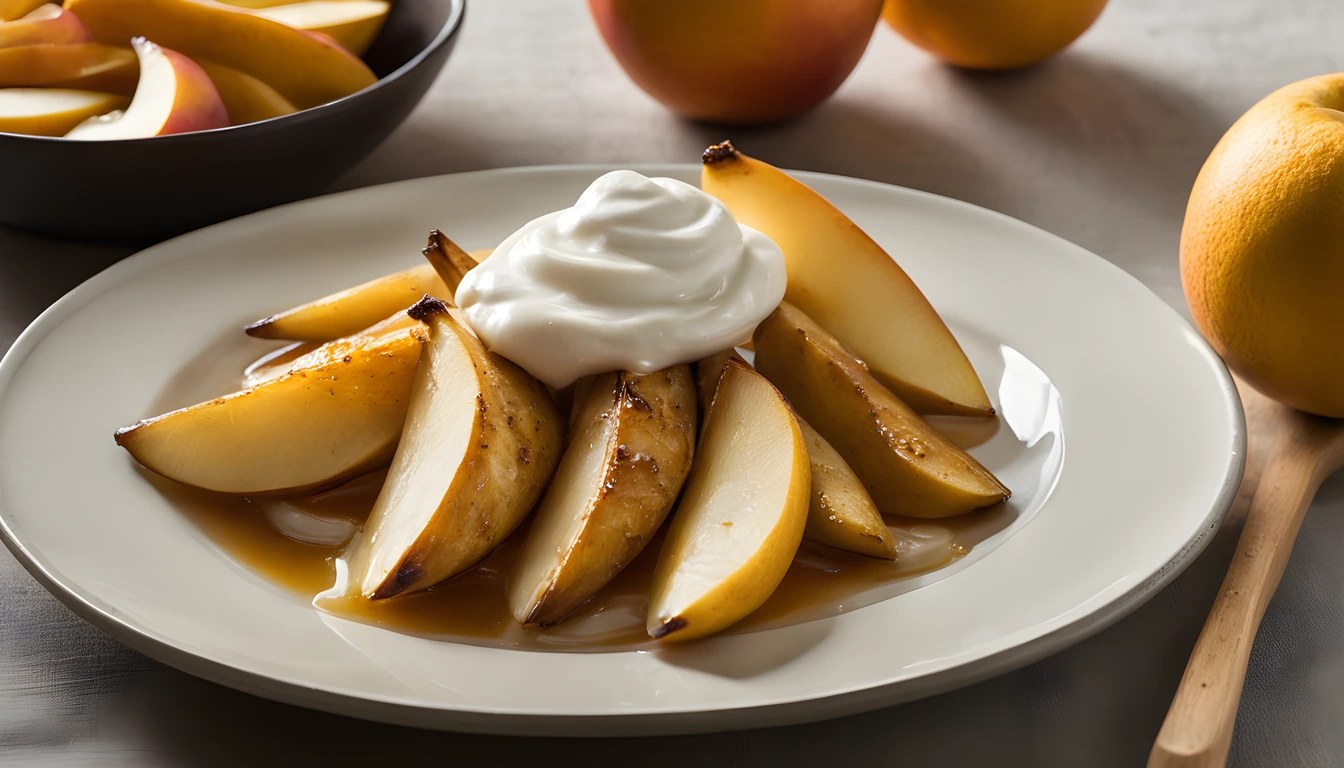
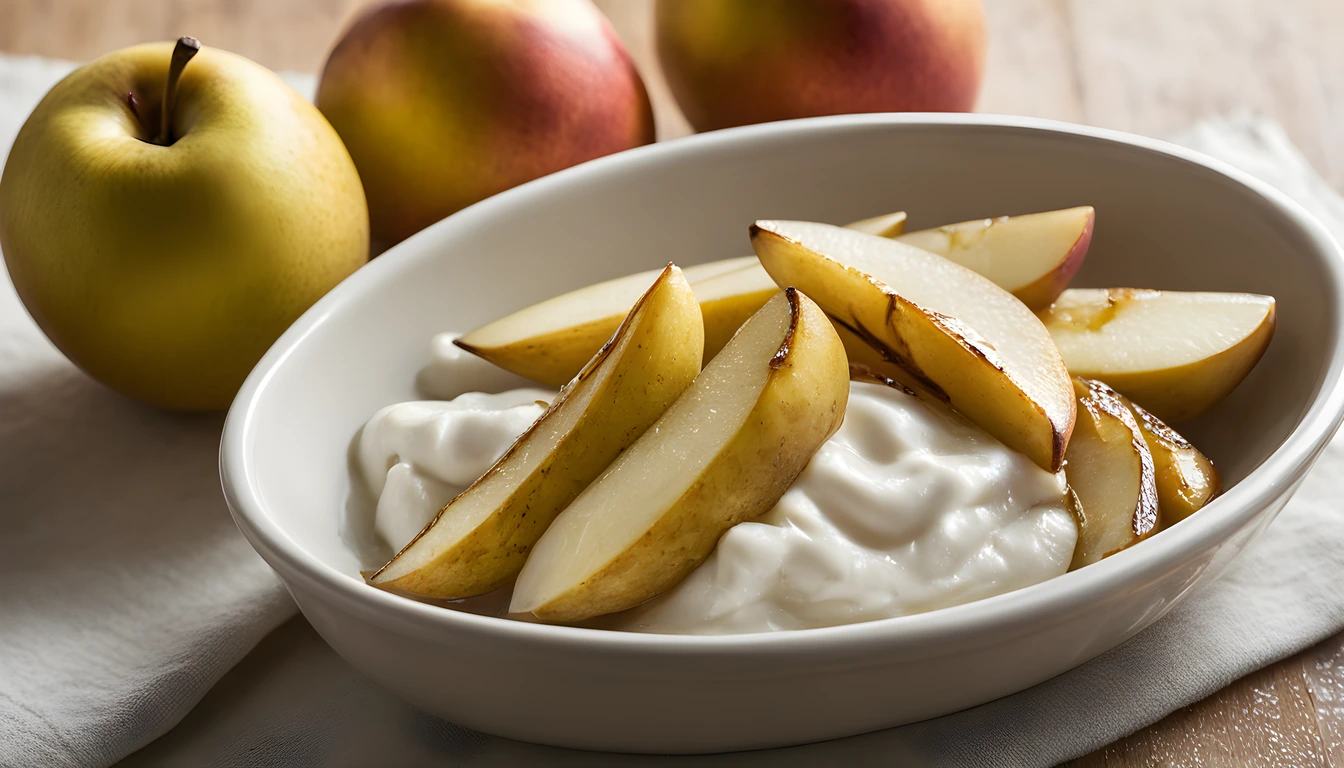
Apple and pear wedges roast with honey, butter and a little lemon, while peeled orange segments release juice into the pan. Serve the warm fruit with cool plain yogurt and spoon over the honey juices.
The base uses weighed edible fruit after coring and peeling. Four equal portions include all pan juices and 60 g yogurt each; a scoop of ice cream or extra honey is a different serving.
Recipe
Honey Roasted Winter Fruit Recipe
Apple, pear and orange roasted in a honey glaze, then served with measured Greek yogurt. Four portions; preparation weights exclude cores and orange peel.
9Ingredients
Yield: 4 servings
- 300 g cored apple with skin, cut into wedges
- 300 g cored pear with skin, cut into wedges
- 200 g peeled orange segments, seeds removed
- 3 tablespoons clover honey
- 2 tablespoons unsalted butter, melted
- 1 tablespoon fresh lemon juice
- 1/2 teaspoon ground cinnamon
- 1/2 teaspoon vanilla extract
- 240 g plain whole-milk Greek yogurt, for serving
Ingredient amounts scale; instructions show the original batch. Cooking times and pan sizes may need adjustment. Season to taste. Honey grams use US measures at 20°C and 17.5% moisture, a density estimate; weigh your honey for precision.
Instructions
- 1Heat the oven and prepare fruitHeat the oven to 400°F (200°C). Core apple and pear, keep their skins, and weigh 300 g edible pieces of each. Peel oranges, remove seeds and weigh 200 g segments.
- 2Mix the glazeWhisk honey, melted butter, lemon juice, cinnamon and vanilla in a large bowl.
- 3Coat and arrangeToss fruit gently with the glaze. Spread in a single layer in a shallow metal baking dish or rimmed sheet pan with enough depth to contain the juices.
- 4RoastRoast 25–30 minutes, turning the apple and pear wedges gently around halfway through, until tender at the thickest point. The orange may soften more than the firmer fruit. Continue briefly if the wedges are still firm.
- 5Rest and serveRest 5 minutes. Divide all fruit and pan juices into 4 portions, each with 60 g plain Greek yogurt. The yogurt is served cool rather than roasted in the pan.
Estimated nutrition per serving
265.39 calories · 9.06 g fat · 43.61 g carbohydrate · 6.47 g protein · 24.03 mg sodium
Serving: 1/4 of the roasted fruit and juices with 60 g yogurt; input estimate
Calculated from ingredient weights and USDA FoodData Central: 171688, 169118, 169097, 169640, 173430, 167747, 171320, 173471, 171304. Estimates use ingredient input weights; actual portions, brands and cooking losses vary. Omitted nutrient values are unavailable, not zero.
Prepared weight keeps the mix clear
Apple and pear weights refer to cored edible wedges with skin on. Orange weight refers to peeled segments without seeds. Whole purchase weights will be higher and vary with the fruit.
Cut the apple and pear to similar thickness. A very thick apple wedge can still be firm when a thin pear slice is already collapsing, so cut for even cooking and judge the fruit with a knife.
Get the Honey Buyer's Cheat Sheet (free PDF)
16 varieties on one page — color, flavor, best use and what a fair price looks like — from the 304 honeys we track.
Leave room for the juices
A shallow pan lets some moisture evaporate while keeping the honey juices available for serving. A crowded deep dish gives a wetter result and can need longer. Use a rimmed vessel so bubbling juice stays contained.
Turn gently halfway through. The orange segments are included for their juice and flavor; they may break down rather than remain as neat wedges. Spoon that softened fruit into the portions instead of discarding it.
Serving variations
The base includes plain whole-milk Greek yogurt. Its cool tang contrasts with the warm fruit and helps collect the honey juices.
- Nut topping — Add chopped toasted almonds or walnuts at the table as an extra.
- Spice variation — Add a small pinch of ground ginger or cardamom to the glaze; it changes the measured ingredients.
- Dessert serving — Replace yogurt with ice cream as a different serving, without carrying over the yogurt-based estimate.
Storing the fruit and yogurt
Refrigerate leftover fruit and juices promptly in shallow containers, with yogurt covered separately, following USDA leftover guidance. Use within 3–4 days or freeze the fruit without its yogurt.
Reheat a fruit portion thoroughly, then add cold yogurt at serving time. The fruit will be softer after reheating; a second roast will not reproduce the first tray exactly.
Choosing honey for this dish
Clover is a mild base for the fruit. Orange blossom adds a citrus aroma alongside the orange segments. Wildflower makes a more floral pan glaze, with character that changes between jars.
The flavor scale runs from 1 (mild) to 5 (bold). These are editorial pairing suggestions, not laboratory measurements.
1 = mild, 5 = bold. Editorial pairing guidance, not laboratory measurements; jars vary.
- Clover
- Apple and pear glaze
- Orange blossom
- Orange and warm fruit
- Wildflower
- A floral winter pan
Nutrition basis
The card divides the measured ingredient inputs into 4 portions.
The estimate uses USDA ingredient inputs, not a laboratory analysis of the finished dish. No cooking-loss, discarded-food or retention factor has been invented. Portions, brands and additions change the result.