About This Recipe
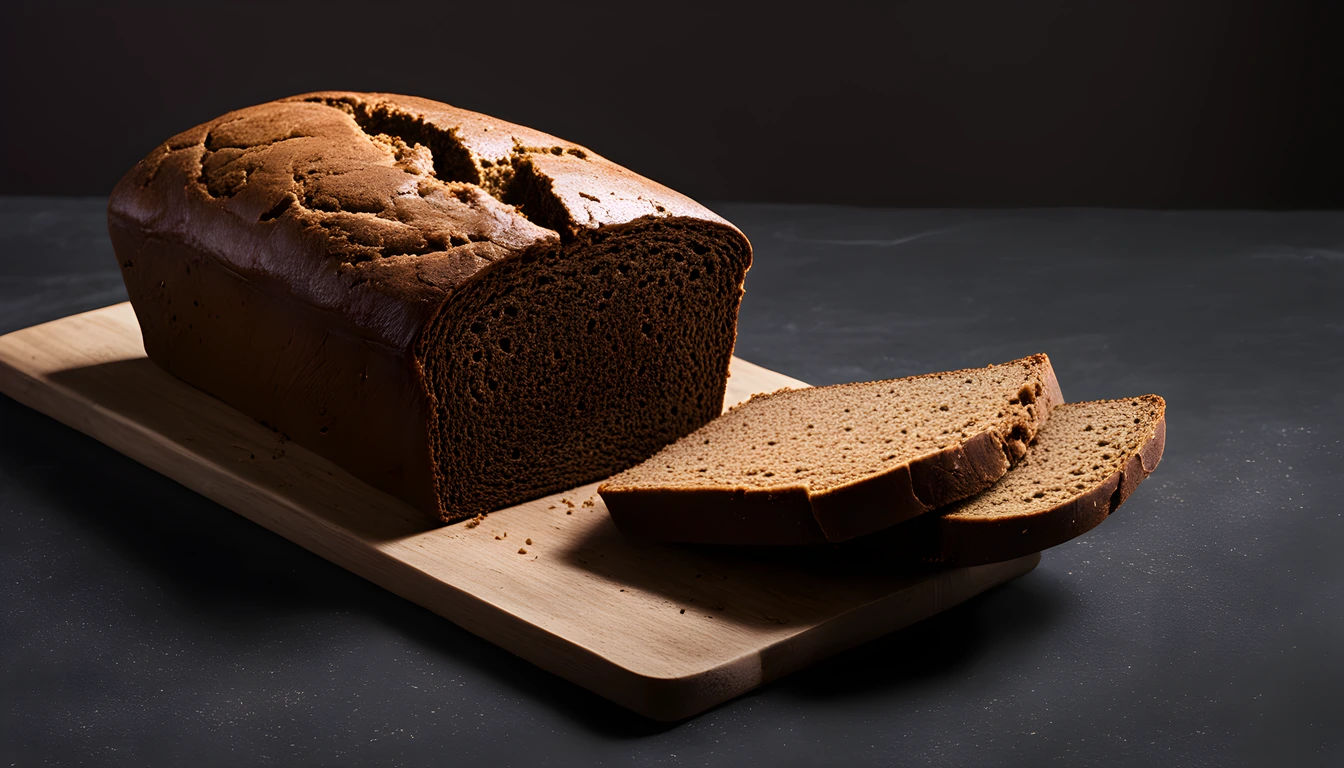
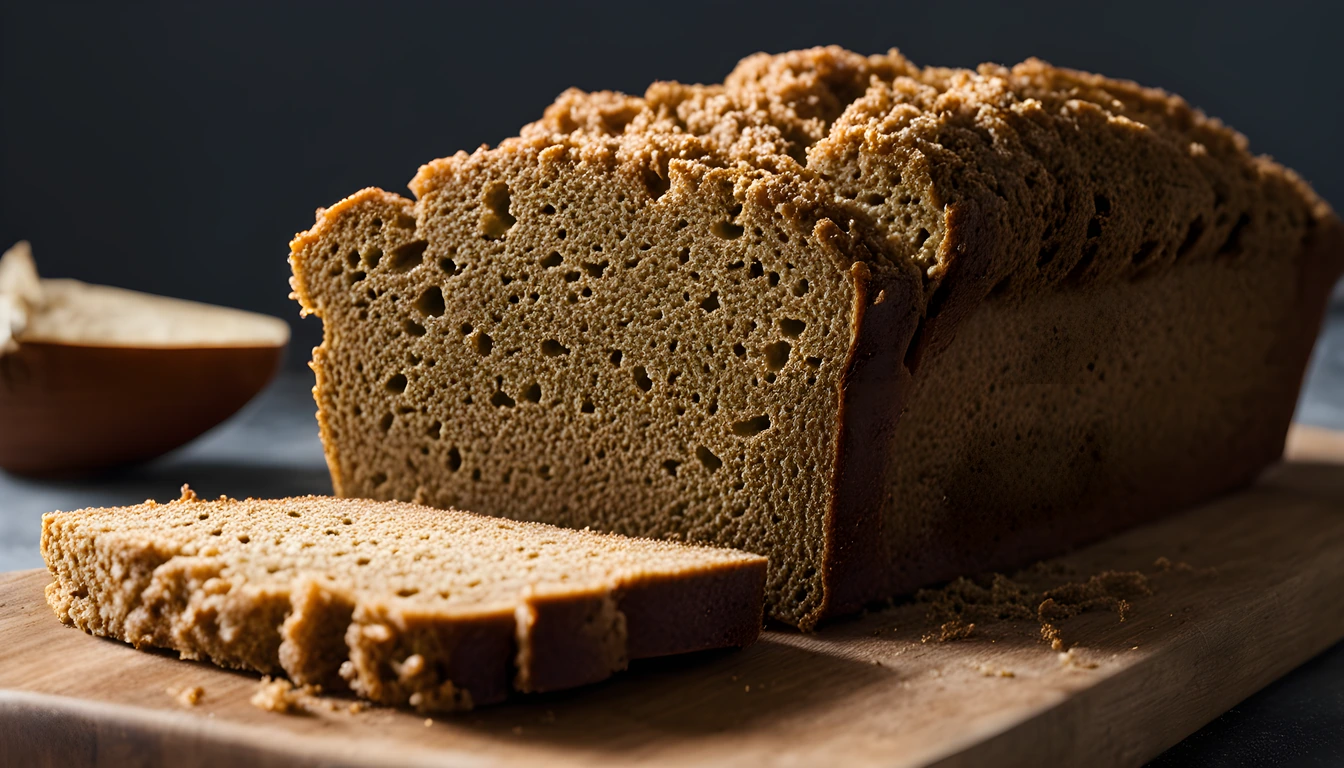
Honey supplies the leading sweetness in this dark spiced loaf, while molasses gives it the deeper edge associated with gingerbread. Ground ginger is the strongest spice, with cinnamon and a small amount of clove behind it. The honey also contributes moisture to the fine crumb.
This is a quick bread made by folding wet and dry mixtures together. It shares a loaf shape with the related honey cake but has a different molasses-and-ginger flavor. Bake it unglazed and allow the full cooling time before cutting ten slices.
Recipe
Honey Gingerbread Loaf Recipe
A honey-led gingerbread loaf with molasses and ground ginger, baked in a 9-by-5-inch pan. Includes a gentle mixing method and 75 minutes of cooling time.
11Ingredients
Yield: 10 servings
- 250 g all-purpose flour
- 170 g honey
- 84 g molasses, regular baking molasses rather than blackstrap
- 85 g unsalted butter, melted and cooled
- 100 g whole egg, weighed without shells (2 large eggs)
- 150 g whole milk
- 4 g baking soda
- 5.4 g ground ginger
- 2.6 g ground cinnamon
- 0.5 g ground cloves
- 3 g table salt
Ingredient amounts scale; instructions show the original batch. Cooking times and pan sizes may need adjustment. Season to taste. Honey grams use US measures at 20°C and 17.5% moisture, a density estimate; weigh your honey for precision.
Instructions
- 1Prepare pan and ovenHeat oven to 325°F (163°C). Line a 9x5-inch metal loaf pan with parchment so it overhangs the long sides; the parchment is the only pan lining, so do not add grease.
- 2Melt and cool butterMelt the 85 g unsalted butter in a small saucepan or microwave, then set it aside to cool for a few minutes so it will not cook the eggs.
- 3Whisk wet ingredientsIn a large bowl, whisk 170 g honey, 84 g molasses, 100 g eggs, 150 g whole milk, and the cooled melted butter until completely smooth and evenly colored.
- 4Whisk dry ingredientsIn a separate bowl, whisk 250 g all-purpose flour, 4 g baking soda, 5.4 g ground ginger, 2.6 g ground cinnamon, 0.5 g ground cloves, and 3 g table salt until the spices are distributed.
- 5Fold to just combinedPour the dry mixture into the wet and fold with a spatula until no dry streaks remain. Stop there; a few small lumps are fine, and overmixing toughens the crumb. Scrape into the lined pan and level the surface.
- 6BakeBake at 325°F (163°C) for 50 to 60 minutes. Rotate the pan if browning is uneven. Once the top is browned, lay a sheet of foil loosely over it to slow further darkening. The loaf is done when it has risen and set, a skewer in the center comes out with just a few moist crumbs and no raw batter, and the center springs back lightly.
- 7Cool in and out of panCool in the pan for 15 minutes, then lift out by the parchment onto a rack and cool for about 60 minutes before slicing.
- 8Slice and storeCut into 10 slices with a serrated knife. Store airtight at cool room temperature for up to 2 days for best quality; refrigerate only if the room is hot.
Estimated nutrition per serving
254.02 calories · 8.62 g fat · 40.78 g carbohydrate · 4.49 g protein · 252.18 mg sodium
Serving: 1 of 10 servings
Calculated from ingredient weights and USDA FoodData Central: 168894, 169640, 168820, 173430, 171287, 171265, 175040, 170926, 171320, 171321, 173468. Estimates use ingredient input weights; actual portions, brands and cooking losses vary. Omitted nutrient values are unavailable, not zero.
Why honey and molasses both belong here
Honey and molasses have separate jobs here. The larger honey portion provides most of the sweetness and its own aroma; the smaller molasses portion adds a dark, slightly bitter edge. Combined with ground ginger, that molasses makes the loaf recognizable as gingerbread rather than a plain honey cake.
Honey contributes moisture and aroma, and the UCANR honey guide notes that it acts as a humectant and that honey browns faster than sugar, which is why this loaf bakes at 325°F rather than 350°F. Molasses, meanwhile, supports the deep color and the tang that ground ginger sharpens.
Flavor intensity uses an editorial culinary scale: 1 is mild and 5 is bold. These are tasting suggestions, not laboratory measurements.
Sources: UCANR: Honey (baking with honey).
- Honey at 170 g is the leading sweetener; 84 g molasses supplies the gingerbread backbone.
- Ground ginger at 5.4 g is the dominant spice, with cinnamon rounding and clove kept to 0.5 g.
- The loaf is unglazed and un-iced so the dark crumb and spice stay the focus.
Pro Tip
If you only have crystallized honey, warm it gently to liquefy before measuring; it weighs the same.
1 = mild, 5 = bold. Editorial pairing guidance, not laboratory measurements; jars vary.
- Clover
- Mild sweetness beside ginger and molasses
- Wildflower
- Floral honey with warm baking spices
- Buckwheat
- Malty honey in a dark gingerbread loaf
Get the Honey Buyer's Cheat Sheet (free PDF)
16 varieties on one page — color, flavor, best use and what a fair price looks like — from the 304 honeys we track.
Quick-bread method: no creaming, no yeast
There is no butter-and-sugar creaming step here and no yeast. Melted butter is whisked into the wet ingredients, the dry ingredients are whisked separately, and the two are folded just until combined. Baking soda does the leavening and reacts with the acidic molasses and honey.
Work quickly and gently. The batter is fairly loose and pours into the pan; it should not be beaten smooth like a cake batter. A spatula and a wide folding motion keep gluten development low, which gives a tender, even crumb rather than a chewy one.
- Melt butter first so it can cool while you measure everything else.
- Whisk dry ingredients thoroughly; stray clumps of baking soda or clove taste harsh.
- Fold, do not stir vigorously, and stop as soon as the flour disappears.
Pro Tip
A few small lumps in the finished batter bake out; dry streaks do not.
Pan, lining, and how to judge doneness
Use the specified 9-by-5-inch metal loaf pan so the batter depth and baking schedule stay close to those described. Line the base and sides with parchment, leaving overhang to lift the loaf out. Fold the paper neatly into the corners so the batter can spread evenly.
Because honey and molasses both brown readily, keep the oven at 325°F (163°C) and start watching at 50 minutes. If the top looks dark before the center is set, a loose foil tent is the fix. Judge doneness by crumb and texture, not by time alone: risen loaf, set center, skewer with a few moist crumbs and no raw batter.
- 9x5-inch metal pan, parchment-lined with overhang.
- 325°F (163°C), 50 to 60 minutes, foil tent once browned.
- Cool 15 minutes in the pan, then about 60 minutes on a rack before slicing.
Pro Tip
Cutting a warm loaf smears the crumb; the full cooling hour is part of the recipe, not optional.
Storing, slicing, and freezing
Once fully cool, wrap the loaf or put it in an airtight container. Letting it stand overnight softens the crust and allows the spice flavors to mingle. Keep it at cool room temperature for up to two days for best quality; use the refrigerator in a hot kitchen.
For longer storage, cut ten slices and freeze them individually wrapped or separated with parchment in a freezer bag. Thaw a slice still wrapped, then warm it briefly if you prefer. Serve plain with tea or coffee; added butter or toppings would be extra ingredients beyond this recipe.
Pro Tip
Warm a frozen slice briefly in a toaster oven to bring back the aroma.
Choosing Honey and Molasses
Clover is a mild choice that leaves room for ginger. Wildflower can add a stronger floral note, depending on its source. Buckwheat gives a more assertive, malty loaf. The recipe keeps the honey at 170 g so changing the variety changes the aroma without deliberately changing the sweetener balance.
Use regular baking molasses. Blackstrap is more bitter and can overwhelm the honey in this small loaf. The baking guidance comes from the UCANR honey reference, which explains moisture retention and faster browning; it supports those principles rather than evaluating this particular loaf formula.
Pro Tip
Stir thick or crystallized honey until smooth before mixing it with the eggs and milk.
Choosing the Honey
Use Clover honey or Wildflower honey or Buckwheat honey or Orange blossom honey for the flavor described in this recipe. See our honey selection guide for other culinary choices.