About This Recipe
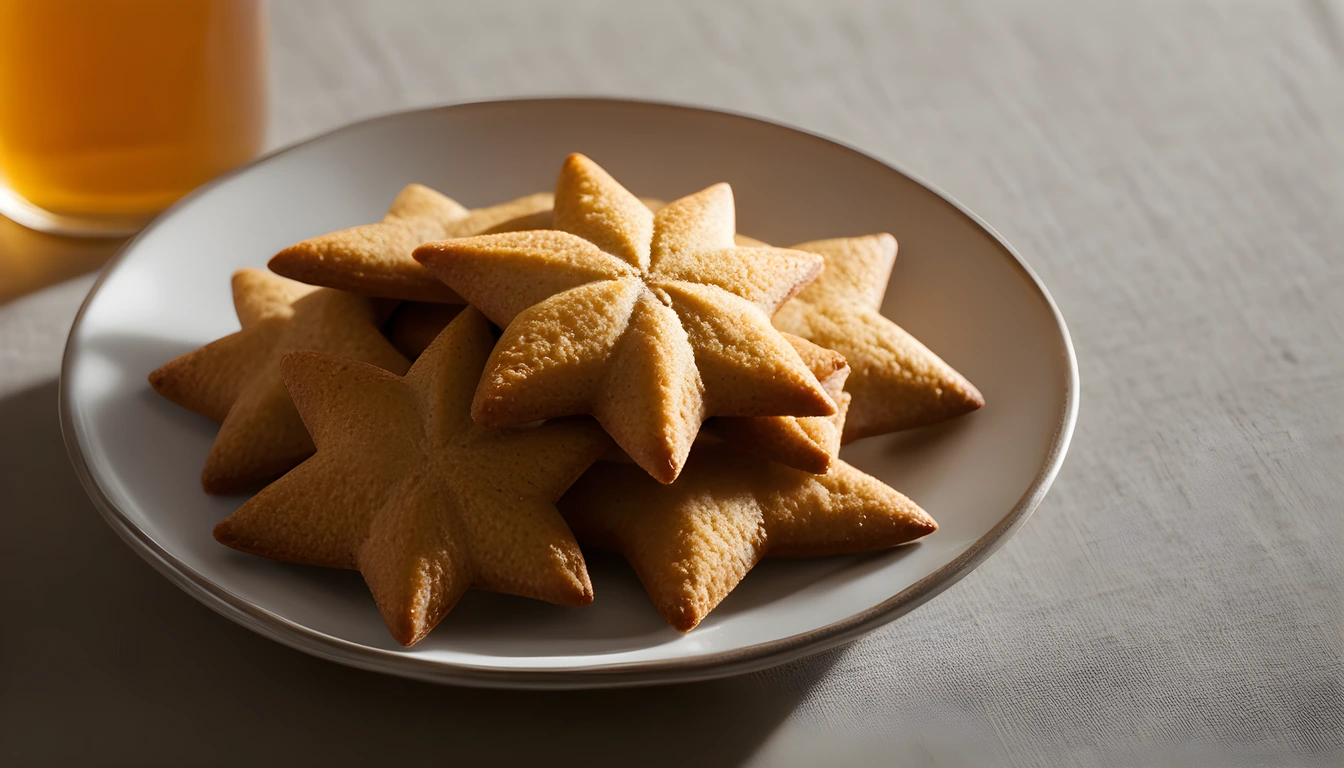
This is a rolled, chilled dough built for cutters, not a soft drop cookie. Honey carries the sweetness and the flavor; molasses sits in the background with ginger, cinnamon and cloves so the cookies read as gingerbread rather than as honey-sweetened sugar cookies.
The workflow matters more than the ingredient list. The dough firms in the refrigerator twice, once as a block and once after cutting, and it rolls between sheets of baking paper so no stray bench flour throws off the amounts. Bake at a modest 325°F because honey browns quickly, and group similar cutter sizes on the same tray so nothing overbakes waiting on a neighbor.
Recipe
Honey Gingerbread Cutout Cookies
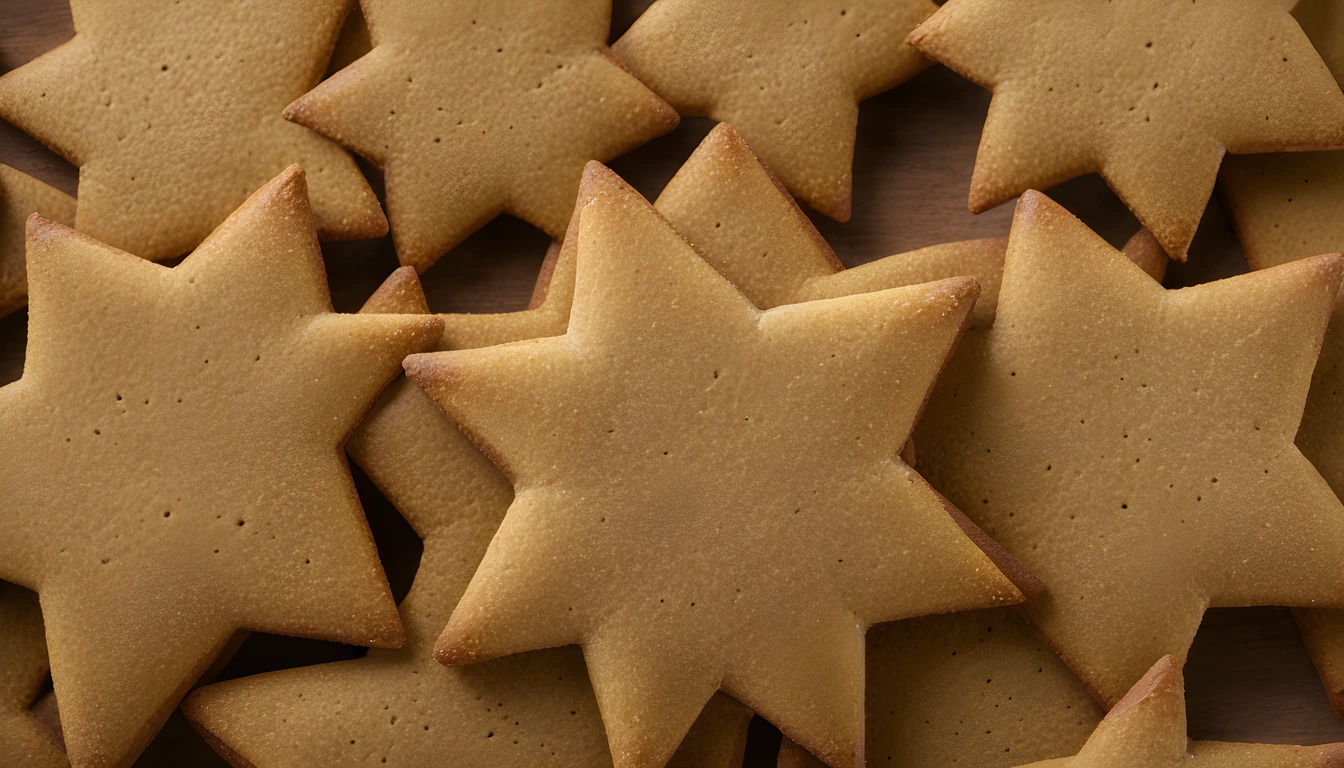
Roll and chill a honey-led gingerbread dough for 30 plain star cookies. Includes cutter sizing, four-tray baking time and clear cooling cues.
11Ingredients
Yield: 15 servings
- 300 g all-purpose flour
- 113 g unsalted butter, softened
- 170 g honey
- 42 g molasses
- 50 g egg, beaten
- 28 g packed brown sugar
- 5.4 g ground ginger
- 2.6 g ground cinnamon
- 1.05 g ground cloves
- 3 g baking soda
- 3 g table salt
Ingredient amounts scale; instructions show the original batch. Cooking times and pan sizes may need adjustment. Season to taste. Honey grams use US measures at 20°C and 17.5% moisture, a density estimate; weigh your honey for precision.
Instructions
- 1Cream butter, honey and sugarBeat the softened butter, brown sugar and honey until smooth and slightly pale, about 2 minutes. Scrape the bowl once.
- 2Add eggBeat in the beaten egg and the molasses until fully combined; the mixture will look glossy and loose.
- 3Mix dry ingredientsWhisk the flour, ginger, cinnamon, cloves, baking soda and salt in a separate bowl so the spices and leavener are evenly distributed.
- 4Form the doughAdd the dry mixture to the butter mixture in two additions, mixing on low just until no dry streaks remain. The dough will be soft and sticky; do not add extra unmeasured flour to make it feel dry.
- 5Chill the blockPat the dough into a flat rectangle about 2 cm thick, wrap it tightly and refrigerate for at least 60 minutes, until firm enough to resist a thumb press.
- 6Roll between paperCut the chilled dough in half. Roll each half between two sheets of baking paper to 5–6 mm thick. If the dough softens or fights the pin, slide it, paper and all, onto a tray and chill 15 minutes before continuing.
- 7Cut and chill shapesPeel back the top paper and use an approximately 9 cm (3 1/2 inch) star cutter. Transfer the shapes to lined trays, leaving 3 cm between them. Re-roll the scraps between paper to the same thickness and continue until all the dough is used. Aim for 30 stars, about 24 g dough per cookie. Divide the shapes over four trays, grouping similar sizes together, and chill each loaded tray for 20 minutes before baking.
- 8BakeHeat the oven to 325 F (165 C). Bake one tray at a time for 10–12 minutes, allowing up to 48 minutes for four trays. The edges should look set and dry and the center should have no wet sheen, though it will still feel slightly soft. Keep the waiting trays refrigerated and check the first tray early.
- 9Cool before movingLeave each tray for 5 minutes before moving the cookies to a rack, then let them cool completely before stacking. The 210-minute schedule allows for active preparation, the 60-minute dough chill, chilling the cut shapes, four sequential trays and cooling. One serving is two of the 30 cookies.
Estimated nutrition per serving
183.07 calories · 6.65 g fat · 28.99 g carbohydrate · 2.62 g protein · 140.68 mg sodium
Serving: 1 of 15 servings
Calculated from ingredient weights and USDA FoodData Central: 168894, 173430, 169640, 168820, 171287, 168833, 170926, 171320, 171321, 175040, 173468. Estimates use ingredient input weights; actual portions, brands and cooking losses vary. Omitted nutrient values are unavailable, not zero.
Why this dough is rolled, not dropped
Soft honey drop cookies rely on a wet, scoopable batter that spreads in the oven. This formula sits at the other end: enough flour to hold a cutter edge, butter that stays firm when cold, and a double chill that keeps the shapes from slumping. The honey is doing real structural work here, not just sweetening, because it holds water and keeps the crumb tender after the edges set.
That tenderness is also the risk. Honey doughs color quickly, and a hot oven turns the points of a star dark before the center is done. A 325°F bake, checked at the early end of the window, gives you a set edge with a slightly soft middle that firms as it cools.
Flavor intensity uses an editorial culinary scale: 1 is mild and 5 is bold. These are tasting suggestions, not laboratory measurements.
Sources: Using Honey in Cottage Foods; USDA FoodData Central: flour composition.
- Chill the wrapped block for at least 60 minutes before rolling.
- Roll to 5–6 mm, using baking paper above and below instead of bench flour.
- Chill cut shapes 20 minutes before they go into the oven.
Pro Tip
If the dough cracks at the edges of the cutter, let it rest on the counter for two minutes rather than pressing harder.
1 = mild, 5 = bold. Editorial pairing guidance, not laboratory measurements; jars vary.
- Clover
- Ginger and cinnamon
- Wildflower
- Molasses and warm spices
- Buckwheat
- A bolder gingerbread flavor
Get the Honey Buyer's Cheat Sheet (free PDF)
16 varieties on one page — color, flavor, best use and what a fair price looks like — from the 304 honeys we track.
Reading honey in a cutout formula
Honey is slightly sweeter than granulated sugar, and it brings water with it. That is why this dough leans on a modest amount of brown sugar rather than a full cup of white sugar, and why the molasses stays small: it is there for color and a bitter edge, not to replace the honey.
The baking soda is not incidental. Honey is acidic, and a small measure of soda helps the dough brown and lift evenly rather than staying dense at the center.
- 170 g honey supplies most of the sweetness and moisture.
- 42 g molasses deepens the gingerbread character without taking over.
- 3 g baking soda balances honey acidity and supports browning.
Pro Tip
Measure honey in a cup wiped with a little oil or beaten egg so it releases cleanly and the grams stay accurate.
Cutter sizes and tray grouping
Small and large stars bake at different rates, and a tray loaded with both gives you some pale and some scorched. Keep one tray for the larger cutters and another for the smaller ones, and bake them separately even though it adds a few minutes.
Re-roll scraps only once. Each pass works the dough and warms it, so later cutouts will be slightly tougher than the first batch.
The recipe aims for 30 stars from an approximately 9 cm cutter, with two cookies counted as one serving. Cutter geometry changes the count. If yours makes more or fewer cookies, divide the same total batch estimate by the number you actually make.
- Large stars: one tray, bake first.
- Small stars: second tray, shorter bake.
- Re-roll scraps once, then discard or chill the remainder.
Pro Tip
Slide the whole sheet of cut dough onto a tray and into the refrigerator if the kitchen is warm; cold dough cuts cleaner.
Bake cues and cooling
Set edge, dry surface, soft center. Those are the cues that matter here. A cookie that looks fully firm in the oven is usually overbaked by the time it cools, and honey cookies go from golden to dark in a hurry.
Cool on the tray for five minutes before moving. The cookies are fragile while warm, and the brief rest lets them firm enough to lift without bending the points of a star.
- Bake at 325°F, one tray at a time.
- Check at 10 minutes; the edges set before the center.
- Cool 5 minutes on the tray, then finish on a rack.
Pro Tip
Rotate the tray once at the midpoint if your oven browns unevenly.
Storage and a note on honey choice
Store cooled cookies in an airtight container at room temperature for a few days. Honey keeps the crumb soft, though these are not a long-keeping biscuit and the spices fade before the texture does.
For flavor, a mild clover or wildflower honey lets the spices speak; a dark buckwheat honey will push the cookies toward a stronger, more bitter gingerbread. Either works, but taste the honey first and pick accordingly.
- Airtight container, room temperature, a few days.
- Mild honey for a spiced-but-bright cookie.
- Dark honey for a deeper, more assertive gingerbread.
Pro Tip
Cool completely before sealing the container; trapped warmth softens the set edges.
Choosing the Honey
Use Clover Honey or Wildflower Honey or Buckwheat Honey for the flavor described in this recipe. See our honey selection guide for other culinary choices.