Honey and Brown Sugar Cookies
Making a Christmas gift for a baker? Pair a jar with a tea towel and this recipe card; our Christmas honey gift guide explains how to choose the jar and assemble the bundle.
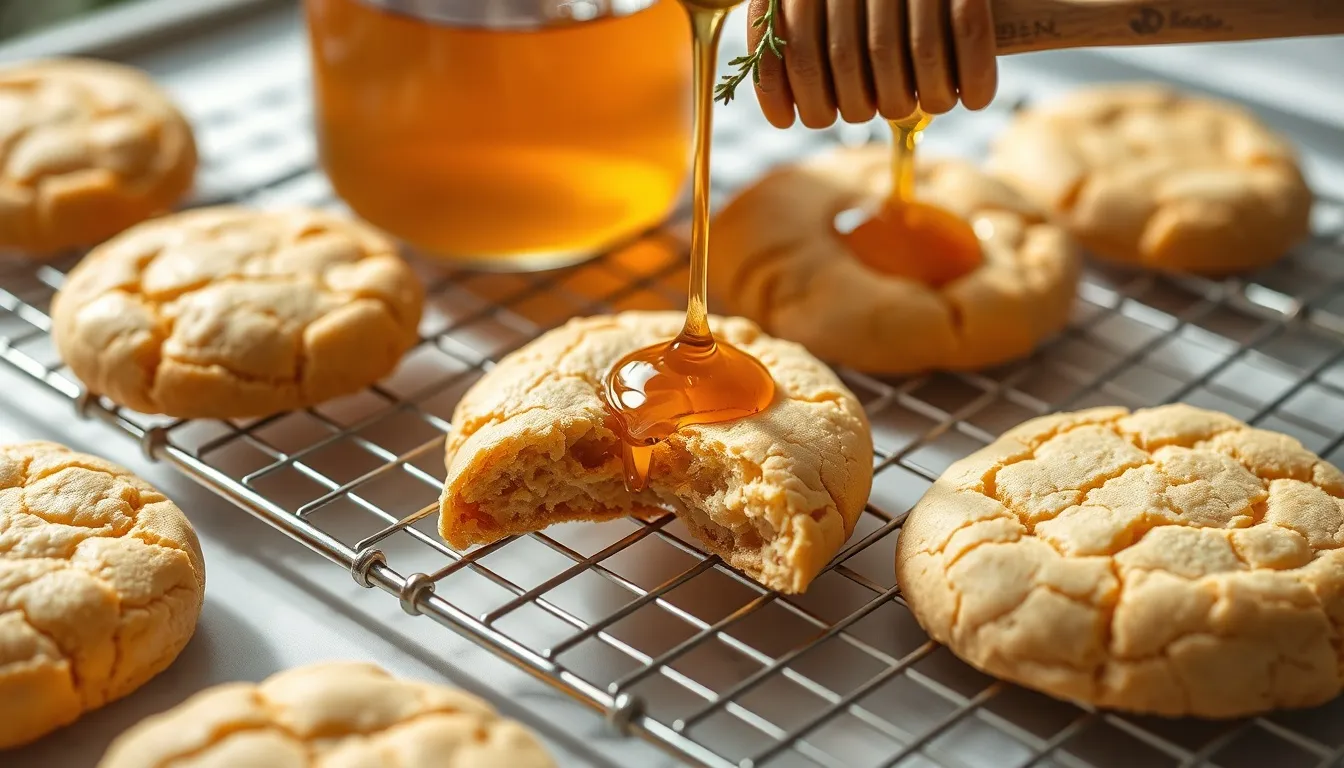
These cookies use both honey and brown sugar. Honey adds a floral note; chilling the dough before baking helps control spreading. Choose a mild clover honey or a bolder jar for a more noticeable honey flavor.
Recipe
Honey Cookies
Soft honey-and-brown-sugar cookies with a 30-minute dough chill and six flavor variations. Makes 24; the total includes two baking batches and cooling.
9Ingredients
Yield: 24 servings
- 113.5 g unsalted butter, softened
- 1/3 cup clover honey
- 1/4 cup packed brown sugar
- 1 large egg
- 1 teaspoon vanilla extract
- 2 cups all-purpose flour
- 1 teaspoon baking soda
- 1/2 teaspoon table salt
- 1/2 teaspoon ground cinnamon
Ingredient amounts scale; instructions show the original batch. Cooking times and pan sizes may need adjustment. Season to taste. Honey grams use US measures at 20°C and 17.5% moisture, a density estimate; weigh your honey for precision.
Instructions
- 1Beat butter and sweetenersBeat butter, honey and brown sugar until combined and lighter, about 2 minutes. Beat in the egg and vanilla.
- 2Mix dry ingredientsWhisk flour, baking soda, salt and cinnamon separately. Mix into the wet ingredients just until no dry flour remains.
- 3ChillCover and refrigerate at least 30 minutes until firm.
- 4ShapeHeat the oven to 350°F (175°C). Divide the dough into 24 equal pieces on parchment-lined baking sheets, leaving room to spread.
- 5Bake in two batchesBake 12 cookies at a time for 9–11 minutes per batch, until the edges color and the centers are set but still soft. The total allows 22 minutes for two sequential batches.
- 6CoolLeave each batch on its tray for 5 minutes, then transfer to a rack and allow about 15 minutes more. Cool before storing.
Estimated nutrition per serving
98.46 calories · 4.14 g fat · 14.16 g carbohydrate · 1.39 g protein · 105.55 mg sodium
Serving: 1 of 24 equal base cookies, with honey and brown sugar
Calculated from ingredient weights and USDA FoodData Central: 173430, 169640, 168833, 171287, 173471, 168894, 175040, 173468, 171320. Estimates use ingredient input weights; actual portions, brands and cooking losses vary. Omitted nutrient values are unavailable, not zero.
Honey Cookies Recipe
The card makes 24 equal cookies. Chill the dough at least 30 minutes, then allow for two sequential baking batches and cooling.
- 113.5 g unsalted butter, softened
- 1/3 cup clover honey
- 1/4 cup packed brown sugar
- 1 large egg
- 1 teaspoon vanilla extract
- 2 cups all-purpose flour
- 1 teaspoon baking soda
- 1/2 teaspoon table salt
- 1/2 teaspoon ground cinnamon
Get the Honey Buyer's Cheat Sheet (free PDF)
16 varieties on one page — color, flavor, best use and what a fair price looks like — from the 304 honeys we track.
6 Flavor Variations
The base recipe is a canvas for different flavor combinations. Here are six variations that all start from the same dough.
- Honey Lemon Cookies — Add the zest of 2 lemons and 1 tablespoon fresh lemon juice to the wet ingredients. Replace the cinnamon with 1/4 teaspoon cardamom. These are bright, citrusy, and pair beautifully with acacia honey for a delicate floral note.
- Honey Chocolate Chip Cookies — Fold in 1 cup of semi-sweet or dark chocolate chips after mixing the dough. Use wildflower honey — its complex floral notes complement chocolate without competing. Skip the cinnamon.
- Honey Cinnamon Sugar Cookies — Double the cinnamon to 1 teaspoon and roll the dough balls in a mixture of 2 tablespoons sugar plus 1 teaspoon cinnamon before baking. The sugar coating creates a crackled, sparkly top.
- Honey Peanut Butter Cookies — Add 1/2 cup creamy peanut butter to the wet ingredients and reduce the butter to 1/4 cup (half a stick). Press a fork crosshatch pattern into each ball before baking. Rich, nutty, and satisfying.
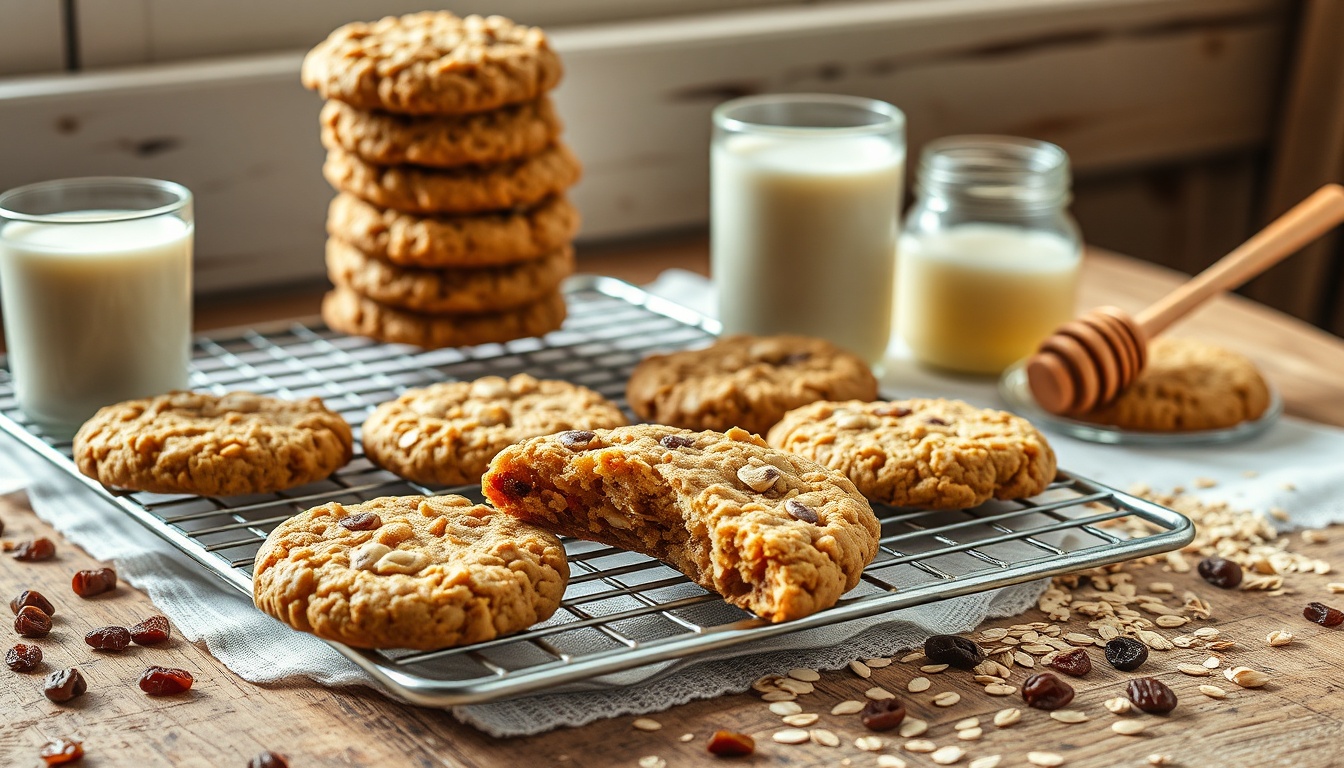
- Honey Oat Cookies — Replace 1/2 cup of the flour with 3/4 cup old-fashioned rolled oats. Add 1/2 cup raisins or dried cranberries. These are heartier and chewier, closer to an oatmeal cookie but with honey flavor throughout.
- Honey Ginger Cookies — Add 1 teaspoon ground ginger, 1/4 teaspoon ground cloves, and 1/4 teaspoon nutmeg to the dry ingredients. Use buckwheat honey for its dark, molasses-like flavor. Roll dough balls in granulated sugar for a crinkle-top finish.
Choosing the Best Honey for Cookies
Since honey is the star flavor in these cookies — not just a sweetener — the variety you use matters more than in most baking.
The chart gives editorial pairing suggestions on a 1 (mild) to 5 (bold) scale. It is not a laboratory measurement; harvests and jars vary.
- Clover honey — Mild and clean. The most versatile choice — lets butter, vanilla, and any add-ins come through. The safest option if you are unsure.
- Wildflower honey — Complex and aromatic. Adds floral depth that makes the cookies taste more interesting. The best all-around choice for bakers who want honey to be noticeable.
- Orange blossom honey — Citrus-floral notes that naturally pair with the lemon variation and add brightness to the base recipe. Beautiful in holiday cookies.
- Buckwheat honey — Dark and robust. Produces cookies with deep, almost gingerbread-like flavor. Bold choice, best in the ginger or oat variations.
- Manuka honey — Earthy and pungent. While excellent for eating straight, its strong flavor can be polarizing in cookies. Use only if you specifically enjoy manuka's taste profile.
1 = mild, 5 = bold. Editorial pairing guidance, not laboratory measurements; jars vary.
- Clover
- Butter and vanilla
- Orange blossom
- Lemon cookies
- Buckwheat
- Ginger-spice cookies
Matching a honey to another dish: the honey flavor map
Tips for the Base Dough
Use softened butter and the measured honey and brown sugar. Keep the 30-minute chill, then divide the dough evenly so the cookies bake at a similar rate. The base has already been written for honey; no further sugar-swap liquid adjustment is needed.
Nutrition Basis
The card divides the measured ingredient inputs into 24 portions.
Brands and portion sizes vary. The values are estimates from USDA records, not laboratory results for this batch. Toppings and the variations change the calculation.