Why Honey Works in Brownies
Replacing sugar with honey in brownies is not just a health swap — it actually produces a better texture.
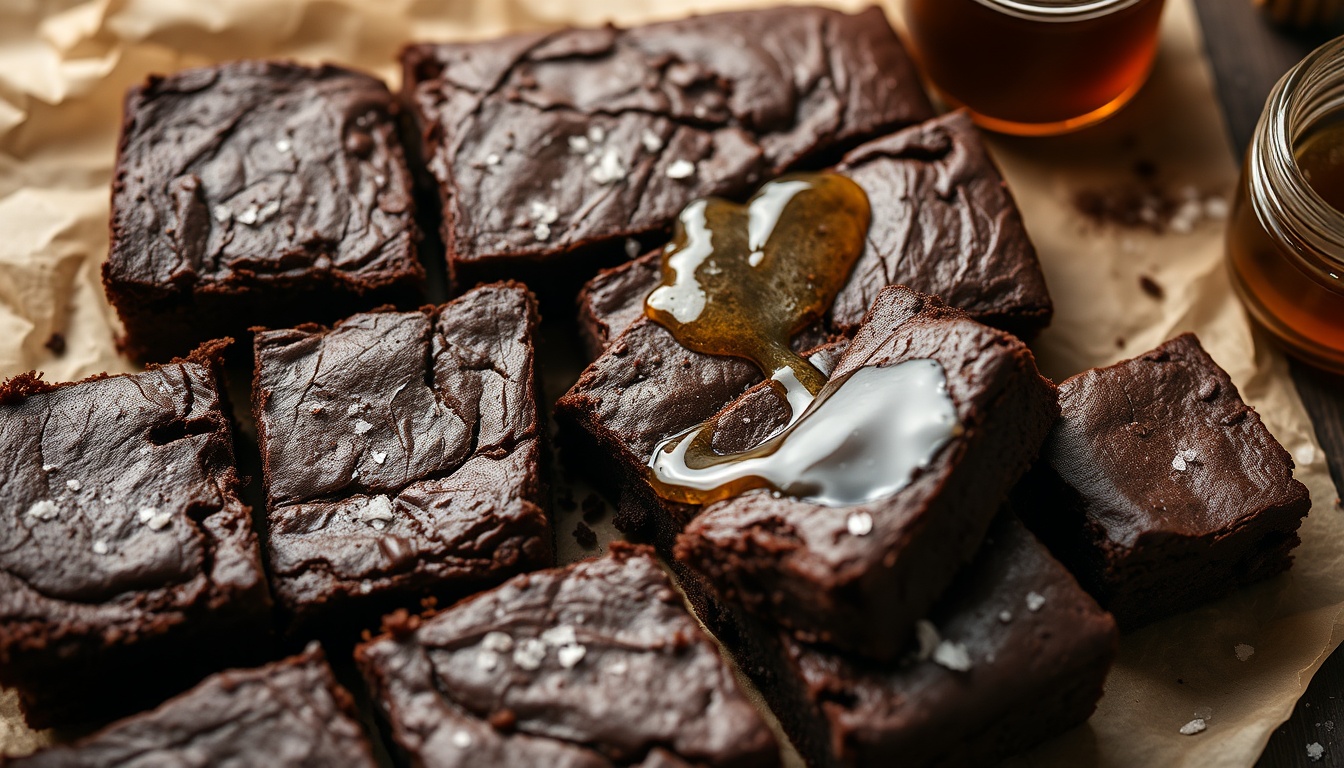
Honey is about 17% water, which creates extra steam during baking. This steam, combined with the proteins in the eggs, produces the signature crackly, meringue-like top crust that brownie lovers obsess over. Sugar-based brownies can achieve this too, but honey does it more reliably.
The fructose in honey is more hygroscopic (moisture-attracting) than sucrose. This means honey brownies stay fudgy and moist for days after baking, while sugar brownies start drying out within 24 hours. If you have ever had a brownie that was perfect on day one but chalky by day three, honey solves that problem.
Honey also brings flavor complexity. The over 180 aromatic compounds in raw honey add subtle floral, caramel, and malty notes that deepen the chocolate rather than competing with it. Wildflower honey provides complex multi-floral depth, while clover honey offers clean sweetness that lets chocolate dominate. The effect is like using brown sugar on steroids — more depth, more warmth, more character.
The Science of Fudgy vs Cakey
The fudgy-cakey spectrum depends on the ratio of fat and sugar to flour and eggs. This recipe is engineered for maximum fudge.
- High fat ratio — 1/2 cup butter plus 6 ounces chocolate provides substantial cocoa butter. Fat inhibits gluten development and creates that dense, melt-in-your-mouth texture
- Low flour — just 1/2 cup of flour is barely enough to hold the brownies together. More flour would shift the texture toward cake. Do not be tempted to add more even if the batter looks thin
- Minimal leavening — only 1/4 teaspoon baking soda, which reacts with the slight acidity in honey and cocoa. This provides just enough lift for the crackly top without making the interior airy
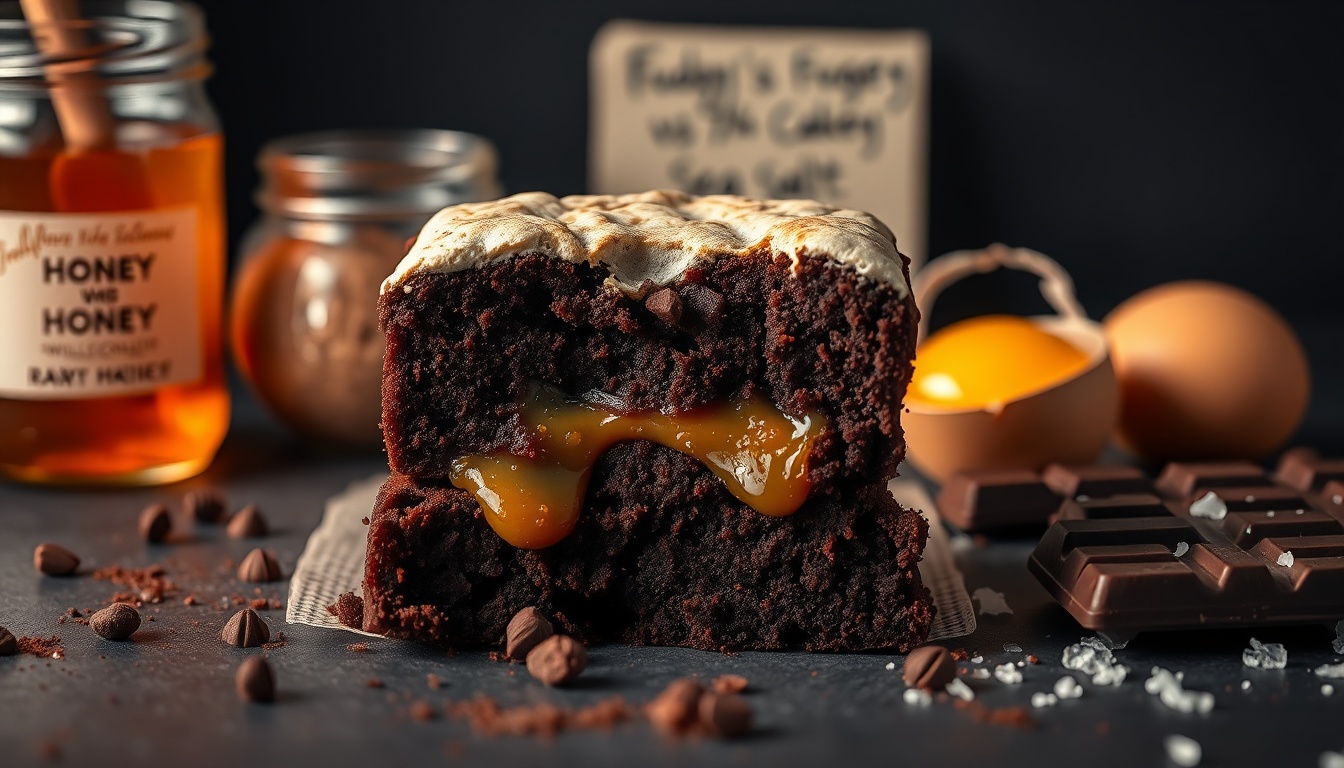
- Honey moisture — the water content in honey keeps the center gooey even after the structure sets. This is why cooling time matters — the brownies need time for the starch and chocolate to firm up around that moisture
- No overmixing — stirring too much after adding flour develops gluten, which creates a chewy, bread-like texture instead of a fudgy one. Fold gently until the flour streaks just disappear
Pro Tip
For even fudgier brownies, refrigerate the cut brownies for 2 hours before serving. The cold firms up the chocolate and butter, intensifying the fudge texture.
Get the Honey Buyer's Cheat Sheet (free PDF)
16 varieties on one page — color, flavor, best use and what a fair price looks like — from the 304 honeys we track.
4 Mix-In Variations
Add mix-ins after folding in the dry ingredients, just before pouring the batter into the pan.
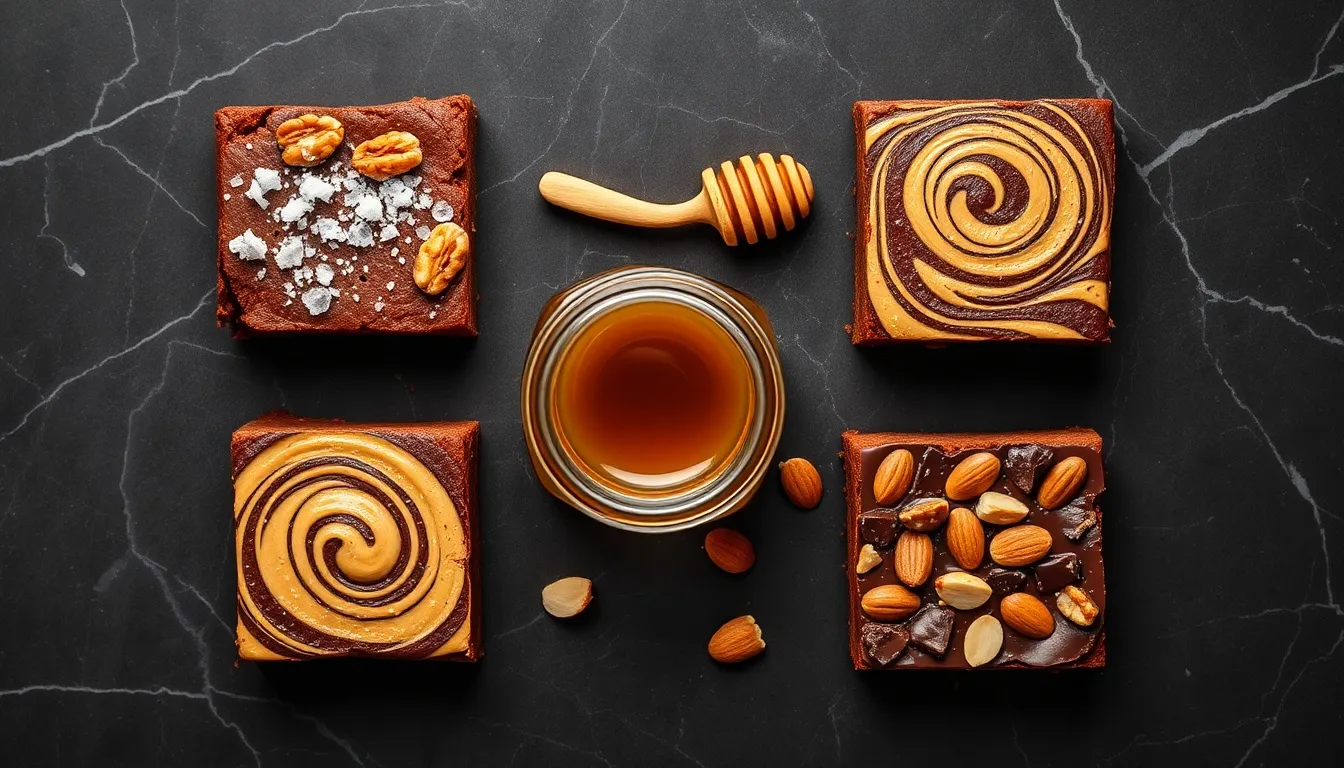
- Sea salt and walnut — fold in 1/2 cup roughly chopped walnuts and sprinkle extra flaky sea salt on top before baking. The classic combination. The nuts add crunch contrast to the fudgy interior and the salt makes the honey-chocolate flavor pop. Use buckwheat honey for the most intense result
- Peanut butter swirl — drop tablespoons of natural peanut butter across the top of the batter and use a knife to create swirls. The peanut butter bakes into pockets of salty richness within the chocolate. Do not stir it in — you want distinct ribbons, not a uniform blend
- Espresso chocolate chunk — add 1 tablespoon instant espresso powder to the dry ingredients and fold in 1/2 cup dark chocolate chunks. The coffee amplifies the chocolate flavor without making the brownies taste like coffee. A bakery-level upgrade
- Orange zest and almond — add the zest of one large orange and 1/2 cup sliced almonds. Orange and dark chocolate is a classic European pairing. Use orange blossom honey to double down on the citrus note. Toast the almonds first for better flavor
Best Honey Varieties for Brownies
The honey variety matters here because you are using a generous 2/3 cup — enough to influence the final flavor.
- Wildflower honey — the best all-purpose choice. Its complex, rounded sweetness blends seamlessly with dark chocolate. Produces a balanced brownie where you taste chocolate first with honey warmth in the finish
- Clover honey — mild and clean, letting the chocolate be the star. The most affordable option and a safe choice if you are making brownies for a crowd with varied tastes
- Buckwheat honey — bold, malty, and molasses-like. Creates an intensely flavored brownie with deep caramel and almost coffee-like notes. Not subtle, but spectacular for dark chocolate lovers
- Orange blossom honey — adds a gentle citrus-floral undertone that pairs beautifully with dark chocolate. Use this with the orange zest and almond variation for a triple-citrus effect
- Avoid strong or unusual honeys like manuka or eucalyptus — their distinctive medicinal or herbal notes can clash with chocolate rather than complement it
Storage and Make-Ahead Tips
Honey brownies store better than conventional brownies because of honey's moisture-retaining properties.
- Room temperature — up to 4 days in an airtight container. The brownies actually improve on day two as the flavors meld and the texture firms up slightly. Keep the container sealed to prevent drying
- Refrigerator — up to 10 days sealed. Cold brownies have an intensely fudgy, almost truffle-like texture. Bring to room temperature for 15 minutes before serving if you prefer a softer bite
- Freezer — up to 3 months. Freeze individual brownies wrapped in plastic wrap, then stored in a freezer bag. Thaw at room temperature for 30 minutes. Frozen brownies make excellent lunchbox additions — they thaw by midday
- Make-ahead batter — the batter can be refrigerated for up to 24 hours before baking. Cold batter takes 3-5 extra minutes in the oven. This is useful for having fresh-baked brownies ready for an event without the prep-day mess
Common Mistakes to Avoid
Honey brownies are straightforward, but these errors will cost you the fudgy texture.
- Using too much honey — resist the urge to add extra sweetness. Honey is sweeter than sugar by volume, and excess liquid from too much honey will make the brownies dense and gummy instead of fudgy. Stick to the 2/3 cup measurement
- Overbaking — the single most common mistake. Honey browns faster than sugar because fructose caramelizes at a lower temperature. Check at 22 minutes. The center should jiggle slightly when you shake the pan. A toothpick should have moist crumbs, not clean
- Cutting too early — honey brownies are liquid in the center when hot. They need the full hour of cooling to set. If you cut at 30 minutes, you get brownie soup. Patience is the entire difference between fudgy squares and a chocolate mess
- Skipping the parchment paper — honey caramelizes on contact with metal. Without parchment, the bottom and edges of the brownies will weld to the pan. No amount of greasing prevents this with honey-based batters
- Using low-quality chocolate — the chocolate is the primary flavor here. Cheap baking chips with added vegetable oils produce a waxy, dull brownie. Use good dark chocolate (70% cacao) that you would eat by itself