About This Recipe
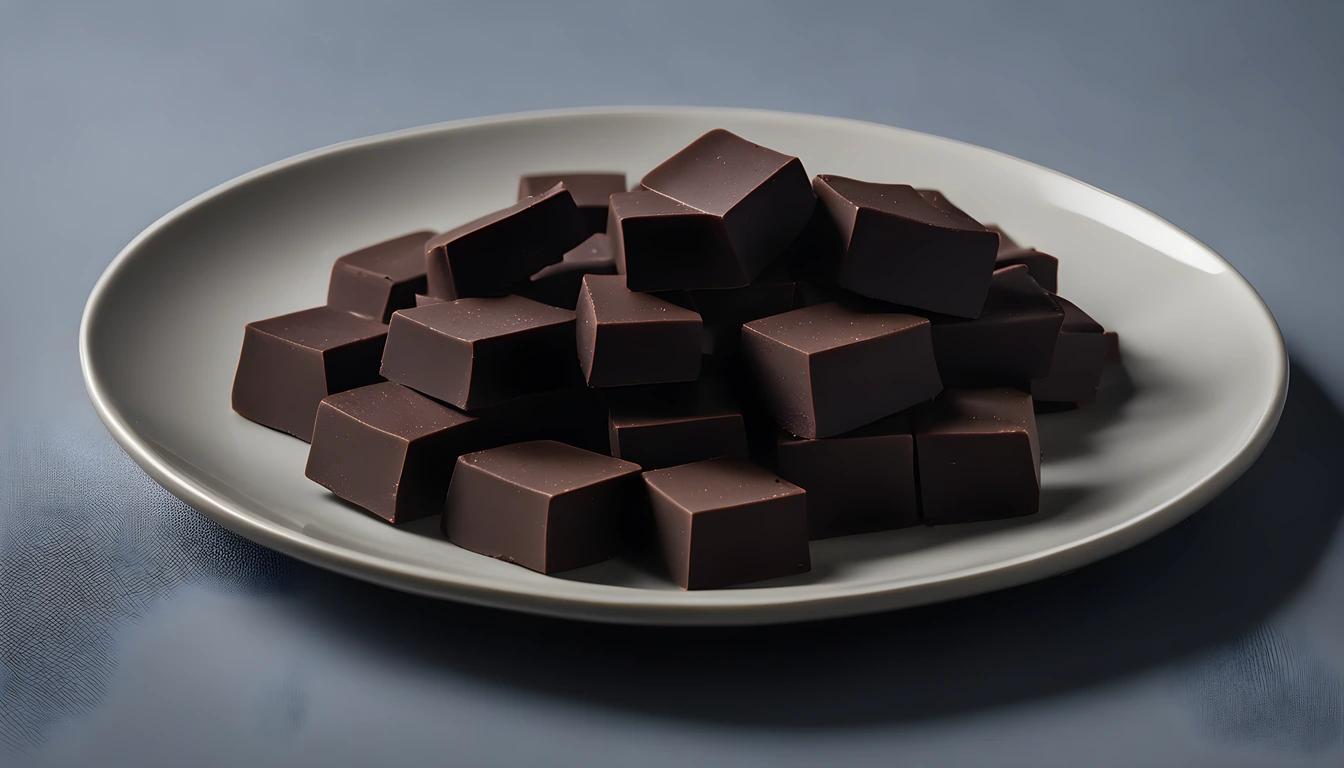
This is cooked chocolate fudge: honey and sugar simmer with milk, cream and unsweetened chocolate, then cool before beating. Honey supplies part of the sweetness and a floral note behind the chocolate. The hands-off cooling matters as much as the boiling stage. Reserve about 7 hours for the whole process, including the final set.
Recipe
Chocolate Honey Fudge with a Cooked Sugar Base
Make chocolate honey fudge with a candy thermometer. Cook to soft-ball, cool undisturbed before beating, then allow several hours for setting.
8Ingredients
Yield: 32 servings
- 550 g granulated sugar
- 84 g honey
- 100 g unsweetened baking chocolate
- 180 g whole milk
- 60 g heavy cream
- 42 g unsalted butter
- 8 g vanilla extract
- 1.5 g table salt
Ingredient amounts scale; instructions show the original batch. Cooking times and pan sizes may need adjustment. Season to taste. Honey grams use US measures at 20°C and 17.5% moisture, a density estimate; weigh your honey for precision.
Instructions
- 1Prepare the pan and thermometerLine a 20 cm (8 inch) square pan with baking paper. Check the thermometer in boiling water. For the 238 F syrup target, subtract the difference between 212 F and the observed local boiling temperature. Use a heavy 3 to 4 litre saucepan with room for the mixture to rise.
- 2Dissolve and meltChop the chocolate. Combine it with the sugar, honey, milk, cream and salt in the saucepan. Stir over low heat until the sugar dissolves and the chocolate melts, scraping the base gently so milk solids do not catch.
- 3Cook to soft-ballBring to a steady boil, then stop stirring. Keep the thermometer probe in the mixture without touching the base. Cook to 238 F (114 C) at sea level, or the adjusted target from the water test. If sugar crystals cling above the liquid, dissolve them with a clean pastry brush dipped in warm water.
- 4Cool without stirringRemove the pan from the heat and leave it undisturbed until the fudge reads about 110 F (43 C). Do not beat it, scrape the sides or move it into a cold-water bath. Allow roughly 1 to 2 hours, using the temperature rather than the elapsed time as the endpoint.
- 5Beat until the gloss fadesAdd the butter and vanilla. Beat steadily with a sturdy wooden spoon until the mixture thickens, loses much of its shine and begins to hold ridges, allowing about 15 to 20 minutes. Transfer promptly to the lined pan and level it. Stop beating once it becomes stiff rather than waiting until it crumbles.
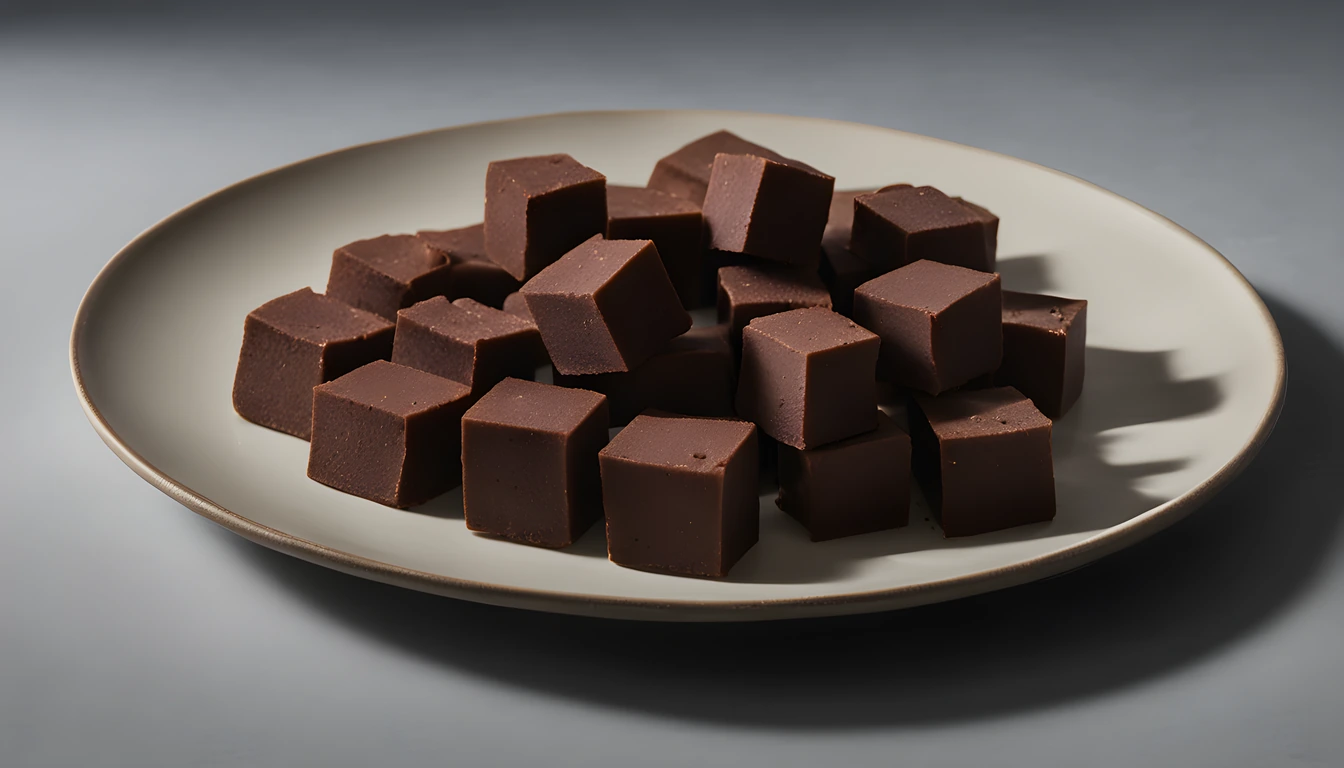
- 6Let the fudge setLeave the pan for at least 4 hours in a cool room, until firm enough to cut cleanly. Lift out and cut into 32 small squares. Store airtight with baking paper between layers. The 7-hour total includes a long cooling period, beating and the 4-hour set; allow longer if the room is warm.
Estimated nutrition per serving
114.5 calories · 3.56 g fat · 20.59 g carbohydrate · 0.7 g protein · 22.31 mg sodium
Serving: 1 of 32 servings
Calculated from ingredient weights and USDA FoodData Central: 169655, 169640, 167568, 171265, 170859, 173430, 173471, 173468. Estimates use ingredient input weights; actual portions, brands and cooking losses vary. Omitted nutrient values are unavailable, not zero.
Cooling Controls the Texture
Fudge needs fine sugar crystals. The Exploratorium explains why a cooked batch should cool without stirring before beating begins: early disturbance can produce larger crystals and a gritty texture. Use its approximate 110 F cooling endpoint as a check.
This honey formula uses the same soft-ball-and-beat approach. It is not a chocolate bar melted with condensed milk. The butter and vanilla wait until the cooling stage is finished, so there is no reason to stir the hot pan.
Flavor intensity uses an editorial culinary scale: 1 is mild and 5 is bold. These are tasting suggestions, not laboratory measurements.
Sources: UC Agriculture and Natural Resources: cooking with honey; USDA FoodData Central: Baking chocolate, unsweetened, squares; Exploratorium: fudge cooling and crystal size; Exploratorium: cooked chocolate fudge method; Idaho Agricultural Extension: candy temperatures and altitude.
1 = mild, 5 = bold. Editorial pairing guidance, not laboratory measurements; jars vary.
- Clover
- Unsweetened chocolate
- Wildflower
- Floral chocolate fudge
- Buckwheat
- A stronger chocolate confection
Get the Honey Buyer's Cheat Sheet (free PDF)
16 varieties on one page — color, flavor, best use and what a fair price looks like — from the 304 honeys we track.
Honey Is Part of the Sugar Mixture
Honey adds flavor alongside the unsweetened chocolate. Clover makes a mild fudge; wildflower brings more floral character. A darker honey can give a stronger, maltier taste, which is worth choosing deliberately in a small confection.
Keep the honey quantity in balance with the granulated sugar. A large extra pour changes how the syrup sets. The linked Idaho bulletin notes that honey can slow crystal growth, and that too much of an interfering ingredient can leave candy sticky.
Use the Temperature, Then Wait
The stated 238 F endpoint sits within the soft-ball range given in the primary candy references. Correct it using a boiling-water thermometer check. A probe touching the pan base can read the metal rather than the syrup.
After cooking, the thermometer has a second job: telling you when to beat. A pan that feels merely warm on the outside can still be hotter than 110 F inside. Waiting is part of making fudge, not spare time omitted from the recipe.
Beating and Cutting
The change from shiny to thick and ridged is more useful than an exact number of spoon strokes. Keep the lined pan close before you start. Once the batch begins to stiffen, it needs to go into the pan promptly.
Let it set fully before cutting. Wipe the knife between cuts for tidier edges. Serve a small square beside honey cookies, or choose honey caramel sauce when you want a pourable chocolate-free option.
Portions and the Ingredient Estimate
This batch is divided into 32 small squares. The estimate includes all the sugar, honey, chocolate, dairy and butter. There are no nuts or toppings in the formula. Additions change both the texture and the displayed estimate.
The numbers use the listed ingredient weights before cooking; evaporated water is not modeled as a separate loss. For a baked chocolate dessert with a shorter waiting period, see honey brownies.
Choosing the Honey
Use Clover Honey or Wildflower Honey for the flavor described in this recipe. See our honey selection guide for other culinary choices.