About This Recipe
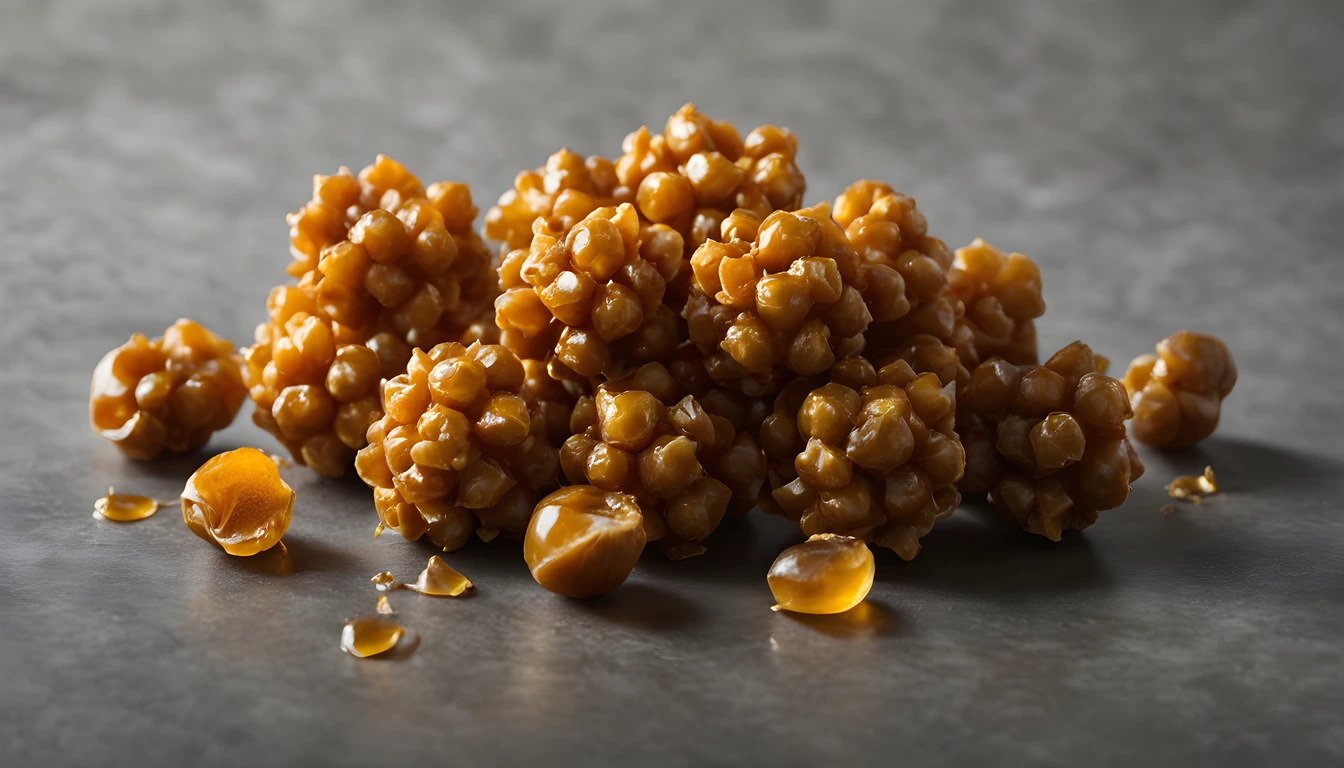
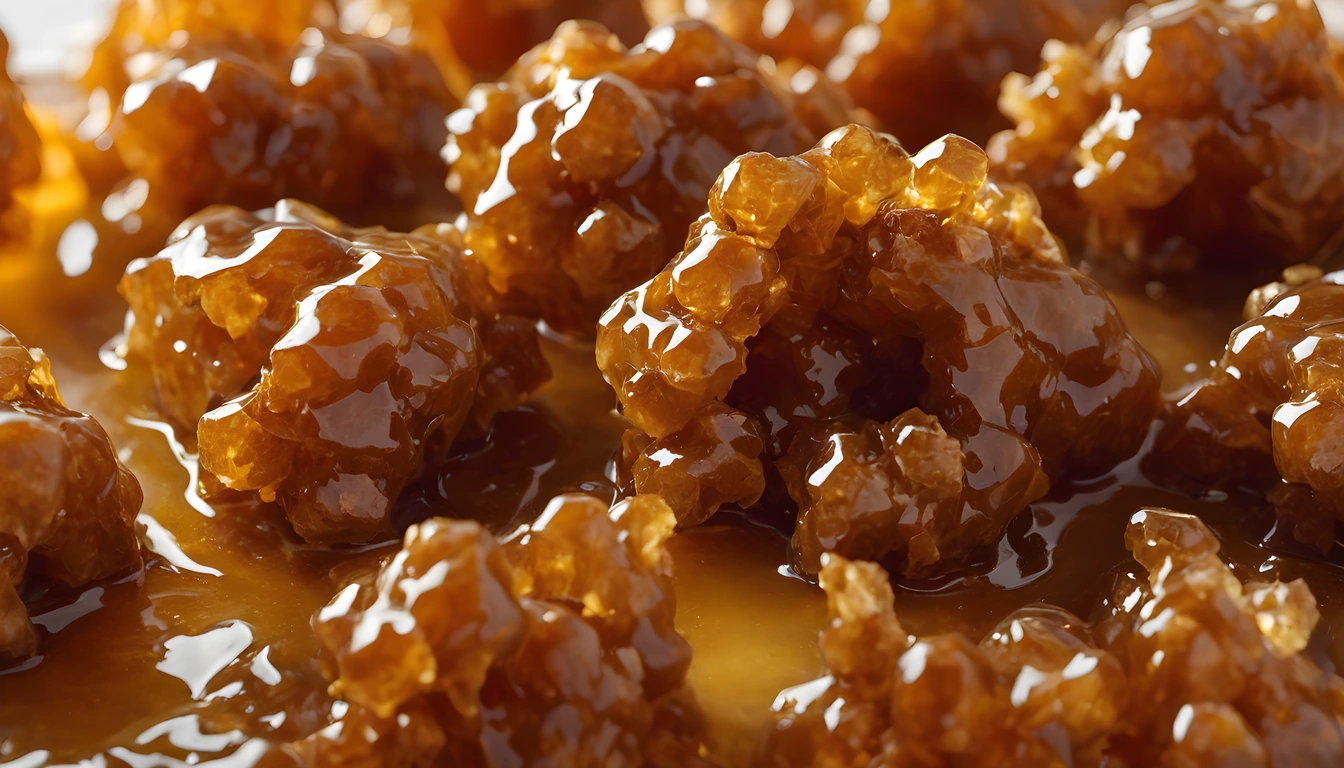
Whole roasted hazelnuts are coated in a cooked sugar-and-honey caramel, then spooned into small crunchy clusters. Honey adds flavor to the amber coating and helps limit coarse sugar crystals. These are French-style nut pralines with a crisp candy coating.
Praline has several meanings. This version is a non-creamy nut confection, cooked to hard crack, rather than a crystallized dairy praline or a filled chocolate. The measured honey also makes the candy moisture-sensitive, so make a small batch and enjoy it soon after cooling.
Recipe
Honey Hazelnut Pralines Recipe
Crunchy French-style hazelnut praline clusters in honey caramel. Includes the hard-crack endpoint, full cooling time and short, dry storage guidance.
6Ingredients
Yield: 24 servings
- 150 g dry-roasted unsalted hazelnuts
- 200 g granulated sugar
- 84 g honey
- 45 g water
- 14 g unsalted butter
- 1 g table salt
Ingredient amounts scale; instructions show the original batch. Cooking times and pan sizes may need adjustment. Season to taste. Honey grams use US measures at 20°C and 17.5% moisture, a density estimate; weigh your honey for precision.
Instructions
- 1Warm the nuts and line the trayLine a heatproof tray with parchment or a silicone mat. Warm the measured roasted hazelnuts in a low oven at 200°F (93°C) while the syrup cooks; they only need to become warm, not toast darker. Have two heatproof spoons ready.
- 2Start the syrupCombine 200 g sugar, 84 g honey, 45 g water and 1 g salt in a heavy saucepan. Set it over moderate heat and stir gently until the sugar dissolves and the mixture looks clear. Stop stirring once dissolved; from here on, swirl the pan if needed rather than stirring.
- 3Cook to hard crackClip a candy thermometer to the pan so the probe is immersed in the syrup but not touching the bottom. Cook without stirring until the syrup reaches 300°F (149°C) at sea level. For every 1,000 ft of elevation, lower the target by 2°F. Honey darkens quickly, so judge by the reading and pull the pan promptly.
- 4Add butter and nutsTake the pan off the heat and add 14 g unsalted butter carefully; it will bubble up. Stir it in, then fold in the warm hazelnuts so every nut is coated.
- 5Spoon the clustersWorking quickly, use two heatproof spoons to drop 24 small clusters onto the lined tray, letting excess caramel drain slightly. Do not touch the hot candy with your hands. If the mixture stiffens in the pan, return it briefly to low heat.
- 6Cool and separateLeave the clusters undisturbed for at least 60 minutes, until completely cool and set. Separate them and keep in an airtight container in a cool, dry place. One cluster is one of the 24 servings.
Estimated nutrition per serving
87.45 calories · 4.37 g fat · 12.32 g carbohydrate · 0.95 g protein · 16.53 mg sodium
Serving: 1 of 24 servings
Calculated from ingredient weights and USDA FoodData Central: 170583, 169655, 169640, 173647, 173430, 173468. Estimates use ingredient input weights; actual portions, brands and cooking losses vary. Omitted nutrient values are unavailable, not zero.
Why these are clusters, not creamy pralines
These clusters use a cooked, non-crystalline candy coating. Creamy praline styles instead rely on controlled sugar crystallization, and chocolate pralines have another structure again. Here the hazelnuts remain whole, and each spoonful becomes a small piece with several kernels bound by amber candy.
They are also not honey roasted nuts. Honey roasted nuts are simply baked or pan-tossed with a seasoned coating. Here the sugar, honey and water are cooked together into a true candy syrup at hard crack, so the coating is glassy rather than a sticky glaze.
Flavor intensity uses an editorial culinary scale: 1 is mild and 5 is bold. These are tasting suggestions, not laboratory measurements.
Sources: Exploratorium: Honey and Praline Crystallization; Colorado State University Extension: Candy Making at High Elevation; UC ANR: Honey (Cottage Foods).
Pro Tip
If you want soft pralines instead, this is not the recipe to adapt; the dairy and the lower cook temperature change everything.
1 = mild, 5 = bold. Editorial pairing guidance, not laboratory measurements; jars vary.
- Clover
- Mild, buttery caramel with toasted hazelnut
- Wildflower
- Round floral note against roasted nuts
- Orange blossom
- Citrus-floral aroma beside hazelnuts and amber caramel
- Buckwheat
- Dark, malty depth; use sparingly
Get the Honey Buyer's Cheat Sheet (free PDF)
16 varieties on one page — color, flavor, best use and what a fair price looks like — from the 304 honeys we track.
Reading the Thermometer
Hard crack is the stage where the syrup cools to a rigid, glassy solid. Below it, the candy is chewy or sticky; above it, the sugar can scorch before you notice. At sea level, 300°F (149°C) sits at the low end of the hard-crack range and suits small clusters.
Elevation matters. Water boils at a lower temperature as you climb, so the candy reaches the same concentration at a lower reading. Colorado State University Extension advises reducing candy temperatures by 2°F for each 1,000 feet above sea level.
- Sea level: 300°F / 149°C
- 1,000 ft: 298°F
- 2,000 ft: 296°F
- 3,000 ft: 294°F
Pro Tip
Keep the thermometer probe off the pan bottom; a false high reading there will make you pull the candy too soon.
Honey behavior and realistic crunchy expectations
The Exploratorium explains that honey slows the formation of sugar crystals, while its fructose readily takes up moisture from the air. That combination can make honey candies sticky. It helps explain both the smooth candy coating sought here and the short storage advice; it does not establish how long this original formula will stay crisp.
Humidity in the kitchen makes stickiness more likely. On a damp day, keep the finished clusters in an airtight container and accept that the surface may soften sooner.
- Best eaten the day they are made
- Store airtight in a cool, dry place and use within about 3 days for best quality
- Do not refrigerate for storage; condensation can make the candy sticky
Pro Tip
Crushing a few clusters over ice cream or a dessert is a good use for any that soften.
Have the Tray Ready Before Cooking
Keep the lined tray beside a heatproof place to rest the saucepan. Once the nuts go in, the mixture begins cooling and becomes harder to spoon. Dry heatproof utensils let you work without handling the hot candy.
Divide the mixture into 24 modest spoonfuls while it remains workable. If it stiffens before you finish, warm the pan briefly over low heat only until it becomes spoonable again. Do not scrape a scorched layer into the clusters.
- Warm the roasted nuts while cooking the syrup.
- Work with two heatproof spoons; never shape hot candy by hand.
- Leave space between the spoonfuls as they cool.
Pro Tip
The nutrition estimate includes the full candy mixture. Syrup left on the pan or spoons is an unmeasured loss, not an assumed deduction.
Choosing the Honey
Use Clover honey or Wildflower honey or Orange blossom honey or Buckwheat honey for the flavor described in this recipe. See our honey selection guide for other culinary choices.