Why Honey Makes Better Roasted Walnuts
Most roasted walnut recipes use granulated sugar or brown sugar. Honey produces a fundamentally different result, and a better one.
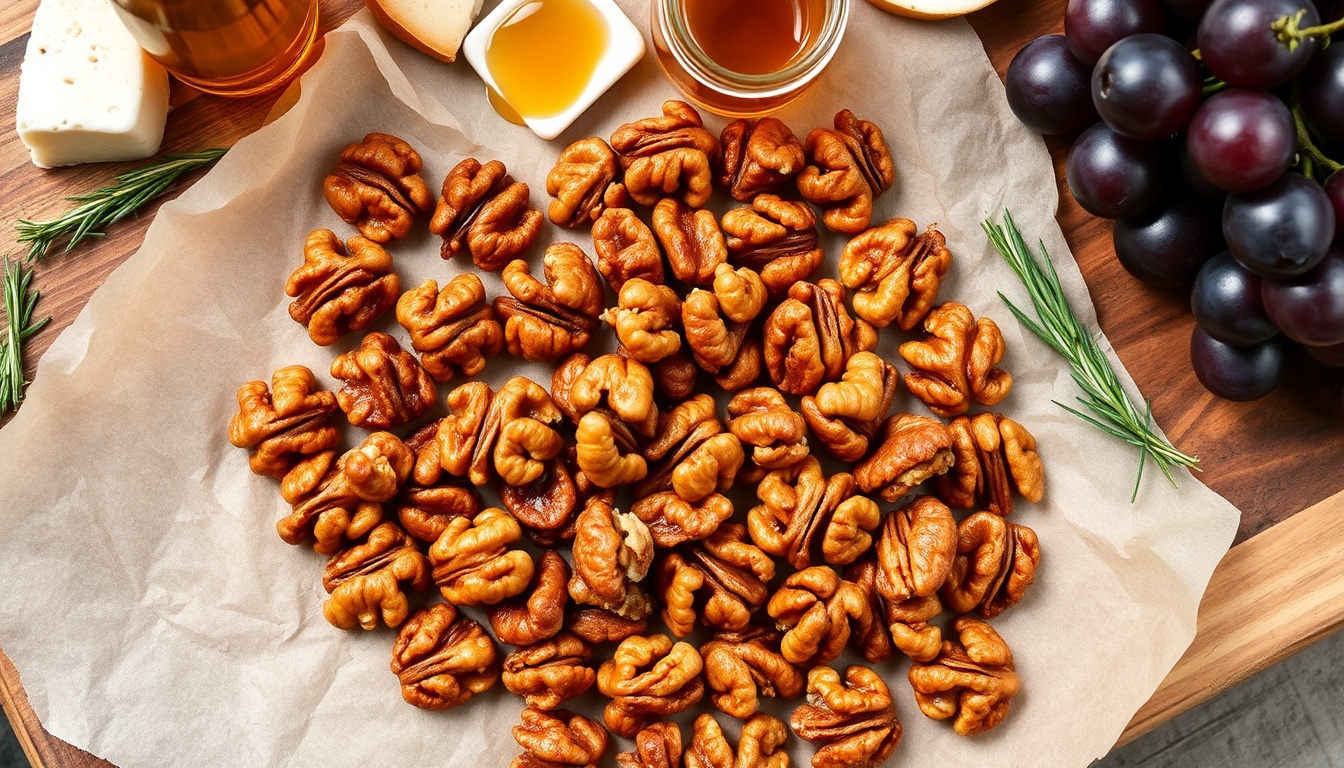
Sugar coatings rely on melting and recrystallizing — the coating is thick, gritty, and opaque. Honey coatings are thin and glassy because honey stays liquid at room temperature and forms a thin caramelized shell during roasting. The result is a cleaner crunch with less overall sweetness per walnut.
Honey also adds flavor complexity that sugar cannot. The aromatic compounds in raw honey — floral, fruity, and herbaceous notes depending on the variety — infuse into the walnut surface during roasting. A sugar-coated walnut tastes sweet. A honey-coated walnut tastes sweet, toasty, and slightly floral.
The hygroscopic nature of honey works in your favor here too. After cooling, the thin honey shell attracts just enough ambient moisture to stay slightly tacky, which helps the flaky salt adhere permanently. Sugar-coated nuts shed their salt within hours.
4 Flavor Variations
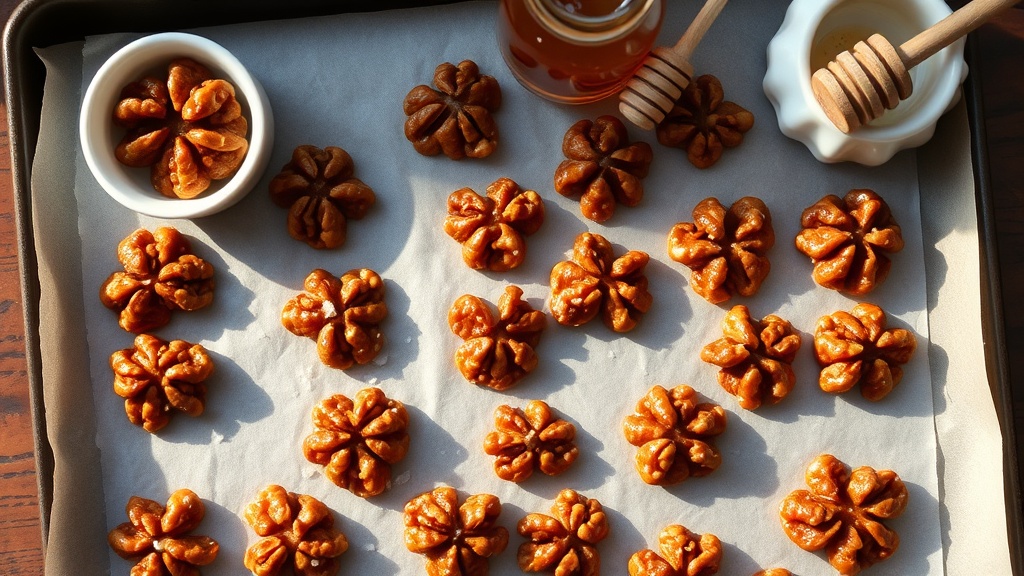
The base recipe is a starting point. Swap or add a few ingredients to create completely different snacking experiences.
- Cinnamon sugar — increase cinnamon to 1 teaspoon and add 1/4 teaspoon ground nutmeg. This is the classic candied nut flavor that works on everything from oatmeal to ice cream. Use cinnamon-paired honey for double the warmth
- Rosemary sea salt — skip the cinnamon. Toss the coated walnuts with 1 tablespoon finely chopped fresh rosemary before roasting. Finish with coarse flaky sea salt. The herbal-savory-sweet combination is addictive with cheese plates, salads, and wine
- Spicy honey — add 1/4 teaspoon cayenne pepper and 1/2 teaspoon smoked paprika to the honey coating. Or use hot honey instead of regular honey. The slow heat builds after a few bites. Great as a cocktail snack or on top of grain bowls
- Maple chai — replace half the honey with maple syrup and add 1/2 teaspoon each of cinnamon, cardamom, and ginger, plus 1/4 teaspoon black pepper. The warm spice blend makes these taste like a chai latte in walnut form. A standout holiday gift
Get the Honey Buyer's Cheat Sheet (free PDF)
16 varieties on one page — color, flavor, best use and what a fair price looks like — from the 304 honeys we track.
Best Honey Varieties for Roasted Walnuts
The honey flavor concentrates during roasting, so your variety choice affects the final taste more than you might expect.
- Wildflower honey — the best all-purpose choice and our top recommendation for honey roasted walnuts. Mild floral complexity with subtle herbal undertones complements the earthy walnut flavor without competing. Works perfectly with all four variations
- Clover honey — very mild and clean. Use this when you want the walnut and spice flavors to dominate, with honey just providing sweetness and texture
- Buckwheat honey — bold, dark, and malty. Creates a deep, almost molasses-like coating that pairs beautifully with the rosemary sea salt and spicy variations. Too intense for the delicate maple chai version
- Orange blossom honey — adds a citrus-floral note that brightens the base recipe. Especially good when using these walnuts as a salad topping with goat cheese and arugula
Ways to Use Honey Roasted Walnuts
These are a snack on their own, but they also upgrade a wide range of dishes.
- Salad topping — crush lightly and scatter over green salads, beet salads, or grain bowls. The crunch and sweetness replace croutons with more flavor and nutrition
- Cheese boards — pair with sharp cheddar, aged Gouda, blue cheese, or brie. The honey-walnut-cheese combination is a classic for a reason. Add dried figs or fresh grapes for a complete board
- Oatmeal and yogurt bowls — the crunchy coating holds up in creamy bases better than raw walnuts, which go soft quickly. Add them right before eating for maximum contrast
- Baking — chop and fold into banana bread, muffin batter, or cookie dough. The honey coating caramelizes further during baking, creating pockets of sticky crunch
- Gifting — pack in mason jars with a ribbon for a homemade holiday or hostess gift. They look professional and keep for 3 weeks at room temperature
Storage Tips
Proper storage is the difference between walnuts that stay crunchy for weeks and ones that go soft overnight.
- Room temperature — up to 3 weeks in an airtight container or sealed jar. The honey coating seals out air and keeps the walnut interior fresh longer than uncoated nuts. Store in a cool, dry place away from the stove or oven
- Refrigerator — up to 6 weeks sealed. The cold slows the natural oils in walnuts from going rancid. Let them come to room temperature for 10 minutes before eating for the best crunch and flavor
- Freezer — up to 3 months in a freezer bag with air pressed out. The honey coating protects the walnut surface from freezer burn. They thaw quickly — spread on a baking sheet for 15 minutes at room temperature
- Avoiding sogginess — the biggest enemy is moisture. Never store honey roasted walnuts in a container with a damp lid, and do not add them to warm dishes until you are ready to serve. Humidity makes the honey coating go sticky instead of crunchy
Pro Tip
If your walnuts have gone soft, spread them on a baking sheet and bake at 300°F for 5 minutes. This drives off absorbed moisture and re-crisps the honey coating. Let them cool completely before storing again.
Common Mistakes
Honey roasted walnuts are simple but a few errors can ruin the batch.
- Oven too hot — roasting above 350°F burns the honey coating before the walnuts toast through. The thin honey layer goes from golden to black in under a minute at high temperatures. Stick to 325°F and be patient
- Overcrowding the pan — overlapping walnuts steam in each other's moisture and never develop a crisp coating. Use a large enough baking sheet that every walnut sits flat with space around it. Use two sheets if needed
- Skipping the fat — the coconut oil or butter is not optional. Without fat, the honey forms a sticky, chewy coating instead of a crisp, glassy one. The fat promotes even browning and a clean snap when you bite
- Moving them too soon — the walnuts feel soft and bendable right out of the oven. This is normal. The honey hardens as it cools, like candy. Picking them up hot pulls the coating off. Wait the full 15 minutes