Why Honey Beats Sugar in Yogurt
Flavored yogurts from the grocery store contain 15-25 grams of added sugar per serving — refined sugar that adds empty calories and spikes blood sugar. Making your own honey yogurt parfait puts you in control.
A tablespoon and a half of raw honey provides about 90 calories of sweetness, and a floral flavor that refined sugar completely lacks.
The protein and fat in Greek yogurt make a honey yogurt parfait more filling than a sweetened commercial yogurt cup, and you control exactly how much honey goes in.
Choosing the Right Yogurt
The yogurt base matters as much as what you layer on top.
- Greek yogurt (recommended) — strained to remove whey, producing a thick, creamy texture with 15-20g protein per cup. The high protein content makes parfaits genuinely filling rather than just a sweet snack. Full-fat (5%) is richest and most satisfying; 2% is a solid middle ground; 0% works but tastes noticeably more tart
- Skyr (Icelandic yogurt) — even thicker and higher in protein than Greek yogurt (17-22g per cup). Slightly tangier. Excellent choice if you want maximum protein density. The extra thickness holds up well in layers
- Regular yogurt — thinner and lower in protein (8-10g per cup). Fine for parfaits but produces a more liquid consistency. If using regular yogurt, increase the honey slightly to offset the higher tanginess
- Plant-based yogurt — coconut, almond, and oat yogurts work but are much lower in protein (1-4g per cup) and thinner in texture. Choose unsweetened versions and look for brands with added protein. Coconut yogurt is the richest and layers best
- Avoid flavored or pre-sweetened yogurts — the whole point of making a honey parfait is controlling the sweetener. Vanilla-flavored yogurt plus honey produces an overly sweet result
Get the Honey Buyer's Cheat Sheet (free PDF)
16 varieties on one page — color, flavor, best use and what a fair price looks like — from the 304 honeys we track.
5 Seasonal Parfait Combinations
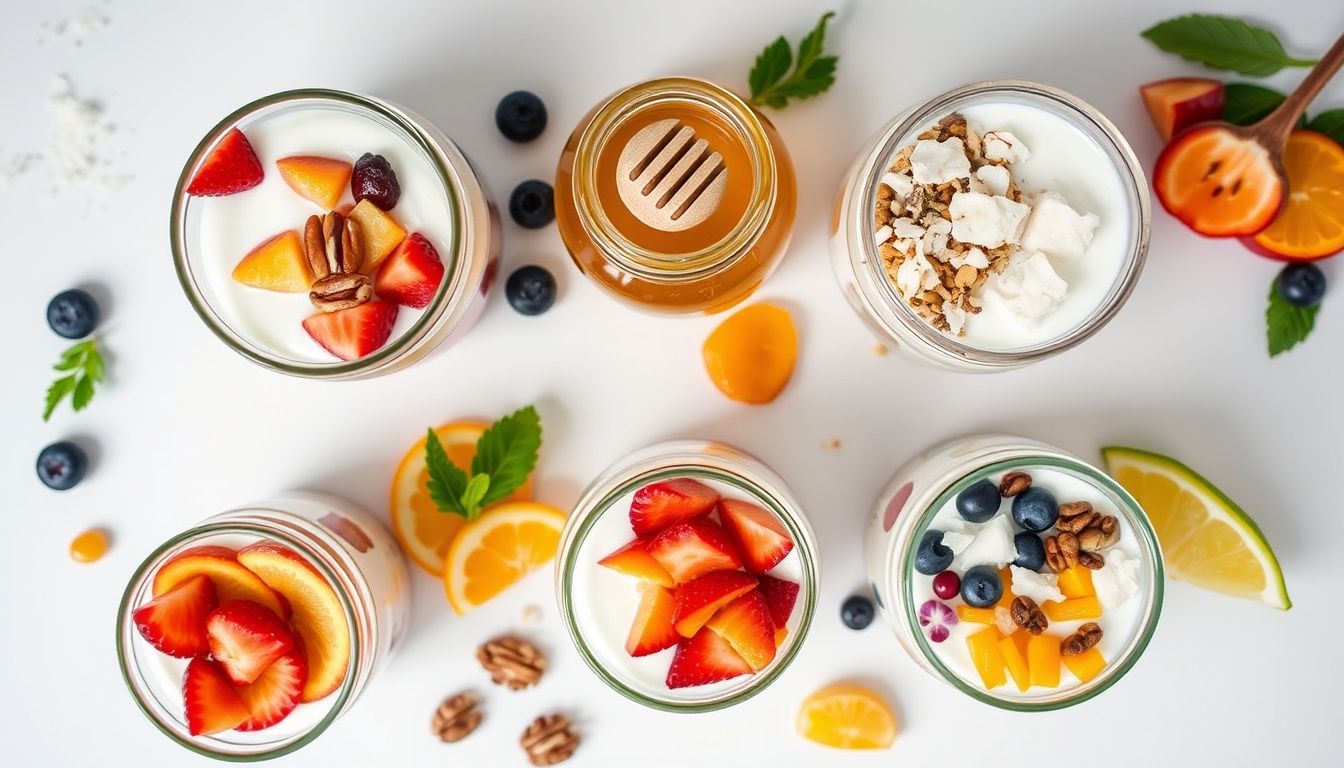
The basic method works with any fruit and topping combination. These five seasonal builds use fruit at its peak flavor.
- Spring berry — fresh strawberries and blueberries, honey granola, a drizzle of wildflower honey ($13-24), and a sprinkle of lemon zest. The bright acidity of spring berries pairs perfectly with floral honey. The lemon zest lifts every other flavor
- Summer stone fruit — sliced peaches, nectarines, or apricots with toasted almonds, a drizzle of lavender honey ($11-17), and a pinch of cardamom. Stone fruit at peak ripeness needs minimal sweetening — reduce the honey in the yogurt to 1 tablespoon
- Autumn harvest — diced apple or pear with honey cinnamon granola, toasted pecans, and a drizzle of buckwheat honey ($9-23). Add 1/4 teaspoon of cinnamon and a tiny pinch of nutmeg to the yogurt. Tastes like apple pie for breakfast
- Winter citrus — segmented blood orange, grapefruit, or cara cara orange with honey roasted pecans, shredded coconut, and orange blossom honey. The bright citrus cuts through the richness of full-fat yogurt and keeps winter breakfasts interesting
- Tropical — mango, pineapple, and kiwi with macadamia nuts, toasted coconut flakes, and a drizzle of raw honey plus a squeeze of lime juice. Transport yourself somewhere warm regardless of the weather outside. Use coconut yogurt for a fully tropical flavor profile
Best Honey Varieties for Yogurt Parfaits
Since the honey is stirred directly into yogurt with minimal other flavors competing, the variety you choose is more noticeable here than in baked goods or sauces.
- Wildflower honey ($13-24) — complex, rounded sweetness that complements any fruit combination. The best all-purpose choice and what most people should reach for
- Clover honey ($9-15) — mild, clean sweetness that lets the fruit and yogurt flavors dominate. Best if you want gentle sweetening without additional flavor complexity
- Orange blossom honey ($12-24) — delicate citrus-floral notes that pair especially well with berries and stone fruit. Elevates a simple parfait to something that tastes intentional and refined
- Acacia honey ($9-16) — light, almost transparent, with very mild sweetness and vanilla undertones. The best choice when you want the fruit and yogurt to lead
- Manuka honey ($29-71) — rich, earthy flavor that stands up to tart yogurt. Use UMF 5+ for daily eating — higher grades are better saved for eating straight from the spoon
Pro Tip
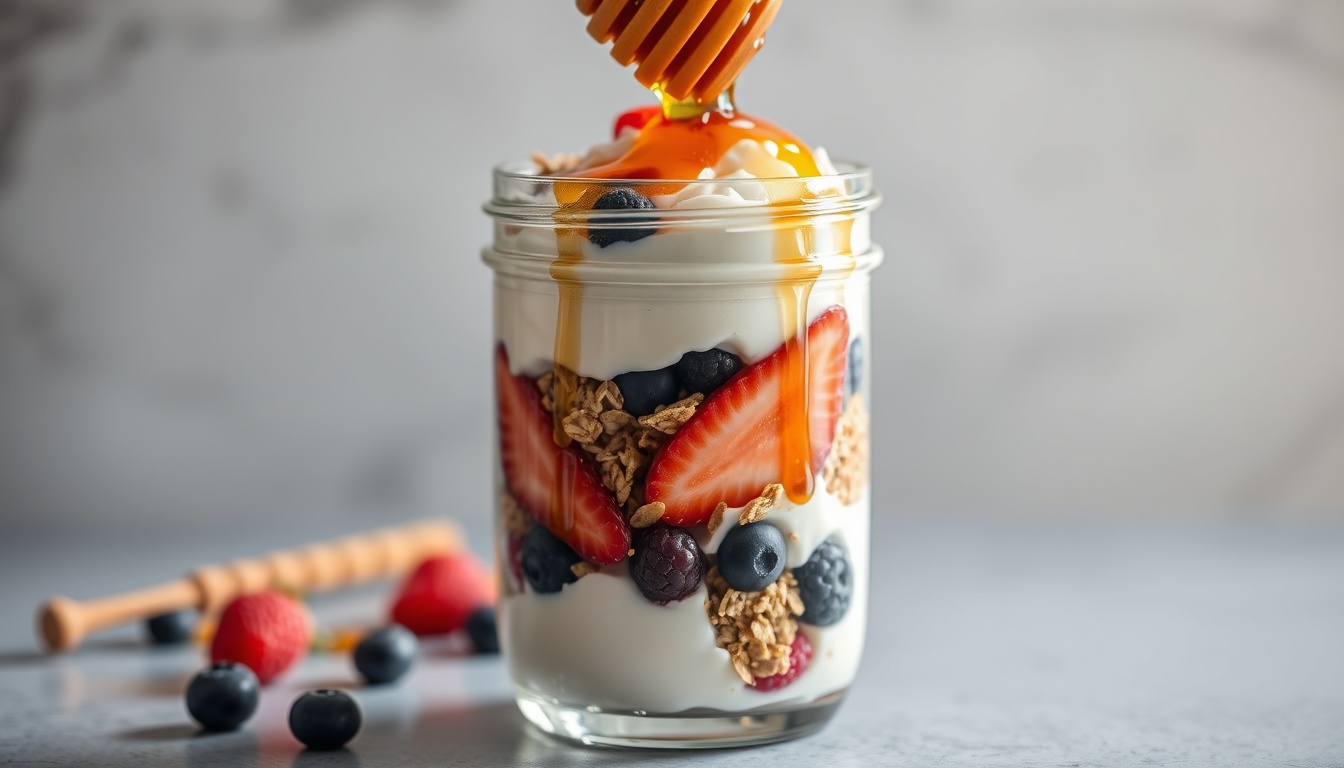
Drizzle a small amount of honey on top of the finished parfait as a final layer. This gives you visible honey swirls and an immediate sweet hit before the more blended yogurt layer underneath.
Make-Ahead and Meal Prep Tips
Parfaits are one of the best meal-prep breakfasts because most of the components store well separately.
- Mason jar method — layer yogurt and fruit in wide-mouth pint jars (16 oz) the night before. Keep granola in a small separate container or bag and add it in the morning. The yogurt and fruit keep perfectly for 12-18 hours; the granola stays crunchy
- Batch the honey yogurt — mix a large bowl of honey-sweetened Greek yogurt at the start of the week (32 oz yogurt + 6 tablespoons honey). Store sealed in the fridge for up to 5 days. Scoop as needed for daily parfaits
- Pre-portion fruit — wash and cut fruit for 3-4 days at once, stored in airtight containers lined with paper towels to absorb moisture. Berries keep 3-4 days; stone fruit and bananas should be cut same-day
- Overnight option — if you like softer granola, assemble the full parfait the night before and refrigerate. The granola absorbs yogurt moisture overnight, creating a texture similar to overnight oats — chewy rather than crunchy
- Freezer parfait popsicles — blend honey yogurt with fruit, pour into popsicle molds in layers, and freeze. A frozen snack that doubles as a grab-and-go breakfast on hot mornings
Nutrition Breakdown
A standard honey yogurt parfait with Greek yogurt, granola, and mixed berries provides roughly 350-400 calories with a well-balanced macronutrient profile.
- Protein — 18-22g from Greek yogurt, plus 3-5g from granola and nuts. This is comparable to 3 eggs and enough to keep you full through a morning
- Carbohydrates — 45-55g total, including natural fruit sugars, honey, and granola. The fiber from fruit and oats (6-8g) slows digestion and prevents blood sugar spikes
- Fat — 10-15g depending on yogurt fat percentage and nut additions. The fat further slows sugar absorption and adds satiety. Full-fat yogurt keeps you fuller longer than non-fat
- Micronutrients — calcium (25-30% daily value from yogurt), potassium (from fruit), B vitamins and probiotics (from yogurt), and a floral sweetness from raw honey
- Compared to commercial flavored yogurts — a homemade honey parfait typically has more protein, more fiber, less added sugar, and significantly more micronutrient diversity from real fruit versus fruit-flavored syrups
Common Mistakes to Avoid
Parfaits are simple, but a few errors can ruin the experience.
- Adding granola too early — granola turns soggy within 30-60 minutes of contact with yogurt. Either eat immediately after assembling or keep granola separate until ready to eat. This is the single most important tip
- Using sweetened yogurt plus honey — the combination of pre-sweetened yogurt and honey produces a dessert, not a breakfast. Always start with plain, unsweetened yogurt and add just enough honey to taste
- Skipping the layers — dumping everything into a bowl and mixing is a smoothie bowl, not a parfait. The layers create distinct textural contrasts (creamy, crunchy, juicy) that make parfaits satisfying to eat. Use a clear glass to see and enjoy the layers
- Wet fruit — fruit that has not been drained after washing releases water into the yogurt, making the whole parfait watery. Pat berries dry with a paper towel, and drain any juice from cut stone fruit before layering
- Too many toppings — stick to 1-2 fruits plus 1-2 crunchy elements. Overloading with six different fruits, three types of seeds, nut butter, coconut, and chocolate chips creates a confused flavor profile rather than a composed dish