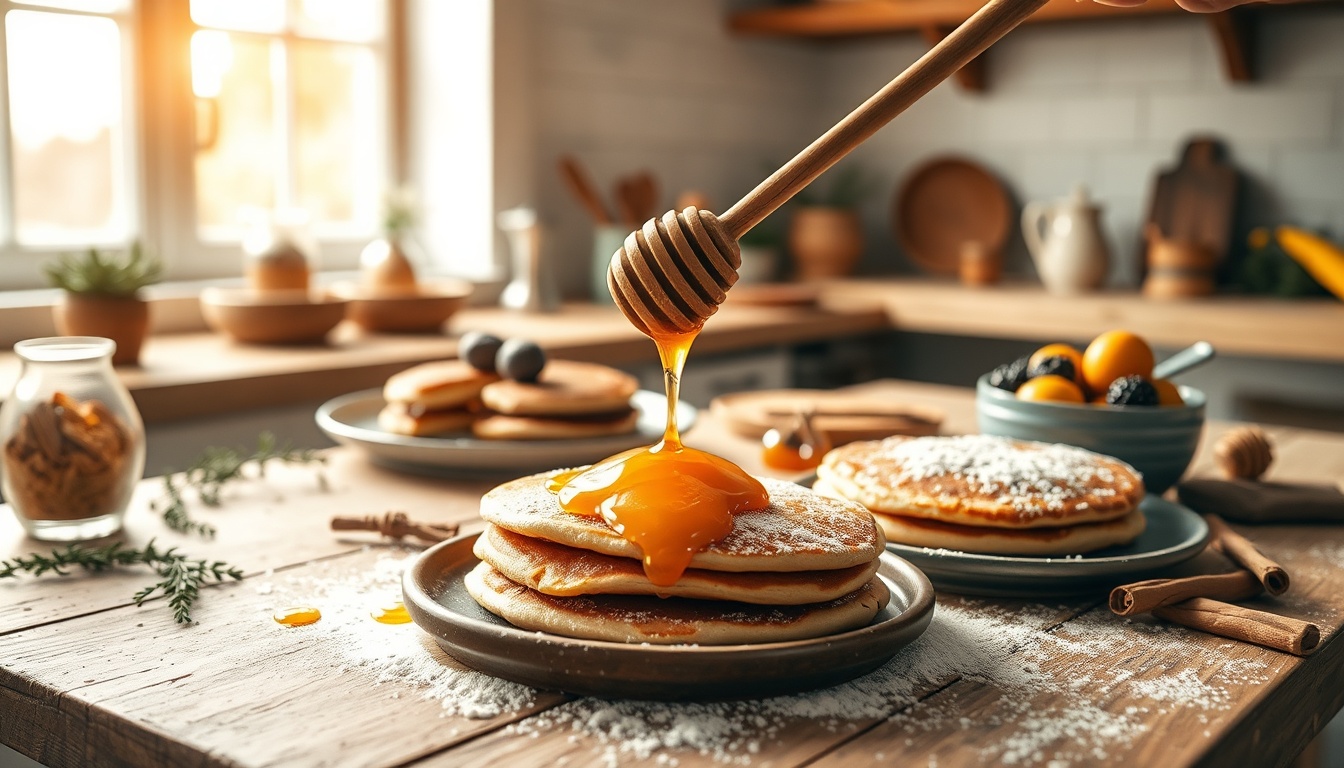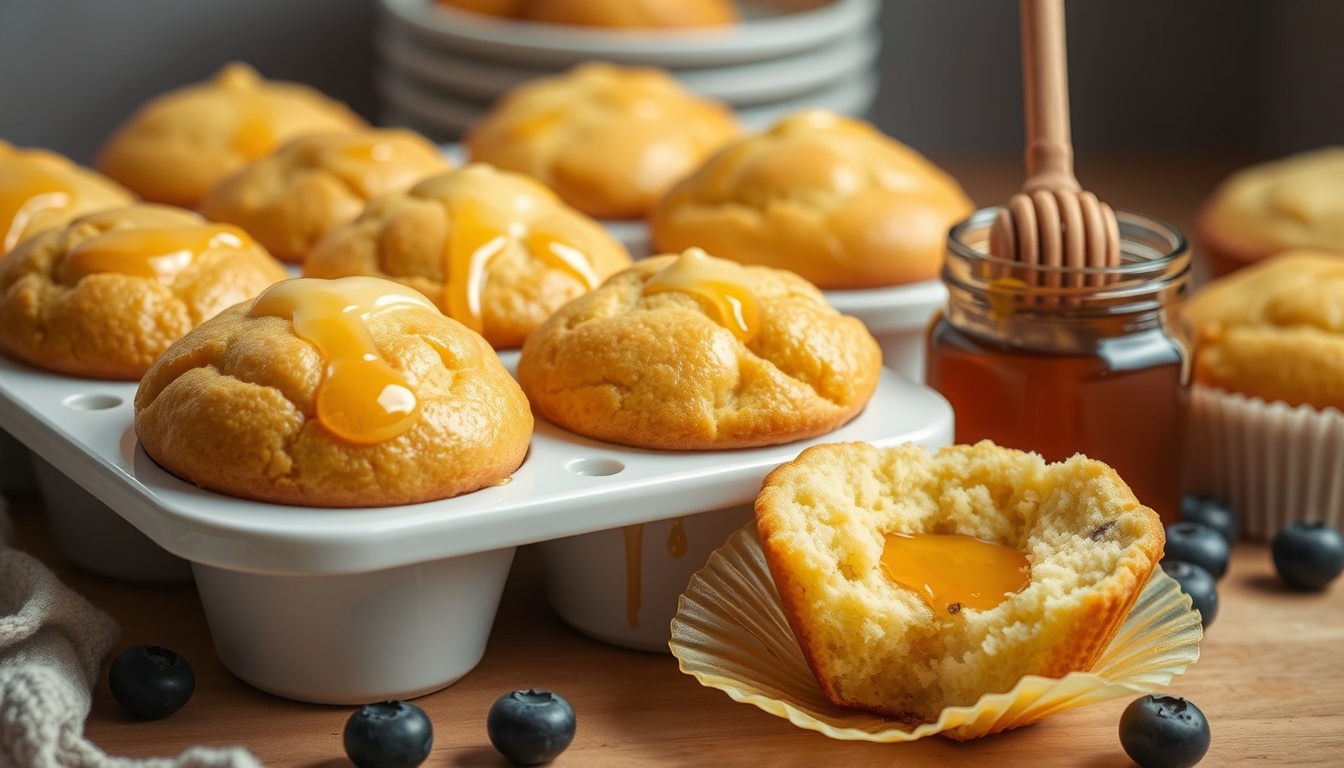
Why Honey Makes Better Muffins
Honey does three things in muffins that granulated sugar simply cannot. First, it's hygroscopic — meaning it actively attracts and retains moisture from the air. This is why honey baked goods stay soft and tender for days while sugar-based muffins dry out within 24 hours.
Second, honey's fructose caramelizes at a lower temperature (230°F) than sucrose (320°F). This produces a beautiful golden-brown crust without overbaking the interior — you get color and flavor development while the crumb stays perfectly moist.
Third, honey contains over 200 aromatic compounds that add genuine flavor complexity. Where sugar provides only sweetness, honey contributes floral, fruity, or earthy notes that make these muffins taste like something from a proper bakery rather than a basic recipe.
This one-bowl recipe uses no refined sugar whatsoever. The honey provides all the sweetness you need, and the result is a tender, domed muffin with a golden top and an incredibly soft crumb.
Choosing the Right Honey for Muffins
The honey variety you choose directly affects both flavor and color:
- **Clover honey ($9–15)** — The safest all-around choice. Mild, clean sweetness that produces classic muffin flavor without overpowering any mix-ins. Light golden color.
- **Wildflower honey ($13–24)** — Slightly more complex than clover with subtle floral undertones. Creates a warm, amber-tinged crumb. Excellent for plain or fruit variations.
- **Orange blossom honey ($12–24)** — Delicate citrus notes that shine in the lemon-poppy seed and blueberry variations. Produces a fragrant, almost perfumed muffin.
- **Buckwheat honey ($9–23)** — Bold, molasses-like flavor for a deeper, richer muffin. Best paired with strong mix-ins like chocolate, cinnamon, or nuts. Creates a darker crumb.
- **Lavender honey ($11–17)** — Floral and delicate. Beautiful in plain muffins or with berries. Creates an elegant flavor that feels elevated without any extra ingredients.
- **Sourwood honey ($14–23)** — Caramel-anise notes that add a distinctive Southern character. Wonderful in the apple cinnamon variation.
Pro Tip
For the most versatile result, start with clover or wildflower honey. Once you've mastered the base recipe, experiment with specialty honeys to create signature flavors.
Get the Honey Buyer's Cheat Sheet (free PDF)
16 varieties on one page — color, flavor, best use and what a fair price looks like — from the 304 honeys we track.
Ingredients
**Makes 12 standard muffins:**
- 2 cups (250g) all-purpose flour
- 2 teaspoons baking powder
- 1/2 teaspoon baking soda
- 1/2 teaspoon salt
- 1/3 cup (80ml) honey
- 2 large eggs, at room temperature
- 1/2 cup (120ml) whole milk, at room temperature
- 1/3 cup (80ml) neutral oil (vegetable, canola, or melted coconut oil)
- 1/4 cup (60g) plain Greek yogurt or sour cream
- 1 teaspoon vanilla extract
Pro Tip
Room temperature ingredients are important for even mixing and a tender crumb. Cold eggs or milk can cause the batter to seize up and produce a tougher muffin.
Step-by-Step Instructions
**Step 1: Preheat and prep.** Preheat your oven to 375°F (190°C). Line a 12-cup muffin tin with paper liners or grease generously with butter or cooking spray.
**Step 2: Mix dry ingredients.** In a large bowl, whisk together the flour, baking powder, baking soda, and salt. Make a well in the center.
**Step 3: Mix wet ingredients.** In a separate bowl or large measuring cup, whisk together the honey, eggs, milk, oil, Greek yogurt, and vanilla extract until smooth. The honey should be fully incorporated — no streaks.
**Step 4: Combine gently.** Pour the wet ingredients into the well in the dry ingredients. Fold with a spatula using about 10-15 strokes, just until the flour is barely incorporated. The batter should look slightly lumpy with a few visible streaks of flour. Do not overmix — this is the most important step for tender muffins.
**Step 5: Add mix-ins (optional).** If using any of the variations below, gently fold in the mix-ins with 2-3 more strokes.
**Step 6: Fill and top.** Divide the batter evenly among the 12 muffin cups, filling each about 2/3 to 3/4 full. For domed tops, use an ice cream scoop for even portioning and slightly overfill — about 3/4 full.
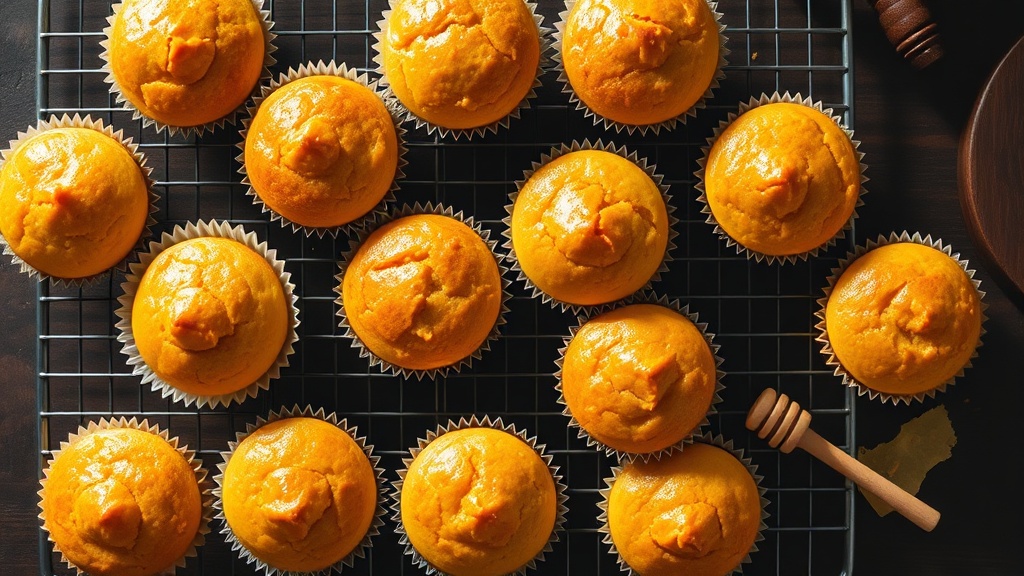
**Step 7: Bake.** Bake for 18-22 minutes, until the tops spring back when gently pressed and a toothpick inserted in the center comes out clean (or with just a few moist crumbs). The tops should be golden brown thanks to honey's lower caramelization point.
**Step 8: Cool.** Let the muffins cool in the tin for 5 minutes, then transfer to a wire rack. Optionally drizzle warm muffin tops with a thin ribbon of honey.
Pro Tip
For the tallest, most bakery-style domes, start with a higher oven temperature (400°F) for the first 5 minutes, then reduce to 375°F for the remaining time. The initial blast of heat sets the edges quickly while the center continues to rise.
6 Mix-In Variations
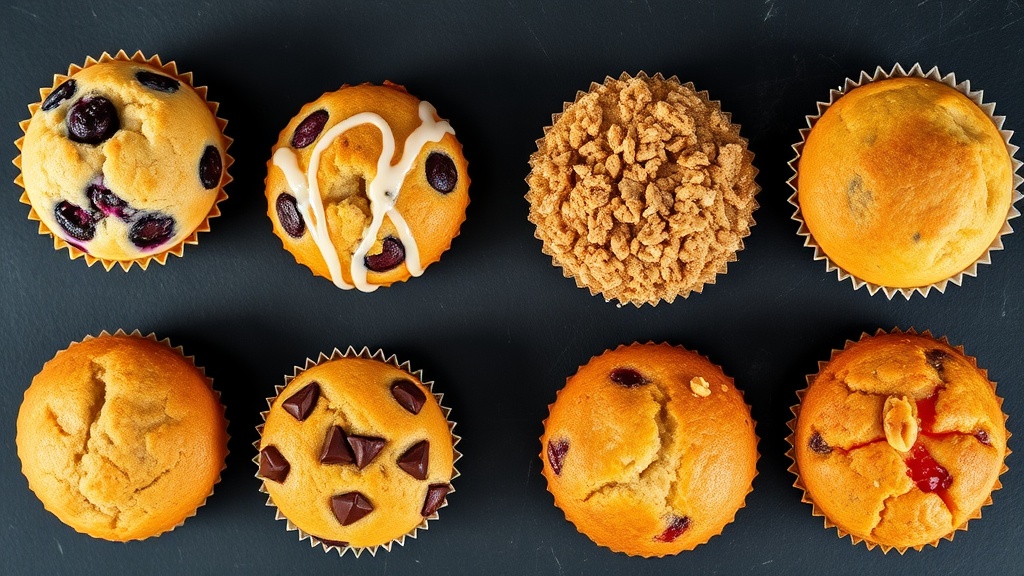
The base recipe is wonderful plain, but these variations take it further:
- **Blueberry Honey** — Fold in 1 cup fresh or frozen blueberries (don't thaw frozen berries). Toss the berries in 1 tablespoon flour first to prevent them from sinking to the bottom. The blueberries burst during baking, creating pockets of juicy fruit throughout.
- **Apple Cinnamon** — Add 1 teaspoon ground cinnamon and 1/4 teaspoon nutmeg to the dry ingredients. Fold in 1 cup peeled, diced apple (Honeycrisp or Granny Smith). Top with a streusel: mix 3 tablespoons flour, 2 tablespoons butter, 1 tablespoon honey, and 1/4 teaspoon cinnamon until crumbly.
- **Lemon Poppy Seed** — Add 2 tablespoons poppy seeds to the dry ingredients, plus the zest of 2 lemons and 2 tablespoons lemon juice to the wet ingredients. Use orange blossom honey ($12–24) for a double-citrus effect. Glaze with: 1/2 cup powdered sugar + 2 tablespoons lemon juice.
- **Chocolate Chip** — Fold in 3/4 cup semi-sweet chocolate chips. Use buckwheat honey ($9–23) for a deeper, more complex chocolate muffin. For a sophisticated adult version, add 1 tablespoon espresso powder to the dry ingredients.
- **Banana Walnut** — Mash 2 ripe bananas and add to the wet ingredients (reduce milk to 1/4 cup to compensate for the moisture). Fold in 1/2 cup chopped walnuts. Like a mini version of honey banana bread in muffin form.
- **Cranberry Orange** — Add the zest of 1 orange to the wet ingredients. Fold in 3/4 cup dried cranberries and 1/3 cup chopped pecans. The tartness of cranberries balances honey's sweetness perfectly. Use orange blossom honey to amplify the citrus flavor.
The Baking Science Behind Honey Muffins
Understanding why honey behaves differently from sugar in baking helps you troubleshoot and adapt:
- **Moisture retention** — Honey is about 17% water and is hygroscopic (attracts moisture from the air). This is why honey muffins stay soft for 3-4 days while sugar muffins start drying out after day one. It also means you need slightly less liquid in the recipe.
- **Lower browning temperature** — Honey's fructose caramelizes at 230°F vs sugar's 320°F. This means you bake at 25°F lower or for slightly less time than a sugar-based recipe, or the tops will over-brown before the centers are done. The golden color develops earlier.
- **Acidity** — Honey has a pH of 3.2-4.5, making it mildly acidic. This is why the recipe includes baking soda (which reacts with acids) alongside baking powder. The acid-base reaction creates extra lift, producing a lighter, more tender crumb.
- **Denser sweetness** — Honey is about 25% sweeter than sugar by volume, thanks to its higher fructose content. This recipe uses 1/3 cup honey where a sugar version might use 1/2 cup or more of sugar, keeping the muffins sweet but not cloying.
- **Gluten development** — Honey's moisture and acidity slightly tighten the gluten network, which actually helps muffins hold their dome shape. But this also means overmixing is more punishing — stop folding while the batter still looks lumpy.
Tips for Perfect Honey Muffins Every Time
- **Don't overmix** — This is the number one muffin mistake. Mix until the flour is barely incorporated, about 10-15 strokes. Lumps are fine — they bake out. Overmixing develops gluten, producing tough, dense muffins with tunneling.
- **Room temperature ingredients** — Cold eggs and milk can cause the oil and honey to seize, leading to an unevenly mixed batter. Set eggs and milk out 30 minutes before baking.
- **Fill cups generously** — For bakery-style domed tops, fill each cup 3/4 full rather than the usual 2/3. The extra batter creates the rounded top that bakes up over the edges.
- **Measure honey accurately** — Spray your measuring cup with cooking spray first, and the honey will slide right out without sticking. Or weigh it: 1/3 cup honey = about 115g.
- **Watch the clock** — Check muffins at 18 minutes. Honey's lower browning point means they can go from golden to over-browned quickly. The toothpick test is more reliable than color.
- **Let them cool in the pan** — 5 minutes in the pan, then move to a wire rack. Removing too early can cause the bottoms to tear; leaving too long creates condensation and soggy bottoms.
Storage and Make-Ahead Tips
**Room temperature:** Store in an airtight container for 3-4 days. Honey's hygroscopic nature keeps them moist longer than sugar-based muffins.
**Refrigerate:** Wrap individually in plastic wrap and refrigerate for up to 1 week. Bring to room temperature or warm briefly in the oven (300°F, 5 minutes) before serving.
**Freeze:** Wrap individually in plastic wrap, then place in a freezer bag. Freeze for up to 3 months. Thaw at room temperature for 1-2 hours or microwave for 30-45 seconds.
**Make the batter ahead:** Mix wet and dry ingredients separately the night before. Combine in the morning and bake fresh — the whole process takes under 5 minutes once the oven is preheated.
**Drizzle after baking:** For extra honey flavor, drizzle warm muffin tops with a thin ribbon of raw honey immediately after removing from the oven. The warmth helps it absorb into the top.
Nutrition Comparison: Honey Muffins vs Store-Bought
A typical store-bought muffin contains 40-60g of refined sugar, artificial preservatives, and often high-fructose corn syrup. These homemade honey muffins use about 7g of honey per muffin (roughly 1.5 teaspoons), plus whatever comes naturally from the mix-ins.
Beyond the reduced sweetener content, honey brings floral aroma and trace minerals that refined sugar lacks. Choosing honey over corn syrup or refined sugar in your baking means you're getting genuine flavor complexity along with your sweetness.