About This Recipe
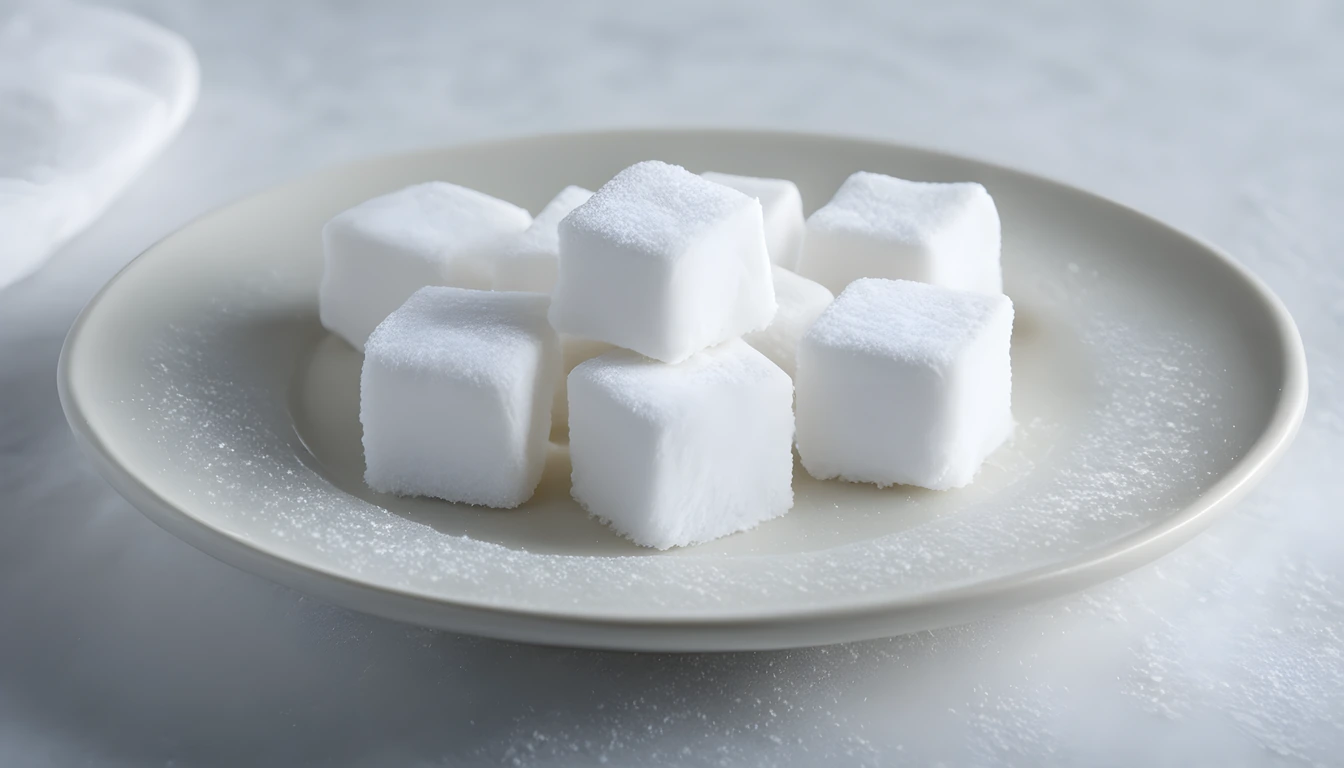
These marshmallows lean on honey rather than sugar alone, so the finished cubes carry a soft floral note instead of plain sweetness. Unflavored gelatin does the setting; no whipped egg white enters the bowl.
The syrup cooks to 240°F, gets poured into bloomed gelatin, and whips until thick and only warm. The slab then rests uncovered at cool room temperature for at least six hours before cutting.
Recipe
Honey Marshmallows Recipe
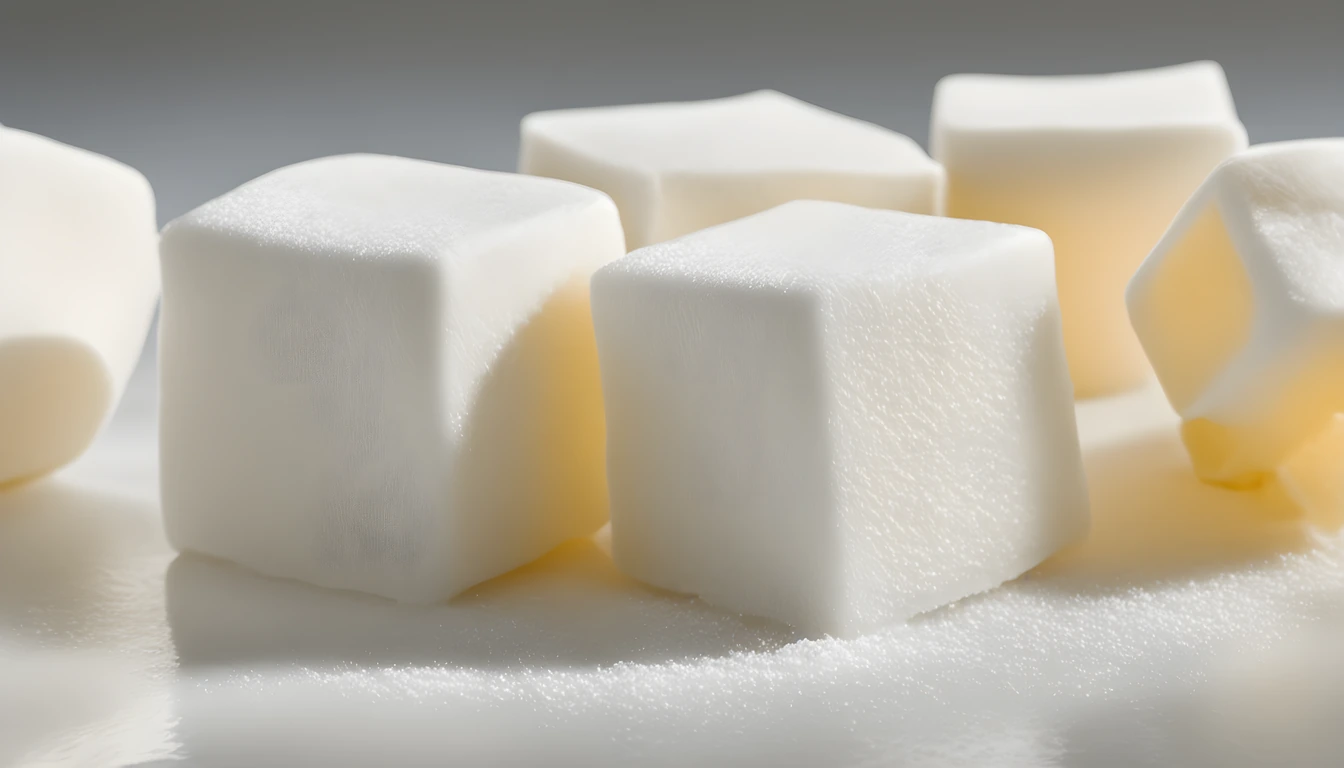
A honey-forward marshmallow set with unflavored gelatin and cut into 48 cubes, with a 240°F syrup stage, a cool-set window, and a light cornstarch coating.
10Ingredients
Yield: 24 servings
- 21 g unflavored gelatin powder
- 113 g cool water, for blooming gelatin
- 112 g water, for the syrup
- 300 g mild clover honey
- 300 g granulated sugar
- 1 g table salt
- 7 g vanilla extract
- 30 g powdered sugar, for coating
- 30 g cornstarch, for coating
- 5 g canola oil, divided among parchment, spatula and knife
Ingredient amounts scale; instructions show the original batch. Cooking times and pan sizes may need adjustment. Season to taste. Honey grams use US measures at 20°C and 17.5% moisture, a density estimate; weigh your honey for precision.
Instructions
- 1Line and oil the panLine a 9x13-inch pan with baking parchment, pressing it into the corners. Brush the parchment and the exposed pan sides lightly with the canola oil. Reserve any remaining oil for oiling the knife later.
- 2Bloom the gelatinSprinkle the 21 g gelatin over the 113 g cool water in the bowl of a stand mixer fitted with the whisk attachment. Stir briefly so no dry patches remain, then leave it to swell while the syrup cooks. Blooming in cool water keeps the granules separate.
- 3Cook the syrupCombine the 300 g honey, 300 g granulated sugar, 112 g water, and 1 g salt in a heavy saucepan. Warm over medium heat, stirring just until the sugar dissolves, then stop stirring. Cook until the syrup reads 240°F (116°C) at sea level on a candy thermometer. At high elevation, reduce that finish temperature by 2°F for each 1,000 feet above sea level. Judge by the thermometer, not by a clock.
- 4Pour into the gelatinWith the mixer on low speed, pour the hot syrup down the inside of the bowl in a slow, steady stream. Aim between the whisk and the bowl wall so the syrup does not splash or fling onto the sides. If a little syrup clings to the pan, let it drain in; do not scrape hard.
- 5Whip until thick and warmRaise the mixer to high and whip until the marshmallow is very thick, glossy, and no longer hot, roughly 3 to 10 minutes depending on the mixer. Add the 7 g vanilla near the end of whipping and mix just to combine. Stop when the mixture holds a soft mound and feels warm rather than hot.
- 6Spread and setScrape the marshmallow into the prepared pan and smooth with an offset spatula lightly oiled from the reserved 5 g. Leave uncovered in a cool, dry room for at least 6 hours, until the slab is firm and springs back gently.
- 7Coat and cutWhisk the powdered sugar with the cornstarch. Use some to dust the slab, then lift it out by the parchment and turn it onto a dusted cutting board. Lightly oil a long knife with the remaining reserved oil. Cut a 6-by-8 grid into 48 pieces, coating the cut faces as you work.
- 8Finish and storeToss the pieces in the remaining coating and shake off the excess. Two pieces make one serving. Store in an airtight container with parchment between layers, in a cool, dry place, and use within 3 days for best quality.
Estimated nutrition per serving
101.61 calories · 0.21 g fat · 25.23 g carbohydrate · 0.79 g protein · 19.05 mg sodium
Serving: 1 of 24 servings
Calculated from ingredient weights and USDA FoodData Central: 169599, 173647, 169640, 169655, 173468, 173471, 169656, 169698, 172336. Estimates use ingredient input weights; actual portions, brands and cooking losses vary. Omitted nutrient values are unavailable, not zero.
Why honey changes the mix
Honey contributes both sugar and its own floral aroma. Its glucose and fructose help limit the sucrose crystals that can give candy a gritty texture. This formula uses honey alongside granulated sugar, with no corn syrup and no whipped egg white.
The syrup reaches 240°F (116°C) at sea level before it is whipped with the bloomed gelatin. That endpoint comes from a gelatin-marshmallow method, not the higher hard-ball temperature used for some other confections. The cited method supports the technique; the honey proportions here are an original formulation.
Flavor intensity uses an editorial culinary scale: 1 is mild and 5 is bold. These are tasting suggestions, not laboratory measurements.
Sources: King Arthur Baking: Homemade Marshmallows; UC ANR: Honey; Colorado State University Extension: Candy Making at High Elevation.
- Check the thermometer in boiling water before starting.
- Reduce the target by 2°F per 1,000 feet of elevation, following CSU Extension guidance.
- Stop stirring once the sugar is dissolved and the syrup is boiling.
Pro Tip
Cool, dry air gives the cleanest set. On a humid day the cut faces pick up moisture and turn tacky faster.
1 = mild, 5 = bold. Editorial pairing guidance, not laboratory measurements; jars vary.
- Clover
- Vanilla and warm milk drinks
- Wildflower
- Coffee and toasted nuts
- Orange blossom
- Citrus and tea
- Buckwheat
- Dark chocolate and strong coffee
Get the Honey Buyer's Cheat Sheet (free PDF)
16 varieties on one page — color, flavor, best use and what a fair price looks like — from the 304 honeys we track.
Working with the gelatin
Sprinkle ordinary unflavored gelatin powder over the cool bloom water and let it hydrate before the syrup is ready. Every patch should become wet. Dry gelatin trapped under the hot syrup can form stubborn lumps; instant collagen powder is not a substitute for a setting gelatin.
Keep the mixer on low while the syrup goes in, and let the whisk run rather than scraping the bowl. Once all the syrup is added, the high-speed whip aerates the mass into the thick, glossy foam that sets into the familiar spongy texture.
- Bloom in cool, not warm, water.
- Pour syrup down the bowl, not onto the whisk.
- Stop whipping when the mixture is warm, not hot.
Pro Tip
Have the lined pan ready before whipping. Once the foam becomes thick and warm, it gets harder to spread as it cools.
Setting, cutting, and coating
The slab needs at least six hours uncovered at cool room temperature to firm up; rushing that stage leaves sticky edges. The powdered sugar and cornstarch coating is not decoration. It absorbs surface moisture and keeps the cut faces from welding together.
Cut a six-by-eight grid into 48 pieces, with two pieces per serving. An oiled knife slides through the foam more easily than a dry blade. The written 5 g oil covers the pan lining, spatula and knife; use it sparingly rather than pouring extra oil onto the candy.
- Dust the top before lifting the slab from the pan.
- Cut with a lightly oiled long knife.
- Toss each square in coating so all faces are covered.
Pro Tip
If the slab feels too soft to cut, give it more cool room-temperature time rather than moving it to the refrigerator.
Storage and expectations
Keep the finished pieces in an airtight container with parchment between layers. Use within three days for best quality. Damp air can dissolve the coating and make the surfaces tacky, so avoid storing the open container near a steaming kettle or dishwasher.
The nutrition estimate conservatively includes the full 60 g coating mixture and all 5 g oil. Some coating and oil will remain on the board or tools. The amount actually eaten therefore varies; the calculation does not pretend to measure that residue.
Pro Tip
Keep the container closed between servings. Refrigeration can introduce condensation when the candy returns to room temperature.
Choosing the honey
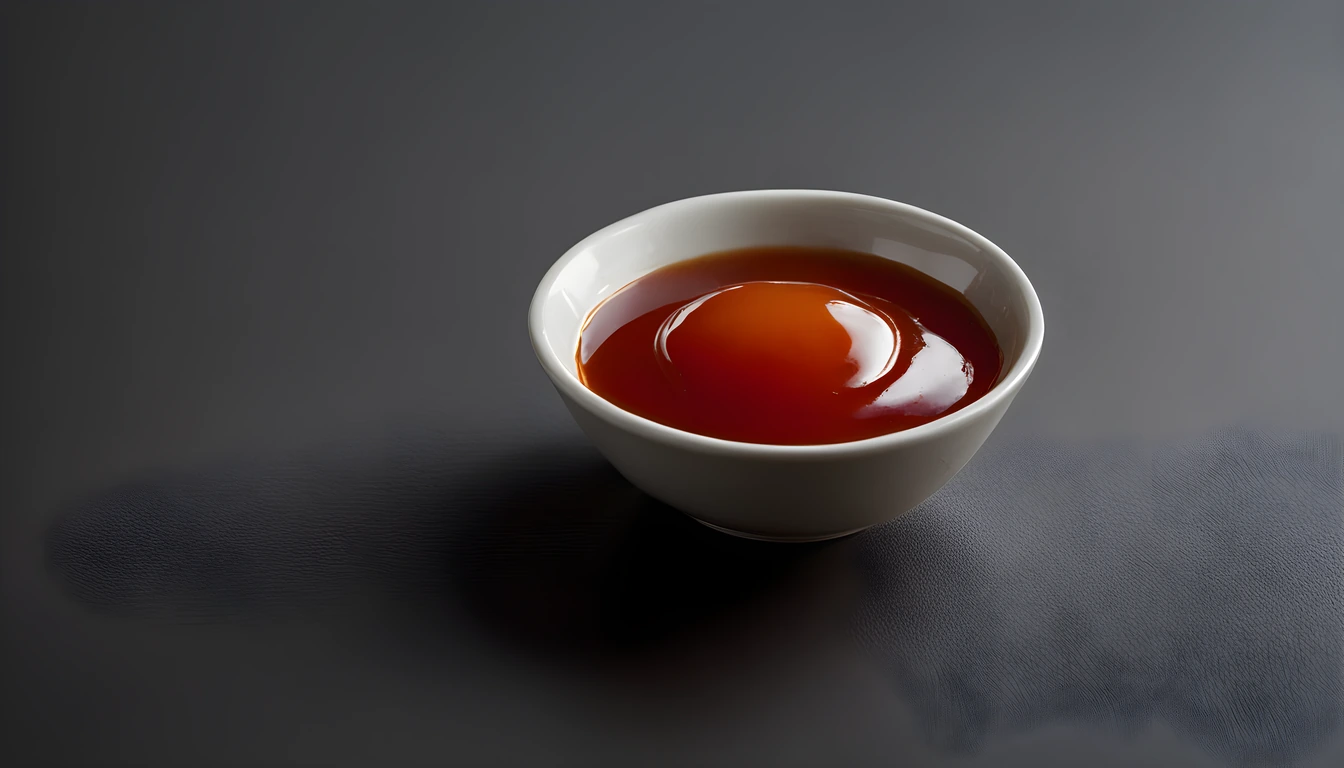
Mild clover honey is the written base and gives pale cubes with a floral note beneath the vanilla. Wildflower can be more pronounced, depending on its source. Buckwheat produces a darker, more assertive marshmallow; it will not look or taste like the mild base.
Use a liquid honey so it measures and blends evenly. Crystallized honey works after gentle warming, but keep the total weight at 300 g.
Pro Tip
Match the honey to how the cubes will be used: a neutral honey suits coffee and hot drinks, a stronger one stands up on its own.
Choosing the Honey
Use Clover honey or Wildflower honey or Orange blossom honey or Buckwheat honey for the flavor described in this recipe. See our honey selection guide for other culinary choices.