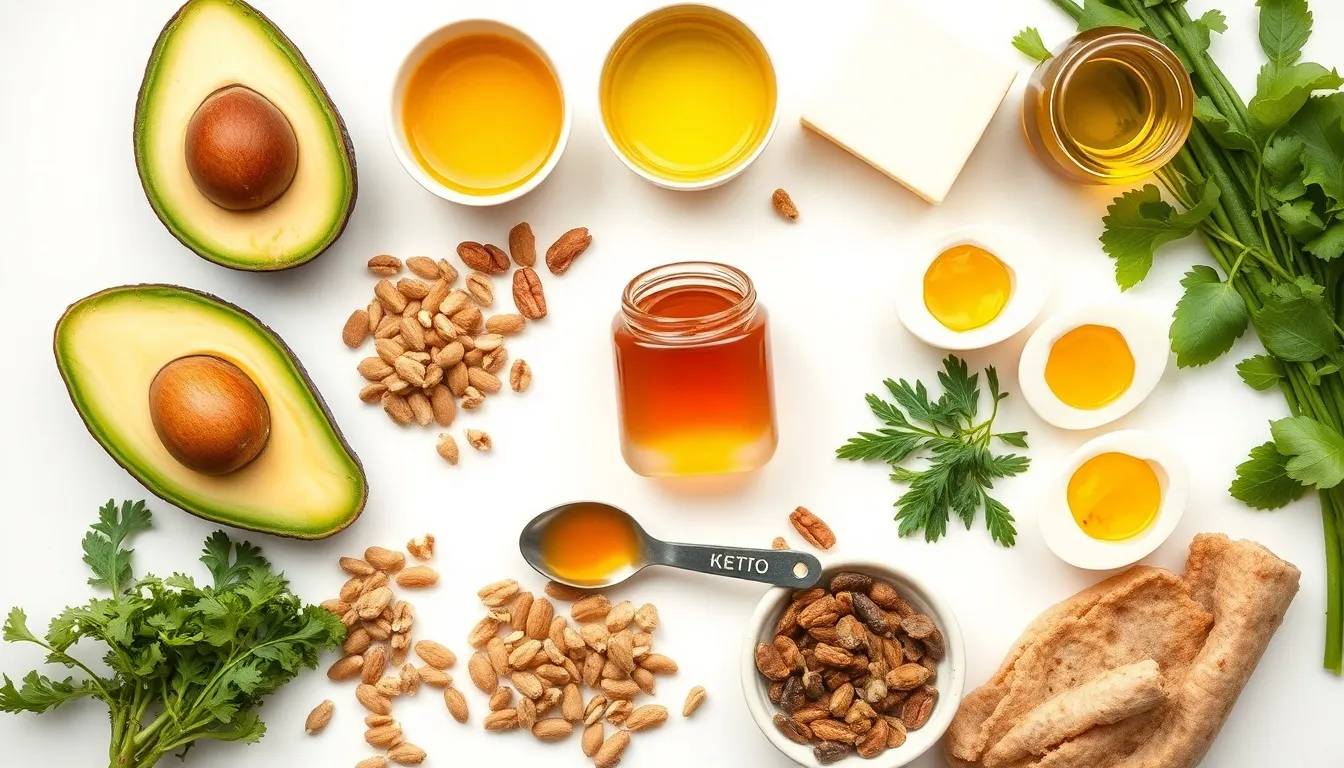
The Short Answer: Honey Is Not Keto-Friendly (But It's Complicated)
If you are following a strict ketogenic diet (20-50g net carbs per day), honey is not keto-friendly by any standard definition. One tablespoon of honey contains approximately 17g of carbohydrates — nearly the entire daily carb budget on strict keto. There is no low-carb version of honey, and no amount of wishing changes the biochemistry.
However, the full picture is more nuanced than a simple yes-or-no. This guide examines exactly how honey affects ketosis, whether tiny amounts can fit within your macros, when the nutritional benefits of honey might outweigh the carb cost, and what the best alternatives are for different situations.
We believe in giving you the science so you can make informed decisions for your specific goals — rather than just labeling foods as "allowed" or "banned." See our honey nutrition facts guide for honey's complete nutritional profile.
Honey's Carb and Sugar Breakdown
Understanding honey's exact composition helps you make informed decisions about whether — and how — to include it in a ketogenic diet.
**Per tablespoon (21g) of raw honey:**
- **Total carbohydrates:** 17.3g (all sugar, zero fiber — so net carbs equal total carbs)
- **Fructose:** ~8.1g (38.2% of honey weight)
- **Glucose:** ~6.5g (31.3% of honey weight)
- **Maltose:** ~1.4g (6.8% of honey weight)
- **Sucrose:** ~0.3g (1.3% of honey weight)
- **Other sugars and oligosaccharides:** ~0.9g
- **Calories:** 64 kcal
- **Glycemic index:** 58 average, but varies by variety — acacia honey has the lowest GI (~32), tupelo is ~45, sage ~48, wildflower 50–65, clover ~69, and buckwheat ~83. Lower than table sugar (65) and significantly lower than glucose (100)
Pro Tip
For comparison: a teaspoon of honey (7g) has about 5.7g of carbs. If you are on strict keto at 20g/day, even a teaspoon represents nearly 30% of your daily carb allowance. On a more liberal low-carb approach (50-100g/day), a teaspoon is far more manageable.
Get the Honey Buyer's Cheat Sheet (free PDF)
16 varieties on one page — color, flavor, best use and what a fair price looks like — from the 268 honeys we track.
How Honey Affects Ketosis
Ketosis occurs when carbohydrate intake is low enough that the body shifts to burning fat for fuel, producing ketone bodies (beta-hydroxybutyrate, acetoacetate, and acetone) as an alternative energy source for the brain and muscles. The threshold for maintaining ketosis varies by individual but is typically 20-50g net carbs per day.
**Honey's glucose component knocks you out of ketosis.** The ~6.5g of glucose per tablespoon is directly absorbed into the bloodstream, triggers insulin release, and suppresses ketone production. This is the primary reason honey is incompatible with strict keto — insulin is the master switch that turns off ketogenesis.
**Honey's fructose component is more nuanced.** Fructose is metabolized primarily in the liver and does not directly stimulate insulin secretion. In theory, fructose has less impact on ketosis than glucose. However, liver fructose metabolism replenishes liver glycogen, and when liver glycogen stores are full, the body reduces fat oxidation and ketone production. So while fructose's effect on ketosis is less immediate than glucose's, it still contributes to exiting ketosis through a different pathway.
**The bottom line:** A full tablespoon of honey will likely disrupt ketosis for most people on strict keto. Whether a small amount (1/2 to 1 teaspoon) disrupts ketosis depends on your individual carb tolerance, activity level, timing, and how metabolically flexible you are.
Can Small Amounts of Honey Fit Keto Macros?
If you are flexible about your approach, here are the scenarios where small amounts of honey might work:
**Targeted Keto Diet (TKD) — most realistic scenario:** TKD allows 25-50g of fast-acting carbs around workouts to fuel high-intensity exercise. A tablespoon of honey before intense training provides 17g of rapid carbs that are used for exercise rather than stored. Many TKD practitioners use honey as a pre-workout specifically because its dual glucose-fructose delivery provides both immediate and sustained energy. Clover honey ($8–15) and wildflower honey ($10–18) are the most practical TKD choices — affordable for regular training use. See our honey for athletes guide.
**Cyclical Keto Diet (CKD):** CKD alternates keto days with 1-2 higher-carb "refeed" days per week. Honey is an excellent refeed carb source because it replenishes glycogen effectively while providing antioxidants and micronutrients that processed carbs lack. During refeed windows, 2-3 tablespoons of honey on yogurt, in tea, or on toast is a clean carb choice.
**Liberal low-carb (50-100g/day):** If your goal is low-carb rather than strict ketosis, a teaspoon of honey in your morning coffee (5.7g carbs) or tea is easily accommodated. You may not maintain deep ketosis at this carb level anyway, so the question shifts from "will this kick me out of ketosis" to "is this a nutritious carb choice" — and honey is one of the most nutrient-dense sugar sources available.
**Strict keto (20g/day):** Not recommended. Even a teaspoon consumes nearly 30% of your daily carb budget with no room for the carbs in vegetables, nuts, and other whole foods that should make up most of your carb allocation.
When Honey Might Be Worth the Carbs
There are specific situations where honey's health benefits may outweigh the ketosis disruption, even on a low-carb diet:
**Acute illness (sore throat, cough):** Honey is as effective as dextromethorphan for cough suppression according to a 2020 BMJ Evidence-Based Medicine systematic review. When you are sick, rigid adherence to keto macros is less important than recovery. Buckwheat honey ($15–25) is the most clinically studied variety for cough relief, with 9x higher antioxidants than lighter honeys. Warm lemon water with honey stirred in is a common approach — see our honey for sore throat guide.
**Sleep support:** If poor sleep is undermining your health goals, a small amount of honey before bed (roughly 5-6g carbs per teaspoon) may be a worthwhile trade-off. Acacia honey ($12–20, GI ~32) is ideal here — its lower glycemic impact means less insulin disruption of sleep cycles while still replenishing liver glycogen via the tryptophan-melatonin pathway. Better sleep improves insulin sensitivity, which actually supports metabolic goals. See our honey before bed guide.
**Wound care:** Topical honey for wound healing has zero impact on ketosis — only ingested honey matters. Medical-grade manuka honey (UMF 15+, $45–80) is FDA-cleared for wound care and is completely keto-compatible when used externally. See our honey wound healing guide.
**Gut health restoration:** If you are experiencing digestive issues on keto (constipation and gut dysbiosis are common side effects), honey's prebiotic oligosaccharides (FOS, GOS) feed beneficial gut bacteria. A teaspoon of wildflower honey ($10–18) provides diverse prebiotic compounds from multiple floral sources — more gut benefit than the carb cost warrants. See our honey and gut health guide.
Keto-Friendly Honey Alternatives
When you want honey flavor without the carbs, these alternatives provide the closest experience:
- **Allulose "honey" (best overall substitute):** Allulose is a rare sugar with ~0.2-0.4 calories per gram and virtually zero glycemic impact. Several brands now sell allulose-based honey alternatives that mimic honey's texture and sweetness with 0-1g net carbs per tablespoon. It browns like honey in baking and dissolves in tea
- **Sugar-free honey-flavored syrups:** Products like ChocZero Honest Syrup or Lakanto sugar-free syrup provide honey-like sweetness with monk fruit or erythritol. Zero net carbs but taste is not identical to real honey
- **Monk fruit sweetener + honey extract:** Some keto products combine monk fruit sweetener with natural honey flavor compounds (minus the sugars). Provides aroma and taste notes of honey with zero carbs
- **Yacon syrup (moderate option):** Made from yacon root, primarily composed of fructooligosaccharides (FOS) which function as prebiotics rather than digestible sugar. About 7g net carbs per tablespoon — lower than honey but not zero-carb. May be suitable for liberal low-carb diets
- **Raw honey in micro-doses:** If no substitute satisfies, 1/4 teaspoon of real honey provides just 1.4g carbs and may be enough to flavor a cup of tea or a recipe without meaningfully impacting ketosis. Sometimes the real thing in tiny amounts beats a large serving of imitation
Pro Tip
No alternative perfectly replicates honey's full nutritional profile — the antioxidants, enzymes, and prebiotics are unique to real honey. Substitutes replicate sweetness and texture but not health benefits. For health applications (cough, wound healing, gut support), real honey is the only evidence-based choice.

Honey vs Other Sweeteners on Keto
How does honey compare to other sweetener options for keto dieters?
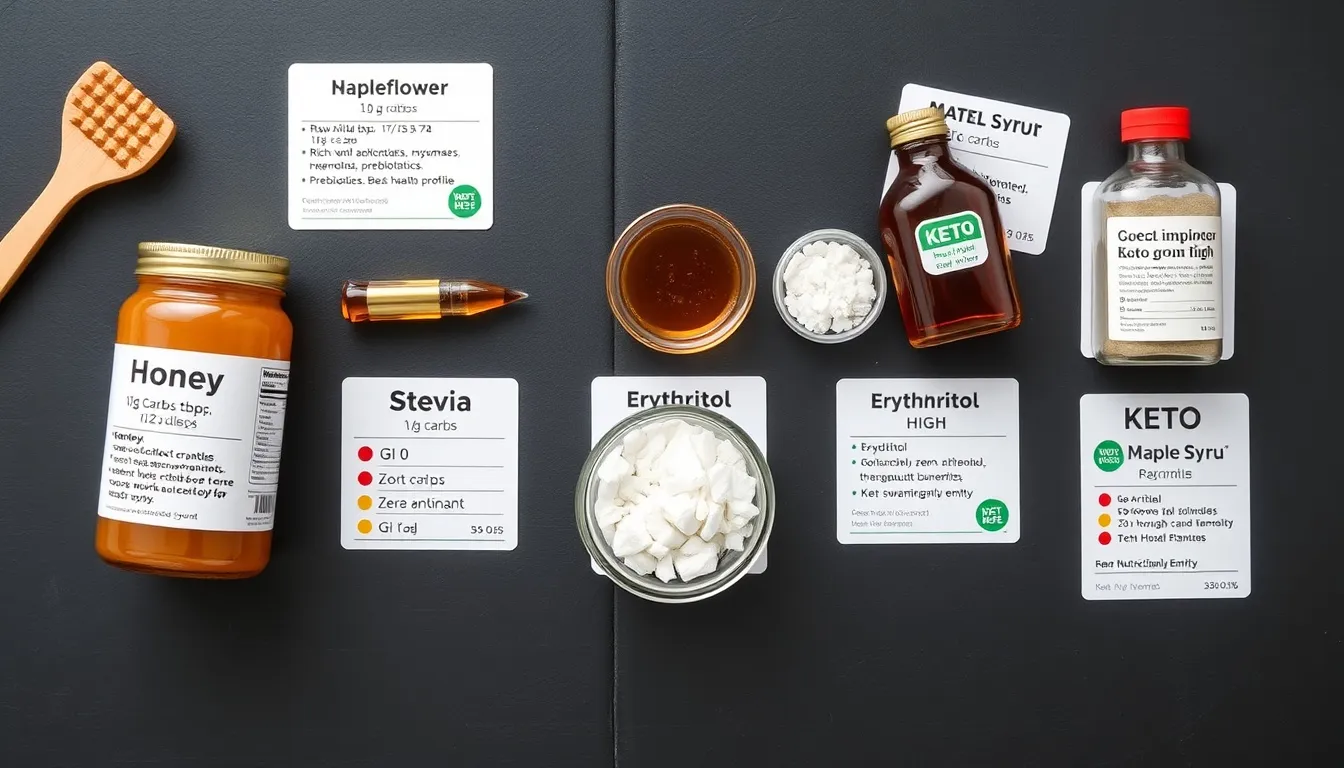
- **Honey vs stevia:** Stevia has zero carbs and zero glycemic impact — far more keto-friendly. But stevia provides none of honey's antioxidants, prebiotics, or therapeutic properties. Stevia is the better choice for strict keto; honey is better for overall health if carbs permit. See our honey vs stevia comparison
- **Honey vs erythritol:** Erythritol has 0 net carbs (it passes through undigested) and is the most popular keto sweetener. It has 70% the sweetness of sugar. No health benefits beyond being low-calorie. Keto-compatible but nutritionally empty
- **Honey vs maple syrup:** Maple syrup has 13g carbs per tablespoon — slightly less than honey's 17g but still far too high for strict keto. Neither is keto-friendly. Honey has more antioxidants and research-backed health benefits. See our honey vs maple syrup comparison
- **Honey vs agave:** Agave has 16g carbs per tablespoon — nearly identical to honey. Its very high fructose content (85%) has been criticized for liver health. Honey is the healthier choice when carbs are equal. See our honey vs agave comparison
- **Honey vs coconut sugar:** Coconut sugar has 12g carbs per tablespoon with a GI of 54 — slightly better numbers than honey but still not keto-friendly. Its main advantage is inulin fiber content, but the carb difference is too small to matter for keto purposes
What Happens If You Eat Honey on Keto
If you accidentally (or intentionally) eat honey while on keto, here is what to expect physiologically:
**Small amount (1 teaspoon, 5.7g carbs):** If you are otherwise at 15-20g carbs for the day, this may or may not disrupt ketosis depending on your individual tolerance. Some metabolically flexible people on established keto diets can tolerate up to 30-40g carbs and maintain mild ketosis. Monitor with ketone strips or a blood ketone meter if you want data.
**Moderate amount (1 tablespoon, 17g carbs):** This will likely pause ketone production for 2-4 hours as insulin rises to clear the glucose. Ketosis typically resumes within 6-12 hours if you return to keto eating. One tablespoon will not undo weeks of keto-adaptation — your metabolic flexibility is preserved.
**Larger amount (2+ tablespoons, 34+ carbs):** This may knock you out of ketosis for 12-24 hours. If you are deeply keto-adapted (8+ weeks), you will return to ketosis faster than someone who is newly adapted. Glycogen depletion through exercise accelerates the return.
The key insight: occasional honey consumption does not "ruin" keto or require starting over. Metabolic flexibility means your body can switch back to fat-burning efficiently. Rigid perfectionism about ketosis is counterproductive — the stress of dietary anxiety may harm your health more than a tablespoon of honey.
The Health Argument Against Strict Keto + Zero Honey
Some nutrition researchers argue that completely eliminating nutrient-dense whole foods like honey from your diet may not serve long-term health, even on a ketogenic diet.
Honey provides compounds difficult to obtain from other keto-friendly foods: prebiotic oligosaccharides (FOS, GOS) that feed beneficial gut bacteria, 30+ polyphenol antioxidants including quercetin and kaempferol, active enzymes (glucose oxidase, diastase), and trace minerals in a bioavailable matrix. Dark varieties like buckwheat (ORAC 16,000+) and chestnut honey ($20–35) deliver 3-5x more minerals and antioxidants per teaspoon than lighter honeys. Long-term keto without prebiotic foods can reduce gut bacterial diversity — a pattern linked to inflammation and metabolic dysfunction.
The 2022 Nutrition Reviews meta-analysis of 18 RCTs found that honey consumption reduced inflammatory markers, LDL cholesterol, triglycerides, and fasting blood glucose. These are the same metabolic markers that keto dieters aim to improve. The question becomes: does a small amount of honey help or hinder your overall metabolic goals?
For many people, the answer is that strict elimination of all sugar — including nutrient-dense sources like honey — is unnecessary. A teaspoon of honey in your morning coffee or tea adds 5.7g of carbs but may provide anti-inflammatory and gut health benefits that support the metabolic improvements keto aims to achieve.
Practical Recommendations by Keto Type
Here is our summary guidance based on your specific approach:
- **Strict/therapeutic keto (20g/day, for epilepsy or medical reasons):** Avoid honey. The carb cost is too high relative to your very limited budget. Use zero-carb sweeteners if needed. Topical honey for wound care is fine
- **Standard nutritional keto (20-30g/day):** Occasional honey in small amounts (1/2-1 teaspoon) for therapeutic purposes (cough, sleep) when the benefit clearly outweighs the carb cost. Not recommended as a daily sweetener
- **Moderate keto (30-50g/day):** A teaspoon of honey daily is feasible if you plan your other carbs around it. Choose acacia honey (GI ~32) or tupelo honey (GI ~45) to minimize glycemic impact. Prioritize the honey in your tea or before bed, when the benefits are most targeted
- **Targeted keto (TKD):** 1 tablespoon of honey before intense exercise is an excellent pre-workout fuel. The carbs are used for training, not stored
- **Cyclical keto (CKD):** Include honey freely on refeed days as a clean, nutrient-dense carb source. It is one of the best refeed options available
- **Liberal low-carb (50-100g/day):** Honey fits comfortably within this carb budget. Wildflower honey ($10–18) offers the best value for daily use, while buckwheat honey ($15–25) maximizes antioxidant return per carb spent. This is the sweet spot where you get both the metabolic benefits of carb restriction and the health benefits of honey