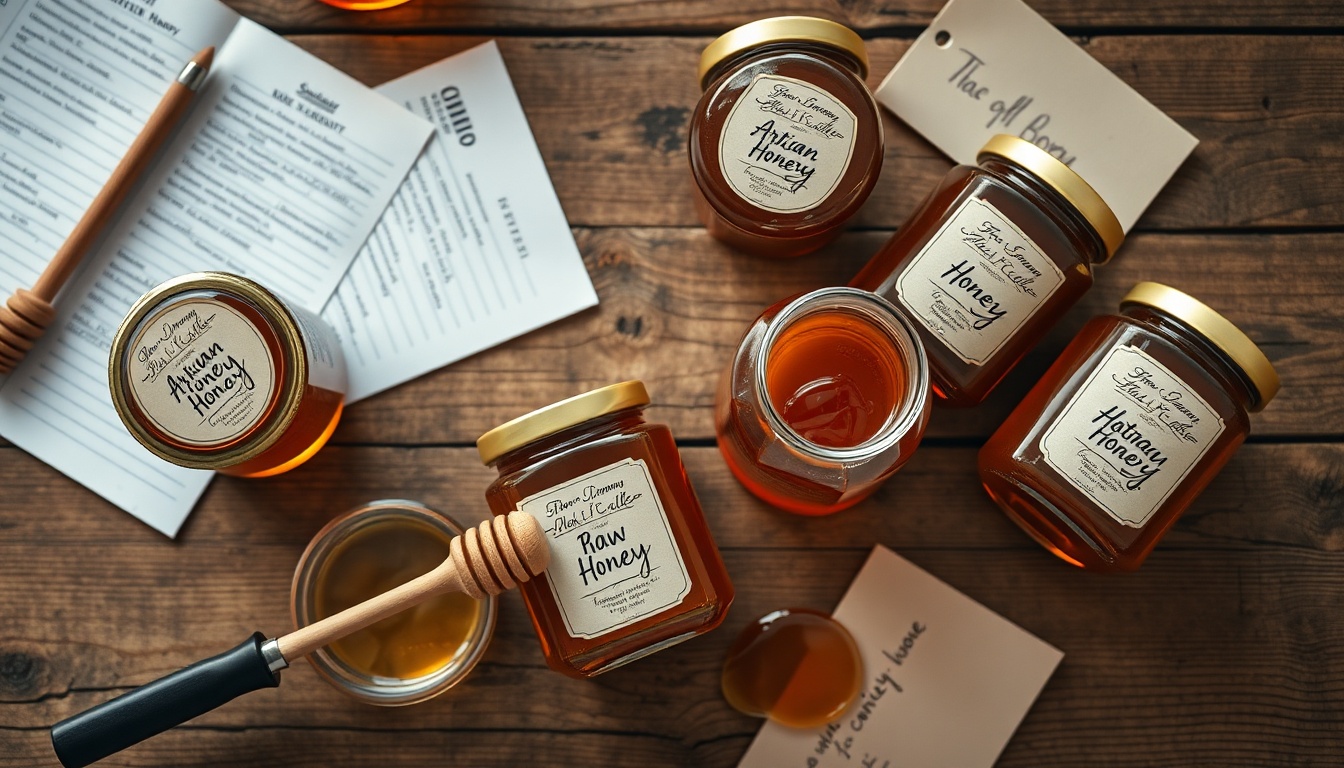
Why Oman Honey Is Exceptional
Oman holds an unusual distinction: it may be the only country on Earth where a buyer can choose between three globally rare honey types under one national label. The Hajar mountain range in the north produces Sidr honey from Ziziphus spina-christi trees growing in limestone wadi floors — the same species that generates Yemen's most expensive Wadi Doan Sidr, but from a distinct Omani microclimate with different mineral-rich soils. The southern Dhofar governorate, where the annual khareef monsoon transforms the landscape into a green highland from June to September, hosts wild Boswellia sacra (frankincense) forests that bloom briefly and yield a resinous-sweet honey available almost nowhere else on the planet. And in the wadis between, beekeepers and wild honey hunters still collect from Apis florea cliff hives using techniques documented for over a millennium.
What unites these three categories is scarcity. Total Omani honey production is estimated at 250–350 tonnes per year — less than 0.02% of global output — against domestic demand that absorbs most of it before export is considered. Premium Sidr is sold as a prestige good at specialist Muscat vendors. No dated per-kilogram price is cited here. Understanding what drives that premium, and how to distinguish authentic from adulterated product, is the purpose of this guide.
Sidr Honey: The Hajar Mountain Wadis
Ziziphus spina-christi — the Christ's thorn jujube, known in Arabic as sidr — grows as a drought-adapted tree along the seasonal riverbeds (wadis) of the Hajar Ash-Sharqi and Hajar Al-Gharbi mountain ranges. The trees typically bloom in October and November after the first cold nights of autumn, with each wadi system acting as a micro-channel concentrating the bloom window to 3–5 weeks. Beekeepers migrate hives from interior Oman northward to position colonies near flowering Sidr stands, a form of nomadic beekeeping (naql al-nahl) practiced for centuries.
Fresh Omani Sidr honey is dark amber to reddish-brown, with a thick, almost pasty texture at temperatures below 25°C. The flavor profile is characteristically deep — dates, dried fig, and a faint medicinal resin — with lower moisture content (typically 15–17%) than European floral honeys. High diastase activity (>20 Schade units) and low HMF (<10 mg/kg when fresh) are quality markers routinely cited in Omani market appraisals; adulterated product typically fails both thresholds after blending with sugar syrup.
Melissopalynological analysis (pollen identification under microscope) is the gold standard for verifying floral origin. Authentic monofloral Omani Sidr requires ≥30–40% Ziziphus pollen by count. The challenge is that Sidr trees bloom contemporaneously with ghaf (Prosopis cineraria) and some Acacia species in the same wadis, meaning completely pure single-source Sidr is rare even in honest product. The regional label "Mountain Sidr" (Sidr Al-Jabal) carries a premium over "Valley Sidr" (Sidr Al-Wadi), reflecting both altitude and the greater isolation of high-wadi bloom sites from other floral sources.
- Hajar Ash-Sharqi system: Al-Mudaybi, Sur, and Wadi Bani Khalid areas
- Hajar Al-Gharbi: Nizwa, Jebel Akhdar, and Wadi Al-Hoqain
- Peak bloom: October–November (cooler nights trigger flowering)
- Authentication: ≥30% Ziziphus pollen; diastase >20; HMF <20 mg/kg
Pro Tip
When evaluating Omani Sidr, texture tells you more than the label. Authentic mountain Sidr at room temperature (25°C) should be thick enough to hold a slow ribbon for 8–10 seconds when poured from a spoon — comparable to set-stage heather honey from Scotland. Runny product with ordinary floral sweetness is almost certainly blended.
Get the Honey Buyer's Cheat Sheet (free PDF)
16 varieties on one page — color, flavor, best use and what a fair price looks like — from the 304 honeys we track.
Frankincense Blossom Honey: A Near-Global Monopoly
Boswellia sacra — the frankincense tree — grows naturally in only three places on Earth: the Dhofar mountains of southern Oman, the adjacent Mahra region of eastern Yemen, and the island of Socotra. The Omani population in the Dhofar hills around Salalah is the largest and most accessible, and local beekeepers position hives in the frankincense woodland during the short flowering window in March and April, before the khareef monsoon arrives in June.
Frankincense-blossom honey is pale gold to light amber, with a flavor the aromatic chemistry explains: Boswellia sacra flowers produce small quantities of terpenoid volatiles as nectar-adjacent exudates, and trace amounts carry through into the honey. Tasters describe it as floral-resinous, slightly lemony, with a clean finish that lacks the heavy date-molasses note of Sidr. It is less viscous than Sidr, granulates more readily (2–4 months at room temperature), and sells for less than Sidr. No dated price is cited.
The khareef season itself — a localized Indian Ocean monsoon that delivers June-to-September drizzle to Dhofar while the rest of Oman bakes at 40°C+ — is ecologically significant for honey. Bees in Dhofar build stronger colonies during the cool humid monsoon than elsewhere in Arabia. After the khareef ends in September, they are well-placed to forage the post-monsoon bloom of several endemic Dhofar flora, yielding the multi-flora wildflower honey labeled "Dhofar honey" that carries notes of Boswellia, wild sage, and coastal shrubs.
- Boswellia sacra natural range: Dhofar (Oman), Mahra (Yemen), Socotra island
- Flowering window: March–April (before khareef monsoon)
- Flavor: Pale gold, floral-resinous, slight citrus, lighter than Sidr
- Granulation: Fine crystals form in 2–4 months
- Post-monsoon "Dhofar wildflower" follows the khareef bloom (October)
Pro Tip
Frankincense-blossom honey is arguably the most terroir-locked honey in the world — there is simply no other commercial-scale Boswellia sacra forest with managed apiaries. If a jar labeled "frankincense honey" outside Oman does not reference a direct Dhofar source, it is almost certainly mislabeled or flavored with frankincense resin added to plain honey.
Ghaf Honey and Interior Desert Varieties
Away from the coastal mountains and Dhofar highlands, the arid interior of Oman — the Hajar piedmont, the Sharqiyah Sands approaches, and the Al-Batinah coastal plain — is dominated by ghaf trees (Prosopis cineraria), locally called the "tree of life" for its ability to persist in hyperarid soils where little else survives. Ghaf flowers in spring (February–April) with small yellow catkins that attract Apis mellifera jemenitica colonies positioned nearby for the Sidr season just months earlier.
Ghaf honey is lighter than Sidr — typically golden yellow to medium amber — with a mild, sweet-herbaceous character and lower viscosity. It crystallizes slowly (4–8 months) to a fine-grained cream honey. It is the Omani variety most often sold for everyday use. No dated price is cited. In interior Oman, ghaf honey is the daily table honey; Sidr is reserved for gifting, medicinal use, or special occasions.
A secondary interior variety is tamarisk honey (tarfa, Tamarix aphylla), from the salt-tolerant tamarisk trees that colonize wadi edges. Tamarisk honey has a distinctive slightly mineral-salty character from the high sodium content of wadi substrates. It is rarely labeled as monofloral in the market — usually sold as part of wadi wildflower blends — but knowledgeable buyers seek it for its unique mineral profile.
- Ghaf (Prosopis cineraria): Pale gold, mild-sweet
- Tamarisk (Tamarix aphylla): Mineral-salty character, wadi wildflower blends
- Acacia tortilis (samr): Part of interior wadi honey mixes
- Spring bloom: February–April across interior Oman
- Crystallization: Slow (4–8 months), fine grain texture
Wild Cliff Honey: Al Kharja and the Apis florea Tradition
Oman is one of the few countries where the traditional practice of collecting honey from wild Apis florea colonies on cliff faces (Al Kharja — literally "the exit," referring to the cut made in the rock overhang to access the comb) persists alongside modern apiary management. Apis florea — the red dwarf honey bee — is native to South and Southeast Asia and the Arabian Peninsula, and in Oman it builds small single-comb nests on rock overhangs, tree branches, or cliff ledges, typically 1–5 meters above the wadi floor.
Wild Apis florea honey is biochemically distinctive. Because A. florea forages a different height range and preferred plant species than Apis mellifera (which tends toward taller trees and more distant blooms), A. florea honey reflects a hyper-local foraging radius — sometimes under 100 meters from the hive site. The resulting honey is typically lighter in color, higher in moisture (18–22%), and has a more delicate, almost candy-like sweetness that lacks the resinous depth of managed Sidr. Medicinal traditions in Oman rate it highly for digestive complaints.
The murid technique for collecting wild cliff honey involves smoke, woven grass platforms, and practiced quickness in cutting the single comb from the rock surface without destroying the colony structure. Unlike A. mellifera hive management — where the colony can be inspected, frames removed and replaced — A. florea collection is strictly extractive: the comb is cut and the colony rebuilds at the same site across seasons. Quantities collected per site are small (200–500 grams per seasonal harvest), making wild A. florea honey among the most volume-constrained Omani products.
- Apis florea nest: Single open comb on cliff/branch, 1–5 m elevation
- Honey color: Light golden, high moisture (18–22%)
- Flavor: Delicate, candy-sweet, floral without resinous notes
- Traditional murid collection: Smoke + grass platform, seasonal harvest
- Yield per site: 200–500 g per season — extremely limited supply
- Verification: Pollen profile is hyper-local; moisture >18% is typical
Pro Tip
Wild A. florea honey should not be confused with commercial A. florea honey from South Asia (Bangladesh, India, Thailand) where the bee is managed at scale and honey is often heated for processing. Authentic Omani wild-collected A. florea honey is rare and expensive, and sellers will typically name the specific wadi site.
Bee Biodiversity: Arabian Subspecies and Stingless Bees
The managed honey bee in Oman is Apis mellifera jemenitica (also classified in some literature as A. m. yemenitica), the Arabian honey bee. It is a small, dark, heat-tolerant subspecies adapted to surviving extended periods with little forage — capable of reducing colony size and metabolic activity during summer dearth. Its defensive behavior is notably higher than European subspecies, which makes beekeeping in Oman a skill-intensive profession: experienced beekeepers use heavier veils and more smoke, and work hives in the cooler hours of early morning.
The introduction of European Apis mellifera subspecies (particularly A. m. ligustica from Italy and A. m. carnica from the Balkans) by some commercial operators has been a source of regional debate. Hybridization pressure on A. m. jemenitica is documented, and Omani beekeeping associations have lobbied for restrictions on imports to protect the native gene pool. The Ministry of Agriculture and Fisheries has periodically issued guidance on managing imported hive stock.
Two genera of stingless bees (Meliponini) are present in coastal Dhofar and mountain areas, producing small quantities of very acidic, low-viscosity honey. Stingless bee honey (sometimes called "propolis honey" by local vendors for its high propolis content and strongly resinous taste) is collected from clay pot hives and rock crevice colonies, and commands a considerable premium in local markets. It is essentially unavailable for export in any significant quantity.
- Apis mellifera jemenitica: Native Arabian subspecies, heat-tolerant, more defensive
- Apis florea: Dwarf bee, wild cliff and bush colonies, distinctive lighter honey
- Stingless bees (Meliponini): Coastal Dhofar, highly acidic honey, very limited supply
- Import pressure: European subspecies hybridization documented, policy debate ongoing
Omani Honey Standards and Authenticity
Oman's national honey standard is OSMA OS 1038, administered by the Omani Standards and Metrology Authority (OSMA). It sets parameters for moisture (<21% for raw honey), HMF (<40 mg/kg for general honey, <80 mg/kg for honey from tropical regions), diastase activity (>8 Schade units), ash content, and electrical conductivity. The GCC Standardization Organization (GSO) standard GSO 147 applies across all Gulf Cooperation Council member states and harmonizes basic parameters at a regional level.
Formal Protected Designation of Origin (PDO) equivalent certification does not yet exist for Omani honey at the international level — unlike the EU's PDO system, which protects Greek thyme honey or Slovenian acacia honey. This gap means that "Omani Sidr" labeling on products sold outside Oman carries no legally verifiable geographic guarantee.
Adulteration studies on Gulf honey markets consistently identify 30–50% of products labeled as Sidr honey (Yemeni or Omani) as adulterated with sugar syrups, lower-grade honey, or artificially flavored blends. The diagnostic markers for adulteration include: C4 sugar isotope ratios by IRMS (detects corn/cane syrup addition at >7%), oligosaccharide profiles by HPLC (beet sugar addition leaves a distinctive fructooligosaccharide fingerprint), and pollen count (heavily filtered honey loses authenticity markers). Buyers at premium price points should request laboratory certificates from OSMA-approved labs or equivalent.
- OSMA OS 1038: National standard — moisture <21%, HMF <40 mg/kg, diastase >8
- GCC GSO 147: Regional harmonized standard across Saudi Arabia, UAE, Kuwait, Oman, Qatar, Bahrain
- No international PDO equivalent for "Omani Sidr" labeling
- Adulteration detection: IRMS C4 ratio, HPLC oligosaccharides, pollen count
- Request a lab certificate when the jar is sold as premium Sidr
Pro Tip
The single most reliable authenticity indicator available without laboratory access is crystallization behavior. Authentic Omani Sidr should begin showing fine-grain crystallization at the jar bottom within 3–6 months at 20°C. Honey that remains perfectly liquid after 12 months at room temperature is almost certainly adulterated with inverted sugar or high-fructose syrup, both of which inhibit crystallization.
Market Structure and How to Source Authentic Omani Honey
The Omani honey market is organized around direct-beekeeper sales, specialty honey shops in Muscat's commercial district and the Nizwa souk, and informal wadi-side sales during the Sidr season. The national brand landscape is thin — Oman lacks the equivalent of New Zealand's Comvita for Manuka — and most premium Sidr reaches buyers through personal referrals, tribal networks, or trusted souk vendors. Export volume is minimal: a small number of companies export limited quantities of premium Sidr to UAE, Kuwait, and the UK, typically in branded 250 g and 500 g glass jars.
International online availability is sparse. Some specialty Gulf food importers in the UK and Germany list authentic Omani Sidr, but volumes are small and provenance verification is buyer-dependent. The premium price range (for authenticated mountain Sidr) makes misrepresented product economically attractive to produce, so the economics favor caution at every point in the supply chain outside Oman itself.
The most reliable sourcing path for international buyers is through the Oman Beekeepers Association (active since the 2010s) or through direct contact with wadi-region producers. Visiting Oman during the Sidr season (October–November) allows direct market purchase in Nizwa, Ibra, and Sur — cities at the northern edge of the main Sidr wadi systems. The Nizwa souk honey section, open year-round, consistently has the widest selection of authenticated Sidr from named producers.
- Best in-country buying: Nizwa souk, Muscat specialty honey shops, Ibra market (Oct–Nov)
- Season to visit for fresh Sidr: October–November
- Ghaf honey: — most accessible authentic Omani variety
- Frankincense blossom honey: — Dhofar source required
- Mountain Sidr: — lab certificate recommended
- Oman Beekeepers Association: Contact point for registered producer lists