Light Honey vs Dark Honey
A detailed comparison to help you choose the right honey for your needs.
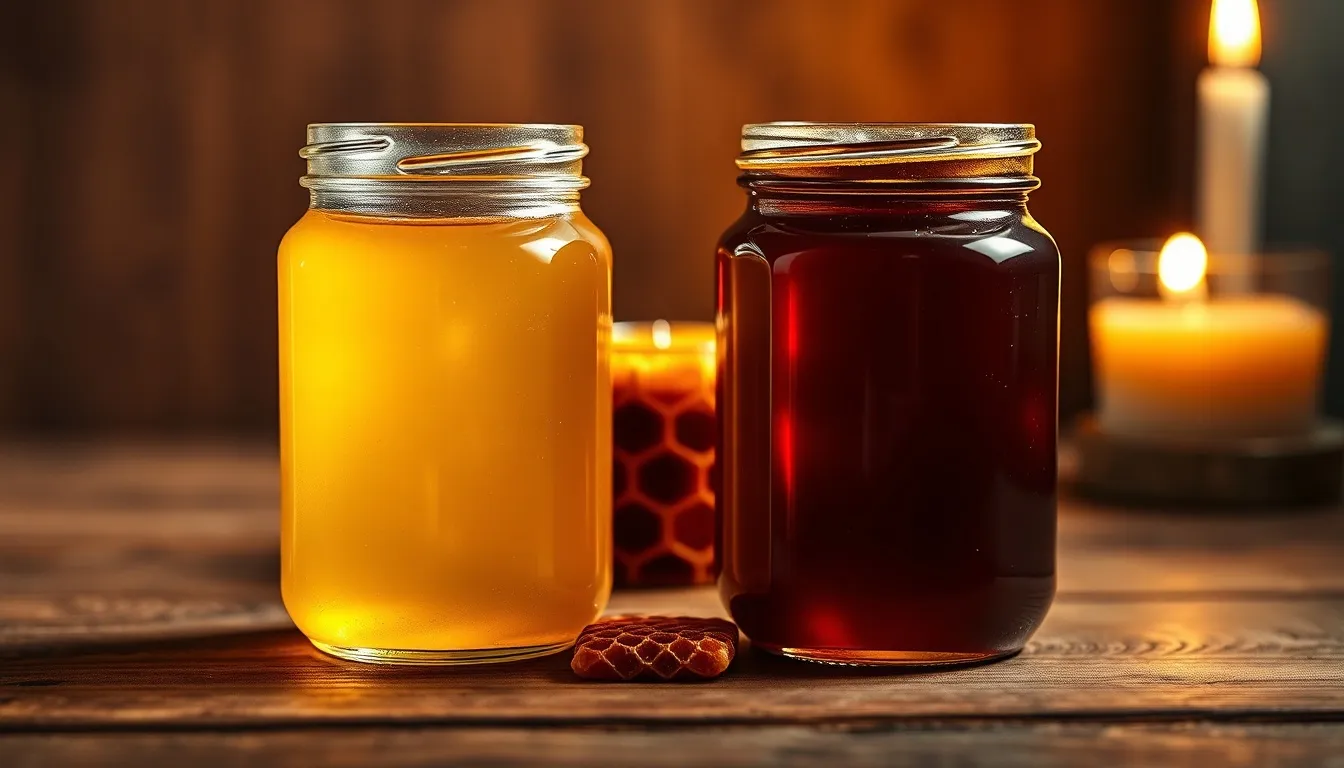
Quick Answer
Light honeys offer mild, approachable flavors ideal for everyday sweetening and delicate dishes. Dark honeys pack stronger flavors and significantly higher antioxidant levels, making them better for health-conscious consumers and bold culinary applications. The darker the honey, the more nutrient-dense it tends to be.
At a Glance
Light Honey
Mild, delicate, gently floral
Tea, light cooking, desserts, everyday use
$6-$20 per jar
Worldwide (clover, acacia, orange blossom)
Dark Honey
Bold, robust, complex
Health benefits, strong pairings, marinades
$8-$25 per jar
Worldwide (buckwheat, manuka, chestnut)
Head-to-Head
Flavor Comparison
Light honeys like clover, acacia, and orange blossom share a common trait: gentle sweetness that does not overwhelm.
They range from nearly tasteless (acacia) to mildly floral (clover) to subtly aromatic (orange blossom). Their restraint makes them versatile and widely liked. Light honeys are the safe choice when you want sweetness without strong honey character. Dark honeys tell a completely different story. Buckwheat delivers intense malty, molasses-like depth. Chestnut honey offers bitter, earthy complexity. Forest honeydew honey tastes woodsy and mineral-rich. Manuka brings herbal earthiness. These are honeys with opinions, and they demand attention in whatever they touch. The intensity spectrum within dark honeys is itself wide, from moderately robust avocado honey to the near-black intensity of buckwheat.
Nutrition Comparison
Research has conclusively established that darker honeys contain significantly more antioxidants, minerals, and bioactive compounds than lighter varieties.
A landmark University of Illinois study found that dark honeys like buckwheat had antioxidant levels comparable to many fruits and vegetables, while light honeys like clover had much lower concentrations. This correlation between color and nutritional density is consistent across studies. Dark honeys also tend to have higher mineral content, particularly iron, copper, and manganese. The difference is substantial enough that choosing dark over light honey is one of the simplest dietary upgrades you can make if you eat honey regularly. Both light and dark honeys provide roughly the same calories and basic sugar composition.
Best Use Cases
Light honeys excel at subtle sweetening tasks: stirring into tea, drizzling over fresh fruit, sweetening yogurt, baking delicate cakes and pastries, and making light vinaigrettes and glazes.
They work best when honey should complement rather than dominate. Dark honeys shine in bold applications: barbecue sauces, dark bread spreads, strong cheese pairings, robust marinades, and gingerbread. They are the medicinal honey of choice, with higher antioxidant content making them better for health-focused consumption. Dark honeys also pair exceptionally well with strong flavors like aged cheddar, blue cheese, and cured meats.
Price Comparison
Prices for both categories vary widely depending on variety and origin.
Common light honeys like clover range from $6 to $15, while premium light honeys like acacia cost $12 to $25. Dark honeys typically range from $8 to $25, with premium varieties like manuka commanding significantly more. Dollar for dollar, dark honeys generally offer more nutritional value.
Our Verdict
Both light and dark honeys have their place, and the best choice depends on your priorities. For health benefits and nutritional density, dark honeys are objectively superior with their higher antioxidant, mineral, and bioactive compound content. For versatile kitchen use and crowd-pleasing sweetness, light honeys are more practical and widely enjoyed. Ideally, keep one of each type: a light honey for everyday cooking and a dark honey for health-focused eating and bold flavor applications.
Frequently Asked Questions
Is darker honey always healthier?
What makes honey dark?
Can I use dark honey in baking?
Which dark honey has the highest antioxidant content?
Can light honey still be nutritious if it has fewer antioxidants?
How much higher are dark honey's mineral levels compared to light honey?
Best Honey For...
More Honey Comparisons
View allRelated Guides
Raw Honey vs Regular
Processing, nutrition, and how to choose.
Read GuideCreamed Honey Guide
What creamed honey is, the Dyce method, best varieties, and buying tips.
Read GuideWhat Honey Should I Buy?
Personalized quiz to find your perfect honey.
Read GuideRelated Articles
Types of Honey: A Complete Guide to 20+ Varieties
Guide to 20+ honey varieties — clover, manuka, buckwheat, wildflower, and more. How floral source affects flavor and use.
Read ArticleRaw Honey vs Regular Honey: What's Actually Different?
Raw vs regular honey: compare nutrition, enzymes, antioxidants, processing methods, and which one is better for your health.
Read ArticleHeather Honey Benefits: Why This Scottish Classic Is Worth the Premium
Heather honey benefits: exceptionally high antioxidants, unique thixotropic gel texture, and bold, complex flavor profile.
Read Article