Manuka Honey vs Acacia Honey
A detailed comparison to help you choose the right honey for your needs.
Quick Answer
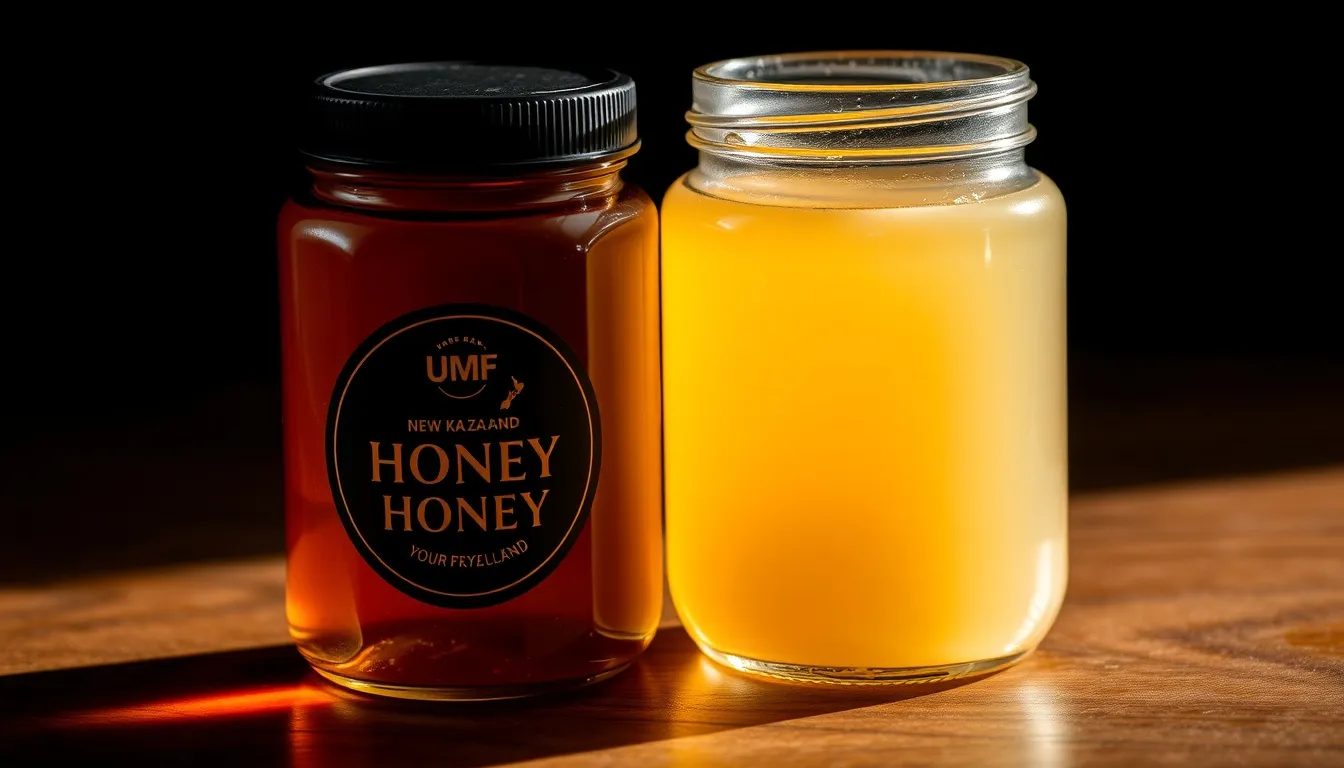
Manuka and acacia honey sit at opposite ends of the honey spectrum. Manuka is the medicinal powerhouse with bold, earthy flavor and premium pricing backed by clinical research. Acacia is the elegant minimalist—crystal clear, delicately sweet, and perfect for applications where you want sweetness without competing flavors. Choose manuka for health benefits, acacia for culinary finesse.
At a Glance
Manuka Honey
Rich, earthy, slightly bitter with herbal notes
Medicinal use, wound healing, immune support
$30-$80 per jar
New Zealand
Acacia Honey
Mild, delicate, vanilla-like sweetness
Sweetening without flavor change, drizzling, cocktails
$10-$25 per jar
Hungary, Italy, Romania, China
Head-to-Head
Flavor Comparison
Manuka honey is dense and assertive.
Its flavor is earthy and herbal with a slight bitterness that distinguishes it from sweeter varieties. Higher UMF-rated manuka honeys can taste almost medicinal, with notes of damp earth and eucalyptus. It is a honey that demands respect rather than casual enjoyment—complex and serious. Acacia honey could not be more different. It is one of the lightest, most delicate honeys in the world—nearly transparent with a gentle, vanilla-accented sweetness. There is no bitterness, no assertiveness, just pure, clean sweetness with a whisper of floral character. Acacia is the honey for people who want sweetness to enhance rather than announce itself.
Nutrition Comparison
Manuka honey is the most clinically researched honey variety.
Its unique methylglyoxal (MGO) content provides antibacterial activity not found in other honeys. UMF-rated manuka has documented wound healing, digestive health, and oral health benefits. It is one of the few honeys that can justify its medicinal reputation with peer-reviewed science. Acacia honey has a notably high fructose content, giving it a lower glycemic index than most honeys. It is slow to crystallize and is sometimes preferred by people managing blood sugar. Its antioxidant content is lower than darker honeys but still present. Both provide standard enzymes and trace nutrients when consumed raw.
Best Use Cases
Manuka honey is often taken as a daily spoonful for general wellness; skin conditions and digestive complaints should be directed by a healthcare provider rather than self-treated with honey.
In the kitchen, it works in robust applications where its strong flavor is a feature: dark marinades, health tonics, and hearty grain bowls. Acacia honey is the ultimate culinary honey. Use it to sweeten drinks without changing their flavor, drizzle it over delicate desserts, or add it to cocktails. It is perfect for cheese plates with mild soft cheeses, and its liquid consistency makes it ideal for drizzling applications.
Price Comparison
Manuka honey is among the most expensive varieties at $30 to $80 per jar, with high UMF ratings pushing prices even higher.
The cost reflects rigorous testing, limited supply, and documented medicinal value. Acacia honey is mid-range at $10 to $25, offering excellent value for a premium specialty honey. The price difference is substantial—manuka costs three to six times as much.
Our Verdict
These honeys serve completely different purposes. Manuka is an investment in health—its clinical backing for antibacterial and healing properties justifies the premium for those seeking medicinal benefits. Acacia is an investment in culinary pleasure—its crystalline purity and gentle sweetness make it the most elegant everyday honey available. A well-stocked kitchen has room for both: manuka in the medicine cabinet and acacia on the breakfast table.
Frequently Asked Questions
Can acacia honey replace manuka for health benefits?
Why is acacia honey so clear and slow to crystallize?
How do I verify manuka honey is genuine?
Which has a lower glycemic index: manuka or acacia?
Which crystallizes faster: manuka or acacia?
Which honey is better for cooking?
Best Honey For...
More Honey Comparisons
View allRelated Guides
Health Benefits
Nutritional and therapeutic benefits of honey.
Read GuideHoney for Sore Throat
Evidence-based sore throat relief.
Read GuideQuality & Grading
Identify quality honey and spot fakes.
Read GuideRelated Articles
Manuka Honey Benefits: 10 Science-Backed Uses Worth Knowing
10 evidence-based manuka honey benefits — wounds, sore throats, gut health, and skin care. Which UMF/MGO grade to buy.
Read ArticleManuka Honey Grading Systems Explained: UMF vs MGO vs KFactor
UMF vs MGO vs KFactor — manuka honey ratings decoded. Learn what the numbers mean and how to choose authentic manuka.
Read ArticleHoney for Wound Healing: The Science Behind Nature's Bandage
Medical-grade honey dressings are used in clinical wound care — evidence, best types, Medihoney, and what the research shows.
Read ArticleHoney for Eye Health: Benefits, Risks, and What Science Says
Can honey benefit eye health? Evidence on antimicrobial and anti-inflammatory properties for dry eyes and conjunctivitis.
Read ArticleRaw Honey vs Manuka Honey: Which Should You Buy?
Raw honey vs manuka honey: compare price, antibacterial strength, taste, and best uses. Is manuka worth the premium?
Read Article