Honey for Burns: Safe First Aid & Evidence-Based Treatment
A 2015 Cochrane review of 26 clinical trials found honey heals partial-thickness burns faster than conventional treatments. Learn which burns honey can treat, how to apply it properly, and what the medical evidence says.
Last updated:
Yes — a 2015 Cochrane review (Jull et al., 26 RCTs) found honey heals partial-thickness burns an average of 4.68 days faster than silver sulfadiazine, with one-third the infection rate (RR 0.34). Use medical-grade honey (Medihoney) or Manuka UMF 10+ (MGO 263+) for best results. Only treat first-degree and small second-degree burns (under 3 inches) at home — larger, deeper, or facial burns need emergency medical care. Never apply honey to burns on infants under 12 months.
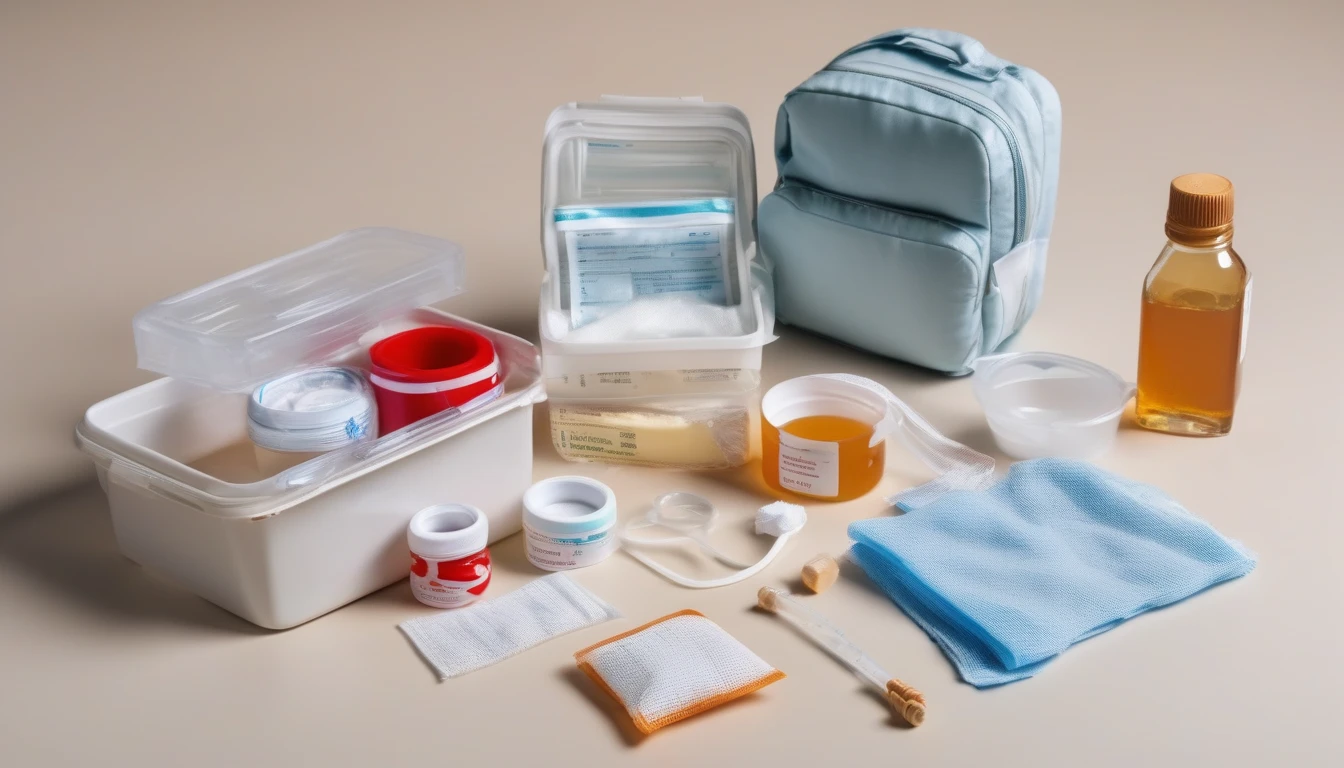
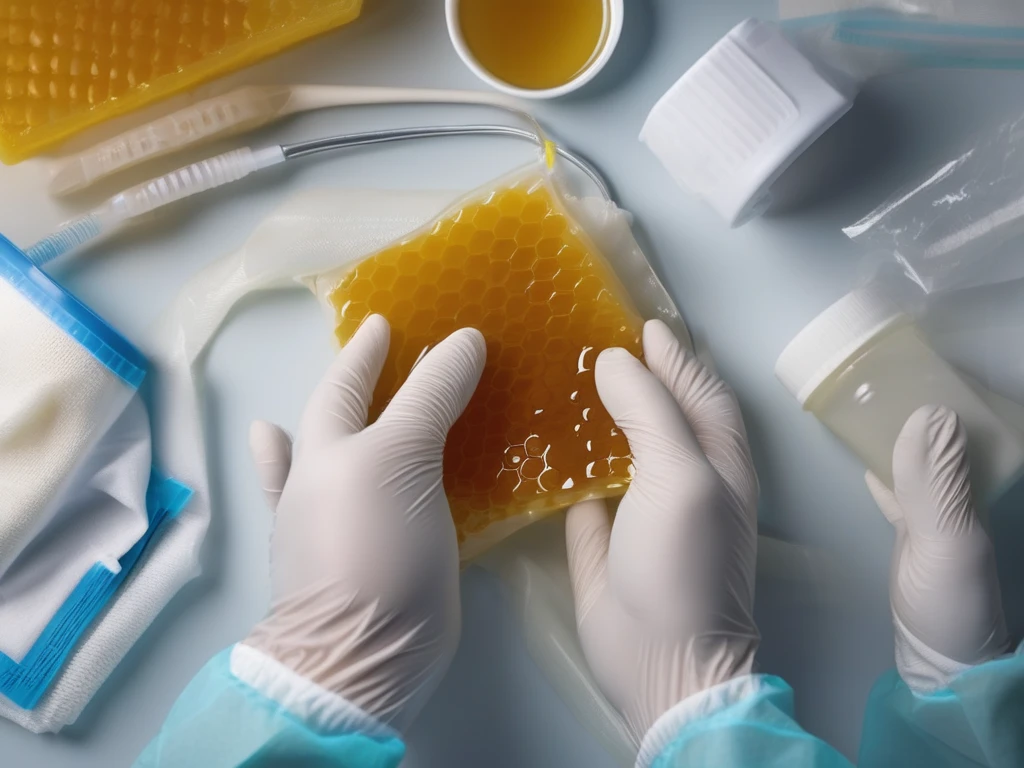
Why Does Honey Work on Burns?
Honey has been used to treat burns for over 4,000 years, from ancient Egyptian and Ayurvedic medicine to modern hospital burn units. Contemporary research has identified several mechanisms that make honey uniquely effective for burn care. First, honey creates a moist wound environment that is now considered the gold standard for burn healing — it prevents the wound from drying out, reduces tissue death, and allows new skin cells to migrate across the wound bed more easily. Second, honey's high osmolarity (approximately 80% sugars) draws excess fluid and inflammatory exudate away from the burn site, reducing edema and swelling. Third, the enzyme glucose oxidase produces continuous low levels of hydrogen peroxide when honey contacts wound fluid, providing sustained antimicrobial activity without the tissue-damaging concentrations of direct antiseptic application. A landmark 2015 Cochrane systematic review (Jull et al.) analyzed 26 randomized controlled trials and found that honey healed partial-thickness (second-degree) burns an average of 4 to 5 days faster than conventional dressings including silver sulfadiazine, the previous standard of care. Honey also reduces pain during dressing changes because it does not adhere to the wound bed like traditional gauze, and its anti-inflammatory properties lower pain signals at the burn site. Its acidic pH (3.2 to 4.5) further promotes healing by stimulating oxygen release from hemoglobin and creating an environment hostile to common burn-wound pathogens like Pseudomonas aeruginosa and MRSA.
Key Takeaways
- Creates optimal moist environment — gold standard for modern burn healing
- High osmolarity draws out edema fluid, reducing swelling at the burn site
- Glucose oxidase produces sustained low-level hydrogen peroxide without tissue damage
- Cochrane review (26 RCTs): honey heals partial-thickness burns 4-5 days faster
- Non-adherent: less painful dressing changes compared to traditional gauze
- Acidic pH fights common burn pathogens including Pseudomonas and MRSA
Which Burn Types Can Honey Treat?
Burns are classified into degrees based on depth, and honey's effectiveness varies by severity. First-degree burns (superficial burns affecting only the epidermis, like mild sunburns) are the most suitable for home treatment with honey. These cause redness, mild swelling, and pain but no blistering. Applying honey to a first-degree burn can reduce pain, prevent infection, and speed healing from 7–10 days to 4–6 days. Second-degree burns (partial-thickness burns) damage the epidermis and part of the dermis, causing blisters, severe pain, and redness. This is where honey has the strongest clinical evidence — the Cochrane review specifically found honey superior to silver sulfadiazine for superficial partial-thickness burns. Small second-degree burns (smaller than 3 inches or 7.5 cm in diameter) can be treated at home with medical-grade honey, but larger ones require professional medical care. Third-degree burns (full-thickness burns) destroy both the epidermis and dermis completely, often appearing white, brown, or charred. These always require emergency medical treatment and often need skin grafting — honey alone is not appropriate, though medical-grade honey may be used as part of a hospital burn treatment protocol under medical supervision. Fourth-degree burns extend into muscle, tendon, or bone and are medical emergencies. Chemical burns and electrical burns have unique tissue damage patterns and always require emergency medical evaluation regardless of apparent severity. Radiation burns from radiation therapy may benefit from medical-grade honey under oncologist supervision.
Key Takeaways
- First-degree (sunburn-like): ideal for home honey treatment — heals in 4-6 days vs 7-10
- Superficial second-degree: strongest clinical evidence for honey — superior to silver sulfadiazine
- Small second-degree (<3 inches): treatable at home with medical-grade honey
- Large second-degree: requires professional care — honey may be used in clinical protocol
- Third-degree and fourth-degree: always emergency medical treatment — honey alone is not sufficient
- Chemical, electrical, and radiation burns: require emergency medical evaluation regardless of size
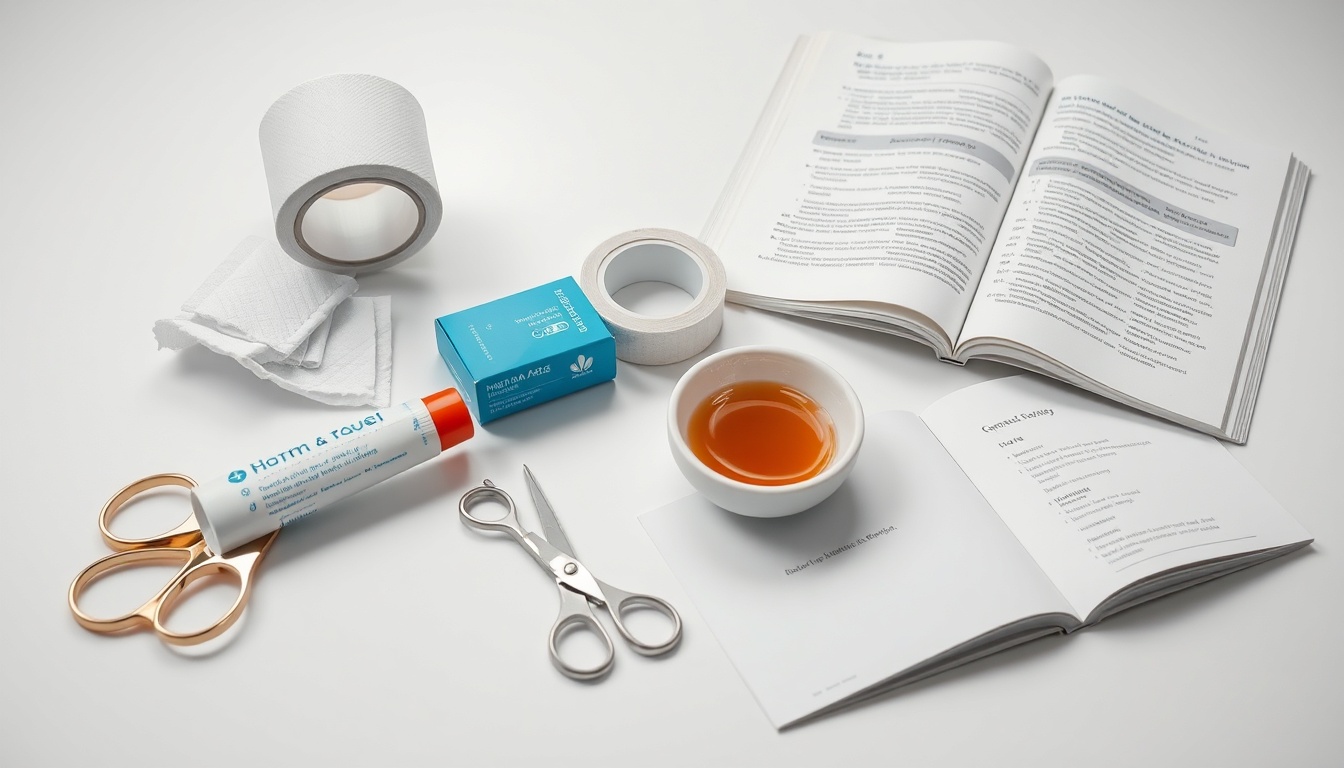
Applying Honey to a Burn
Technique matters for burn care, and it is best directed by a healthcare provider rather than a step-by-step home guide. In clinical settings, medical-grade honey is applied as a wound dressing and changed on a schedule set by the treating clinician. Standard first aid for any burn starts with cooling it under cool (not cold) running water — avoid home remedies like ice, butter, or toothpaste, which can worsen tissue damage. If you are considering honey for a minor burn, talk to a pharmacist or doctor about technique and dressing changes rather than following a generic online protocol. Seek medical attention immediately for increasing redness, warmth, swelling, pus, fever, or red streaks radiating from a burn, as these are signs of infection.
Key Takeaways
- Burn dressing technique and change frequency are best directed by a healthcare provider
- Standard first aid: cool any burn under cool running water — avoid ice, butter, or toothpaste
- Medical-grade honey dressings are applied on a clinician-set schedule in clinical care, not a home protocol
- Talk to a pharmacist or doctor before using honey on a burn at home
Which Honey Is Best for Burns?
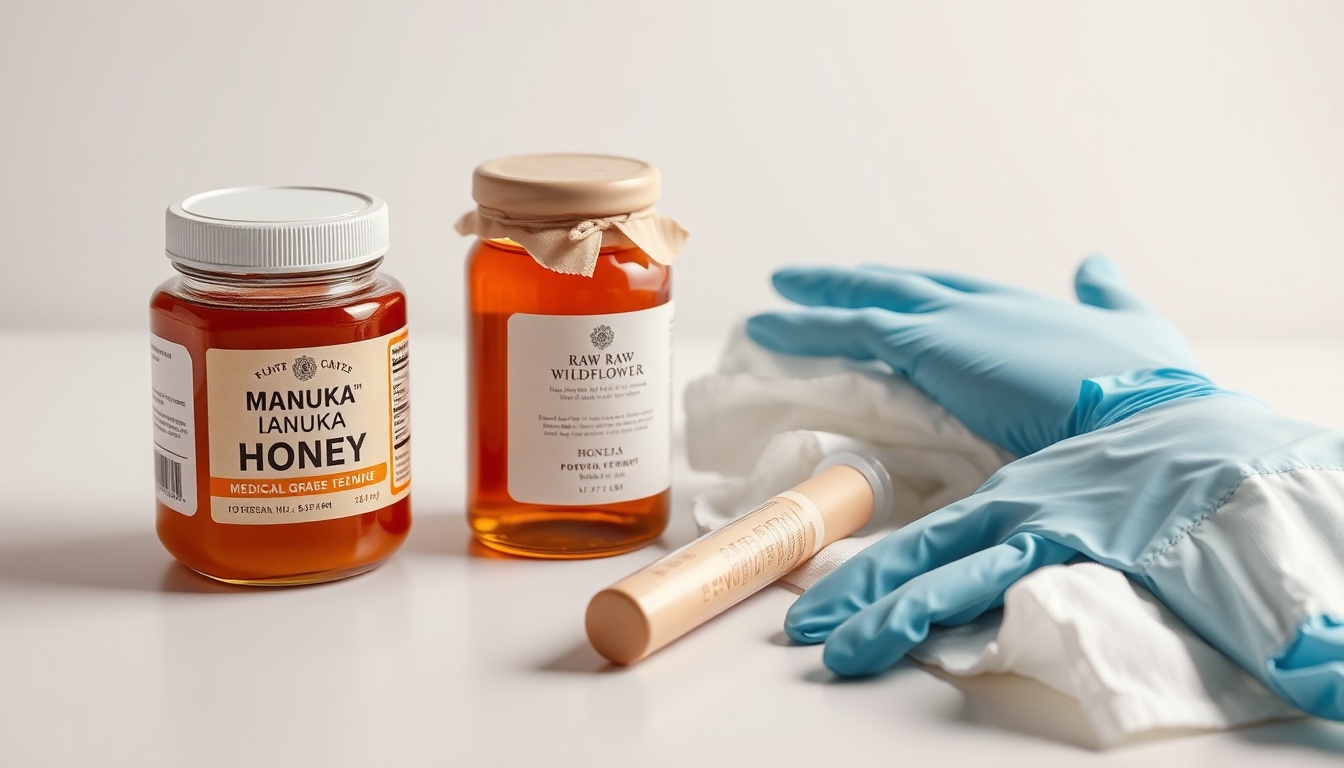
Not all honey is equally effective for burn treatment. Medical-grade honey is the gold standard for burn care — it is gamma-irradiated to eliminate bacterial spores (including Clostridium botulinum) without destroying beneficial bioactive compounds, and it is standardized for consistent antibacterial potency. Medihoney, made from Leptospermum (Manuka) honey, is the most widely used medical-grade product and is registered as a medical device by the FDA. It is available as gel, alginate dressings, and tulle dressings in most pharmacies and online. Manuka honey with a UMF (Unique Manuka Factor) rating of 10 or higher (equivalent to MGO 263+) is the next best option if medical-grade products are unavailable. Manuka honey contains methylglyoxal (MGO), a compound that provides antibacterial activity independent of the hydrogen peroxide mechanism found in all honeys — this dual antimicrobial action makes it particularly effective against burn-wound infections. Raw, unfiltered honey from other floral sources (wildflower, buckwheat, clover) also possesses wound-healing properties through the hydrogen peroxide pathway, but their antibacterial potency is less standardized and they have not been sterilized. Never use commercially processed, pasteurized, or ultra-filtered honey for burns — the heat treatment destroys glucose oxidase and other beneficial enzymes. When purchasing honey for burn first-aid, look for Medihoney products specifically labeled for wound care, or raw Manuka honey with verified UMF/MGO ratings from accredited laboratories.
Key Takeaways
- Medical-grade honey (Medihoney): gold standard — gamma-irradiated, FDA-registered, standardized potency
- Manuka UMF 10+ (MGO 263+): best alternative — dual antimicrobial action via MGO + hydrogen peroxide
- Raw wildflower or buckwheat: wound-healing properties but less standardized and not sterilized
- Never use pasteurized or ultra-filtered honey — heat destroys glucose oxidase and enzymes
- Medical-grade products available as gel, alginate dressings, and tulle dressings
- Look for verified UMF/MGO ratings from accredited laboratories when buying Manuka
Honey vs Silver Sulfadiazine for Burns
Silver sulfadiazine (SSD) cream has been the conventional standard treatment for burns since the 1970s, but a growing body of evidence now favors honey. The 2015 Cochrane review found that honey-treated burns healed significantly faster than SSD-treated burns, with a weighted mean difference of approximately 4.68 days. Multiple randomized controlled trials have shown that honey-treated burns have lower infection rates compared to SSD — a 2011 meta-analysis found a relative risk of infection of 0.34 for honey versus SSD, meaning honey-treated burns were about one-third as likely to become infected. Honey-treated burns also show less scarring and better cosmetic outcomes in several studies, likely because the moist wound environment and anti-inflammatory properties reduce excessive scar tissue formation. Pain management is another advantage: SSD must be completely removed and reapplied at each dressing change (which is painful), while honey dressings lift away easily without disturbing the wound bed. SSD can also cause skin discoloration (argyria), allergic reactions in patients with sulfa allergies, and may actually slow wound healing by damaging keratinocytes (skin cells). The World Health Organization and several national burn treatment guidelines now include honey as a recommended treatment for superficial and partial-thickness burns. Despite this evidence, SSD remains widely prescribed due to clinical inertia. However, many major burn centers have now transitioned to honey-based dressings as their primary treatment for superficial partial-thickness burns.
Key Takeaways
- Cochrane review: honey heals burns ~4.68 days faster than silver sulfadiazine
- Honey-treated burns: one-third the infection rate compared to SSD (RR 0.34)
- Better cosmetic outcomes and less scarring with honey treatment
- Honey dressings lift away painlessly — SSD requires painful removal and reapplication
- SSD risks: skin discoloration, sulfa allergy reactions, keratinocyte damage
- Clinical studies show honey speeds healing of superficial/partial-thickness burns
Safety Precautions and When to See a Doctor
While honey is one of the safest burn treatments available, important safety guidelines apply. Treat only first-degree and small second-degree burns (under 3 inches diameter) at home — any burn larger than 3 inches, any burn on the face, hands, feet, genitals, or major joints, and any third-degree or deeper burn requires emergency medical care. Use medical-grade honey whenever possible; if using raw honey, choose Manuka UMF 10+ from a reputable source. Never use regular grocery-store honey on burns — it may contain bacterial spores and environmental contaminants. Never apply honey to burns in infants under 12 months due to infant botulism risk from Clostridium botulinum spores potentially present in non-medical-grade honey. People with known bee product allergies should not use honey on burns — test a small amount on unburned skin first if uncertain. People with diabetes should follow their clinician's burn-care advice rather than using a food guide as a treatment protocol. Watch for infection signs: increasing redness, warmth, swelling, pus or cloudy discharge, red streaks radiating from the burn, fever, or worsening pain after the first 24 hours. If a burn shows no improvement after 5–7 days of honey treatment, consult a healthcare provider. For sunburns, while honey can provide soothing relief, severe sunburns with extensive blistering may need medical evaluation. Keep a medical-grade honey product in your first-aid kit — it has an indefinite shelf life and is ready when needed.
Key Takeaways
- Home treatment only: first-degree and small (<3 inch) second-degree burns
- Face, hands, feet, genitals, joint burns: always seek professional medical care
- Never apply honey to burns in infants under 12 months — botulism risk
- Test on unburned skin first if you have any bee product allergies
- Diabetics: follow your clinician's burn-care advice rather than treating this guide as a treatment protocol
- See a doctor if no improvement after 5-7 days, or any signs of infection appear
What to Check Before You Buy Honey for Burns
Burn care is one place where label reading matters. You want a product that is traceable, clearly labeled, and not ultra-filtered. For home first aid, start with honey quality and grading so you know what raw, filtered, and medical-grade products actually mean. If you want a quick product sanity check, use the honey freshness toolkit and compare it with our real vs fake honey guide before you buy. When possible, choose a product made for wound care instead of a random grocery jar.
Key Takeaways
- Read the label: traceable origin and clear processing details matter
- Use the quality guide to separate raw, filtered, and medical-grade honey
- Check freshness and purity before buying a jar for first aid
- Prefer wound-care products over an ordinary grocery-store bottle
- Compare with real-vs-fake honey guidance if the label looks vague
What to Check Before You Buy Honey for Burns
Burn care is one place where label reading matters. You want a product that is traceable, clearly labeled, and not ultra-filtered.
Frequently Asked Questions
Can you put honey on a burn?
Yes. A 2015 Cochrane systematic review of 26 randomized controlled trials found that honey heals partial-thickness burns 4-5 days faster than conventional treatments like silver sulfadiazine. Honey creates a moist healing environment, produces sustained antimicrobial activity, and reduces pain during dressing changes. Use medical-grade honey (like Medihoney) or raw Manuka UMF 10+ for best results.
What kind of honey is best for burns?
Medical-grade honey (such as Medihoney) is the gold standard — it is gamma-irradiated to eliminate bacterial spores and standardized for consistent antibacterial potency. Manuka honey with UMF 10+ (MGO 263+) is the best alternative. Never use pasteurized or ultra-filtered grocery store honey, as heat processing destroys the beneficial enzymes.
How do you apply honey to a burn?
Burn care technique should be directed by a healthcare provider, especially for anything beyond a very minor burn. Medical-grade honey dressings are used in clinical settings under professional supervision — talk to a doctor or pharmacist about wound care options rather than following a generic online protocol.
Is honey better than silver sulfadiazine for burns?
Clinical evidence says yes for superficial and partial-thickness burns. The Cochrane review found honey heals burns approximately 4.68 days faster than silver sulfadiazine, with one-third the infection rate. Honey also causes less pain during dressing changes, better cosmetic outcomes, and fewer side effects. Medical-grade honey dressings are used clinically for superficial burns under professional supervision.
Can you use honey on a sunburn?
Some people use a thin layer of honey on mild sunburn for its soothing, moisturizing properties. Severe sunburns with extensive blistering should be evaluated by a doctor.
Is it safe to put honey on a child's burn?
Never apply honey to burns on infants under 12 months due to the risk of infant botulism from Clostridium botulinum spores. For a burn on any child, talk to a pediatrician or seek medical care rather than self-treating at home.
Edited by Sam French · Raw Honey Guide Editorial Team
Source reviewed against primary literature and official guidance where available. Health content is educational, not medical advice, and does not replace a licensed clinician.
Get the Honey Buyer's Cheat Sheet (free PDF)
16 varieties on one page — color, flavor, best use and what a fair price looks like — from the 268 honeys we track.
Related Guides
Honey for Wound Healing
Medical evidence and clinical uses.
Read GuideManuka Honey Benefits
UMF/MGO ratings and proven benefits.
Read GuideHealth Benefits
Nutritional and therapeutic benefits of honey.
Read GuideRelated Articles
Honey for Burns: First Aid, Treatment, and What the Evidence Shows
A Cochrane review of 3,011 patients found honey speeds burn healing by 4-5 days. Types, application, and safety.
Read ArticleHoney for Sunburn: Does It Work? What the Evidence Shows
Can honey heal sunburn? Clinical evidence on burns, anti-inflammatory effects, and what the research shows about sun damage.
Read ArticleHoney for Wound Healing: Medical Products and Evidence Limits
Food honey is not a wound dressing. Understand the limits of medical-honey research, product-specific instructions, and when to seek professional care.
Read ArticleHoney and Aloe Vera: Benefits for Skin, Hair, and Health
Honey and aloe vera for skin, hair, and wellness. Evidence-based benefits, 6 DIY recipes, best honey types, and safety.
Read ArticleLooking for high-quality honey with natural healing properties?