Why Honey for Burns? The Clinical Case
Burns are one of the most common household injuries — the American Burn Association estimates over 486,000 burn injuries receive medical treatment annually in the United States alone. While mild burns are typically managed with cool water and over-the-counter treatments, a growing body of rigorous clinical evidence shows that honey may outperform conventional burn dressings.
This isn't alternative medicine speculation. The strongest evidence comes from a 2015 Cochrane systematic review — the gold standard of medical evidence — analyzing 26 trials with 3,011 participants. The review found that honey-treated superficial and partial-thickness burns healed 4 to 5 days faster than conventional dressings. That's a clinically significant difference for an injury where every day of healing matters for pain, infection risk, and scarring outcomes.
Honey's use for burns isn't new — it was documented in ancient Egyptian papyri, traditional Chinese medicine, and Ayurvedic texts. What's new is the rigorous modern evidence confirming what healers observed for millennia, and understanding the specific mechanisms behind honey's effectiveness.
The Clinical Evidence: What Research Shows
The evidence for honey in burn treatment is among the strongest for any natural remedy in wound care. Here's what the major studies found.
- 2015 Cochrane systematic review — Analyzed 26 RCTs with 3,011 participants. Honey-treated superficial and partial-thickness burns healed an average of 4-5 days faster than conventional dressings (silver sulfadiazine, gauze, or polyurethane film). The review rated the evidence as moderate quality — strong enough for clinical consideration.
- 2010 International Journal of Lower Extremity Wounds — A 50-patient RCT comparing honey dressings to silver sulfadiazine (SSD, the standard burn cream) found that honey-treated burns showed faster epithelialization, less infection, less pain during dressing changes, and better cosmetic outcomes at 6-month follow-up.
- 2005 British Journal of Surgery — A meta-analysis of 5 RCTs (446 patients) found mean healing time of 10.8 days for honey vs 15.3 days for conventional treatment in superficial burns — a 4.5-day advantage.
- 2004 Burns journal — A 104-patient RCT in India found 100% of honey-treated superficial burns were sterile within 7 days, compared to 84% of SSD-treated burns. Honey-treated burns also showed faster healing (mean 9.4 vs 17.4 days for SSD).
- 2012 Annals of Burns and Fire Disasters — A study of radiation-induced burns (from cancer treatment) found honey dressings reduced healing time, pain scores, and infection rates compared to standard care — demonstrating effectiveness beyond thermal burns.
Pro Tip
Silver sulfadiazine (SSD), once the standard burn cream, has been declining in clinical favor because it can delay wound healing and cause silver toxicity. Multiple studies now show honey outperforms SSD specifically.
Get the Honey Buyer's Cheat Sheet (free PDF)
16 varieties on one page — color, flavor, best use and what a fair price looks like — from the 268 honeys we track.
How Honey Heals Burns: 7 Mechanisms
Honey doesn't work through a single pathway — it addresses burn injuries through seven complementary mechanisms, which is why it outperforms single-agent treatments.
- Antibacterial defense — Burns are extremely vulnerable to infection because the protective skin barrier is destroyed. Honey's broad-spectrum antimicrobial activity (effective against 60+ species including MRSA, Pseudomonas aeruginosa, and Staphylococcus aureus — the most common burn pathogens) provides continuous protection without antibiotic resistance.
- Moist wound healing — Modern wound care science shows that maintaining optimal moisture accelerates healing by 30-50% compared to dry dressings. Honey's high sugar content and natural humectant properties create an ideal moist wound environment while simultaneously drawing lymph fluid to flush debris.
- Anti-inflammatory action — Burns trigger intense inflammation that, while initially protective, can become destructive and slow healing if prolonged. Honey's polyphenols inhibit the NF-κB inflammatory pathway and suppress pro-inflammatory cytokines (TNF-α, IL-1β, IL-6), reducing swelling, redness, and pain.
- Osmotic debridement — Honey's high sugar concentration (about 80%) creates an osmotic gradient that gently draws fluid and dead tissue away from the wound bed. This natural debridement removes necrotic tissue without the pain and trauma of mechanical debridement.
- Low pH environment — Honey's acidic pH (3.2-4.5) reduces the alkaline pH of wound surfaces. This matters because an acidic wound environment increases oxygen release from hemoglobin, promotes fibroblast activity, and inhibits bacterial protease enzymes that break down healing tissue.
- Collagen synthesis stimulation — Honey promotes fibroblast proliferation and collagen deposition — the structural protein that rebuilds skin. This is critical for burn healing because collagen organization determines whether the burn heals with minimal scarring or forms hypertrophic scars.
- Reduced odor and exudate — Burns can produce significant wound odor from bacterial metabolism and tissue breakdown. Honey's antibacterial action and osmotic effect reduce malodorous compounds, improving patient comfort and quality of life during recovery.
Which Burns Can Honey Treat?
Not all burns are appropriate for honey treatment. The clinical evidence is strongest for superficial and partial-thickness burns, and understanding burn classification is essential for safe self-care.
- First-degree burns (superficial) — Affect only the outer skin layer (epidermis). Skin is red, painful, and dry but not blistered. Examples: mild sunburn, brief contact with a hot pan. These are the most appropriate burns for home honey treatment. Healing time: 3-7 days.
- Second-degree burns (partial-thickness) — Affect the epidermis and part of the dermis. Skin is red, blistered, swollen, and very painful. Examples: scald from hot water, longer contact burns, severe sunburns. Superficial second-degree burns can be treated with honey, but deep second-degree burns require medical evaluation.
- Third-degree burns (full-thickness) — Destroy the full skin thickness. Skin appears white, brown, or black and may be numb (nerve damage). These always require emergency medical care. Do not apply honey — these burns need surgical intervention.
- Fourth-degree burns — Extend into muscle, tendon, or bone. Life-threatening emergency. Call 911 immediately.
Pro Tip
A useful rule: if the burn is larger than the palm of your hand, involves the face/hands/feet/genitals/major joints, encircles a limb, or shows white/brown/black coloring, seek immediate medical attention. Honey is appropriate for minor burns you would otherwise treat at home.
Best Honey Types for Burns
The type of honey matters significantly for burn treatment. Clinical trials have used specific honeys, and effectiveness varies with floral source, processing, and quality.
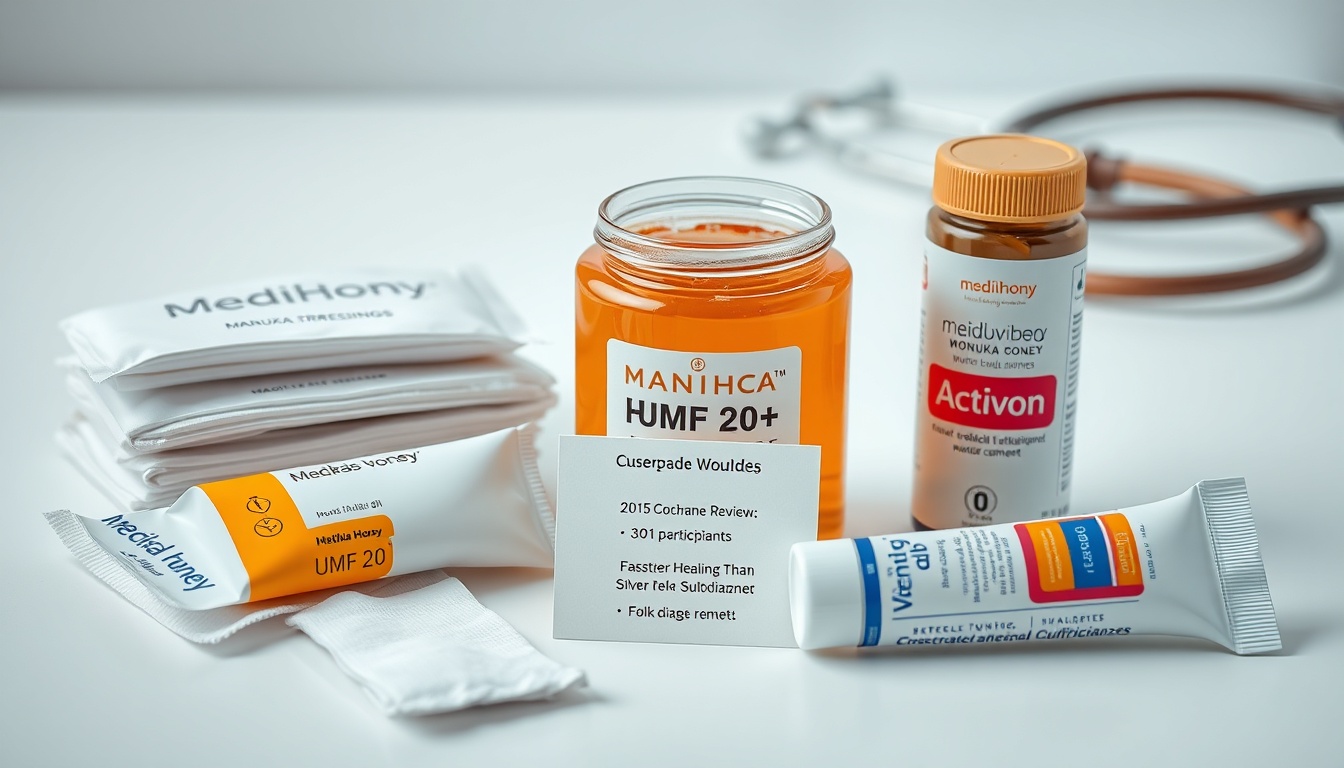
- Medical-grade manuka honey (UMF 12.5+) — The gold standard for clinical burn care. Medihoney (FDA-cleared) and Activon Tulle are medical-grade manuka products specifically designed for wound care. MGO provides non-peroxide antibacterial activity that persists even when honey is diluted by wound fluid. For the ultimate burn care choice, New Zealand Manuka honey offers authentic UMF-certified varieties with methylglyoxal content remaining stable during wound healing when traditional honey would lose potency.
- Medical-grade honey dressings — Products like Medihoney Gel Sheet, Activon Tulle, and SurgihoneyRO are impregnated gauze or gel dressings that provide controlled honey delivery. These are easiest to apply to burns and maintain the optimal moisture environment.
- Raw manuka honey (UMF 10+) — If medical-grade products aren't available, raw manuka honey UMF 10+ or MGO 263+ provides strong antimicrobial activity. Ensure it's genuine (look for UMF or MGO certification from New Zealand).
- Raw buckwheat honey — With 3-9x higher antioxidant content than lighter honeys, buckwheat honey provides potent anti-inflammatory and free radical scavenging support. A practical option when manuka isn't available. New York buckwheat honey exemplifies ideal raw varieties with exceptional ORAC values (16,000+ μmol TE/100g) from glacial till soil mineral complexity creating superior anti-inflammatory support for thermal burn recovery.
- Raw thyme honey — Contains thymol and carvacrol, which provide additional antimicrobial pathways beyond standard honey mechanisms. Mediterranean thyme honey has demonstrated strong wound-healing properties in studies. Greek thyme honey represents the pinnacle of thymol-rich varieties with authentic wild thyme terroir providing therapeutic carvacrol compounds ideal for antimicrobial burn protection.
Pro Tip
Never use processed, heated, or blended supermarket honey for burn treatment. Pasteurization destroys glucose oxidase (which generates hydrogen peroxide), reduces polyphenol content by 30-50%, and eliminates active enzymes critical for wound healing.
How Honey Has Been Used on Burns in Clinical Studies
Clinical trials on honey for burns were conducted in medical settings, using medical-grade honey and clinician-directed dressing protocols — not a routine to replicate from an article.
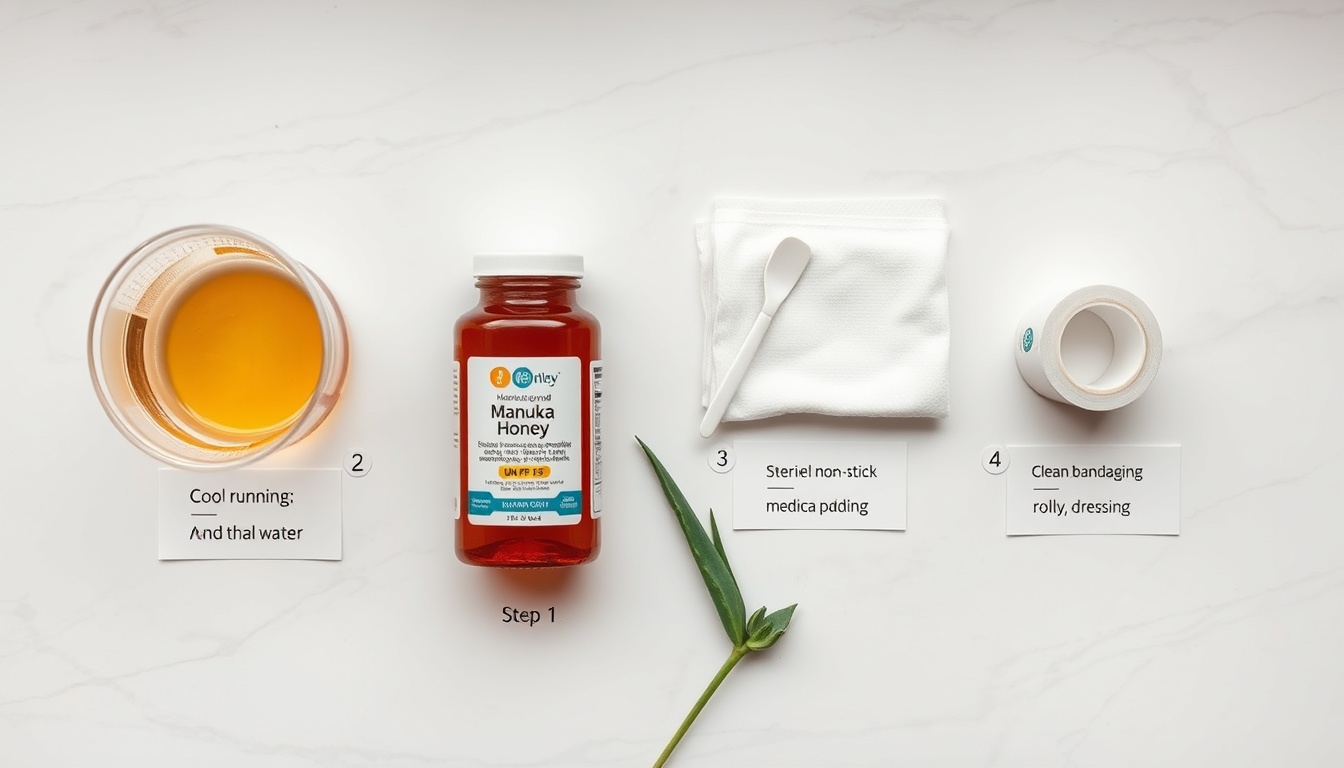
- Cool the burn first — Run cool (not ice-cold) water over the burn for 10-20 minutes immediately after injury. This is standard first aid for any minor burn and stops thermal damage from progressing deeper into tissue. Do not apply honey, butter, ice, or anything else before cooling.
- Keep the area clean — After cooling, gently clean the burn with mild soap and lukewarm water and pat dry. Do not break blisters — intact blisters protect the healing tissue underneath.
- Beyond basic first aid, whether to apply honey, how much, how it is covered, and how often a dressing is changed are decisions to make with a pharmacist or clinician, not a fixed protocol to follow at home.
- Seek medical care rather than self-treating for anything beyond a small, superficial burn, or if you are unsure how serious a burn is.
Honey vs Conventional Burn Treatments
How does honey compare to the standard treatments used for minor burns? The evidence allows for a fair comparison.
Honey vs silver sulfadiazine (SSD) — Multiple RCTs and meta-analyses show honey outperforms SSD for superficial burns. Honey heals faster (4-5 days on average), has lower infection rates, causes less pain during dressing changes, and produces better cosmetic outcomes. SSD has also been associated with delayed wound healing and rare silver toxicity. Many burn units have moved away from SSD.
Honey vs petroleum gauze — Conventional petroleum-impregnated gauze (Vaseline gauze) maintains moisture but has no antimicrobial or anti-inflammatory properties. Honey provides the same moisture benefit plus active healing support. Studies show faster healing with honey.
Honey vs hydrocolloid dressings — Modern hydrocolloid dressings (like DuoDERM) are effective for minor burns. Head-to-head data with honey is limited, but honey offers antimicrobial protection that hydrocolloids lack.
Honey vs aloe vera — Aloe vera has some burn-healing evidence, but the clinical data is weaker and less consistent than honey's. For superficial burns, combining aloe vera (for its cooling effect) followed by honey (for healing) is a reasonable approach, though no trials have tested this combination. For sensitive burn applications where gentle honey varieties are preferred, Italian acacia honey offers water-white clarity and delicate vanilla undertones with low glycemic impact (GI ~32) making it ideal for extended burn healing protocols requiring minimal skin irritation during recovery.
When conventional treatment wins — For deep partial-thickness or full-thickness burns, surgical debridement and skin grafting are necessary. Honey cannot replace surgery for severe burns. For minor burns, topical anesthetics provide faster pain relief than honey, though honey's anti-inflammatory effects do reduce pain over time.
Special Burn Situations
Different types of burns may benefit from honey in different ways.
- Kitchen scalds (hot water/oil) — The most common household burn. Cool immediately under running water for 20 minutes. Hot oil burns tend to be deeper than hot water burns and may need medical evaluation.
- Contact burns (hot pan, iron, curling iron) — Usually well-defined and small. These burns often blister; do not break blisters, as they protect the healing skin underneath.
- Sunburns — First-degree sunburns respond well to honey's anti-inflammatory and moisturizing properties. For large-area sunburns, a honey bath (1/4 cup in warm bathwater) or diluted honey spray is more practical than direct application.
- Radiation burns — Patients undergoing radiation therapy for cancer can develop painful radiation dermatitis. The 2012 Annals of Burns study showed honey dressings were effective. Discuss with your oncology team before use.
- Friction burns (road rash, carpet burns) — These combine thermal and abrasion injury. Clean thoroughly to remove debris before applying honey. The antibacterial protection is especially important for friction burns, which often contain dirt and bacteria.
- Chemical burns — Flush with water for 20+ minutes first. Chemical burns may require specific treatment depending on the chemical. Seek medical advice before applying honey to chemical burns.
Safety Considerations and When to Seek Medical Care
While honey is remarkably safe for burn treatment, there are important limitations and safety considerations.
Seek immediate medical attention for burns that are larger than 3 inches (7.5cm) in any dimension, involve the face, hands, feet, genitals, or major joints, show white, brown, or black coloring (indicating full-thickness damage), encircle a limb or digit, are caused by chemicals or electricity, or occur in infants under 12 months (infant botulism risk from wound application).
Critical safety warning for caregivers: never give honey orally to infants under 12 months of age — for any reason, including to soothe pain during burn recovery. All honey, regardless of type, quality, or processing (raw, pasteurized, manuka, or supermarket blended), naturally contains dormant Clostridium botulinum spores. These spores are harmless to adults and older children whose gut acid and microbiome suppress germination, but in an infant's immature digestive tract they can germinate and produce botulinum toxin, causing infant botulism. The CDC identifies honey as the primary dietary source of infant botulism in the United States.
Allergic reactions to topical honey are rare but possible. If you have a known bee sting or pollen allergy, do a small patch test on uninjured skin before applying honey to a burn. Signs of reaction include increased redness, swelling, or itching beyond the burn area.
Honey can cause a brief stinging sensation when first applied to an open wound — this is normal and typically subsides within minutes. It's caused by the acidic pH contacting raw tissue. If pain is severe or persistent, remove the honey and rinse with cool water.
Do not use honey as a substitute for medical care when it's needed. Honey is excellent for the minor burns you would otherwise treat at home with basic first aid, but it cannot replace professional burn care for serious injuries.
Oral honey remains a fast-acting carbohydrate, but carbohydrate guidance does not establish whether a burn product is appropriate.
Preventing Burn Scars with Honey
One of honey's most valued benefits for burns is reduced scarring. Burn scars form when the wound healing process produces excessive or disorganized collagen — and honey addresses several factors that influence scar formation.
Honey reduces scar risk by keeping the wound optimally moist (dry wounds scar more), minimizing infection (infected burns scar more), reducing excessive inflammation (chronic inflammation drives fibrosis), promoting organized collagen deposition (rather than the haphazard collagen bundles that form hypertrophic scars), and accelerating healing (wounds that heal within 2-3 weeks scar less than those taking longer).
The 2010 IJLEW study found significantly better cosmetic outcomes at 6-month follow-up in honey-treated burns versus SSD-treated burns, supporting these mechanistic expectations.
Beyond basic first aid for a minor burn, how — and how long — to use honey as part of scar prevention is best worked out with a pharmacist or clinician rather than a fixed at-home schedule. Not picking at scabs or blisters and protecting healed skin from sun exposure for 6-12 months (UV radiation darkens new scar tissue) are widely recommended general scar-care practices independent of honey.